Kirjojen hintavertailu. Mukana 11 244 527 kirjaa ja 12 kauppaa.

Kirjahaku

Etsi kirjoja tekijän nimen, kirjan nimen tai ISBN:n perusteella.

1000 tulosta hakusanalla John P. Bowles

Adrian Piper

Adrian Piper

John P. Bowles

Duke University Press
2011
sidottu
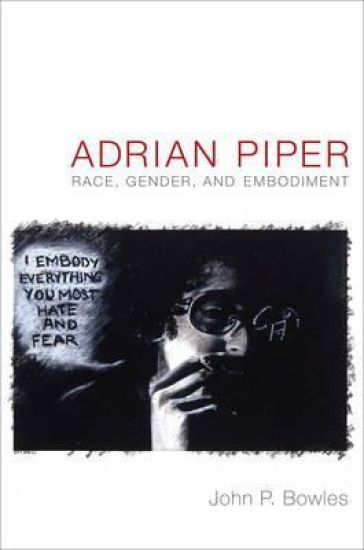
In 1972 the artist Adrian Piper began periodically dressing as a persona called the Mythic Being, striding the streets of New York in a mustache, Afro wig, and mirrored sunglasses with a cigar in the corner of her mouth. Her Mythic Being performances critically engaged with popular representations of race, gender, sexuality, and class; they challenged viewers to accept personal responsibility for xenophobia and discrimination and the conditions that allowed them to persist. Piper’s work confronts viewers and forces them to reconsider assumptions about the social construction of identity. Adrian Piper: Race, Gender, and Embodiment is an in-depth analysis of this pioneering artist’s work, illustrated with more than ninety images, including twenty-one in color.Over the course of a decade, John P. Bowles and Piper conversed about her art and its meaning, reception, and relation to her scholarship on Kant’s philosophy. Drawing on those conversations, Bowles locates Piper’s work at the nexus of Conceptual and feminist art of the late 1960s and 1970s. Piper was the only African American woman associated with the Conceptual artists of the 1960s and one of only a few African Americans to participate in exhibitions of the nascent feminist art movement in the early 1970s. Bowles contends that Piper’s work is ultimately about our responsibility for the world in which we live.
Adrian Piper

Adrian Piper

John P. Bowles

Duke University Press
2011
pokkari
In 1972 the artist Adrian Piper began periodically dressing as a persona called the Mythic Being, striding the streets of New York in a mustache, Afro wig, and mirrored sunglasses with a cigar in the corner of her mouth. Her Mythic Being performances critically engaged with popular representations of race, gender, sexuality, and class; they challenged viewers to accept personal responsibility for xenophobia and discrimination and the conditions that allowed them to persist. Piper’s work confronts viewers and forces them to reconsider assumptions about the social construction of identity. Adrian Piper: Race, Gender, and Embodiment is an in-depth analysis of this pioneering artist’s work, illustrated with more than ninety images, including twenty-one in color.Over the course of a decade, John P. Bowles and Piper conversed about her art and its meaning, reception, and relation to her scholarship on Kant’s philosophy. Drawing on those conversations, Bowles locates Piper’s work at the nexus of Conceptual and feminist art of the late 1960s and 1970s. Piper was the only African American woman associated with the Conceptual artists of the 1960s and one of only a few African Americans to participate in exhibitions of the nascent feminist art movement in the early 1970s. Bowles contends that Piper’s work is ultimately about our responsibility for the world in which we live.
Exiles and Pioneers

Exiles and Pioneers

John P. Bowes

Cambridge University Press
2007
pokkari
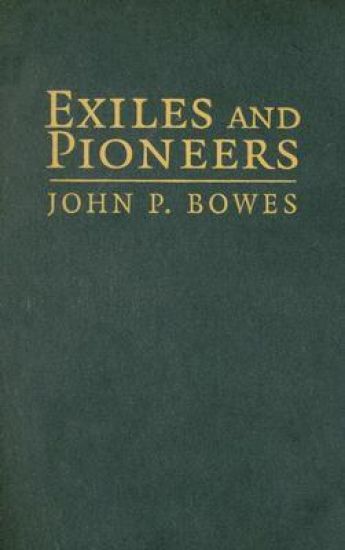
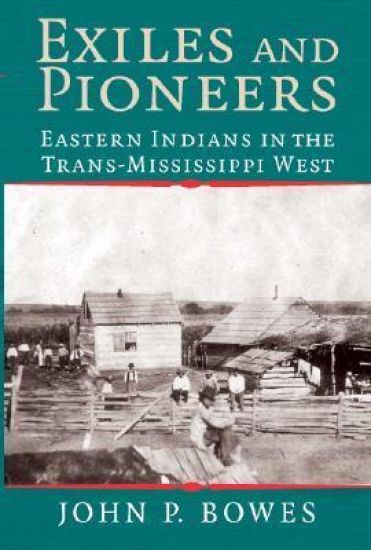
Exiles and Pioneers analyzes the removal and post-removal histories of Shawnee, Delaware, Wyandot, and Potawatomi Indians. The book argues that the experience of these eastern Indians from the late 1700s to the 1860s was at its core a struggle over geographic and political place within the expanding United States. Even as American expansion limited the geographic scope of Indian lands, the extension of American territories and authority raised important questions about the political status of these Indians as individuals as well as nations within the growing republic. More specifically, the national narrative and even the prominent images of Indian removal cast the eastern Indians as exiles who were constantly pushed beyond the edges of American settlement. This study proposes that ineffective federal policies and ongoing debates within Indian communities also cast some of these eastern Indians as pioneers, unwilling trailblazers in the development of the United States.
Exiles and Pioneers

Exiles and Pioneers

John P. Bowes

Cambridge University Press
2007
sidottu
Exiles and Pioneers analyzes the removal and post-removal histories of Shawnee, Delaware, Wyandot, and Potawatomi Indians. The book argues that the experience of these eastern Indians from the late 1700s to the 1860s was at its core a struggle over geographic and political place within the expanding United States. Even as American expansion limited the geographic scope of Indian lands, the extension of American territories and authority raised important questions about the political status of these Indians as individuals as well as nations within the growing republic. More specifically, the national narrative and even the prominent images of Indian removal cast the eastern Indians as exiles who were constantly pushed beyond the edges of American settlement. This study proposes that ineffective federal policies and ongoing debates within Indian communities also cast some of these eastern Indians as pioneers, unwilling trailblazers in the development of the United States.
Land Too Good for Indians

Land Too Good for Indians

John P. Bowes

University of Oklahoma Press
2016
sidottu
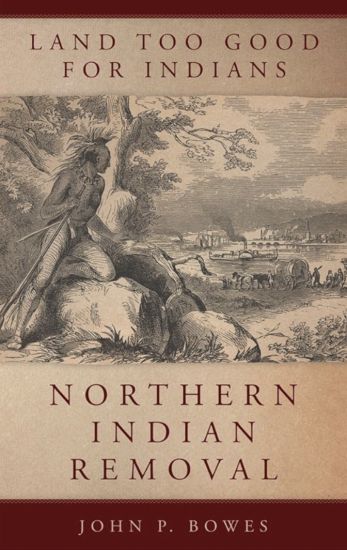
The history of Indian removal has often followed a single narrative arc, one that begins with President Andrew Jackson's Indian Removal Act of 1830 and follows the Cherokee Trail of Tears. In that conventional account, the Black Hawk War of 1832 encapsulates the experience of tribes in the territories north of the Ohio River. But Indian removal in the Old Northwest was much more complicated - involving many Indian peoples and more than just one policy, event, or politician. In Land Too Good for Indians, historian John P. Bowes takes a long-needed closer, more expansive look at northern Indian removal - and in so doing amplifies the history of Indian removal and of the United States. Bowes focuses on four case studies that exemplify particular elements of removal in the Old Northwest. He traces the paths taken by Delaware Indians in response to Euro-American expansion and U.S. policies in the decades prior to the Indian Removal Act. He also considers the removal experience among the Seneca-Cayugas, Wyandots, and other Indian communities in the Sandusky River region of northwestern Ohio. Bowes uses the 1833 Treaty of Chicago as a lens through which to examine the forces that drove the divergent removals of various Potawatomi communities from northern Illinois and Indiana. And in exploring the experiences of the Odawas and Ojibwes in Michigan Territory, he analyzes the historical context and choices that enabled some Indian communities to avoid relocation west of the Mississippi River. In expanding the context of removal to include the Old Northwest, and adding a portrait of Native communities there before, during, and after removal, Bowes paints a more accurate - and complicated - picture of American Indian history in the nineteenth century. Land Too Good for Indians reveals the deeper complexities of this crucial time in American history.
Land Too Good for Indians

Land Too Good for Indians

John P. Bowes

University of Oklahoma Press
2017
nidottu
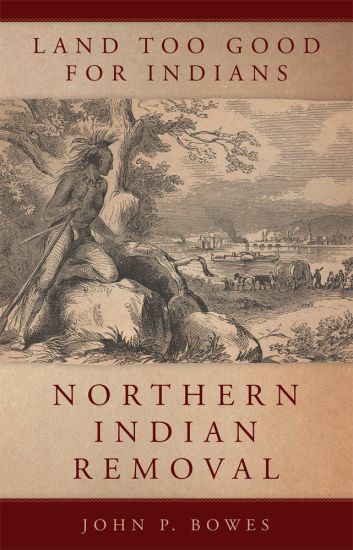
The history of Indian removal has often followed a single narrative arc, one that begins with President Andrew Jackson's Indian Removal Act of 1830 and follows the Cherokee Trail of Tears. In that conventional account, the Black Hawk War of 1832 encapsulates the experience of tribes in the territories north of the Ohio River. But Indian removal in the Old Northwest was much more complicated - involving many Indian peoples and more than just one policy, event, or politician. In Land Too Good for Indians, historian John P. Bowes takes a long-needed closer, more expansive look at northern Indian removal - and in so doing amplifies the history of Indian removal and of the United States. Bowes focuses on four case studies that exemplify particular elements of removal in the Old Northwest. He traces the paths taken by Delaware Indians in response to Euro-American expansion and U.S. policies in the decades prior to the Indian Removal Act. He also considers the removal experience among the Seneca-Cayugas, Wyandots, and other Indian communities in the Sandusky River region of northwestern Ohio. Bowes uses the 1833 Treaty of Chicago as a lens through which to examine the forces that drove the divergent removals of various Potawatomi communities from northern Illinois and Indiana. And in exploring the experiences of the Odawas and Ojibwes in Michigan Territory, he analyzes the historical context and choices that enabled some Indian communities to avoid relocation west of the Mississippi River. In expanding the context of removal to include the Old Northwest, and adding a portrait of Native communities there before, during, and after removal, Bowes paints a more accurate - and complicated - picture of American Indian history in the nineteenth century. Land Too Good for Indians reveals the deeper complexities of this crucial time in American history.
John P. Kotter
John P. Kotter (b. 1947), a leading authority on business leadership and change, is the subject of this new collection from Routledge’s acclaimed Critical Evaluations in Business and Management series. It brings together in two volumes the best critical evaluations of his work. The collection is supplemented with the editors’ expert introduction which places the gathered scholarship in its historical and intellectual context.
John P. Marquand - American Writers 46

John P. Marquand - American Writers 46

C. Hugh Holman

UNIVERSITY OF MINNESOTA PRESS
1965
nidottu
John P. Marquand - American Writers 46 was first published in 1965. Minnesota Archive Editions uses digital technology to make long-unavailable books once again accessible, and are published unaltered from the original University of Minnesota Press editions.
John P. Slough

John P. Slough

Richard L. Miller

University of New Mexico Press
2021
sidottu
John Potts Slough, the Union commander at the Battle of Glorieta Pass, lived a life of relentless pursuit for success that entangled him in the turbulent events of mid-nineteenth-century America. As a politician, Slough fought abolitionists in the Ohio legislature and during Kansas Territory's fourth and final constitutional convention. He organized the 1st Colorado Volunteer Infantry after the Civil War broke out, eventually leading his men against Confederate forces at the pivotal engagement at Glorieta Pass. After the war, as chief justice of the New Mexico Territorial Supreme Court, he struggled to reform corrupt courts amid the territory's corrosive Reconstruction politics.Slough was known to possess a volcanic temper and an easily wounded pride. These traits not only undermined a promising career but ultimately led to his death at the hands of an aggrieved political enemy who gunned him down in a Santa Fe saloon. Recounting Slough's timeless story of rise and fall during America's most tumultuous decades, historian Richard L. Miller brings to life this extraordinary figure.
John P. Slough

John P. Slough

Richard L. Miller

UNIVERSITY OF NEW MEXICO PRESS
2025
nidottu
John Potts Slough, the Union commander at the Battle of Glorieta Pass, lived a life of relentless pursuit for success that entangled him in the turbulent events of mid-nineteenth-century America. As a politician, Slough fought abolitionists in the Ohio legislature and during Kansas Territory's fourth and final constitutional convention. He organized the 1st Colorado Volunteer Infantry after the Civil War broke out, eventually leading his men against Confederate forces at the pivotal engagement at Glorieta Pass. After the war, as chief justice of the New Mexico Territorial Supreme Court, he struggled to reform corrupt courts amid the territory's corrosive Reconstruction politics.Slough was known to possess a volcanic temper and an easily wounded pride. These traits not only undermined a promising career but ultimately led to his death at the hands of an aggrieved political enemy who gunned him down in a Santa Fe saloon. Recounting Slough's timeless story of rise and fall during America's most tumultuous decades, historian Richard L. Miller brings to life this extraordinary figure.
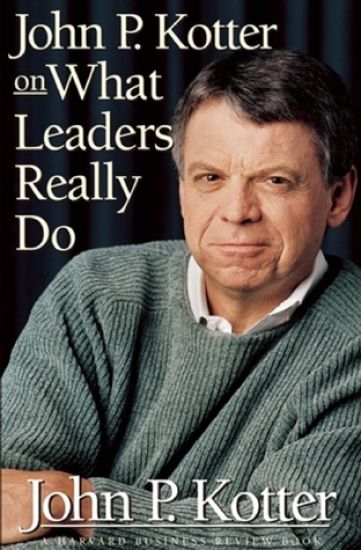
John P. Kotter on What Leaders Really Do

John P. Kotter on What Leaders Really Do

John P. Kotter

Harvard Business Review Press
1999
sidottu
Widely acknowledged as the world's foremost authority on leadership, John Kotter has devoted his remarkable career to studying organizations and those who run them, and his bestselling books and essays have guided and inspired leaders at all levels. Here, in this collection of his acclaimed Harvard Business Review articles, is an astute assessment of the real work of leaders, as only John Kotter can offer. To complement the HBR articles, Kotter also contributes a new piece, a thoughtful reflection on the themes that have developed throughout his work. Convinced that most organizations today lack the leadership they need, Kotter's mission is to help us better understand what leaders--real leaders--do. True leadership, he reminds us, is an elusive quality, and too often we confuse management duties and personal style with leadership, or even mistake unworthy leaders for the real thing. Yet without leadership, organizations move too slowly, stagnate, and lose their way. With John Kotter on What Leaders Really Do, readers will learn how to become more effective leaders as they explore pressing issues such as power, influence, dependence, and strategies for change.
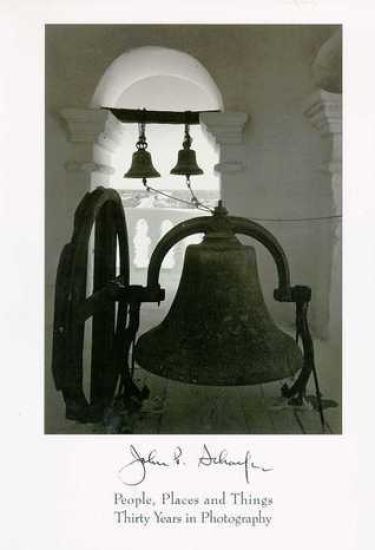
John P. Schaefer: People, Places and Things--Thirty Years in Photography
John Schaefer took up photography as a hobby thirty years ago, and has since become well recognized for his technical skill and has published exensively on photographic technique. While president of the University of Arizona from 1971 to 1982, he secured the cooperation of Ansel Adams in establishing the Center for Creative Photography. This retrospective of Schaefer's work features one hundred examples of his exquisite black-and-white photography most of them gelatin silver prints in subjects ranging from landscapes and peoples of the Southwest to images captured around the world. In studies of Mission San Xavier del Bac, details of cactus spines, and faces of Tarahumara children, appreciators of lenscraft will find ample evidence of Schaefer's sensitivity and skill."
John P. Marquand

John P. Marquand

John J. 1912- Gross

Hassell Street Press
2021
sidottu
This work has been selected by scholars as being culturally important and is part of the knowledge base of civilization as we know it.This work is in the public domain in the United States of America, and possibly other nations. Within the United States, you may freely copy and distribute this work, as no entity (individual or corporate) has a copyright on the body of the work.Scholars believe, and we concur, that this work is important enough to be preserved, reproduced, and made generally available to the public. To ensure a quality reading experience, this work has been proofread and republished using a format that seamlessly blends the original graphical elements with text in an easy-to-read typeface.We appreciate your support of the preservation process, and thank you for being an important part of keeping this knowledge alive and relevant.
John P. Marquand

John P. Marquand

John J. 1912- Gross

Hassell Street Press
2021
nidottu
This work has been selected by scholars as being culturally important and is part of the knowledge base of civilization as we know it.This work is in the public domain in the United States of America, and possibly other nations. Within the United States, you may freely copy and distribute this work, as no entity (individual or corporate) has a copyright on the body of the work.Scholars believe, and we concur, that this work is important enough to be preserved, reproduced, and made generally available to the public. To ensure a quality reading experience, this work has been proofread and republished using a format that seamlessly blends the original graphical elements with text in an easy-to-read typeface.We appreciate your support of the preservation process, and thank you for being an important part of keeping this knowledge alive and relevant.