A 2022 Choice Outstanding Academic TitleThis book surveys and examines the most famous philosophical arguments against building a machine with human-level intelligence. From claims and counter-claims about the ability to implement consciousness, rationality, and meaning, to arguments about cognitive architecture, the book presents a vivid history of the clash between the philosophy and AI. Tellingly, the AI Wars are mostly quiet now. Explaining this crucial fact opens new paths to understanding the current resurgence AI (especially, deep learning AI and robotics), what happens when philosophy meets science, and the role of philosophy in the culture in which it is embedded. Organising the arguments into four core topics - 'Is AI possible', 'Architectures of the Mind', 'Mental Semantics and Mental Symbols' and 'Rationality and Creativity' - this book shows the debate that played out between the philosophers on both sides of the question, and, as well, the debate between philosophers and AI scientists and engineers building AI systems. Up-to-date and forward-looking, the book is packed with fresh insights and supporting material, including:- Accessible introductions to each war, explaining the background behind the main arguments against AI- Each chapter details what happened in the AI wars, the legacy of the attacks, and what new controversies are on the horizon.- Extensive bibliography of key readings
A 2022 Choice Outstanding Academic TitleThis book surveys and examines the most famous philosophical arguments against building a machine with human-level intelligence. From claims and counter-claims about the ability to implement consciousness, rationality, and meaning, to arguments about cognitive architecture, the book presents a vivid history of the clash between the philosophy and AI. Tellingly, the AI Wars are mostly quiet now. Explaining this crucial fact opens new paths to understanding the current resurgence AI (especially, deep learning AI and robotics), what happens when philosophy meets science, and the role of philosophy in the culture in which it is embedded. Organising the arguments into four core topics - 'Is AI possible', 'Architectures of the Mind', 'Mental Semantics and Mental Symbols' and 'Rationality and Creativity' - this book shows the debate that played out between the philosophers on both sides of the question, and, as well, the debate between philosophers and AI scientists and engineers building AI systems. Up-to-date and forward-looking, the book is packed with fresh insights and supporting material, including:- Accessible introductions to each war, explaining the background behind the main arguments against AI- Each chapter details what happened in the AI wars, the legacy of the attacks, and what new controversies are on the horizon.- Extensive bibliography of key readings
An entertaining introduction to the clashes between philosophy and AI over the last 70 years, from claims and counter-claims about the ability to implement consciousness, to arguments about cognitive architecture and ChatGPT. Now updated to include the latest developments in AI, this is an exploration of the most famous philosophical arguments against building a machine with human-level intelligence. The arguments are organized into four central AI wars, showing how the debate that played out between the philosophers, AI scientists and engineers building AI systems. Here is your guide to the major philosophical questions and attacks AI has received throughout its history. Packed with fresh insights and supporting material, this second edition features new content on: - Language Learning Models (LLMs) and the existence of generative AI - Sustainable AI and its ability to regulate our climate - The theoretical, ethical and legislative issues around ‘computational creativity’ - The uncanny valley effect and its potential consequences for AI Are we on the brink of a new AI War? This introduction is for anyone looking to understand the debates that have shaped the philosophy of AI and the arguments that will define its future. It shows us what AI has been doing since its invention in the 1950s – pointing us back, repeatedly, to the philosophical questions humans have always faced: questions about knowledge, meaning, and how we should behave toward each other and toward the rest of the world.
An entertaining introduction to the clashes between philosophy and AI over the last 70 years, from claims and counter-claims about the ability to implement consciousness, to arguments about cognitive architecture and ChatGPT. Now updated to include the latest developments in AI, this is an exploration of the most famous philosophical arguments against building a machine with human-level intelligence. The arguments are organized into four central AI wars, showing how the debate that played out between the philosophers, AI scientists and engineers building AI systems. Here is your guide to the major philosophical questions and attacks AI has received throughout its history. Packed with fresh insights and supporting material, this second edition features new content on: - Language Learning Models (LLMs) and the existence of generative AI - Sustainable AI and its ability to regulate our climate - The theoretical, ethical and legislative issues around ‘computational creativity’ - The uncanny valley effect and its potential consequences for AI Are we on the brink of a new AI War? This introduction is for anyone looking to understand the debates that have shaped the philosophy of AI and the arguments that will define its future. It shows us what AI has been doing since its invention in the 1950s – pointing us back, repeatedly, to the philosophical questions humans have always faced: questions about knowledge, meaning, and how we should behave toward each other and toward the rest of the world.
This is an introduction to the basic tools of mathematics needed to understand the relation between knot theory and quantum gravity. The book begins with a rapid course on manifolds and differential forms, emphasizing how these provide a proper language for formulating Maxwell's equations on arbitrary spacetimes. The authors then introduce vector bundles, connections and curvature in order to generalize Maxwell theory to the Yang-Mills equations. The relation of gauge theory to the newly discovered knot invariants such as the Jones polynomial is sketched. Riemannian geometry is then introduced in order to describe Einstein's equations of general relativity and show how an attempt to quantize gravity leads to interesting applications of knot theory.
This is an introduction to the basic tools of mathematics needed to understand the relation between knot theory and quantum gravity. The book begins with a rapid course on manifolds and differential forms, emphasizing how these provide a proper language for formulating Maxwell's equations on arbitrary spacetimes. The authors then introduce vector bundles, connections and curvature in order to generalize Maxwell theory to the Yang-Mills equations. The relation of gauge theory to the newly discovered knot invariants such as the Jones polynomial is sketched. Riemannian geometry is then introduced in order to describe Einstein's equations of general relativity and show how an attempt to quantize gravity leads to interesting applications of knot theory.
A hands-on guide to unleashing the power of Open-Book Management (OBM). The authors of the acclaimed The Power of Open-Book Management now bring you their essential nuts-and-bolts guide to creating and implementing an OBM strategy tailored to the specific needs of your company. Sample dialogues, training exercises, tips, and techniques provide the tools you need to successfully meet the challenge of introducing OBM into your company. "Open-book management is here to stay, and this OBM field book explains the why, the what, and the how. If you want to create a company of business thinkers, this is the book that will tell you how others are doing it, and how you can do it, too." Jerome Harris, Senior Managing Director, American Express Tax & Business Services, Inc. "If you want your firm's profits to leap ahead, open-book management is for you. This book not only tells you exactly how to implement OBM successfully, but also makes such good reading that you won't want to put it down." Willard I. Zangwill, Ph.D., Professor, Graduate School of Business, University of Chicago. "This is a must read for leaders considering open-book management. The book is a roadmap that presents proven methods and real results. It details what is required to successfully implement this new way of doing business." Robert S. Argabright II, Argabright & Associates. "This book offers the principles of OBM from the masters and techniques from the trenches. It is a rare offering as it is not redundant for readers of the first book nor is it sequential, making the first a prerequisite. It makes the principles of OBM clear to all readers and plumbs the depth of the practice by tapping the experiences of practitioners." Tim O'Donnell, Publisher, The Olathe Daily News. "The Open-Book Management Field Book is a practical resource for companies both new to and experienced with OBM. This book certainly would have accelerated the open-book process in our company when we began. But it's also a wonderful tool for reassessing ourselves now that we are years into the process." Steve Sheppard, CEO, Foldcraft Co.
In 1996, John P. Kotter's Leading Change became a runaway best seller, outlining an eight-step program for organizational change that was embraced by executives around the world. Then, Kotter and co-author Dan Cohen's The Heart of Change introduced the revolutionary "see-feel-change" approach, which helped executives understand the crucial role of emotion in successful change efforts. Now, The Heart of Change Field Guide provides leaders and managers tools, frameworks, and advice for bringing these breakthrough change methods to life within their own organizations. Written by Dan Cohen and with a foreword by John P. Kotter, the guide provides a practical framework for implementing each step in the change process, as well as a new three-phase approach to execution: creating a climate for change, engaging and enabling the whole organization, and implementing and sustaining change. Hands-on diagnostics--including a crucial "change readiness module"--reveal the dynamics that will help or hinder success at each phase of the change process. Both flexible and scaleable, the frameworks presented in this guide can be tailored for any size or type of change initiative. Filled with practical tools, checklists, and expert commentary, this must-have guide translates the most powerful approaches available for creating successful change into concrete, actionable steps for you and your organization. Dan Cohen is the co-author, with John P. Kotter, of The Heart of Change, and a principal with Deloitte Consulting, LLC.
A comprehensive field guide to the birds of Peru.More than 1,890 species - nearly one fifth of the world’s birds - have been recorded in Peru, which hosts one of the richest avifaunas of any country in the world, including a mind-boggling 113 endemics. This field guide offers full coverage for every species that occurs in the country. 307 superb, high-quality plates include full coverage of distinct plumages, subspecific variation sexual and age variation and morphs. The facing text features concise descriptions that discuss key identification criteria, status, vocalisations and distribution, with colour distribution maps.A landmark publication that was the product of almost 40 years of research, expeditions and study, this remarkable book remains the standard work for Peru. Authoritative yet portable and suitable for field use, it is a must-have for any ornithologist or birder visiting the country.
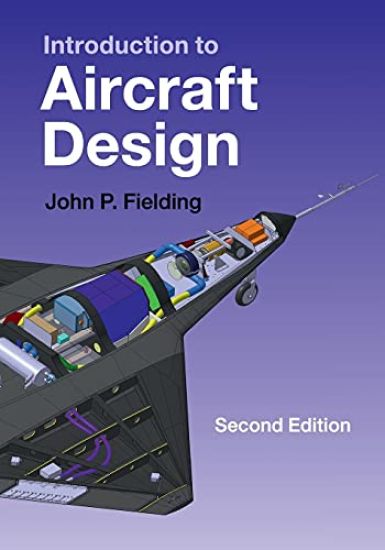
The new edition of this popular textbook provides a modern, accessible introduction to the whole process of aircraft design from requirements to conceptual design, manufacture and in-service issues. Highly illustrated descriptions of the full spectrum of aircraft types, their aerodynamics, structures and systems, allow students to appreciate good and poor design and understand how to improve their own designs. Cost data is considerably updated, many new images have been added and new sections are included on the emerging fields of Uninhabited Aerial Vehicles and environmentally-friendly airlines. Examples from real aircraft projects are presented throughout, demonstrating to students the applications of the theory. Three appendices and a bibliography provide a wealth of information, much not published elsewhere, including simple aerodynamic formulae, an introduction to airworthiness and environmental requirements, aircraft, engine and equipment data, and a case study of the conceptual design of a large airliner.
John P. Kotter (b. 1947), a leading authority on business leadership and change, is the subject of this new collection from Routledge’s acclaimed Critical Evaluations in Business and Management series. It brings together in two volumes the best critical evaluations of his work. The collection is supplemented with the editors’ expert introduction which places the gathered scholarship in its historical and intellectual context.