John P. Kotter (b. 1947), a leading authority on business leadership and change, is the subject of this new collection from Routledge’s acclaimed Critical Evaluations in Business and Management series. It brings together in two volumes the best critical evaluations of his work. The collection is supplemented with the editors’ expert introduction which places the gathered scholarship in its historical and intellectual context.
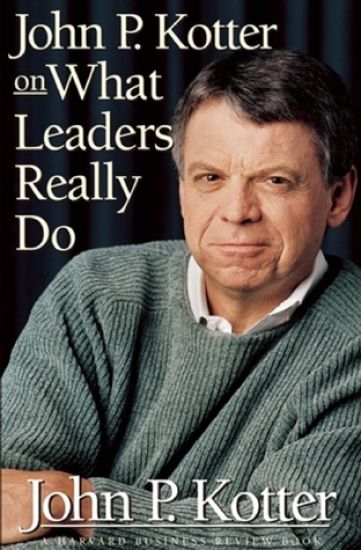
Widely acknowledged as the world's foremost authority on leadership, John Kotter has devoted his remarkable career to studying organizations and those who run them, and his bestselling books and essays have guided and inspired leaders at all levels. Here, in this collection of his acclaimed Harvard Business Review articles, is an astute assessment of the real work of leaders, as only John Kotter can offer. To complement the HBR articles, Kotter also contributes a new piece, a thoughtful reflection on the themes that have developed throughout his work. Convinced that most organizations today lack the leadership they need, Kotter's mission is to help us better understand what leaders--real leaders--do. True leadership, he reminds us, is an elusive quality, and too often we confuse management duties and personal style with leadership, or even mistake unworthy leaders for the real thing. Yet without leadership, organizations move too slowly, stagnate, and lose their way. With John Kotter on What Leaders Really Do, readers will learn how to become more effective leaders as they explore pressing issues such as power, influence, dependence, and strategies for change.
John P. Kotter’s Leading Change: Why Transformation Efforts Fail is a classic of business literature, and an example of high-level analysis and evaluation. In critical thinking, analysis is all about the sequence and features of arguments. When combined with evaluation of the strengths and weaknesses of an argument, it provides the perfect basis for understanding corporate strategies and direction. Kotter applied these skills to his own experiences of coaching large and small businesses through changes aimed at improving their performance.At its heart, Kotter’s conclusion was simple: unsuccessful transformations usually result from poor management decisions. His view was that it was not enough for executives to have management skills. Strong leadership is required, together with a clear process that can be used by all kinds of companies and organizations, no matter what sector they are operating in. Looking at his own successes and failures alike, Kotter used his analytical skills to understand the sequence and features of relevant arguments before evaluating their strengths and distilling them down to identify common mistakes managers make when they try to implement change. This practical application of two core critical thinking skills allowed him to develop an eight-stage model for successful organizational transformation – a model still widely used twenty years on.
John P. Kotter’s Leading Change: Why Transformation Efforts Fail is a classic of business literature, and an example of high-level analysis and evaluation. In critical thinking, analysis is all about the sequence and features of arguments. When combined with evaluation of the strengths and weaknesses of an argument, it provides the perfect basis for understanding corporate strategies and direction. Kotter applied these skills to his own experiences of coaching large and small businesses through changes aimed at improving their performance.At its heart, Kotter’s conclusion was simple: unsuccessful transformations usually result from poor management decisions. His view was that it was not enough for executives to have management skills. Strong leadership is required, together with a clear process that can be used by all kinds of companies and organizations, no matter what sector they are operating in. Looking at his own successes and failures alike, Kotter used his analytical skills to understand the sequence and features of relevant arguments before evaluating their strengths and distilling them down to identify common mistakes managers make when they try to implement change. This practical application of two core critical thinking skills allowed him to develop an eight-stage model for successful organizational transformation – a model still widely used twenty years on.
Most company's change initiatives fail. Yours don't have to. If you read nothing else on change management, read these 10 articles (featuring "Leading Change," by John P. Kotter). We've combed through hundreds of Harvard Business Review articles and selected the most important ones to help you spearhead change in your organization. HBR's 10 Must Reads on Change Management will inspire you to: - Lead change through eight critical stages - Establish a sense of urgency - Overcome addiction to the status quo - Mobilize commitment - Silence naysayers - Minimize the pain of change - Concentrate resources - Motivate change when business is good This collection of best-selling articles includes: featured article "Leading Change: Why Transformation Efforts Fail" by John P. Kotter, "Change Through Persuasion," "Leading Change When Business Is Good: An Interview with Samuel J. Palmisano," "Radical Change, the Quiet Way," "Tipping Point Leadership," "A Survival Guide for Leaders," "The Real Reason People Won't Change," "Cracking the Code of Change," "The Hard Side of Change Management," and "Why Change Programs Don't Produce Change."
Most company's change initiatives fail. Yours don't have to. If you read nothing else on change management, read these 10 articles (featuring “Leading Change,” by John P. Kotter). We've combed through hundreds of Harvard Business Review articles and selected the most important ones to help you spearhead change in your organization. HBR's 10 Must Reads on Change Management will inspire you to: Lead change through eight critical stagesEstablish a sense of urgencyOvercome addiction to the status quoMobilize commitmentSilence naysayersMinimize the pain of changeConcentrate resourcesMotivate change when business is good This collection of best-selling articles includes: featured article "Leading Change: Why Transformation Efforts Fail" by John P. Kotter, "Change Through Persuasion," "Leading Change When Business Is Good: An Interview with Samuel J. Palmisano," "Radical Change, the Quiet Way," "Tipping Point Leadership," "A Survival Guide for Leaders," "The Real Reason People Won't Change," "Cracking the Code of Change," "The Hard Side of Change Management," and "Why Change Programs Don't Produce Change."
Lead change amid constant turbulence and disruption.Get more of the ideas you want, from the authors you trust, with HBR's 10 Must Reads on Change Management (Vol. 2). We've combed through hundreds of Harvard Business Review articles and selected the most important ones to help you successfully transform your organization.With insights from leading experts including John Kotter, Tim Brown, and Roger Martin, this book will inspire you to:Master the eight accelerators of strategic changeTurn your culture into a catalyst for transformationUse your network ties to win over resistersApply design thinking to secure buy-in Scale agile practices across your organizationGet reorgs rightAvoid pursuing the wrong changesThis collection of articles includes "What Everyone Gets Wrong About Change Management," by N. Anand and Jean-Louis Barsoux; "Cultural Change That Sticks," by Jon R. Katzenbach, Ilona Ste?en, and Caroline Kronley; "Culture Is Not the Culprit," by Jay W. Lorsch and Emily McTague; "The Network Secrets of Great Change Agents," by Julie Battilana and Tiziana Casciaro; "Design for Action," by Tim Brown and Roger L. Martin; "Agile at Scale," by Darrell K. Rigby, Je? Sutherland, and Andy Noble; "The Merger Dividend," by Ron Ashkenas, Suzanne Francis, and Rick Heinick; "Getting Reorgs Right," by Stephen Heidari-Robinson and Suzanne Heywood; and "Your Workforce Is More Adaptable Than You Think," by Joseph B. Fuller, Judith K. Wallenstein, Manjari Raman, and Alice de Chalendar.HBR's 10 Must Reads paperback series is the definitive collection of books for new and experienced leaders alike. Leaders looking for the inspiration that big ideas provide, both to accelerate their own growth and that of their companies, should look no further. HBR's 10 Must Reads series focuses on the core topics that every ambitious manager needs to know: leadership, strategy, change, managing people, and managing yourself. Harvard Business Review has sorted through hundreds of articles and selected only the most essential reading on each topic. Each title includes timeless advice that will be relevant regardless of an ever-changing business environment.
Lead change amid constant turbulence and disruption.Get more of the ideas you want, from the authors you trust, with HBR's 10 Must Reads on Change Management (Vol. 2). We've combed through hundreds of Harvard Business Review articles and selected the most important ones to help you successfully transform your organization.With insights from leading experts including John Kotter, Tim Brown, and Roger Martin, this book will inspire you to:Master the eight accelerators of strategic changeTurn your culture into a catalyst for transformationUse your network ties to win over resistersApply design thinking to secure buy-in Scale agile practices across your organizationGet reorgs rightAvoid pursuing the wrong changesThis collection of articles includes "What Everyone Gets Wrong About Change Management," by N. Anand and Jean-Louis Barsoux; "Cultural Change That Sticks," by Jon R. Katzenbach, Ilona Ste?en, and Caroline Kronley; "Culture Is Not the Culprit," by Jay W. Lorsch and Emily McTague; "The Network Secrets of Great Change Agents," by Julie Battilana and Tiziana Casciaro; "Design for Action," by Tim Brown and Roger L. Martin; "Agile at Scale," by Darrell K. Rigby, Je? Sutherland, and Andy Noble; "The Merger Dividend," by Ron Ashkenas, Suzanne Francis, and Rick Heinick; "Getting Reorgs Right," by Stephen Heidari-Robinson and Suzanne Heywood; and "Your Workforce Is More Adaptable Than You Think," by Joseph B. Fuller, Judith K. Wallenstein, Manjari Raman, and Alice de Chalendar.HBR's 10 Must Reads paperback series is the definitive collection of books for new and experienced leaders alike. Leaders looking for the inspiration that big ideas provide, both to accelerate their own growth and that of their companies, should look no further. HBR's 10 Must Reads series focuses on the core topics that every ambitious manager needs to know: leadership, strategy, change, managing people, and managing yourself. Harvard Business Review has sorted through hundreds of articles and selected only the most essential reading on each topic. Each title includes timeless advice that will be relevant regardless of an ever-changing business environment.
In this unprecedented study of America's leading executives, John Kotter shatters the popular management notion of the effective "generalist" manager who can step into any business or division and run it. Based on his first-hand observations of fifteen top GMs from nine major companies, Kotter persuasively shows that the best manager is actually a specialist who has spent most of his or her career in one industry, learning its intricacies and establishing cooperative working relationships. Acquiring the painstaking knowledge and large, informal networks vital to being a successful manager takes years; outsiders, no matter how talented or well-trained seldom can do as well, this in-depth profile reveals. Much more than a fascinating collective portrait of the day-to-day activities of today's top executives, The General Managers provides stimulating new insights into the nature of modern management and the tactics of its most accomplished practitioners.
Strong managers produce predictability and order, but leaders create, communicate and implement visions of the future which enable companies to change themselves in a changing competitive marketplace. Building upon his landmark analysis of the job of the general manager and his influential work on leadership, power and influence, John Kotter now focuses on the human factors which bring change. Using case studies from 11 top corporations, Kotter unfolds the stories behind the great successes of leaders who propelled their companies beyond expectations. Through example after example, Kotter identifies the specific personal attributes of these leaders and illustrates the practices that create outstanding leadership.
This 20-year study of the 115 members of Harvard Business School's Class of '74 identifies the factors that influenced their career decisions and explores the breakthroughs that brought them wealth, satisfaction and security during a time of intense economic volatility.
Most organizational change initiatives fail spectacularly (at worst) or deliver lukewarm results (at best). In his international bestseller Leading Change, John Kotter revealed why change is so hard, and provided an actionable, eight-step process for implementing successful transformations. The book became the change bible for managers worldwide. Now, in A Sense of Urgency, Kotter shines the spotlight on the crucial first step in his framework: creating a sense of urgency by getting people to actually see and feel the need for change. Why focus on urgency? Without it, any change effort is doomed. Kotter reveals the insidious nature of complacency in all its forms and guises. In this exciting new book, Kotter explains: * How to go beyond "the business case" for change to overcome the fear and anger that can suppress urgency * Ways to ensure that your actions and behaviors -- not just your words -- communicate the need for change * How to keep fanning the flames of urgency even after your transformation effort has scored some early successes Written in Kotter's signature no-nonsense style, this concise and authoritative guide helps you set the stage for leading a successful transformation in your company.
The international bestseller--now with a new preface by author John Kotter. Millions worldwide have read and embraced John Kotter's ideas on change management and leadership. From the ill-fated dot-com bubble to unprecedented M&A activity to scandal, greed, and ultimately, recession--we've learned that widespread and difficult change is no longer the exception. It's the rule. Now with a new preface, this refreshed edition of the global bestseller Leading Change is more relevant than ever. John Kotter's now-legendary eight-step process for managing change with positive results has become the foundation for leaders and organizations across the globe. By outlining the process every organization must go through to achieve its goals, and by identifying where and how even top performers derail during the change process, Kotter provides a practical resource for leaders and managers charged with making change initiatives work. Leading Change is widely recognized as his seminal work and is an important precursor to his newer ideas on acceleration published in Harvard Business Review. Needed more today than at any time in the past, this bestselling business book serves as both visionary guide and practical toolkit on how to approach the difficult yet crucial work of leading change in any type of organization. Reading this highly personal book is like spending a day with the world's foremost expert on business leadership. You're sure to walk away inspired--and armed with the tools you need to inspire others. Published by Harvard Business Review Press.
In today's complex work world, things no longer get done simply because someone issues an order and someone else follows it.Most of us work in socially intricate organizations where we need the help not only of subordinates but of colleagues, superiors, and outsiders to accomplish our goals. This often leaves us in a "power gap" because we must depend on people over whom we have little or no explicit control.This is a book about how to bridge that gap: how to exercise the power and influence you need to get things done through others when your responsibilities exceed your formal authority.Full of original ideas and expert insights about how organizations?and the people in them?function, Power and Influence goes further, demonstrating that lower-level personnel also need strong leadership skills and interpersonal know-how to perform well.Kotter shows how you can develop sufficient resources of "unofficial" power and influence to achieve goals, steer clear of conflicts, foster creative team behavior, and gain the cooperation and support you need from subordinates, coworkers, superiors?even people outside your department or organization.He also shows how you can avoid the twin traps of naivete and cynicism when dealing with power relationships, and how to use your power without abusing it.Power and Influence is essential for top managers who need to overcome the infighting, foot-dragging, and politicking that can destroy both morale and profits; for middle managers who don't want their careers sidetracked by unproductive power struggles; for professionals hindered by bureaucratic obstacles and deadline delays; and for staff workers who have to "manage the boss."This is not a book for those who want to "grab" power for their own ends. But if you'd like to create smooth, responsive working relationships and increase your personal effectiveness on the job, Kotter can show you how?and make the dynamics of power work for you instead of against you.
Going far beyond previous empirical work, John Kotter and James Heskett provide the first comprehensive critical analysis of how the "culture" of a corporation powerfully influences its economic performance, for better or for worse. Through painstaking research at such firms as Hewlett-Packard, Xerox, ICI, Nissan, and First Chicago, as well as a quantitative study of the relationship between culture and performance in more than 200 companies, the authors describe how shared values and unwritten rules can profoundly enhance economic success or, conversely, lead to failure to adapt to changing markets and environments.With penetrating insight, Kotter and Heskett trace the roots of both healthy and unhealthy cultures, demonstrating how easily the latter emerge, especially in firms which have experienced much past success. Challenging the widely held belief that "strong" corporate cultures create excellent business performance, Kotter and Heskett show that while many shared values and institutionalized practices can promote good performances in some instances, those cultures can also be characterized by arrogance, inward focus, and bureaucracy -- features that undermine an organization's ability to adapt to change. They also show that even "contextually or strategically appropriate" cultures -- ones that fit a firm's strategy and business context -- will not promote excellent performance over long periods of time unless they facilitate the adoption of strategies and practices that continuously respond to changing markets and new competitive environments.Fundamental to the process of reversing unhealthy cultures and making them more adaptive, the authors assert, is effective leadership. At the heart of this groundbreaking book, Kotter and Heskett describe how executives in ten corporations established new visions, aligned and motivated their managers to provide leadership to serve their customers, employees, and stockholders, and thus created more externally focused and responsive cultures.
Based on the award-winning article in Harvard Business Review, from global leadership expert John Kotter. It's a familiar scene in organizations today: a new competitive threat or a big opportunity emerges. You quickly create a strategic initiative in response and appoint your best people to make change happen. And it does--but not fast enough. Or effectively enough. Real value gets lost and, ultimately, things drift back to the default status. Why is this scenario so frequently repeated in industries and organizations across the world? In the groundbreaking new book Accelerate (XLR8), leadership and change management expert, and best-selling author, John Kotter provides a fascinating answer--and a powerful new framework for competing and winning in a world of constant turbulence and disruption. Kotter explains how traditional organizational hierarchies evolved to meet the daily demands of running an enterprise. For most companies, the hierarchy is the singular operating system at the heart of the firm. But the reality is, this system simply is not built for an environment where change has become the norm. Kotter advocates a new system--a second, more agile, network-like structure that operates in concert with the hierarchy to create what he calls a "dual operating system"--one that allows companies to capitalize on rapid-fire strategic challenges and still make their numbers. Accelerate (XLR8) vividly illustrates the five core principles underlying the new network system, the eight Accelerators that drive it, and how leaders must create urgency in others through role modeling. And perhaps most crucial, the book reveals how the best companies focus and align their people's energy and urgency around what Kotter calls the big opportunity. If you're a pioneer, a leader who knows that bold change is necessary to survive and thrive in an ever-changing world, this book will help you accelerate into a better, more profitable future.
Markeder opstår og forandrer sig hurtigere end nogensinde. Og mens traditionelle organisationer forsøger at tilpasse sig de nye vilkår, indhenter hurtigere opkomlinge deres forspring og snupper kunderne. Baseret på sin prisvindende artikel i Harvard Business Review viser John P. Kotter, hvordan virksomheder skifter silotænkning ud med strategisk smidighed. Løsningen er et dobbelt styresystem, hvor et klassisk hierarki sørger for stabilitet og drift, mens et tværgående agilt netværk står for at udvikle fremdrift. Kombinationen giver en dynamisk organisation, der løser sine opgaver effektivt, men også kan skifte gear, når kravene ændrer sig. Acceleration giver brændstof til enhver, der vil tune sin virksomhed og forblive i front.