The 18th century was a wealth of knowledge, exploration and rapidly growing technology and expanding record-keeping made possible by advances in the printing press. In its determination to preserve the century of revolution, Gale initiated a revolution of its own: digitization of epic proportions to preserve these invaluable works in the largest archive of its kind. Now for the first time these high-quality digital copies of original 18th century manuscripts are available in print, making them highly accessible to libraries, undergraduate students, and independent scholars.Western literary study flows out of eighteenth-century works by Alexander Pope, Daniel Defoe, Henry Fielding, Frances Burney, Denis Diderot, Johann Gottfried Herder, Johann Wolfgang von Goethe, and others. Experience the birth of the modern novel, or compare the development of language using dictionaries and grammar discourses. ++++The below data was compiled from various identification fields in the bibliographic record of this title. This data is provided as an additional tool in helping to insure edition identification: ++++British LibraryT018641Text and register continuous despite pagination.Leeds: printed by Thomas Wright; and sold by Mr. Wills; Mr. Johnson; Mr. Button, London; and Mr. Thomson, Manchester; Mr. Smith, Sheffield; Messrs. Wilson and Co. York; Mr. Binns, Leeds; and the booksellers in Halifax, Bradford, Huddersfield, &c. &c., 17 120,123-182,179-214p.; 12
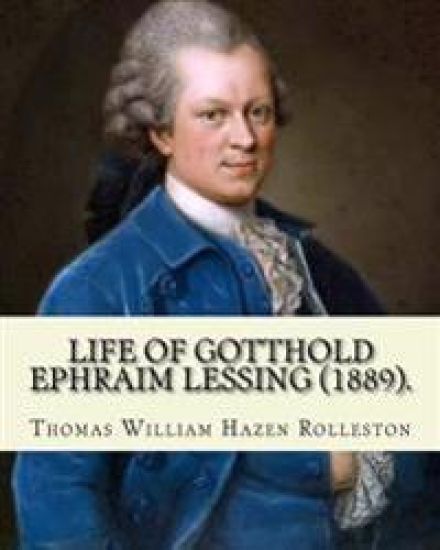
Gotthold Ephraim Lessing (22 January 1729 - 15 February 1781) was a German writer, philosopher, dramatist, publicist and art critic, and one of the most outstanding representatives of the Enlightenment era. His plays and theoretical writings substantially influenced the development of German literature. He is widely considered by theatre historians to be the first dramaturg in his role at Abel Seyler's Hamburg National Theatre. LIFE: Lessing was born in Kamenz, a small town in Saxony, to Johann Gottfried Lessing and Justine Salome Feller. His father was a Lutheran minister and wrote on theology. Young Lessing studied at the Latin School in Kamenz from 1737 to 1741. With a father who wanted his son to follow in his footsteps, Lessing next attended the F rstenschule St. Afra in Meissen. After completing his education at St. Afra's, he enrolled at the University of Leipzig where he pursued a degree in theology, medicine, philosophy, and philology (1746-1748)...... John Parker Anderson (1841-1925)... Thomas William Hazen Rolleston (1857-1920) was an Irish writer, literary figure and translator, known as a poet but publishing over a wide range of literary and political topics. He lived at various times in Killiney in South Dublin, Germany, London and County Wicklow; settling finally in 1908 in Hampstead, London, where he died. His Killiney home, called Secrora, subsequently became the home of tennis player Joshua Pim. He was born in Glasshouse, Shinrone, County Offaly, the son of a judge. He was educated at St Columba's College, Dublin and Trinity College, Dublin. After a time in Germany he founded the Dublin University Review in 1885; he published Poems and Ballads of Young Ireland (1888), and a Life of Lessing (1889). As the first managing director of the Irish Industries' Society, he helped preserve from extinction many Irish handicrafts, such as lace-making, handmade tweeds and glass-making. In London in the 1890s he was one of the Rhymers' Club and a founder-member of the Irish Literary Society. He was to cross paths several times, and sometimes to clash, with W. B. Yeats, who described Rolleston in his memoirs as an "intimate enemy".He was also involved in Douglas Hyde's Gaelic League. He also spent time as a journalist, and as a civil servant involved with agriculture. He had eight children, from two marriages. Works: Approximately 168 books are associated with Rolleston, some as writer or editor. These are the more prominent works; publication dates listed if known. The Teaching of Epictetus (1888) Life of Gotthold Ephraim Lessing (1889) Tannhauser: a dramatic poem by Richard Wagner; translated by T. W. Rolleston; illustrated by Willy Pogany. (1900) A Treasury of Irish Poetry in the English Tongue by Stopford A. Brooke & T. W. Rolleston (1900) Parallel Paths: a study in biology, ethics, and art (1908) The High Deeds of Finn Mac Cumhail (1910) Celtic Myths and Legends also entitled Myths & Legends of the Celtic Race (1911, reprinted 1917, 1990) The Illustrated Guide to Celtic Mythology. London: Studio Editions, 1993 (Based on Myths & Legends of the Celtic Race) Parsifal or, The Legend of the Holy Grail, retold from ancient sources with acknowledgement to the "Parsifal" of Richard Wagner (1912) The tale of Lohengrin, knight of the swan by Richard Wagner and T. W. Rolleston; illustrated by Willy Pogany (1913)........
In 1791, Mary Ann Parker accompanied her husband, Captain John Parker, on a voyage to deliver supplies to New South Wales. A Voyage Round the World, in the Gorgon Man of War (1795) records their travels past the Cape of Good Hope to New South Wales and back, offering valuable insights into late eighteenth-century colonialism, trade, and slavery, as well as the social worlds of Europeans who made careers in the business of empire. Written on subscription following the death of her husband, Parker's travelogue also offers poignant witness to the conditions for women's authorship at the close of the eighteenth century. As she assures her readers, 'nothing but the greatest distress could ever have induced her to solicit beneficence in the manner she has done, for the advantage of her family'. Engaging and observant, Parker's book is an important addition to the canon of early women's travel writing.
Life of John Keats is an unchanged, high-quality reprint of the original edition of 1887. Hansebooks is editor of the literature on different topic areas such as research and science, travel and expeditions, cooking and nutrition, medicine, and other genres. As a publisher we focus on the preservation of historical literature. Many works of historical writers and scientists are available today as antiques only. Hansebooks newly publishes these books and contributes to the preservation of literature which has become rare and historical knowledge for the future.
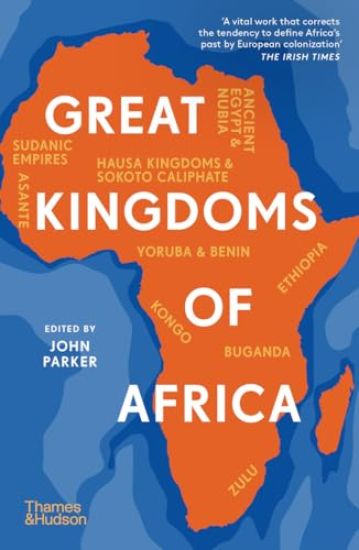
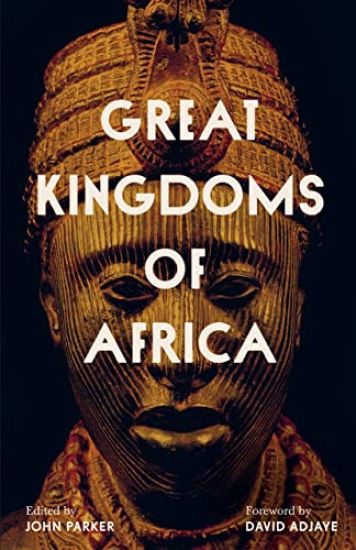
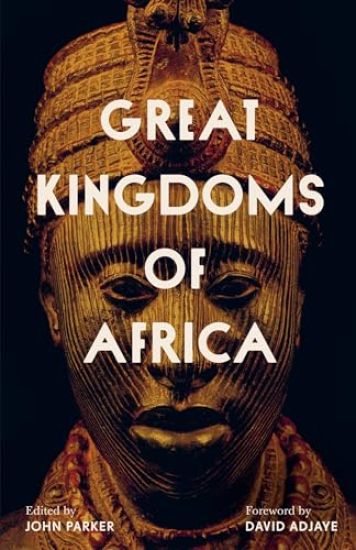
An essential overview of great kingdoms in African history and their legacies, written by world-leading experts. From the ancient Nile Valley to the savannas of medieval West Africa, the highlands of Ethiopia and on to the forests, lakes and grasslands to the south, African civilizations have given rise to some of the world’s most impressive kingdoms. Yet Africa’s history is often little known beyond the devastation wrought by the slave trade and European colonial rule. In this groundbreaking book, nine leading historians of Africa take a fresh look at these great kingdoms and empires over five thousand years of recorded history. How was kingship forged in Africa and how did it operate? Was dynastic power maintained by consent or by coercion? Did kings – and queens – display and project that power for all to see, or did they hide it away, as beneath the fringed crowns that concealed the faces of sacred Yoruba rulers? In what ways have African peoples themselves recorded, celebrated and critiqued the deeds of their kings? Great Kingdoms of Africa explores some of the most important questions in the continent’s deep past.
A groundbreaking, sweeping overview of the great kingdoms in African history and their legacies, written by world-leading experts. This is the first book for nonspecialists to explore the great precolonial kingdoms of Africa that have been marginalized throughout history. Great Kingdoms of Africa aims to decenter European colonialism and slavery as the major themes of African history and instead explore the kingdoms, dynasties, and city-states that have shaped cultures across the African continent. This groundbreaking book offers an innovative and thought-provoking overview that takes us from ancient Egypt and Nubia to the Zulu Kingdom almost two thousand years later. Each chapter is written by a leading historian, interweaving political and social history and drawing on a rich array of sources, including oral histories and recent archaeological findings. Great Kingdoms of Africa is a timely and vital book for anyone who wants to expand their knowledge of Africa's rich history.
An in-depth look at how mortuary cultures and issues of death and the dead in Africa have developed over four centuriesIn My Time of Dying is the first detailed history of death and the dead in Africa south of the Sahara. Focusing on a region that is now present-day Ghana, John Parker explores mortuary cultures and the relationship between the living and the dead over a four-hundred-year period spanning the seventeenth to twentieth centuries. Parker considers many questions from the African historical perspective, including why people die and where they go after death, how the dead are buried and mourned to ensure they continue to work for the benefit of the living, and how perceptions and experiences of death and the ends of life have changed over time.From exuberant funeral celebrations encountered by seventeenth-century observers to the brilliantly conceived designer coffins of the late twentieth century, Parker shows that the peoples of Ghana have developed one of the world’s most vibrant cultures of death. He explores the unfolding background of that culture through a diverse range of issues, such as the symbolic power of mortal remains and the dominion of hallowed ancestors, as well as the problem of bad deaths, vile bodies, and vengeful ghosts. Parker reconstructs a vast timeline of death and the dead, from the era of the slave trade to the coming of Christianity and colonial rule to the rise of the modern postcolonial nation.With an array of written and oral sources, In My Time of Dying richly adds to an understanding of how the dead continue to weigh on the shoulders of the living.
An in-depth look at how mortuary cultures and issues of death and the dead in Africa have developed over four centuriesIn My Time of Dying is the first detailed history of death and the dead in Africa south of the Sahara. Focusing on a region that is now present-day Ghana, John Parker explores mortuary cultures and the relationship between the living and the dead over a four-hundred-year period spanning the seventeenth to twentieth centuries. Parker considers many questions from the African historical perspective, including why people die and where they go after death, how the dead are buried and mourned to ensure they continue to work for the benefit of the living, and how perceptions and experiences of death and the ends of life have changed over time.From exuberant funeral celebrations encountered by seventeenth-century observers to the brilliantly conceived designer coffins of the late twentieth century, Parker shows that the peoples of Ghana have developed one of the world’s most vibrant cultures of death. He explores the unfolding background of that culture through a diverse range of issues, such as the symbolic power of mortal remains and the dominion of hallowed ancestors, as well as the problem of bad deaths, vile bodies, and vengeful ghosts. Parker reconstructs a vast timeline of death and the dead, from the era of the slave trade to the coming of Christianity and colonial rule to the rise of the modern postcolonial nation.With an array of written and oral sources, In My Time of Dying richly adds to an understanding of how the dead continue to weigh on the shoulders of the living.
Through World War II, the Falklands conflict and the sinking of Belgrano, to present-day machines, the Royal Navy Submarine Service has played a large part in British defence. This personality-led investigation includes diaries from the early 20th century and first-person testemonies.
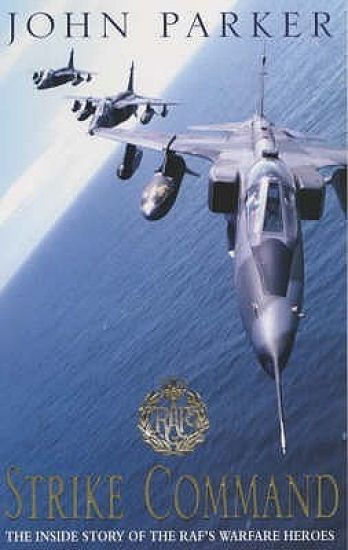
The two key components of air warfare conducted by the Royal Air Force virtually for the whole of the last century were the fighters and the bombers. By the 1960s these two roles had evolved into a single force known in the RAF by its current title, Strike Command. Colloquially, their pilots were known as Top Guns. Full of personal tales of airborne derring-do in just about every conflict in which Britain has been engaged, this is the latest in John Parker's excellent series of elite fighting units.