Kirjojen hintavertailu. Mukana 11 244 527 kirjaa ja 12 kauppaa.

Kirjahaku

Etsi kirjoja tekijän nimen, kirjan nimen tai ISBN:n perusteella.

1000 tulosta hakusanalla John Philip Jones

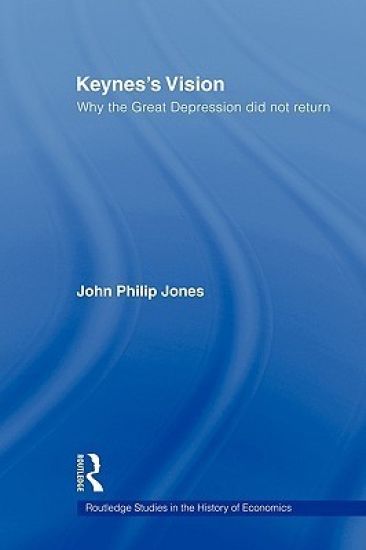
Keynes's Vision

Keynes's Vision

John Philip Jones

Routledge
2007
sidottu
John Maynard Keynes was the most influential economist of the 20th Century, whose doctrines had a huge impact on American prosperity in the years following the Second World War. This new book by John Philip Jones describes the main features of Keynes's work, including the fiscal and monetary policies he recommended, together with a detailed tracking of how his theories played out in the American economy.The book focuses on each individual aspect of Keynes's doctrines: his revolutionary emphasis on the economy as a whole (the study that would later become known as macroeconomics); consumer demand and where it leads; investment demand and where it leads; the rate of interest and the influence of monetary policy; the role of government in controlling fiscal policy; and the overarching importance of expectations, optimism and pessimism. The book concludes with the seven major lessons drawn from the American economy in the latter half of the 20th Century and how these lessons were forecast by Keynes.An excellent introduction to Keynes and his legacy for students and non-specialist members of the public who want to know more about how the economy is controlled and stimulated, it is also of considerable interest to students of modern economic history.
Keynes's Vision

Keynes's Vision

John Philip Jones

Routledge
2009
nidottu
John Maynard Keynes was the most influential economist of the 20th Century, whose doctrines had a huge impact on American prosperity in the years following the Second World War. This new book by John Philip Jones describes the main features of Keynes's work, including the fiscal and monetary policies he recommended, together with a detailed tracking of how his theories played out in the American economy.The book focuses on each individual aspect of Keynes's doctrines: his revolutionary emphasis on the economy as a whole (the study that would later become known as macroeconomics); consumer demand and where it leads; investment demand and where it leads; the rate of interest and the influence of monetary policy; the role of government in controlling fiscal policy; and the overarching importance of expectations, optimism and pessimism. The book concludes with the seven major lessons drawn from the American economy in the latter half of the 20th Century and how these lessons were forecast by Keynes.An excellent introduction to Keynes and his legacy for students and non-specialist members of the public who want to know more about how the economy is controlled and stimulated, it is also of considerable interest to students of modern economic history.
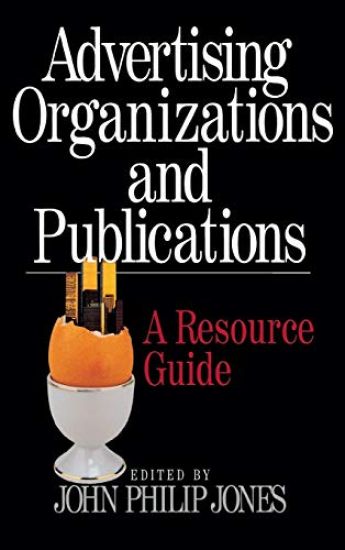
Advertising Organizations and Publications

Advertising Organizations and Publications

John Philip Jones

SAGE Publications Inc
2000
sidottu
"John Philip Jones belongs to an elite group of intellectual adventurers searching for true meaning in an increasingly complex communication industry. Anyone involved in understanding how brands are born and nurtured should follow his work with keen interest." —Andy Fenning, Executive Vice President, Director of Strategic Development, J. Walter Thompson, New York "John Philip Jones is a name you know . . . . with opinions you value . . . . and updated and current information. Here is everything you need to know about advertising." —Don E. Schultz, President, Agora, Inc, Northwestern University John Philip Jones, best-selling author of What's In a Name? Advertising and the Concept of Brands and When Ads Work: New Proof that Advertising Triggers Sales, has compiled a comprehensive guide to the 77 key organizations and publications in the field of advertising and marketing communications. Entries are arranged alphabetically for easy access and include a thorough description of each organization's purpose, activity, and contact information. The collection is balanced among industry trade organizations (American Association of Advertising Agencies), research organizations (Marketing Science Institute), academic organizations (American Academy of Advertising), and pro-social organizations (Partnership for a Drug-Free America)., With 27 entries from outside of the United States, the collection is global in scope. Key publications such as AdWeek, Advertising Age, and AdMap are also included. This resource guide is the fifth and final volume of a series edited by John Philip Jones that comprises an essential advertising library. How Advertising Works: The Role of Research The Advertising Business How to Use Advertising to Build Strong Brands International Advertising: Realities and Myths Advertising Organizations and Publications
Advertising Organizations and Publications

Advertising Organizations and Publications

John Philip Jones

SAGE Publications Inc
2000
nidottu
"John Philip Jones belongs to an elite group of intellectual adventurers searching for true meaning in an increasingly complex communication industry. Anyone involved in understanding how brands are born and nurtured should follow his work with keen interest." —Andy Fenning, Executive Vice President, Director of Strategic Development, J. Walter Thompson, New York "John Philip Jones is a name you know . . . . with opinions you value . . . . and updated and current information. Here is everything you need to know about advertising." —Don E. Schultz, President, Agora, Inc, Northwestern University John Philip Jones, best-selling author of What's In a Name? Advertising and the Concept of Brands and When Ads Work: New Proof that Advertising Triggers Sales, has compiled a comprehensive guide to the 77 key organizations and publications in the field of advertising and marketing communications. Entries are arranged alphabetically for easy access and include a thorough description of each organization's purpose, activity, and contact information. The collection is balanced among industry trade organizations (American Association of Advertising Agencies), research organizations (Marketing Science Institute), academic organizations (American Academy of Advertising), and pro-social organizations (Partnership for a Drug-Free America)., With 27 entries from outside of the United States, the collection is global in scope. Key publications such as AdWeek, Advertising Age, and AdMap are also included. This resource guide is the fifth and final volume of a series edited by John Philip Jones that comprises an essential advertising library. How Advertising Works: The Role of Research The Advertising Business How to Use Advertising to Build Strong Brands International Advertising: Realities and Myths Advertising Organizations and Publications
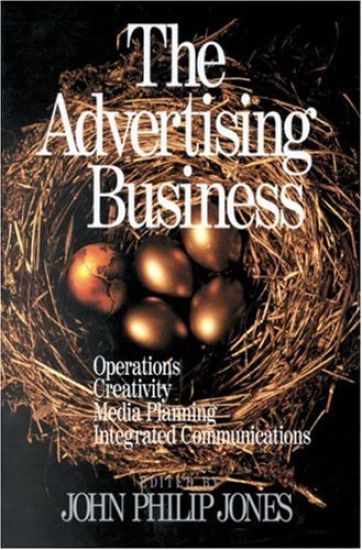
The Advertising Business

The Advertising Business

John Philip Jones

SAGE Publications Inc
1999
nidottu
"A significant one-volume reference on the business of advertising, this work is recommended for undergraduate through professional collections." —R.R. Attison, CUNY College of Staten Island "John Philip Jones belongs to an elite group of intellectual adventurers searching for true meaning in an increasingly complex communication industry. Anyone involved in understanding how brands are born and nurtured should follow his work with keen interest." --Andy Fenning, J. Walter Thompson, New York John Philip Jones, best-selling author of What's in a Name? Advertising and the Concept of Brands and When Ads Work: New Proof That Advertising Triggers Sales, has edited an authoritative handbook of successful advertising procedures. All aspects of the business—creativity, media planning, operations, and specialty advertising—are fully represented in this comprehensive volume. Chapter authors reflect on a global mix of academic and professional backgrounds, and include David Ogilvy, Don E. Schultz, John Deighton Randall Rothnberg, Herbert Krugman, and John Philip Jones himself. Most chapters have been specifically written for this volume, and are complemented by a few adaptations of classic articles. The result is a single knowledge bank of theory and practice for advertising students and professionals. This handbook is part of a series of edited by John Philip Jones, when complete, will comprise a complete library of essential advertising theory and practice. How Advertising Works has already been published; future volumes will address the key topics of brand building and multinational advertising.
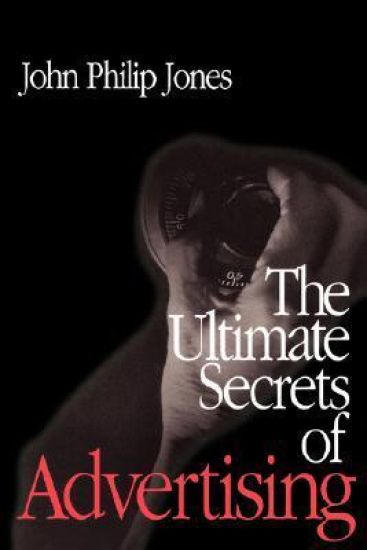
The Ultimate Secrets of Advertising

The Ultimate Secrets of Advertising

John Philip Jones

SAGE Publications Inc
2001
nidottu
"John Philip Jones's new book is a provocative and lively challenge to much conventional advertising practice." —PAUL FELDWICK, Southcot House, Executive Planning Director, BMP,DDB, U. K. "Professor John Philip Jones is more than a fine teacher, he is an exceptional thinker. John at last brings structure, clarity, and understanding to the murky business of how advertising contributes to brand profits. Reading his new book I found myself nodding 'yes, yes, yes' to things I had never read before." —ERWIN EPHRON, President, Ephron, Papazian & Ephron, Inc. "John Phillip Jones has set himself the highest hurdle there is—how to make advertising accountable. His argument is precise, and his language entertaining and intelligent, making this quest an essential, provocative and delightfully enjoyable voyage for professionals and students alike. Read it." —ANDREW FENNING, Executive Vice President of J. Walter Thompson "Building on his original single-source data analysis, Jones demonstrates in depth the potential power of advertising ideas. His new Gatekeeper model gives his thesis some real teeth and provides marketers and agencies with an invaluable tool to harness creativity profitably on behalf of brands." —HAMISH PRINGLE, Director General of the IPA and co-author of 'Brand Spirit' and 'Brand Manners' John Philip Jones gives you his methods and shares details of how advertising can be effectively measured and made accountable. The Ultimate Secrets of Advertising is based on a large study of real brand advertising conducted by Media Marketing Assessment (MMA). Jones provides "inside" information and new information never published before on how advertising works, if it works, how much it works, and how to explain, present, determine, measure, and analyze the medium- and long-term effects of advertising.
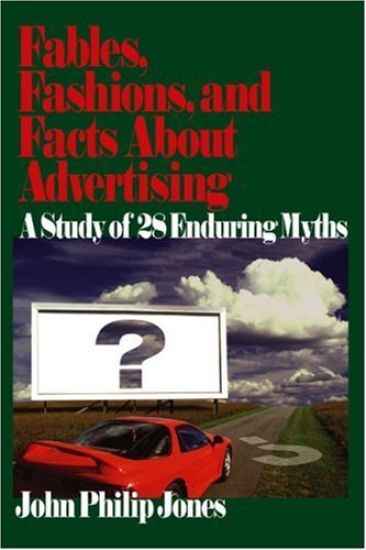
Fables, Fashions, and Facts About Advertising

Fables, Fashions, and Facts About Advertising

John Philip Jones

SAGE Publications Inc
2004
nidottu
"The book makes an interesting and substantive contribution to the field of advertising directly, and also to the entire field of marketing communications or promotion. John Philip Jones presents a new and informed perspective that supports and underpins the need for advertising that works rather than emotive rhetoric that obscures its purpose and function." --Philip J. Kitchen, University of Hull, U.K. "This is a much needed text that puts misinformation to rest with strong evidence to disprove it. Most texts simply show how ads are developed, media plans are implemented, and lots of beautiful advertisements. This book shows how advertising can be and should be effective." --Jan S. Slater, Ph.D., Ohio University The workings of advertising have always remained a bit of a mystery; until about 1960 virtually nothing of the effectiveness of advertising was known. There was even some doubt about whether advertising worked at all. In the absence of facts, theories were developed up to fill the vacuum. These were soon developed into doctrines, which became widely followed—fables that became fashions. Not many of these theories were ever subjected to harsh scrutiny based on factual knowledge, mainly because there was not much factual knowledge available until recently. John Philip Jones, bestselling author and internationally known advertising scholar, has written a textbook to help evaluate these advertising "fables" and "fashions," and also to study the facts. He uses the patterns and trends revealed by the accumulations of data from cutting-edge research to illustrate the occasional incompleteness, inadequacy, and in some cases total wrongheadedness of these fables and fashions. Each chapter then attempts to describe one aspect of how advertising really works. Unlike most other advertising textbooks, Fables, Fashions, and Facts About Advertising is not written as a "how to" text, or as a vehicle for war stories, or as a sales pitch. Instead, it is a book that concentrates solely on describing how advertising works. Written to be accessible to the general public with little or no experience studying advertising, it makes the scholarship of an internationally renowned figure accessible to students taking beginning advertising courses. Fables, Fashions, and Facts About Advertising is ideal as a core or supplemental text for courses in marketing, communication, journalism, and related disciplines. This volume should also be useful to the tens-of-thousands of business people whose careers are directly or indirectly concerned with advertising.
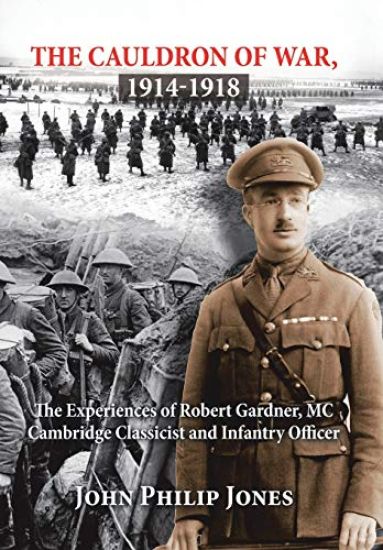
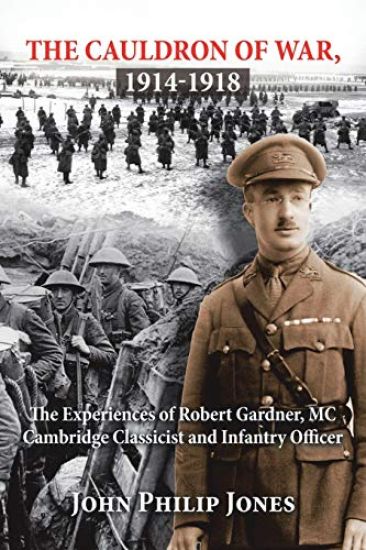
The Cauldron of War, 1914-1918

The Cauldron of War, 1914-1918

John Philip Jones

Xlibris Us
2019
sidottu
THE CAULDRON OF WAR, 1914-1918 Robert Gardner (1899-1972) was a member of a generation of highly-educated Englishmen who went to war in 1914: a war in which they suffered a horrifying loss of life. Robert Gardner was one of the survivors. Before the war, after taking First-Class Honours in both parts of the Classics Tripos at Emmanuel College, Cambridge, he was awarded the much prized Craven Studentship that took him to Italy for two years to carry out research into aspects of Roman military history. Towards the end of his time in Italy, the outbreak of the First World War brought him immediately back to England. He was a Lancashire man and he was commissioned in the senior infantry regiment from that county, the King's Own (Royal Lancashire Regiment). His battalion spent the winter of 1914-1915 training for war. Robert Gardner went with his battalion to France in May 1915, and was with them when they fought in four major battles in which they suffered heavy casualties. His service was interrupted by a serious injury from an accident with a firearm, and although he was away from his battalion for fourteen months, he served for more than two years in the trenches. He was awarded the Military Cross, and was steadily promoted until, at the end of the war he commanded his battalion as a lieutenant colonel. He took his battalion back to England in 1919, and with the rest of his men he was demobilized. Emmanuel College lost no time in electing him to a fellowship, He spent a long and productive career delivering university lectures and supervising students, and he also became Bursar of the College, with the responsibility for finances, investments and all business affairs. His life revolved around the College. He was a very popular figure, and one of the more distinguished public rooms in the College was named after him. He had a happy family life; he was devout, and remarkably abstemious. During all the years after the First World War he maintained regular contact with the King's Own, and although he lived in Cambridge he regularly attended regimental reunions in Lancashire. He retired in 1960, but this did not stop him from his regular association with the fellows and undergraduates of Emmanuel. In the words of the Master of the College: 'He was an Emmanuel institution, who for more than half a century represented a vital link with the past.'
The Cauldron of War, 1914-1918

The Cauldron of War, 1914-1918

John Philip Jones

Xlibris Us
2019
pokkari
THE CAULDRON OF WAR, 1914-1918 Robert Gardner (1899-1972) was a member of a generation of highly-educated Englishmen who went to war in 1914: a war in which they suffered a horrifying loss of life. Robert Gardner was one of the survivors. Before the war, after taking First-Class Honours in both parts of the Classics Tripos at Emmanuel College, Cambridge, he was awarded the much prized Craven Studentship that took him to Italy for two years to carry out research into aspects of Roman military history. Towards the end of his time in Italy, the outbreak of the First World War brought him immediately back to England. He was a Lancashire man and he was commissioned in the senior infantry regiment from that county, the King's Own (Royal Lancashire Regiment). His battalion spent the winter of 1914-1915 training for war. Robert Gardner went with his battalion to France in May 1915, and was with them when they fought in four major battles in which they suffered heavy casualties. His service was interrupted by a serious injury from an accident with a firearm, and although he was away from his battalion for fourteen months, he served for more than two years in the trenches. He was awarded the Military Cross, and was steadily promoted until, at the end of the war he commanded his battalion as a lieutenant colonel. He took his battalion back to England in 1919, and with the rest of his men he was demobilized. Emmanuel College lost no time in electing him to a fellowship, He spent a long and productive career delivering university lectures and supervising students, and he also became Bursar of the College, with the responsibility for finances, investments and all business affairs. His life revolved around the College. He was a very popular figure, and one of the more distinguished public rooms in the College was named after him. He had a happy family life; he was devout, and remarkably abstemious. During all the years after the First World War he maintained regular contact with the King's Own, and although he lived in Cambridge he regularly attended regimental reunions in Lancashire. He retired in 1960, but this did not stop him from his regular association with the fellows and undergraduates of Emmanuel. In the words of the Master of the College: 'He was an Emmanuel institution, who for more than half a century represented a vital link with the past.'
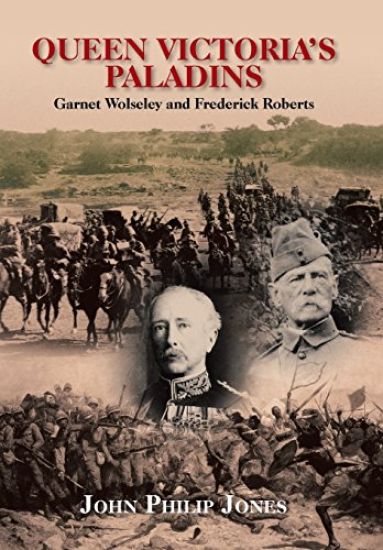
Queen Victoria'S Paladins

Queen Victoria'S Paladins

John Philip Jones

Xlibris Us
2018
sidottu
QUEEN VICTORIAS PALADINS The unique feature of this book is that it is a dual biography. Garnet Wolseley (18331913) and Frederick Roberts (18321914) were the most important British soldiers during the last quarter of the nineteenth century. They both became field marshals and were both raised to the peerage and entered the House of Lords. Wolseley and Roberts were Queen Victorias paladins. Their reputations were built on the expeditions they led. Wolseley commanded forces in North America and Africa; Roberts commanded in Afghanistan and, at the end of his career, in South Africa. Both men were army reformers, and Roberts dedicated his retirement to a campaign to introduce a brief period of compulsory army service for all physically fit young men, with the objective of building a large reserve of partially trained soldiers. However, this proposal was not acceptable to any British government. Both Wolseley and Roberts left extensive well-written personal memoirs, and their campaigns also generated a substantial literature. They both attracted followers. The officers who surrounded themsome of them highly talentedbecame known as the Wolseley Ring and the Roberts Ring. Queen Victorias paladins devoted their lives to the British Empire. They demonstrated formidable strategic and tactical skills and won a succession of wars against brave but militarily backward opponents. This book compares Wolseley and Roberts as commanders. It also touches on whether Wolseley and Roberts can be compared with generals like Wellington and Montgomery, who won their battles against large, well-organized, and well-armed enemy armies. It is by no means certain that Wolseley and Roberts would have done well in such different circumstances.
Queen Victoria'S Paladins

Queen Victoria'S Paladins

John Philip Jones

Xlibris Us
2018
pokkari
QUEEN VICTORIAS PALADINS The unique feature of this book is that it is a dual biography. Garnet Wolseley (18331913) and Frederick Roberts (18321914) were the most important British soldiers during the last quarter of the nineteenth century. They both became field marshals and were both raised to the peerage and entered the House of Lords. Wolseley and Roberts were Queen Victorias paladins. Their reputations were built on the expeditions they led. Wolseley commanded forces in North America and Africa; Roberts commanded in Afghanistan and, at the end of his career, in South Africa. Both men were army reformers, and Roberts dedicated his retirement to a campaign to introduce a brief period of compulsory army service for all physically fit young men, with the objective of building a large reserve of partially trained soldiers. However, this proposal was not acceptable to any British government. Both Wolseley and Roberts left extensive well-written personal memoirs, and their campaigns also generated a substantial literature. They both attracted followers. The officers who surrounded themsome of them highly talentedbecame known as the Wolseley Ring and the Roberts Ring. Queen Victorias paladins devoted their lives to the British Empire. They demonstrated formidable strategic and tactical skills and won a succession of wars against brave but militarily backward opponents. This book compares Wolseley and Roberts as commanders. It also touches on whether Wolseley and Roberts can be compared with generals like Wellington and Montgomery, who won their battles against large, well-organized, and well-armed enemy armies. It is by no means certain that Wolseley and Roberts would have done well in such different circumstances.
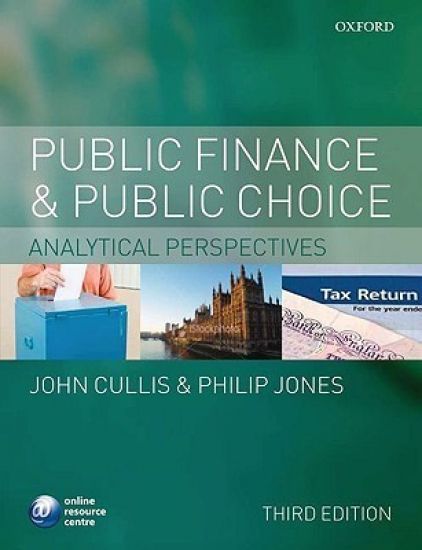
Public Finance and Public Choice

Public Finance and Public Choice

John G. Cullis; Philip Jones

Oxford University Press
2009
nidottu
Public Finance and Public Choice provides a solid foundation in contemporary public economics, analysing different theoretical approaches and contextualising the theory with relevant and up-to-date examples. The authors have retained the focus on the public choice school of thought in this new edition and have also added an emphasis on behavioural public finance. The comprehensive nature of the analysis, coupled with the intuitive diagrammatic approach, ensures that students using this book gain a thorough understanding of the subject. Online Resource Centre The text will be accompanied by an Online Resource Centre which comprises For lecturers: Artwork from the book For students: Self-test questions (5 per chapter) Web links
Psychology in Social Context

Psychology in Social Context

Philip John Tyson; Dai Jones; Jonathan Elcock

Wiley-Blackwell (an imprint of John Wiley Sons Ltd)
2011
nidottu
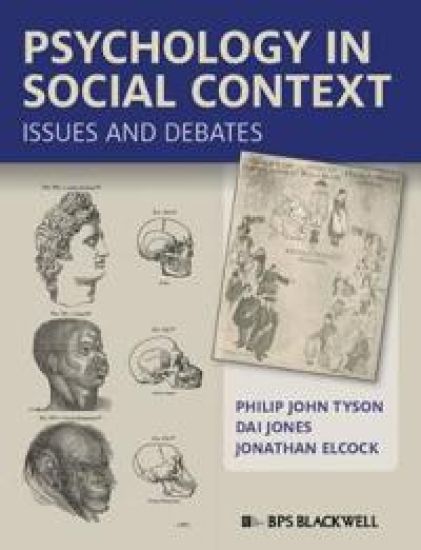
Psychology in Social Context: Issues and Debates provides a critical perspective on debates and controversies that have divided opinion within psychology both past and present. Explores the history of psychology through examples of classic and contemporary debates that have split the discipline and sparked change, including race and IQ, psychology and gender, ethical issues in psychology, parapsychology and the nature-nurture debateRepresents a unique approach to studying the nature of psychology by combining historical controversies with contemporary debates within the disciplineSets out a clear view of psychology as a reflexive human science, embedded in and shaped by particular socio-historical contextsWritten in an accessible style using a range of pedagogical features - such as set learning outcomes, self-test questions, and further reading suggestions at the end of each chapter
Psychology in Social Context

Psychology in Social Context

Philip John Tyson; Dai Jones; Jonathan Elcock

Wiley-Blackwell (an imprint of John Wiley Sons Ltd)
2011
sidottu
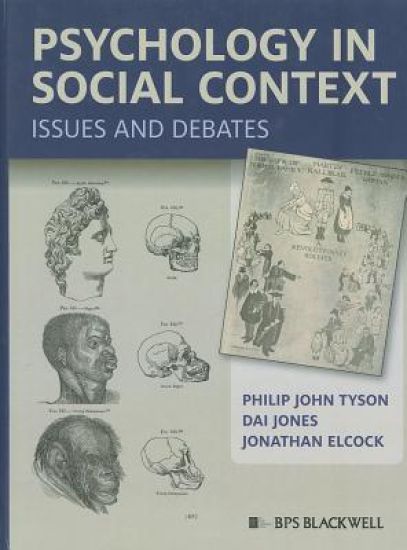
Psychology in Social Context: Issues and Debates provides a critical perspective on debates and controversies that have divided opinion within psychology both past and present. Explores the history of psychology through examples of classic and contemporary debates that have split the discipline and sparked change, including race and IQ, psychology and gender, ethical issues in psychology, parapsychology and the nature-nurture debateRepresents a unique approach to studying the nature of psychology by combining historical controversies with contemporary debates within the disciplineSets out a clear view of psychology as a reflexive human science, embedded in and shaped by particular socio-historical contextsWritten in an accessible style using a range of pedagogical features - such as set learning outcomes, self-test questions, and further reading suggestions at the end of each chapter
Central and Flexible Staging: A New Theater in the Making

Central and Flexible Staging: A New Theater in the Making

Walden Philip Boyle; John H. Jones; Kenneth Macgowan

Literary Licensing, LLC
2012
sidottu
""Central and Flexible Staging: A New Theater in the Making"" is a book written by Walden Philip Boyle that explores the concept of a new type of theater staging that combines the traditional central stage with a flexible, adaptable design. The book delves into the history of theater staging, from ancient Greek amphitheaters to modern-day theaters, and analyzes the advantages and limitations of each design. Boyle proposes a new approach to theater staging that combines the best of both worlds - a central stage that provides a focal point for the audience, and a flexible design that allows for a range of staging options and creative possibilities. The book includes detailed diagrams and illustrations that showcase the proposed design, as well as examples of how it could be implemented in practice.Throughout the book, Boyle also discusses the role of technology in modern theater, and how it can be used to enhance the audience experience and create new possibilities for staging. He also explores the potential impact of this new staging design on theater productions, from the creative process to the audience experience.Overall, ""Central and Flexible Staging: A New Theater in the Making"" is a thought-provoking book that offers a fresh perspective on theater staging and its potential for innovation. It is a must-read for anyone interested in theater design, technology, and the future of the performing arts.This scarce antiquarian book is a facsimile reprint of the old original and may contain some imperfections such as library marks and notations. Because we believe this work is culturally important, we have made it available as part of our commitment for protecting, preserving, and promoting the world's literature in affordable, high quality, modern editions, that are true to their original work.