Kirjojen hintavertailu. Mukana 11 244 527 kirjaa ja 12 kauppaa.

Kirjahaku

Etsi kirjoja tekijän nimen, kirjan nimen tai ISBN:n perusteella.

1000 tulosta hakusanalla John Quincy Adams

John Quincy Adams

John Quincy Adams

Fred Kaplan

HarperPerennial
2015
pokkari
In this fresh and illuminating biography, Fred Kaplan brings into focus the dramatic life of John Quincy Adams—the little-known and much-misunderstood sixth president of the United States and the first son of John and Abigail Adams—and reveals how Adams' inspiring, progressive vision guided his life and helped shape the course of America.Kaplan draws on a trove of unpublished archival material to trace Adams' evolution from his childhood during the Revolutionary War to his brilliant years as Secretary of State to his time in the White House and beyond. He examines Adams' myriad sides: the public and private man, the statesman and writer, the wise thinker and passionate advocate, the leading abolitionist and fervent federalist. In these ways, Adams was a predecessor of Lincoln and, later, FDR and Obama. This sweeping biography makes clear how Adams' forward-thinking values, his definition of leadership, and his vision for the nation's future is as much about twenty-first-century America as it is about Adams' own time.Meticulously researched and masterfully written, John Quincy Adams paints a rich portrait of this brilliant leader and his vision for a young nation.
John Quincy Adams

John Quincy Adams

Lynn Hudson Parsons

Greenwood Press
1993
sidottu
Neither his contemporaries nor subsequent historians have known quite what to do with John Quincy Adams. He was neither conservative nor liberal, neither aristocrat nor democrat. Frequently at odds with New England's political and social leadership, he was influenced by both Puritan traditions of the 17th century and the scientific Enlightenment of the 18th. His life divided into three careers, with his presidency, his least successful career, sandwiched between those of diplomat and Secretary of State on one hand, and congressman on the other. This bibliography provides a guide to the literature on all three careers and provides the first comprehensive listing of Adams's published writings.Following the introduction and a chronology of Adams's life, the volume opens with chapters devoted to manuscript and archival resources, the writings of John Quincy Adams, and general biographical publications. Chapters 4 and 5 list sources on Adams's early career and mature years, and chapter 6 turns to the elections of 1824 and 1828. The presidency is covered in chapter 7, administration associates in chapter 8, and the post-presidential years in chapter 9. Chapter 10 examines his childhood and personal life. Two concluding chapters are devoted to historiography and iconography. The volume also includes a list of relevant periodicals and author and subject indexes.
Diary of John Quincy Adams

Diary of John Quincy Adams

John Quincy Adams

The Belknap Press
1982
sidottu
Volumes 1 and 2 of the Diary of John Quincy Adams begin the publication of the greatest diary, both in mass and substance, in American History. Recording a span of sixty-eight years, it has been known heretofore only in partial form. When, over a hundred years ago, Charles Francis Adams edited his grandfather’s diary, he chose to omit “the details of common life,” reduce “the moral and religious speculations,” and retain criticisms of others only if they applied to public figures “acting in the same sphere with the writer.”Now the diary is being published complete for the first time. Starting with the entries of a twelve-year-old, the present volumes cover John Quincy Adams’s formative year—his schooling and travel abroad, study at Harvard, and the first months of training for the law. Adams’s six years overseas with his father took him to a half dozen countries, with lengthy stays in Paris, the Netherlands, and St. Petersburg. On his return he stayed for a time in New York, making the acquaintance of influential congressmen. To finish preparing for college, he lived with an aunt and uncle in Haverhill, caught up in a round of social activities. Entering Harvard with junior standing in the spring of 1786, he graduated in fifteen months.As Adams matured, diary entries became less a dutiful response to a father’s request and more a record of the young man’s perceptive observations and reflections—and thus a rich source for social history. There are accounts of play-going in Paris, evenings with Lafayette and Jefferson, the diversions of rural New England, apprenticeship in a Newburyport law office. And through the eyes of a serious but not unbending student we are given a picture of Harvard in the 1780s.Candid opinions of preachers, writers, men of affairs, and family members accompany the closest self-scrutiny. Here is a remarkable record of the passage from adolescence to manhood of a precocious and sensitive boy torn by self-doubt and driving himself to fulfill his promise and his parents’ expectations.
Diary of John Quincy Adams

Diary of John Quincy Adams

John Quincy Adams

The Belknap Press
1982
sidottu
Volumes 1 and 2 of the Diary of John Quincy Adams begin the publication of the greatest diary, both in mass and substance, in American History. Recording a span of sixty-eight years, it has been known heretofore only in partial form. When, over a hundred years ago, Charles Francis Adams edited his grandfather’s diary, he chose to omit “the details of common life,” reduce “the moral and religious speculations,” and retain criticisms of others only if they applied to public figures “acting in the same sphere with the writer.”Now the diary is being published complete for the first time. Starting with the entries of a twelve-year-old, the present volumes cover John Quincy Adams’s formative year—his schooling and travel abroad, study at Harvard, and the first months of training for the law. Adams’s six years overseas with his father took him to a half dozen countries, with lengthy stays in Paris, the Netherlands, and St. Petersburg. On his return he stayed for a time in New York, making the acquaintance of influential congressmen. To finish preparing for college, he lived with an aunt and uncle in Haverhill, caught up in a round of social activities. Entering Harvard with junior standing in the spring of 1786, he graduated in fifteen months.As Adams matured, diary entries became less a dutiful response to a father’s request and more a record of the young man’s perceptive observations and reflections—and thus a rich source for social history. There are accounts of play-going in Paris, evenings with Lafayette and Jefferson, the diversions of rural New England, apprenticeship in a Newburyport law office. And through the eyes of a serious but not unbending student we are given a picture of Harvard in the 1780s.Candid opinions of preachers, writers, men of affairs, and family members accompany the closest self-scrutiny. Here is a remarkable record of the passage from adolescence to manhood of a precocious and sensitive boy torn by self-doubt and driving himself to fulfill his promise and his parents’ expectations.
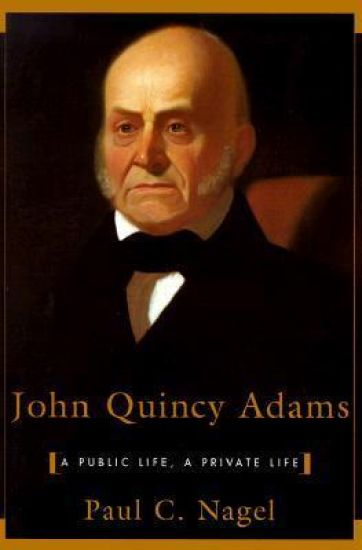
John Quincy Adams

John Quincy Adams

Paul Chester Nagel

Harvard University Press
1999
nidottu
John Quincy Adams was raised, educated, and groomed to be President, following in the footsteps of his father, John. At fourteen he was secretary to the Minister to Russia and, later, was himself Minister to the Netherlands and Prussia. He was U.S. Senator, Secretary of State, and then President for one ill-fated term. His private life showed a parallel descent. He was a poet, writer, critic, and Professor of Oratory at Harvard. He married a talented and engaging Southerner, but two of his three sons were disappointments. This polymath and troubled man, caught up in both a democratic age not to his understanding and the furies of passion, was an American lion in winter.
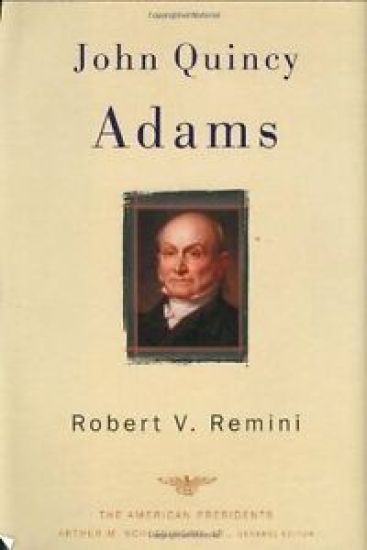
John Quincy Adams

John Quincy Adams

Remini

St Martin's Press
2002
sidottu
A vivid portrait of a man whose pre- and post-presidential careers overshadowed his presidency.Chosen president by the House of Representatives after an inconclusive election against Andrew Jackson, John Quincy Adams often failed to mesh with the ethos of his era, pushing unsuccessfully for a strong, consolidated national government. Historian Robert V. Remini recounts how in the years before his presidency Adams was a shrewd, influential diplomat, and later, as a dynamic secretary of state under President James Monroe, he solidified many basic aspects of American foreign policy, including the Monroe Doctrine. Undoubtedly his greatest triumph was the negotiation of the Transcontinental Treaty, through which Spain acknowledged Florida to be part of the United States. After his term in office, he earned the nickname "Old Man Eloquent" for his passionate antislavery speeches.
John Quincy Adams

John Quincy Adams

James E. Lewis

Rowman Littlefield
2001
nidottu
This new book focuses on John Quincy Adams's extensive role in foreign policy, including his years as secretary of state and as president. Brief but thorough, John Quincy Adams: Policymaker for the Union analyzes Adams's foreign policy accomplishments during key moments in American history, including the Rush-Bagot Agreement, the Transcontinental Treaty, the recognition of the Spanish-American republics, and the Monroe Doctrine. At the same time, the book shows that Adams was far less successful than many historians suggest. John Quincy Adams: Policymaker for the Union focuses on Adams's ideals of the centrality of the union to American happiness, the necessity of federal action to protect the union, and the indivisibility of foreign and domestic concerns. This book's examination of these three points casts new light on the logic behind many of Adams's accomplishments and also exposes the sources of some of his failures. This is the first study to examine how Adams's views ultimately led to his failure as a policymaker. This book is ideal for courses in diplomatic history, American history, and American political history.
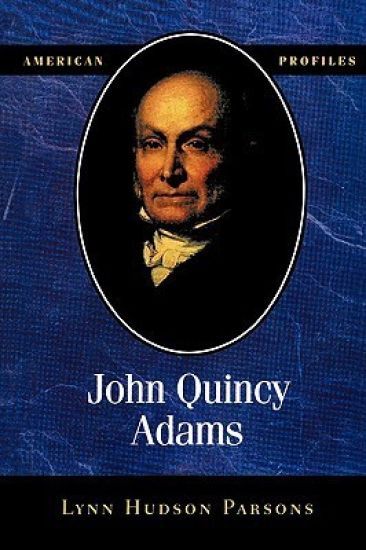
John Quincy Adams

John Quincy Adams

Lynn Hudson Parsons

Rowman Littlefield
1999
nidottu
He was born in 1767, a subject of the British Empire, and died in 1848, a citizen of the United States and a member of Congress in company with Abraham Lincoln. In his dramatic career he had known George Washington and Benjamiin Franklin, La Fayette of France, Alexander I of Russia, and Castlereagh of Great Britain. He had both collaborated and quarrelled with Thomas Jefferson, Andrew Jackson, Henry Clay, John C. Calhoun, and Daniel Webster. In his lifetime Americans had fought for and established their independence, adopted a Constitution, fought two wars with Great Britain and one with Mexico. They had expanded south to the Rio Grande and west to the Pacific. At the time of his death, Adams was seen as a living connection between the present and past of the young republic and his passing severed one of the nation's last ties with its founding generation. As son of the second president of the United States, father of the minister to the Court of St. James, and grandfather to author Henry Adams, John Quincy Adams was part of an American dynasty. In his own career as secretary of state, President, senator, and congressman, Adams was as an actor in some of the most dramatic events of the nineteenth century. In this concise biography, Lynn Hudson Parsons masterfully chronicles the life of one of America's most absorbing figures. From the day in 1778 when, as a boy, he accompanied his father on a diplomatic mission to France, to his last years as an eloquent , cantankerous opponent of this country's foreign and domestic policies, Adams was rarely detached from public affairs. And yet, this biography reveals Adams as a man never truly at home anywhere—in Washington he was stubborn and reclusive, in Europe he was a phlegmatic ideologue, a bulldog among spaniels. His story parallels America's own.
John Quincy Adams

John Quincy Adams

John T (John Torrey) Morse

Anson Street Press
2025
pokkari
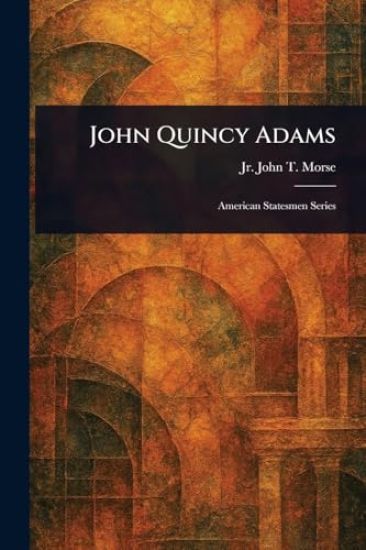
Explore the life and legacy of John Quincy Adams in this meticulously prepared edition of John T. Morse's "John Quincy Adams: American Statesmen Series." Delve into the political history of one of America's most influential statesmen and presidents. This volume examines Adams's significant contributions to United States foreign policy during a pivotal period in the nation's development, specifically focusing on the years 1783-1865. A key figure in 19th-century America, Adams shaped the course of American government and left an undeniable mark on the country's trajectory. Through detailed analysis, this book offers insights into the man, his motivations, and his enduring impact on American political thought. Perfect for readers interested in presidential biographies, the history of U.S. foreign relations, and the evolution of American political ideals, this work remains a vital resource for understanding a critical era in United States history.This work has been selected by scholars as being culturally important, and is part of the knowledge base of civilization as we know it.This work is in the public domain in the United States of America, and possibly other nations. Within the United States, you may freely copy and distribute this work, as no entity (individual or corporate) has a copyright on the body of the work.Scholars believe, and we concur, that this work is important enough to be preserved, reproduced, and made generally available to the public. We appreciate your support of the preservation process, and thank you for being an important part of keeping this knowledge alive and relevant.
John Quincy Adams

John Quincy Adams

John T (John Torrey) Morse

Anson Street Press
2025
sidottu
Explore the life and legacy of John Quincy Adams in this meticulously prepared edition of John T. Morse's "John Quincy Adams: American Statesmen Series." Delve into the political history of one of America's most influential statesmen and presidents. This volume examines Adams's significant contributions to United States foreign policy during a pivotal period in the nation's development, specifically focusing on the years 1783-1865. A key figure in 19th-century America, Adams shaped the course of American government and left an undeniable mark on the country's trajectory. Through detailed analysis, this book offers insights into the man, his motivations, and his enduring impact on American political thought. Perfect for readers interested in presidential biographies, the history of U.S. foreign relations, and the evolution of American political ideals, this work remains a vital resource for understanding a critical era in United States history.This work has been selected by scholars as being culturally important, and is part of the knowledge base of civilization as we know it.This work is in the public domain in the United States of America, and possibly other nations. Within the United States, you may freely copy and distribute this work, as no entity (individual or corporate) has a copyright on the body of the work.Scholars believe, and we concur, that this work is important enough to be preserved, reproduced, and made generally available to the public. We appreciate your support of the preservation process, and thank you for being an important part of keeping this knowledge alive and relevant.