Kirjojen hintavertailu. Mukana 11 244 527 kirjaa ja 12 kauppaa.

Kirjahaku

Etsi kirjoja tekijän nimen, kirjan nimen tai ISBN:n perusteella.

1000 tulosta hakusanalla John R. Dolan

The Mushroom Farm: and Other Reflections from a Spiritual Journey
"The Mushroom Farm" is offered as nourishment and inspiration for personal spiritual growth. Each carefully woven story in the book stands alone, and is intended to provide strength, solace, comfort and reinforcement, particularly to Christians, as they experience similar challenges and events in their own lives. The stories are based on the author's life experiences just as they happened and they are stories that have been used in the author's sermons for more than fifteen years. Each of Rev. Dolan's stories has been woven into Holy Scripture selected for that day. The cross referencing to scripture allows the reader the opportunity to explore their own stories in relation to God's word. Through this sharing of experiences, the book's purpose is to offer hope and strength in troubled times and enhance one's joy in those special moments in life. The stories selected for the "Mushroom Farm" purposely follows Dolan's age in life. The stories travel through his early childhood in England and growing up in Llandaff, Wales. They continue through his life studying and working in London and ultimately his life here in the United States, taking taking the reader through 52 stories to the present day... The stories contain the experience of a growing awareness of the Holy Spirit from more than fifteen years preaching experience as a Deacon, the combined effect of these timelines is to reveal a "forward movement" in Dolan's ability to discern the Divine in his life. God is always present and available to us, but we as human beings have the opportunity for a growing discernment of that presence if, as Bishop Griswold describes it, "we just watch, listen and learn". After reading "The Mushroom Farm", the reader will be able to relate these stories to their own spiritual journeys and be more sensitive to the presence of the Holy Spirit on their own journey through life...
Troubleshooting LC Systems

Troubleshooting LC Systems

John W. Dolan; Lloyd R. Snyder

Humana Press Inc.
1989
sidottu
Over the last 15 years, high-performance liquid chromatogra­ phy (LC) has made the transition from an instrument used only by experts in research labs to a tool used for routine applications by relatively unskilled workers. With this transition have come in instrumentation and column technology. In major advances the past, the operator had to be a jack-of-all-trades, with a screw­ driver, soldering iron, and various wrenches as constant compan­ ions in the LC lab. Today, many instruments contain micropro­ cessors as powerful as those of mainframe computers of earlier days. With this technology has come a variety of self-diagnostic tools that allow the LC system to locate many of its own prob­ lems. Traditionally, well-honed LC troubleshooting skills have been a result of years of work at the bench. Today the LC system itself often can do a better job of troubleshooting than the operator can. Yet many of the problems of the past are still the major problems of today: air bubbles, check valves, detector lamps, and, of course, problems with the separation. An added pressure on the operator of today's LC system is that of productivity-the lab often cannot afford unnecessary downtime. This means that the operator has to be a troubleshooting expert, or has to have that expertise at his or her fingertips. The present book was written to provide this expertise in an easy-to-use format for users at all levels of experience.
Troubleshooting LC Systems

Troubleshooting LC Systems

John W. Dolan; Lloyd R. Snyder

Humana Press Inc.
2013
nidottu
Over the last 15 years, high-performance liquid chromatogra­ phy (LC) has made the transition from an instrument used only by experts in research labs to a tool used for routine applications by relatively unskilled workers. With this transition have come in instrumentation and column technology. In major advances the past, the operator had to be a jack-of-all-trades, with a screw­ driver, soldering iron, and various wrenches as constant compan­ ions in the LC lab. Today, many instruments contain micropro­ cessors as powerful as those of mainframe computers of earlier days. With this technology has come a variety of self-diagnostic tools that allow the LC system to locate many of its own prob­ lems. Traditionally, well-honed LC troubleshooting skills have been a result of years of work at the bench. Today the LC system itself often can do a better job of troubleshooting than the operator can. Yet many of the problems of the past are still the major problems of today: air bubbles, check valves, detector lamps, and, of course, problems with the separation. An added pressure on the operator of today's LC system is that of productivity-the lab often cannot afford unnecessary downtime. This means that the operator has to be a troubleshooting expert, or has to have that expertise at his or her fingertips. The present book was written to provide this expertise in an easy-to-use format for users at all levels of experience.
High-Performance Gradient Elution

High-Performance Gradient Elution

Lloyd R. Snyder; John W. Dolan

John Wiley Sons Inc
2007
sidottu
Gradient elution demystified Of the various ways in which chromatography is applied today, few have been as misunderstood as the technique of gradient elution, which presents many challenges compared to isocratic separation. When properly explained, however, gradient elution can be less difficult to understand and much easier to use than often assumed. Written by two well-known authorities in liquid chromatography, High-Performance Gradient Elution: The Practical Application of the Linear-Solvent-Strength Model takes the mystery out of the practice of gradient elution and helps remove barriers to the practical application of this important separation technique. The book presents a systematic approach to the current understanding of gradient elution, describing theory, methodology, and applications across many of the fields that use liquid chromatography as a primary analytical tool. This up-to-date, practical, and comprehensive treatment of gradient elution: * Provides specific, step-by-step recommendations for developing a gradient separation for any sample * Describes the best approach for troubleshooting problems with gradient methods * Guides the reader on the equipment used for gradient elution * Lists which conditions should be varied first during method development, and explains how to interpret scouting gradients * Explains how to avoid problems in transferring gradient methods With a focus on the use of linear solvent strength (LSS) theory for predicting gradient LC behavior and separations by reversed-phase HPLC, High-Performance Gradient Elution gives every chromatographer access to this useful tool.
Introduction to Modern Liquid Chromatography

Introduction to Modern Liquid Chromatography

Lloyd R. Snyder; Joseph J. Kirkland; John W. Dolan

John Wiley Sons Inc
2010
sidottu
The latest edition of the authoritative reference to HPLC High-performance liquid chromatography (HPLC) is today the leading technique for chemical analysis and related applications, with an ability to separate, analyze, and/or purify virtually any sample. Snyder and Kirkland's Introduction to Modern Liquid Chromatography has long represented the premier reference to HPLC. This Third Edition, with John Dolan as added coauthor, addresses important improvements in columns and equipment, as well as major advances in our understanding of HPLC separation, our ability to solve problems that were troublesome in the past, and the application of HPLC for new kinds of samples. This carefully considered Third Edition maintains the strengths of the previous edition while significantly modifying its organization in light of recent research and experience. The text begins by introducing the reader to HPLC, its use in relation to other modern separation techniques, and its history, then leads into such specific topics as: The basis of HPLC separation and the general effects of different experimental conditionsEquipment and detectionThe column—the "heart" of the HPLC systemReversed-phase separation, normal-phase chromatography, gradient elution, two-dimensional separation, and other techniquesComputer simulation, qualitative and quantitative analysis, and method validation and quality controlThe separation of large molecules, including both biological and synthetic polymersChiral separations, preparative separations, and sample preparationSystematic development of HPLC separations—new to this editionTroubleshooting tricks, techniques, and case studies for both equipment and chromatograms Designed to fulfill the needs of the full range of HPLC users, from novices to experts, Introduction to Modern Liquid Chromatography, Third Edition offers the most up-to-date, comprehensive, and accessible survey of HPLC methods and applications available.
John R. La Montagne Memorial Symposium on Pandemic Influenza Research
The Institute of Medicine (IOM) of the National Academies of Science held a symposium, in memory of Dr. John R. La Montagne on April 4-5, 2005, to discuss the current state of the art of research on pandemic influenza and to identify gaps in research. The symposium serves as a first step of discussion towards a combined and coordinated research effort among Department of Health and Human Services agencies, other governmental agencies, international partners and the private sector. The statement of task that guided the Symposium agenda included these specific questions: What is the current state of the science on pandemic influenza research? What are the pressing unmet scientific questions and technical issues? What administrative, logistic or legal impediments exist that block progress towards the development of interventions to respond to pandemic influenza? How can collaboration among Global health Security Action Group nations be strengthened to address unmet scientific questions and technical issues related to research on pandemic influenza? What do experts believe are the most important next steps to take to advance research on pandemic influenza? The Proceedings of the John La Montagne Memorial Symposium on Pandemic Influenza Research Gaps represents a slightly edited transcript of the plenary presentations, rapporteur presentations, plenary discussion and presentation slides. This document contains the Symposium agenda, short biographies of plenary speakers, and provides a list of individuals who attended the symposium. Table of Contents Front Matter 1 Introduction 2 Plenary Speakers, Day 1 3 Morning Plenary Discussion, Day 1 4 Working Groups , Day 1 5 Afternoon Discussion: Reaction to Rapporteurs, Day 1 6 Plenary Speakers, Day 2 7 Morning Plenary Discussion, Day 2 8 Working Groups, Day 2 9 Preparation for Pandemic Infuenza: Filling the Gaps in Knowledge and Understanding Appendix A: Speaker Biographies Appendix B: Pandemic Flu Workshop Participants
Some Historical Facts About the Chiles Family / Recorded by John R. Chiles.

Some Historical Facts About the Chiles Family / Recorded by John R. Chiles.

John R. (John Russell) 1879- Chiles

Hassell Street Press
2021
nidottu
This work has been selected by scholars as being culturally important and is part of the knowledge base of civilization as we know it.This work is in the public domain in the United States of America, and possibly other nations. Within the United States, you may freely copy and distribute this work, as no entity (individual or corporate) has a copyright on the body of the work.Scholars believe, and we concur, that this work is important enough to be preserved, reproduced, and made generally available to the public. To ensure a quality reading experience, this work has been proofread and republished using a format that seamlessly blends the original graphical elements with text in an easy-to-read typeface.We appreciate your support of the preservation process, and thank you for being an important part of keeping this knowledge alive and relevant.
The Emerald City of Oz (1910), by L. Frank Baum and John R. Neill(illustrated)original version: John Rea Neill (November 12, 1877 - September 19, 1943
The Emerald City of Oz is the sixth of L. Frank Baum's fourteen Land of Oz books. It was also adapted into a Canadian animated film in 1987. Originally published on July 20, 1910, it is the story of Dorothy Gale and her Uncle Henry and Aunt Em coming to live in Oz permanently. While they are toured through the Quadling Country, the Nome King is assembling allies for an invasion of Oz. This is the first time in the Oz series that Baum made use of double plots for one of the books. Baum had intended to cease writing Oz stories with this book, but financial pressures prompted him to write and publish The Patchwork Girl of Oz, with seven other Oz books to follow.The book was dedicated to "Her Royal Highness Cynthia II of Syracuse" actually the daughter (born in the previous year, 1909) of the author's younger brother, Henry Clay "Harry" Baum.At the beginning of this story, it is made quite clear that Dorothy Gale (the primary protagonist of many of the previous Oz books), is in the habit of freely speaking of her many adventures in the Land of Oz to her only living relatives, her Aunt Em and Uncle Henry. Neither of them believes a word of her stories, but consider her a dreamer, as her dead mother had been. She is undeterred (unlike her alter ego in the film Return to Oz who is much perturbed by her guardians' doubts.) Later, it is revealed that the destruction of their farmhouse by the tornado back in The Wonderful Wizard of Oz has left Uncle Henry in terrible debt. In order to pay it, he has taken out a mortgage on his farm. If he cannot repay his creditors, they will seize the farm, thus leaving Henry and his family homeless. He is not too afraid for himself, but both he and his wife, Aunt Em, fear very much for their niece's future. Upon learning this, Dorothy quickly arranges with Princess Ozma to let her bring her guardians to Oz where they will be very happier and forever safe. Using the Magic Belt (a tool captured from the jealous Nome King Roquat), Ozma transports them to her throne room. They are given rooms to live in and luxuries to enjoy, including a vast and complex wardrobe. They meet with many of Dorothy's animal friends, including the Cowardly Lion and Billina the Yellow Hen. In the underground Nome Kingdom, the Nome King, Roquat, is plotting to conquer the Land of Oz and recover his magic belt, which Dorothy took from him in Ozma of Oz. After ordering the expulsion of his General (who will not agree to such an attack) and the death of his Colonel (who also refuses), King Roquat holds counsel with a veteran soldier called Guph. Guph believes that against the many magicians of Oz (the reputation of which has grown in the telling), the Nome Army has no chance alone. He therefore sets out personally to recruit allies. John Rea Neill (November 12, 1877 - September 19, 1943) was a magazine and children's book illustrator primarily known for illustrating more than forty stories set in the Land of Oz, including L. Frank Baum's, Ruth Plumly Thompson's, and three of his own.His pen-and-ink drawings have become identified almost exclusively with the Oz series. He did a great deal of magazine and newspaper illustration work which is not as well known today.Born in Philadelphia, Pennsylvania, John R. Neill did his first illustration work for the Philadelphia's Central High School newspaper in 1894-95. Neill dropped out of Pennsylvania Academy of the Fine Arts after one semester because he said, "they have nothing to teach me".
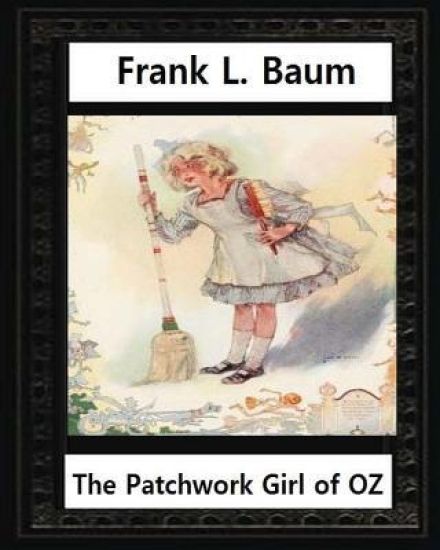
The Patchwork Girl of Oz (1913), by by L.Frank Baum and John R.Neill(illustrator): John Rea Neill (November 12, 1877 - September 19, 1943) was a magaz
The Patchwork Girl of Oz by L. Frank Baum, is a children's novel, the 7th set in the Land of Oz. Characters include the Woozy, Ojo "the Unlucky", Unc Nunkie, Dr. Pipt, Scraps (the patchwork girl), and others. The book was first published on July 1, 1913, with illustrations by John R. Neill. In 1914, Baum adapted the book to film through his "Oz Film Manufacturing Company." In the previous Oz book, The Emerald City of Oz, magic was used to isolate Oz from all outside worlds. Baum did this to end the Oz series, but was forced to restart the series with this book due to financial hardships. 1] In the prologue, he explains how he managed to get another story about Oz, even though it is isolated from all other worlds. He explains that a child suggested he make contact with Oz with wireless telegraphy. 2] Glinda, using her book that records everything that happens, is able to know that someone is using a telegraph to contact Oz, so she erects a telegraph tower and has the Shaggy Man, who knows how to make a telegraph reply, tell the story contained in this book to Baum. The book was dedicated to Sumner Hamilton Britton, the young son of one of its publishers, Sumner Charles Britton of Reilly & Britton.Ojo the very unlucky, is a young Munchkin boy who, devoted to life with his uncle Unc Nunkie in the wilderness but on the verge of starvation, goes to see a neighboring "magician" and old friend of Unc, Dr. Pipt. While there they see a demonstration of the Pipt-made Powder of Life, which animates any object it touches after saying the magic words. Unc Nunkie and Dr. Pipt's wife are also the sufferers of the consequences of another of the Doctor's inventions, the Liquid of Petrifaction, which turns them into solid marble statues. The remainder of this book is Ojo's quest through Oz to collect the five components of an antidote to the Liquid: a six-leaved clover found only in the Emerald City, three hairs from the tip of a Woozy's tail, a gill (a quarter of a pint) of water from a dark well (one that remains untouched by natural light), a drop of oil from a live man's body, and the left wing of a yellow butterfly. With the help of the life-size patchwork doll named Scraps, Bungle the snobbish Glass Cat (another of Dr. Pipt's creations), the Woozy, Dorothy, the Shaggy Man, and the Scarecrow, Ojo gathers all of these supplies but the left wing - the Tin Woodman, who rules the yellow Winkie Country, which is the only place where yellow butterflies grow, will not allow any living thing to be killed, even to save another's life. The party returns to the Emerald City, where the Wizard of Oz (one of the few allowed to lawfully practice magic in Oz) uses his own magic to restore Unc Nunkie and Dr. Pipt's wife. The story is also a growth process for Ojo; he learns that luck is not a matter of who you are or what you have, but what you do; he is renamed "Ojo the Lucky," and so he appears in the following Oz books. John Rea Neill (November 12, 1877 - September 19, 1943) was a magazine and children's book illustrator primarily known for illustrating more than forty stories set in the Land of Oz, including L. Frank Baum's, Ruth Plumly Thompson's, and three of his own. His pen-and-ink drawings have become identified almost exclusively with the Oz series. He did a great deal of magazine and newspaper illustration work which is not as well known today.