Kirjahaku
Etsi kirjoja tekijän nimen, kirjan nimen tai ISBN:n perusteella.
1000 tulosta hakusanalla John Ray; Edwin (EDT) Lankester
The Wisdom of God Manifested in the Works of the Creation. in Two Parts. ... with Answers to Some Objections. by John Ray, ...
John Ray
Gale Ecco, Print Editions
2010
pokkari
The Wisdom of God Manifested in the Works of the Creation. in Two Parts. ... with Answers to Some Objections. by John Ray, ...
John Ray
Gale Ecco, Print Editions
2010
pokkari
The Wisdom of God Manifested in the Works of the Creation. In two Parts. ... With Answers to Some Objections. By John Ray,
John Ray
Gale Ecco, Print Editions
2018
sidottu
The 18th century was a wealth of knowledge, exploration and rapidly growing technology and expanding record-keeping made possible by advances in the printing press. In its determination to preserve the century of revolution, Gale initiated a revolution of its own: digitization of epic proportions to preserve these invaluable works in the largest archive of its kind. Now for the first time these high-quality digital copies of original 18th century manuscripts are available in print, making them highly accessible to libraries, undergraduate students, and independent scholars.The Age of Enlightenment profoundly enriched religious and philosophical understanding and continues to influence present-day thinking. Works collected here include masterpieces by David Hume, Immanuel Kant, and Jean-Jacques Rousseau, as well as religious sermons and moral debates on the issues of the day, such as the slave trade. The Age of Reason saw conflict between Protestantism and Catholicism transformed into one between faith and logic -- a debate that continues in the twenty-first century.++++The below data was compiled from various identification fields in the bibliographic record of this title. This data is provided as an additional tool in helping to insure edition identification: ++++British LibraryT093658Glasgow: printed in the year, 1758. 24],316p.; 12

A Collection of English Words not Generally Used. With the Significations and Original, in two Alphabetical Catalogues. ... The Fourth Edition. Augmented With Many Hundred Words, ... By John Ray, F.R.S
John Ray
Gale Ecco, Print Editions
2018
sidottu
The 18th century was a wealth of knowledge, exploration and rapidly growing technology and expanding record-keeping made possible by advances in the printing press. In its determination to preserve the century of revolution, Gale initiated a revolution of its own: digitization of epic proportions to preserve these invaluable works in the largest archive of its kind. Now for the first time these high-quality digital copies of original 18th century manuscripts are available in print, making them highly accessible to libraries, undergraduate students, and independent scholars.Western literary study flows out of eighteenth-century works by Alexander Pope, Daniel Defoe, Henry Fielding, Frances Burney, Denis Diderot, Johann Gottfried Herder, Johann Wolfgang von Goethe, and others. Experience the birth of the modern novel, or compare the development of language using dictionaries and grammar discourses. ++++The below data was compiled from various identification fields in the bibliographic record of this title. This data is provided as an additional tool in helping to insure edition identification: ++++British LibraryT092842Also issued as part of: 'A compleat collection of English proverbs; .. By .. J. Ray, .. ', London, 1768.London: printed for W. Otridge; S. Bladon; W. Cooke; W. Harris; S. Steare and T. Peat; J. Robson and 7 others in London], 1768. 150p.; 8
The Wisdom of God Manifested in the Works of the Creation. In two Parts. ... With Answers to Some Objections. By John Ray,
John Ray
Gale Ecco, Print Editions
2018
sidottu
The 18th century was a wealth of knowledge, exploration and rapidly growing technology and expanding record-keeping made possible by advances in the printing press. In its determination to preserve the century of revolution, Gale initiated a revolution of its own: digitization of epic proportions to preserve these invaluable works in the largest archive of its kind. Now for the first time these high-quality digital copies of original 18th century manuscripts are available in print, making them highly accessible to libraries, undergraduate students, and independent scholars.The Age of Enlightenment profoundly enriched religious and philosophical understanding and continues to influence present-day thinking. Works collected here include masterpieces by David Hume, Immanuel Kant, and Jean-Jacques Rousseau, as well as religious sermons and moral debates on the issues of the day, such as the slave trade. The Age of Reason saw conflict between Protestantism and Catholicism transformed into one between faith and logic -- a debate that continues in the twenty-first century.++++The below data was compiled from various identification fields in the bibliographic record of this title. This data is provided as an additional tool in helping to insure edition identification: ++++British LibraryT093663London: printed for D. Williams, 1762. 20],259, 1]p., plate; 8
A Collection of English Words not Generally Used. With Their Significations and Original, in two Alphabetical Catalogues. ... The Third Edition, Augmented With Many Hundreds of Words, ... By John Ray,
John Ray
Gale Ecco, Print Editions
2018
sidottu
The 18th century was a wealth of knowledge, exploration and rapidly growing technology and expanding record-keeping made possible by advances in the printing press. In its determination to preserve the century of revolution, Gale initiated a revolution of its own: digitization of epic proportions to preserve these invaluable works in the largest archive of its kind. Now for the first time these high-quality digital copies of original 18th century manuscripts are available in print, making them highly accessible to libraries, undergraduate students, and independent scholars.Western literary study flows out of eighteenth-century works by Alexander Pope, Daniel Defoe, Henry Fielding, Frances Burney, Denis Diderot, Johann Gottfried Herder, Johann Wolfgang von Goethe, and others. Experience the birth of the modern novel, or compare the development of language using dictionaries and grammar discourses. ++++The below data was compiled from various identification fields in the bibliographic record of this title. This data is provided as an additional tool in helping to insure edition identification: ++++Harvard University Houghton LibraryN027426Also issued as part of: his 'A compleat collection of English proverbs', London, 1737. With a final leaf of advertisements.London: printed for J. Torbuck; O. Payne and T. Woodman, 1737. 150, 2]p.; 8
Nomenclator Classicus, Sive Dictionariolum Trilingue, A Classical Nomenclator. With the Gender and Declension of Each Word and the Quantities of the Syllables. By John Ray The Sixth Edition, Carefully Revised and Corrected,
John Ray
Gale Ecco, Print Editions
2018
sidottu
The 18th century was a wealth of knowledge, exploration and rapidly growing technology and expanding record-keeping made possible by advances in the printing press. In its determination to preserve the century of revolution, Gale initiated a revolution of its own: digitization of epic proportions to preserve these invaluable works in the largest archive of its kind. Now for the first time these high-quality digital copies of original 18th century manuscripts are available in print, making them highly accessible to libraries, undergraduate students, and independent scholars.Western literary study flows out of eighteenth-century works by Alexander Pope, Daniel Defoe, Henry Fielding, Frances Burney, Denis Diderot, Johann Gottfried Herder, Johann Wolfgang von Goethe, and others. Experience the birth of the modern novel, or compare the development of language using dictionaries and grammar discourses. ++++The below data was compiled from various identification fields in the bibliographic record of this title. This data is provided as an additional tool in helping to insure edition identification: ++++British LibraryT092846Sig. D is repeated and sig. E omitted.London: printed by Benj. Motte, for J. Taylor, and Benj. Tooke, 1717. 4],84p.; 8
The Wisdom of God Manifested in the Works of the Creation in two Parts, ... With Answers to Some Objections. By John Ray, ... The Fifth Edition Corrected, and Very Much Enlarged
John Ray
Gale Ecco, Print Editions
2018
sidottu
The 18th century was a wealth of knowledge, exploration and rapidly growing technology and expanding record-keeping made possible by advances in the printing press. In its determination to preserve the century of revolution, Gale initiated a revolution of its own: digitization of epic proportions to preserve these invaluable works in the largest archive of its kind. Now for the first time these high-quality digital copies of original 18th century manuscripts are available in print, making them highly accessible to libraries, undergraduate students, and independent scholars.The Age of Enlightenment profoundly enriched religious and philosophical understanding and continues to influence present-day thinking. Works collected here include masterpieces by David Hume, Immanuel Kant, and Jean-Jacques Rousseau, as well as religious sermons and moral debates on the issues of the day, such as the slave trade. The Age of Reason saw conflict between Protestantism and Catholicism transformed into one between faith and logic -- a debate that continues in the twenty-first century.++++The below data was compiled from various identification fields in the bibliographic record of this title. This data is provided as an additional tool in helping to insure edition identification: ++++British LibraryT093668With a divisional titlepage.London: printed by J.B. for Benj. Walford, 1709. 24],17-464p., plate: port.; 8
Select Remains of the Learned John Ray, With His Life
John Ray; William Derham
Kessinger Pub
2007
pokkari
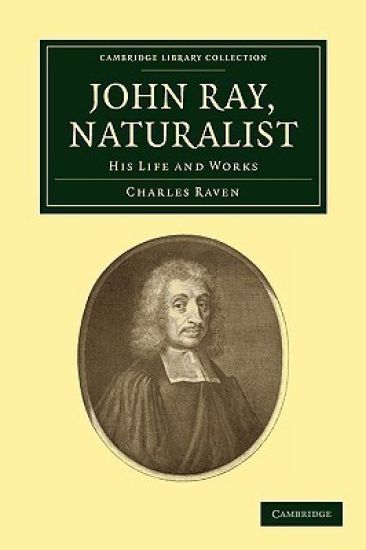
This biography of John Ray, the seventeenth-century naturalist, was first published in 1942 at the height of the Second World War. It was written by Charles Raven, an eminent theologian who shared Ray's deep respect for intellectual integrity, honest exploration of the natural world, and the value of both theology and scientific endeavour. More than a superb history, this offers an opportunity to reassess the pivotal contributions of a brilliant but often undervalued scientist. Ray's major publications were written in Latin; Raven's linguistic skills – coupled with his passion for natural history – made him ideally suited to interpret Ray's scientific legacy. Raven reviews Ray's academic and scientific careers in the context of the dramatic social upheavals of his time. He evaluates the remarkable long-term and widespread influence of Ray's work on the development of science, alongside the significance of his final book, The Wisdom of God.