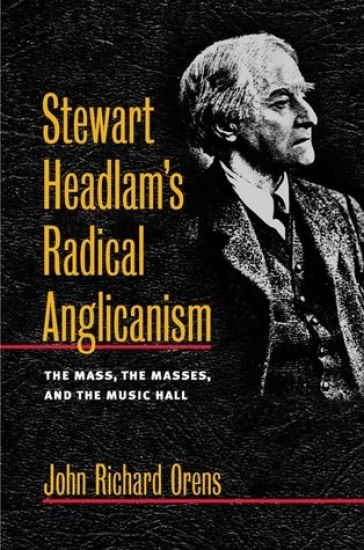
Standing in stark contrast to the conservative churchmen of Victorian Britain, the Anglican clergyman Stewart Headlam was a passionately progressive reformer, a champion of the working poor--especially women --a defender of the music hall performers his colleagues attacked as licentious, and, in short, a man of God who remained firmly and controversially engaged with the society in which he lived and worked. This book, the first significant study of Headlam since 1928, paints a rich and complex picture of this larger-than-life man of the cloth, charting the trail he blazed across the social, political, and religious landscape of late nineteenth- and early twentieth-century Britain. Dissatisfied from an early age with his family’s Evangelical faith, Headlam became an Anglican curate, but his political views were increasingly radicalized as he befriended working-class atheists and trade union leaders. John Richard Orens details Headlam’s repeated conflicts with the establishment figures of his faith over his defense of music hall ballet performers’ right to reveal their legs, his role in the early years of the Fabian Society, his anti-puritanism, and his passionate socialism. Headlam was even instrumental in having Oscar Wilde bailed out of prison following the writer’s arrest for “homosexual offenses.” With this intellectual biography, Orens places Headlam’s life, beliefs, and actions in the context of the period, contributing to the ongoing debate about the proper relationship between Christianity, on the one hand, and society, sexuality, and the arts, on the other.
Title: Oxford during the last century, being two series of papers published in the Oxford Chronicle & Berks & Bucks Gazette, etc. By John Richard Green.]Publisher: British Library, Historical Print EditionsThe British Library is the national library of the United Kingdom. It is one of the world's largest research libraries holding over 150 million items in all known languages and formats: books, journals, newspapers, sound recordings, patents, maps, stamps, prints and much more. Its collections include around 14 million books, along with substantial additional collections of manuscripts and historical items dating back as far as 300 BC.The HISTORY OF BRITAIN & IRELAND collection includes books from the British Library digitised by Microsoft. As well as historical works, this collection includes geographies, travelogues, and titles covering periods of competition and cooperation among the people of Great Britain and Ireland. Works also explore the countries' relations with France, Germany, the Low Countries, Denmark, and Scandinavia. ++++The below data was compiled from various identification fields in the bibliographic record of this title. This data is provided as an additional tool in helping to insure edition identification: ++++ British Library Anonymous; Green, John Richard; 1859. iv. 131 p.; 4 . 10352.dd.12.
Dr Taverner is an occult Sherlock Holmes, an esoteric Master who uses his powers to aid 'untreatable' patients for whom orthodox medical science can do nothing. Utilizing his knowledge of White Magic, he fights an unrelenting battle against vampires, death-hounds, body-snatchers and members of the nefarious Black Lodge. Well-written and briskly paced, these twelve stories stand on their own merits - but there is more to these tales than meets the eye. Dion Fortune was herself a mage, a high initiate of the Hermetic Order of the Golden Dawn and founder of the Society of the Inner Light. The tales she tells are based on real events, and she uses 'The Secrets of Dr Taverner' as a vehicle to introduce the reader to magical practices and many arcane principles of occult law. Each story in this collection is a complete case, as gripping and as entertaining as the stories of Sherlock Holmes. They take you into the inner worlds of the human mind - a world full of strange twists and unexpected happenings!
John Richard Jefferies (6 November 1848 - 14 August 1887) was an English nature writer, noted for his depiction of English rural life in essays, books of natural history, and novels. His childhood on a small Wiltshire farm had a great influence on him and provides the background to all his major works of fiction. Jefferies's corpus of writings includes a diversity of genres and topics, including Bevis (1882), a classic children's book, and After London (1885), an early work of science fiction. For much of his adult life, he suffered from tuberculosis, and his struggles with the illness and with poverty also play a role in his writing. Jefferies valued and cultivated an intensity of feeling in his experience of the world around him, a cultivation that he describes in detail in The Story of My Heart (1883). This work, an introspective depiction of his thoughts and feelings on the world, gained him the reputation of a nature mystic at the time. But it is his success in conveying his awareness of nature and people within it, both in his fiction and in essay collections such as The Amateur Poacher (1879) and Round About a Great Estate (1880), that has drawn most admirers. Walter Besant wrote of his reaction on first reading Jefferies: "Why, we must have been blind all our lives; here were the most wonderful things possible going on under our very noses, but we saw them not."John Richard Jefferies (he used the first name only during his childhood) was born at Coate, in the parish of Chiseldon, near Swindon, Wiltshire, the son of a farmer, James Luckett Jefferies (1816-1896). His birthplace and home is now a museum open to the public. James Jefferies had the farm from his father, John Jefferies, who had been a London printer before returning to Swindon to run the family mill and bakery. Richard's mother, Elizabeth Gyde (1817-1895), always called Betsy, was the daughter of John Jefferies's binder and manager. These relationships are mirrored in the characters of Jefferies's late novel Amaryllis at the Fair (1887); and the portraits of the family in the novel tally with external accounts of the Jefferies.James Jefferies, like Iden in Amaryllis, was devoted to his garden, while struggling to make a financial success of the farm. The garden, lovingly recalled in Wood Magic and Amaryllis, also makes a strong impression on the memories of those who knew the Jefferies at the time.Betsy, like Iden's wife, seems to have been dissatisfied with life on the farm: "a town-bred woman with a beautiful face and a pleasure-loving soul, kind and generous to a fault, but unsuited to a country life." The farm was very small, with 39 acres (160,000 m2) of pasture; and a mortgage of 1500 would later begin a slide into debt for James Jefferies, who lost the farm in 1877 and became a jobbing gardener. But these difficulties were less evident in Richard's childhood. The situation was much as in After London (1885), where the farming and gardening Baron is again based on James Jefferies: "The whole place was thus falling to decay, while at the same time it seemed to be flowing with milk and honey". One part of the Jefferies family is strikingly missing from the books. In Wood Magic, Bevis and Amaryllis, the hero (or heroine) has no siblings; only After London gives the main character brothers and depicts the imperfect sympathy between them. James and Elizabeth's first child, Ellen, had died young; but Richard had two younger brothers and a younger sister....
The lost leaves measure our years; they are gone as the days are gone, and the bare branches silently speak of a new year, slowly advancing to its buds, its foliage, and fruit. Deciduous trees associate with human life as this yew never can. Clothed in its yellowish-green needles, its tarnished green, it knows no hope or sorrow; it is indifferent to winter, and does not look forward to summer. With their annual loss of leaves, and renewal, oak and elm and ash and beech seem to stand by us and to share our thoughts. .............. John Richard Jefferies (6 November 1848 - 14 August 1887) was an English nature writer, noted for his depiction of English rural life in essays, books of natural history, and novels. His childhood on a small Wiltshire farm had a great influence on him and provides the background to all his major works of fiction. Jefferies's corpus of writings includes a diversity of genres and topics, including Bevis (1882), a classic children's book, and After London (1885), an early work of science fiction. For much of his adult life, he suffered from tuberculosis, and his struggles with the illness and with poverty also play a role in his writing. Jefferies valued and cultivated an intensity of feeling in his experience of the world around him, a cultivation that he describes in detail in The Story of My Heart (1883). This work, an introspective depiction of his thoughts and feelings on the world, gained him the reputation of a nature mystic at the time. But it is his success in conveying his awareness of nature and people within it, both in his fiction and in essay collections such as The Amateur Poacher (1879) and Round About a Great Estate (1880), that has drawn most admirers. Walter Besant wrote of his reaction on first reading Jefferies: "Why, we must have been blind all our lives; here were the most wonderful things possible going on under our very noses, but we saw them not."John Richard Jefferies (he used the first name only during his childhood) was born at Coate, in the parish of Chiseldon, near Swindon, Wiltshire, the son of a farmer, James Luckett Jefferies (1816-1896). His birthplace and home is now a museum open to the public. James Jefferies had the farm from his father, John Jefferies, who had been a London printer before returning to Swindon to run the family mill and bakery. Richard's mother, Elizabeth Gyde (1817-1895), always called Betsy, was the daughter of John Jefferies's binder and manager. These relationships are mirrored in the characters of Jefferies's late novel Amaryllis at the Fair (1887); and the portraits of the family in the novel tally with external accounts of the Jefferies.James Jefferies, like Iden in Amaryllis, was devoted to his garden, while struggling to make a financial success of the farm. The garden, lovingly recalled in Wood Magic and Amaryllis, also makes a strong impression on the memories of those who knew the Jefferies at the time.Betsy, like Iden's wife, seems to have been dissatisfied with life on the farm: "a town-bred woman with a beautiful face and a pleasure-loving soul, kind and generous to a fault, but unsuited to a country life." The farm was very small, with 39 acres (160,000 m2) of pasture; and a mortgage of 1500 would later begin a slide into debt for James Jefferies, who lost the farm in 1877 and became a jobbing gardener. But these difficulties were less evident in Richard's childhood. The situation was much as in After London (1885), where the farming and gardening Baron is again based on James Jefferies: "The whole place was thus falling to decay, while at the same time it seemed to be flowing with milk and honey". One part of the Jefferies family is strikingly missing from the books. In Wood Magic, Bevis and Amaryllis, the hero (or heroine) has no siblings; only After London gives the main character brothers and depicts the imperfect sympathy between them............
John Richard Jefferies (6 November 1848 - 14 August 1887) was an English nature writer, noted for his depiction of English rural life in essays, books of natural history, and novels. His childhood on a small Wiltshire farm had a great influence on him and provides the background to all his major works of fiction. Jefferies's corpus of writings includes a diversity of genres and topics, including Bevis (1882), a classic children's book, and After London (1885), an early work of science fiction. For much of his adult life, he suffered from tuberculosis, and his struggles with the illness and with poverty also play a role in his writing. Jefferies valued and cultivated an intensity of feeling in his experience of the world around him, a cultivation that he describes in detail in The Story of My Heart (1883). This work, an introspective depiction of his thoughts and feelings on the world, gained him the reputation of a nature mystic at the time. But it is his success in conveying his awareness of nature and people within it, both in his fiction and in essay collections such as The Amateur Poacher (1879) and Round About a Great Estate (1880), that has drawn most admirers. Walter Besant wrote of his reaction on first reading Jefferies: "Why, we must have been blind all our lives; here were the most wonderful things possible going on under our very noses, but we saw them not."John Richard Jefferies (he used the first name only during his childhood) was born at Coate, in the parish of Chiseldon, near Swindon, Wiltshire, the son of a farmer, James Luckett Jefferies (1816-1896). His birthplace and home is now a museum open to the public. James Jefferies had the farm from his father, John Jefferies, who had been a London printer before returning to Swindon to run the family mill and bakery. Richard's mother, Elizabeth Gyde (1817-1895), always called Betsy, was the daughter of John Jefferies's binder and manager. These relationships are mirrored in the characters of Jefferies's late novel Amaryllis at the Fair (1887); and the portraits of the family in the novel tally with external accounts of the Jefferies.James Jefferies, like Iden in Amaryllis, was devoted to his garden, while struggling to make a financial success of the farm. The garden, lovingly recalled in Wood Magic and Amaryllis, also makes a strong impression on the memories of those who knew the Jefferies at the time.Betsy, like Iden's wife, seems to have been dissatisfied with life on the farm: "a town-bred woman with a beautiful face and a pleasure-loving soul, kind and generous to a fault, but unsuited to a country life." The farm was very small, with 39 acres (160,000 m2) of pasture; and a mortgage of 1500 would later begin a slide into debt for James Jefferies, who lost the farm in 1877 and became a jobbing gardener. But these difficulties were less evident in Richard's childhood. The situation was much as in After London (1885), where the farming and gardening Baron is again based on James Jefferies: "The whole place was thus falling to decay, while at the same time it seemed to be flowing with milk and honey". One part of the Jefferies family is strikingly missing from the books. In Wood Magic, Bevis and Amaryllis, the hero (or heroine) has no siblings; only After London gives the main character brothers and depicts the imperfect sympathy between them. James and Elizabeth's first child, Ellen, had died young; but Richard had two younger brothers and a younger sister....
John Richard Jefferies (6 November 1848 - 14 August 1887) was an English nature writer, noted for his depiction of English rural life in essays, books of natural history, and novels. His childhood on a small Wiltshire farm had a great influence on him and provides the background to all his major works of fiction. Jefferies's corpus of writings includes a diversity of genres and topics, including Bevis (1882), a classic children's book, and After London (1885), an early work of science fiction. For much of his adult life, he suffered from tuberculosis, and his struggles with the illness and with poverty also play a role in his writing. Jefferies valued and cultivated an intensity of feeling in his experience of the world around him, a cultivation that he describes in detail in The Story of My Heart (1883). This work, an introspective depiction of his thoughts and feelings on the world, gained him the reputation of a nature mystic at the time. But it is his success in conveying his awareness of nature and people within it, both in his fiction and in essay collections such as The Amateur Poacher (1879) and Round About a Great Estate (1880), that has drawn most admirers. Walter Besant wrote of his reaction on first reading Jefferies: "Why, we must have been blind all our lives; here were the most wonderful things possible going on under our very noses, but we saw them not."John Richard Jefferies (he used the first name only during his childhood) was born at Coate, in the parish of Chiseldon, near Swindon, Wiltshire, the son of a farmer, James Luckett Jefferies (1816-1896). His birthplace and home is now a museum open to the public. James Jefferies had the farm from his father, John Jefferies, who had been a London printer before returning to Swindon to run the family mill and bakery. Richard's mother, Elizabeth Gyde (1817-1895), always called Betsy, was the daughter of John Jefferies's binder and manager. These relationships are mirrored in the characters of Jefferies's late novel Amaryllis at the Fair (1887); and the portraits of the family in the novel tally with external accounts of the Jefferies.James Jefferies, like Iden in Amaryllis, was devoted to his garden, while struggling to make a financial success of the farm. The garden, lovingly recalled in Wood Magic and Amaryllis, also makes a strong impression on the memories of those who knew the Jefferies at the time.Betsy, like Iden's wife, seems to have been dissatisfied with life on the farm: "a town-bred woman with a beautiful face and a pleasure-loving soul, kind and generous to a fault, but unsuited to a country life." The farm was very small, with 39 acres (160,000 m2) of pasture; and a mortgage of 1500 would later begin a slide into debt for James Jefferies, who lost the farm in 1877 and became a jobbing gardener. But these difficulties were less evident in Richard's childhood. The situation was much as in After London (1885), where the farming and gardening Baron is again based on James Jefferies: "The whole place was thus falling to decay, while at the same time it seemed to be flowing with milk and honey". One part of the Jefferies family is strikingly missing from the books. In Wood Magic, Bevis and Amaryllis, the hero (or heroine) has no siblings; only After London gives the main character brothers and depicts the imperfect sympathy between them. James and Elizabeth's first child, Ellen, had died young; but Richard had two younger brothers and a younger sister....
John Richard Jefferies (6 November 1848 - 14 August 1887) was an English nature writer, noted for his depiction of English rural life in essays, books of natural history, and novels. His childhood on a small Wiltshire farm had a great influence on him and provides the background to all his major works of fiction. Jefferies's corpus of writings includes a diversity of genres and topics, including Bevis (1882), a classic children's book, and After London (1885), an early work of science fiction. For much of his adult life, he suffered from tuberculosis, and his struggles with the illness and with poverty also play a role in his writing. Jefferies valued and cultivated an intensity of feeling in his experience of the world around him, a cultivation that he describes in detail in The Story of My Heart (1883). This work, an introspective depiction of his thoughts and feelings on the world, gained him the reputation of a nature mystic at the time. But it is his success in conveying his awareness of nature and people within it, both in his fiction and in essay collections such as The Amateur Poacher (1879) and Round About a Great Estate (1880), that has drawn most admirers. Walter Besant wrote of his reaction on first reading Jefferies: "Why, we must have been blind all our lives; here were the most wonderful things possible going on under our very noses, but we saw them not."John Richard Jefferies (he used the first name only during his childhood) was born at Coate, in the parish of Chiseldon, near Swindon, Wiltshire, the son of a farmer, James Luckett Jefferies (1816-1896). His birthplace and home is now a museum open to the public. James Jefferies had the farm from his father, John Jefferies, who had been a London printer before returning to Swindon to run the family mill and bakery. Richard's mother, Elizabeth Gyde (1817-1895), always called Betsy, was the daughter of John Jefferies's binder and manager. These relationships are mirrored in the characters of Jefferies's late novel Amaryllis at the Fair (1887); and the portraits of the family in the novel tally with external accounts of the Jefferies.James Jefferies, like Iden in Amaryllis, was devoted to his garden, while struggling to make a financial success of the farm. The garden, lovingly recalled in Wood Magic and Amaryllis, also makes a strong impression on the memories of those who knew the Jefferies at the time.Betsy, like Iden's wife, seems to have been dissatisfied with life on the farm: "a town-bred woman with a beautiful face and a pleasure-loving soul, kind and generous to a fault, but unsuited to a country life." The farm was very small, with 39 acres (160,000 m2) of pasture; and a mortgage of 1500 would later begin a slide into debt for James Jefferies, who lost the farm in 1877 and became a jobbing gardener. But these difficulties were less evident in Richard's childhood. The situation was much as in After London (1885), where the farming and gardening Baron is again based on James Jefferies: "The whole place was thus falling to decay, while at the same time it seemed to be flowing with milk and honey". One part of the Jefferies family is strikingly missing from the books. In Wood Magic, Bevis and Amaryllis, the hero (or heroine) has no siblings; only After London gives the main character brothers and depicts the imperfect sympathy between them. James and Elizabeth's first child, Ellen, had died young; but Richard had two younger brothers and a younger sister....
homas Coke Watkins Birthdate:1800 (75) Death: Died 1875 Immediate Family: Son of Archibald Washington Watkins and Elizabeth Watkins Husband of Elizabeth Ann Watkins Father of George Rust Watkins (John) Richard Jefferies (1848-1887) is best known for his prolific and sensitive writing on natural history, rural life and agriculture in late Victorian England. However, a closer examination of his career reveals a many-sided author who was something of an enigma. To some people he is more familiar as the author of the children's classic Bevis or the strange futuristic fantasy After London, while he also has some reputation as a mystic worthy of serious study. Since his death his books have enjoyed intermittent spells of popularity, but today he is unknown to the greater part of the reading public. Jefferies, however, has been an inspiration to a number of more prominent writers and W.H. Hudson, Edward Thomas, Henry Williamson and John Fowles are among those who have acknowledged their debt to him. In my view his greatest achievement lies in his expression, aesthetically and spiritually, of the human encounter with the natural world - something that became almost an obsession for him in his last years. He was born at Coate in the north Wiltshire countryside - now on the outskirts of Swindon - where his family farmed a smallholding of about forty acres. His father was a thoughtful man with a passionate love of nature but was unsuccessful as a farmer, with the result that the later years of Jefferies' childhood were spent in a household increasingly threatened by poverty. There were also, it seems, other tensions in the family. Richard's mother, who had been brought up in London, never settled into a life in the country and the portrait of her as Mrs Iden - usually regarded as an accurate one - in his last novel, Amaryllis at the Fair, is anything but flattering. Remarks made in some of Jefferies' childhood letters to his aunt also strongly suggest an absence of mutual affection and understanding between mother and son. A combination of an unsettled home life and an early romantic desire for adventure led him at the age of sixteen to leave home with the intention of traversing Europe as far as Moscow. In this escapade he was accompanied by a cousin, but the journey was abandoned soon after they reached France. On their return to England they attempted to board a ship for the United States but this plan also came to nothing when they found themselves without sufficient money to pay for food. A self-absorbed and independent youth, Jefferies spent much of his time walking through the countryside around Coate and along the wide chalk expanses of the Marlborough Downs. He regularly visited Burderop woods and Liddington Hill near his home and on longer trips explored Savernake Forest and the stretch of the downs to the east, where the famous white horse is engraved in the hillside above Uffington. His favourite haunt was Liddington Hill, a height crowned with an ancient fort commanding superb views of the north Wiltshire plain and the downs. It was on the summit of Liddington at the age of about eighteen, as he relates in The Story of My Heart, that his unusual sensitivity to nature began to induce in him a powerful inner awakening - a desire for a larger existence or reality which he termed 'soul life'. Wherever he went in the countryside he found himself in awe of the beauty and tranquillity of the natural world; not only the trees, flowers and animals, but also the sun, the stars and the entire cosmos seemed to him to be filled with an inexpressible sense of magic and meaning.


![Oxford During the Last Century, Being Two Series of Papers Published in the Oxford Chronicle and Berks and Bucks Gazette, Etc. [By John Richard Green.]](/covers/9781241419165.jpg)