Kirjojen hintavertailu. Mukana 11 244 527 kirjaa ja 12 kauppaa.

Kirjahaku

Etsi kirjoja tekijän nimen, kirjan nimen tai ISBN:n perusteella.

1000 tulosta hakusanalla John Russon

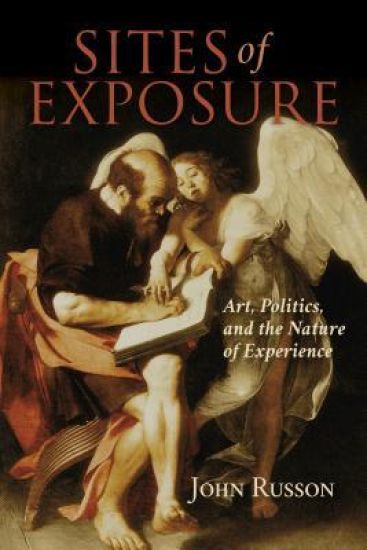
Sites of Exposure

Sites of Exposure

John Russon

Indiana University Press
2017
sidottu
John Russon draws from a broad range of art and literature to show how philosophy speaks to the most basic and important questions in our everyday lives. In Sites of Exposure, Russon grapples with how personal experiences such as growing up and confronting death combine with broader issues such as political oppression, economic exploitation, and the destruction of the natural environment to make life meaningful. His is cutting-edge philosophical work, illuminated by original and rigorous thinking that relies on cross-cultural communication and engagement with the richness of human cultural history. These probing interpretations of the nature of phenomenology, the philosophy of art, history, and politics, are appropriate for students and scholars of philosophy at all levels.
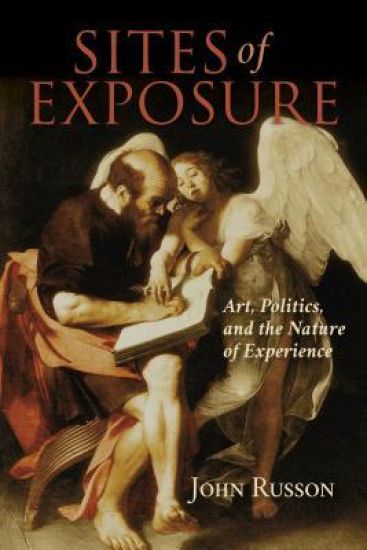
Sites of Exposure

Sites of Exposure

John Russon

Indiana University Press
2017
pokkari
John Russon draws from a broad range of art and literature to show how philosophy speaks to the most basic and important questions in our everyday lives. In Sites of Exposure, Russon grapples with how personal experiences such as growing up and confronting death combine with broader issues such as political oppression, economic exploitation, and the destruction of the natural environment to make life meaningful. His is cutting-edge philosophical work, illuminated by original and rigorous thinking that relies on cross-cultural communication and engagement with the richness of human cultural history. These probing interpretations of the nature of phenomenology, the philosophy of art, history, and politics, are appropriate for students and scholars of philosophy at all levels.
Politics, Money, and Persuasion

Politics, Money, and Persuasion

John Russon

Indiana University Press
2021
sidottu
In Politics, Money, and Persuasion, distinguished philosopher John Russon offers a new framework for interpreting Plato's The Republic. For Russon, Plato's work is about the distinctive nature of what it is to be a human being and, correspondingly, what is distinctive about the nature of human society. Russon focuses on the realities of our everyday experience to come to profoundly insightful assessments of our human realities: the nature of the city, the nature of knowledge, and the nature of human psychology. Russon's argument concentrates on the ambivalence of logos, which includes reflections on politics and philosophy and their place in human life, how humans have shaped the environment, our interactions with money, the economy, and the pursuit of the good in social and political systems. Politics, Money, and Persuasion offers a deeply personal but also practical kind of philosophical reading of Plato's classic text. It emphasizes the tight connection between the life of city and the life of the soul, demonstrating both the crucial role that human cognitive excellence and psychological health play in political and social life.
Politics, Money, and Persuasion

Politics, Money, and Persuasion

John Russon

Indiana University Press
2021
pokkari
In Politics, Money, and Persuasion, distinguished philosopher John Russon offers a new framework for interpreting Plato's The Republic. For Russon, Plato's work is about the distinctive nature of what it is to be a human being and, correspondingly, what is distinctive about the nature of human society. Russon focuses on the realities of our everyday experience to come to profoundly insightful assessments of our human realities: the nature of the city, the nature of knowledge, and the nature of human psychology. Russon's argument concentrates on the ambivalence of logos, which includes reflections on politics and philosophy and their place in human life, how humans have shaped the environment, our interactions with money, the economy, and the pursuit of the good in social and political systems. Politics, Money, and Persuasion offers a deeply personal but also practical kind of philosophical reading of Plato's classic text. It emphasizes the tight connection between the life of city and the life of the soul, demonstrating both the crucial role that human cognitive excellence and psychological health play in political and social life.
Reading Hegel's Phenomenology

Reading Hegel's Phenomenology

John Russon

Indiana University Press
2004
pokkari
In Reading Hegel's Phenomenology, John Russon uses the theme of reading to clarify the methods, premises, evidence, reasoning, and conclusions developed in Hegel's seminal text. Russon's approach facilitates comparing major sections and movements of the text, and demonstrates that each section of Phenomenology of Spirit stands independently in its focus on the themes of human experience. Along the way, Russon considers the rich relevance of Hegel's philosophy to understanding other key Western philosophers, such as Aristotle, Descartes, Kant, Husserl, Heidegger, and Derrida. Major themes include language, embodiment, desire, conscience, forgiveness, skepticism, law, ritual, multiculturalism, existentialism, deconstruction, and absolute knowing. An important companion to contemporary Hegel studies, this book will be of interest to all students of Hegel's philosophy.
Human Experience

Human Experience

John Russon

State University of New York Press
2003
pokkari
Proposes that philosophy is the proper cure for neurosis.Co-winner of the 2005 Biennial Book Prize for the best philosophy book published in English presented by the Canadian Philosophical Association John Russon's Human Experience draws on central concepts of contemporary European philosophy to develop a novel analysis of the human psyche. Beginning with a study of the nature of perception, embodiment, and memory, Russon investigates the formation of personality through family and social experience. He focuses on the importance of the feedback we receive from others regarding our fundamental worth as persons, and on the way this interpersonal process embeds meaning into our most basic bodily practices: eating, sleeping, sex, and so on. Russon concludes with an original interpretation of neurosis as the habits of bodily practice developed in family interactions that have become the foundation for developed interpersonal life, and proposes a theory of psychological therapy as the development of philosophical insight that responds to these neurotic compulsions.
The Self and Its Body in Hegel's Phenomenology of Spirit

The Self and Its Body in Hegel's Phenomenology of Spirit

John Russon

University of Toronto Press
1997
sidottu
A major criticism of Hegel's philosophy is that it fails to comprehend the experience of the body. In this book, John Russon shows that there is in fact a philosophy of embodiment implicit in Hegel's Phenomenology of Spirit. Russon argues that Hegel has not only taken account of the body, but has done so in a way that integrates both modern work on embodiment and the approach to the body found in ancient Greek philosophy. Although Russon approaches Hegel's Phenomenology from a contemporary standpoint, he places both this standpoint and Hegel's work within a classical tradition. Using the Aristotelian terms of 'nature' and 'habit,' Russon refers to the classical distinction between biological nature and a cultural 'second nature.' It is this second nature that constitutes, in Russon's reading of Hegel, the true embodiment of human intersubjectivity. The development of spirit, as mapped out by Hegel, is interpreted here as a process by which the self establishes for itself an embodiment in a set of social and political institutions in which it can recognize and satisfy its rational needs. Russon concludes by arguing that self-expression and self-interpretation are the ultimate needs of the human spirit, and that it is the degree to which these needs are satisfied that is the ultimate measure of the adequacy of the institutions that embody human life. This link with classicism - in itself a serious contribution to the history of philosophy -provides an excellent point of access into the Hegelian system. Russon's work, which will prove interesting reading for any Hegel scholar, provides a solid and reliable introduction to the study of Hegel.
The Self and Its Body in Hegel's Phenomenology of Spirit

The Self and Its Body in Hegel's Phenomenology of Spirit

John Russon

University of Toronto Press
2001
pokkari
A major criticism of Hegel's philosophy is that it fails to comprehend the experience of the body. In this book, John Russon shows that there is in fact a philosophy of embodiment implicit in Hegel's Phenomenology of Spirit. Russon argues that Hegel has not only taken account of the body, but has done so in a way that integrates both modern work on embodiment and the approach to the body found in ancient Greek philosophy. Although Russon approaches Hegel's Phenomenology from a contemporary standpoint, he places both this standpoint and Hegel's work within a classical tradition. Using the Aristotelian terms of 'nature' and 'habit,' Russon refers to the classical distinction between biological nature and a cultural 'second nature.' It is this second nature that constitutes, in Russon's reading of Hegel, the true embodiment of human intersubjectivity. The development of spirit, as mapped out by Hegel, is interpreted here as a process by which the self establishes for itself an embodiment in a set of social and political institutions in which it can recognize and satisfy its rational needs. Russon concludes by arguing that self-expression and self-interpretation are the ultimate needs of the human spirit, and that it is the degree to which these needs are satisfied that is the ultimate measure of the adequacy of the institutions that embody human life. This link with classicism - in itself a serious contribution to the history of philosophy -provides an excellent point of access into the Hegelian system. Russon's work, which will prove interesting reading for any Hegel scholar, provides a solid and reliable introduction to the study of Hegel.
Infinite Phenomenology

Infinite Phenomenology

John Russon

Northwestern University Press
2015
nidottu
Infinite Phenomenology builds on John Russon’s earlier book, Reading Hegel’s Phenomenology, to offer a second reading of Hegel’s Phenomenology of Spirit. Here again, Russon writes in a lucid, engaging style and, through careful attention to the text and a subtle attunement to the existential questions that haunt human life, he demonstrates how powerfully Hegel’s philosophy can speak to the basic questions of philosophy. In addition to original studies of all the major sections of the Phenomenology, Russon discusses complementary texts by Hegel, namely, the Philosophy of Spirit, the Philosophy of Right, and the Science of Logic. He concludes with an appendix that discusses the reception and appropriation of Hegel’s Phenomenology in twentieth-century French philosophy. As with Russon’s earlier work, Infinite Phenomenology will remain essential reading for those looking to engage Hegel’s essential, yet difficult, text.
Adult Life

Adult Life

John Russon

State University of New York Press
2021
pokkari
Drawing from philosophy and psychology, offers a clear and compelling interpretation of what it means to be an adult.What does it mean to be an adult? In this original and compelling work, John Russon answers that question by leading us through a series of rich reflections on the psychological and social dimensions of adulthood and by exploring some of the deepest ethical and existential issues that confront human life: intimacy, responsibility, aging, and death. Using his knowledge of the history of philosophy along with the combined resources of psychology, sociology, and anthropology, he explores the behavioral challenges of becoming an adult and examines the intimate relationships that are integral to healthy development. He also studies our experiences of time and space, which address both aging and the crucial role that our material environments play in the formation of our personalities. Of special note is Russon's provocative assessment of the economic and political contexts of contemporary adult life and the distinctive problems they pose. Engaging and accessible, Adult Life is for anyone seeking the profound lessons our human culture has learned about living well.
Teaching in Unequal Societies

Teaching in Unequal Societies

John Russon

Bloomsbury India
2020
sidottu
This book considers teaching in modern institutional settings, among other things, as the ethical questioning and reversal of passively accepted prejudices, particularly in contexts of diversities and inequalities. Its thematic focus is the ethics of teacher-learner and learner-learner relationships within the democratic setup, and the possibilities of critique and transformation emerging out of such a relationship.The first theme of the book is diversity and pluralism, the second is the question of inequality in such contexts of radical diversity. With respect to this question, an unavoidable phenomenon of our times is the capitalisation of education and the reductionist view of learners as customers and consumers of knowledge. The approach to education that sees students merely as skilled human resources to be readied for the job market militates against critical thinking and do not respond appropriately to the questions of diversity and inequality. Thus, a significant focus of the book is the impact of inherited inequalities of caste and race on classroom ambience and teachers' interventions in the modern institutional context. The pertinent question is the increasing unwillingness of teachers to recognise and challenge discriminatory views and play their role in social transformation. In this regard, the teaching and learning of the humanities is also investigated. Teaching and the traditional classroom, it is often said, may not be required in the future as machines and remotely located teachers/explicators might claim their place. Hence, another question of focus is whether such a future would be hospitable to the critical task of education to cultivate young citizens of democracies.
Adult Life

Adult Life

John Russon

State University of New York Press
2020
sidottu
Drawing from philosophy and psychology, offers a clear and compelling interpretation of what it means to be an adult. What does it mean to be an adult? In this original and compelling work, John Russon answers that question by leading us through a series of rich reflections on the psychological and social dimensions of adulthood and by exploring some of the deepest ethical and existential issues that confront human life: intimacy, responsibility, aging, and death. Using his knowledge of the history of philosophy along with the combined resources of psychology, sociology, and anthropology, he explores the behavioral challenges of becoming an adult and examines the intimate relationships that are integral to healthy development. He also studies our experiences of time and space, which address both aging and the crucial role that our material environments play in the formation of our personalities. Of special note is Russon's provocative assessment of the economic and political contexts of contemporary adult life and the distinctive problems they pose. Engaging and accessible, Adult Life is for anyone seeking the profound lessons our human culture has learned about living well.
Retracting the Platonic Text

Retracting the Platonic Text

John Edward Russon

Northwestern University Press
1999
sidottu
Written from a continental perspective, these essays reveal dimensions of Platonic texts that remain undiscovered by traditional philosophy. This collection of philosophers of Continental philosophy focuses on the dialogues' literary elements. Particular emphasis is placed on interpretations of the Platonic dialogue as a whole, which challenges contemporary philosphical assumptions. The result illustrates the inestimable depth of Platonic thought, as well as the debt of all philosophy to it.
Retracting the Platonic Text

Retracting the Platonic Text

John Edward Russon

Northwestern University Press
1999
nidottu
Written from a continental perspective, these essays reveal dimensions of Platonic texts that remain undiscovered by traditional philosophy. This collection of philosophers of Continental philosophy focuses on the dialogues' literary elements. Particular emphasis is placed on interpretations of the Platonic dialogue as a whole, which challenges contemporary philosphical assumptions. The result illustrates the inestimable depth of Platonic thought, as well as the debt of all philosophy to it.
Phenomenology and the Arts

Phenomenology and the Arts

A. Licia (EDT) Carlson; Peter R. (EDT) Costello; John (CON) Russon

Lexington Books
2018
pokkari
Phenomenology and the Arts develops the interplay between phenomenology as a historical movement and a descriptive method within Continental philosophy and the arts. Divided into five themes, the book explores first how the phenomenological method itself is a kind of artistic endeavor that mirrors what it approaches when it turns to describe paintings, dramas, literature, and music. From there, the book turns to an analysis and commentary on specific works of art within the visual arts, literature, music, and sculpture. Contributors analyze important historical figures in phenomenology-Kant, Hegel, Husserl, Heidegger, and Merleau-Ponty. But there is also a good deal of work on art itself-Warhol, Klee, jazz, and contemporary and renaissance artists and artworks. Edited by Peter R. Costello and Licia Carlson, this book will be of interest to students in philosophy, the arts, and the humanities in general, and scholars of phenomenology will notice incredibly rich, groundbreaking research that helps to resituate canonical figures in phenomenology with respect to what their works can be used to describe.
My Uncle John Is A Zombie!: The Hilarious Novel Based on the Hit Movie
THE CULTURE WARS AS SEEN THROUGH THE EYES OF A REANIMATED CORPSE John Russo specializes in bringing the dead back to life.He did it in Night of the Living Dead when he co-wrote the screenplay and played the ghoul that gets a tire iron in his head and the one who gets set on fire with a Molotov cocktail Now he tells the "true" story of UNCLE JOHN -- a ghoul who can not only walk and talk, but can think and reason and expound intelligently about what's going on in America.He satisfies his intellectual leanings even as he satisfies his craving for human flesh His face is half-rotted and he suffers pangs of rigor mortis, but he still harbors his own ideas about how our society could be improved -- and why zombies should be treated more humanely.Along the way, he becomes world-famous and gets kidnapped and held for ransom by a nefarious gang of zombie hunters.You're sure to enjoy the action, suspense and belly laughs in MY UNCLE JOHN IS A ZOMBIE
Anne Orthwood's Bastard

Anne Orthwood's Bastard

John Ruston Pagan

Oxford University Press Inc
2002
nidottu
In 1663, an indentured servant, Anne Orthwood, was impregnated with twins in a tavern in Northampton County, Virginia. Orthwood died soon after giving birth; one of the twins, Jasper, survived. Orthwood's illegitimate pregnancy sparked four related cases that came before the Northampton magistrates - who coincidentally held court in the same tavern - between 1664 and 1686. These interrelated cases and the decisions rendered in them are notable for the ways in which the Virginia colonists modified English common law traditions and began to create their own, as well as what they reveal about cultural and economic values in an Eastern shore community. Through these cases, the very reasons legal systems are created are revealed, namely, the maintenance of social order, the protection of property interests, the protection of personal reputation, and personal liberty. Through Jasper Orthwood's life, the treatment of the poor in small communities is set in sharp relief.
Dealey Plaza

Dealey Plaza

John Russo

Burning Bulb Publishing
2014
nidottu
From legendary horror and suspense writer JOHN RUSSO comes a harrowing tale where no one is safe Dealey Plaza is one of the most notorious places in America, and when youthful conspiracy buffs go there in1964 to stage their own reenactment of the Kennedy Assassination, four of them are brutally murdered -- the first victims of a hate-filled legacy that continues for four more decades.The survivors of that long-ago Dallas trip, each of them now icons of the American way of life, are about to be honored -- or killed.Who will live and who will die? Will it be country-western star Lori McCoy? Her loving husband? Her scheming ex-husband? Or the case-hardened FBI agent and longtime friend who risks his life trying to protect them?This is JOHN RUSSO at his best From the Prologue: Dealey Plaza is one of the most notorious places in America, and in the spring of 1964 I went there with some college pals, conspiracy buffs, who wanted me to help them film their own version of the Kennedy Assassination.On the way home, four of them were murdered and their footage went up in flames.It was the first link in a chain of violent death that spanned four decades and caused me to abandon all my youthful hopes and dreams.As the years went by, some of us who had survived that trip became rich, some became famous or notorious, and some of us were entangled in tricky or dangerous situations that life had thrown our way.Now we were gathered together for Homecoming Weekend 2000 at Belmont University.But a killer was waiting for us.And he was nursing a deadly grudge that had its roots in the trip to Dallas we had embarked on long ago when we were young, adventurous and innocent.
The Academy

The Academy

John Russo

Burning Bulb Publishing
2014
nidottu
He's a good puppet, he does what they say, but he's programmed for terror, and someone will pay From legendary horror writer John A. Russo comes The Academy. It's every parent's dream, turning their little darlings into geniuses, super-achievers, perfect little children.And if there's a problem, the Academy fixes that, too. It's a simple operation. Just a little device. Then a teeny pink scar on a tender little skull...One boy knows the secret. Now he wants his mind back. But it's much, much too late. Too late for anything but the ugly feelings. The bad feelings. The messy sexy feelings. The knife-cold hatred, the murderous rage, for total screaming, blood-drenching revenge...Get ready to enroll in THE ACADEMY.Publisher's note: this is an updated and enhanced edition of the John Russo's 1985 book DAY CARE.
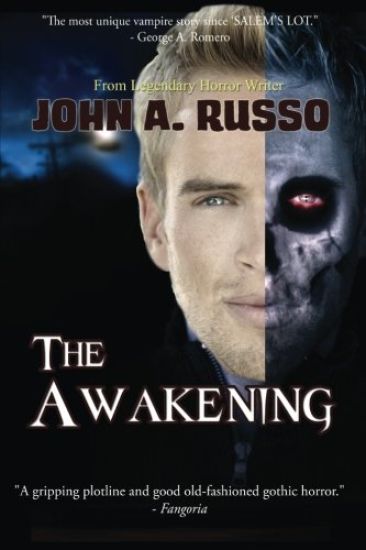
The Awakening

The Awakening

John Russo

Burning Bulb Publishing
2014
nidottu
"The most unique vampire story since 'SALEMS LOT." - George A. Romero"A gripping plotline and good old-fashioned Gothic horror." - FangoriaFor two hundred years, he has rested. Now he rises. Now he will be satisfied. Nothing can stop him. No one can resist him.Benjamin Latham is young and handsome, his eighteenth-century mind wakened to a bizarre twentieth-century world. And there is the need deep within . . . an animal need, frightening, murderous, unholy . . . a vital need that must be fed.And with his need comes a power over men and women to do his bidding, to quiet his dark craving . . .Until the murders begin.And the inquiries. All suggesting the same hideous truth.Now Benjamin must find a sanctuary: a lover, a partner, a friend. Someone who can share his darkness. Someone he can lead to . . . The Awakening.Publisher's note: This is the bestselling novel that the motion picture HEARTSTOPPER was based on.