Kirjojen hintavertailu. Mukana 11 244 527 kirjaa ja 12 kauppaa.

Kirjahaku

Etsi kirjoja tekijän nimen, kirjan nimen tai ISBN:n perusteella.

1000 tulosta hakusanalla John Sadler

Clan Donald's Greatest Defeat

Clan Donald's Greatest Defeat

John Sadler

The History Press Ltd
2002
nidottu
One of the bloodiest battles in Scottish history and a devastating defeat for Clan Donald. The battle of 'Red' Harlaw, fought on 24 July 1411 is one of the most famous fought on Scottish soil, and infamous for the ferocity and duration of the fighting. However, it still remains something of an enigma. Donald Lord of the Isles, spurred on by a dispute over the Earldom of Ross with the Scottish regent, Robert Duke of Albany, led a Highland host to burn Inverness and descend upon Aberdeen. At Inverurie the Highlanders clashed with the smaller Lowlander force of Alexander Earl of Mar, son of the infamous 'Wolf of Badenoch'. The Highland clansmen flung themselves against the Lowland spears, their fearsome long swords and sharp axes doing fearful execution. Wave upon wave of the mighty highland force charged forth, only to meet their death at the hands of the more efficient Lowland force, fighting against the odds. Casualties on both sides were heavy as the carnage continued throughout the day. At dusk, the Lord of the Isles withdrew, leaving the blood-soaked field to Mar's hard-won victory and almost 1,000 of his Highland soldiers dead.
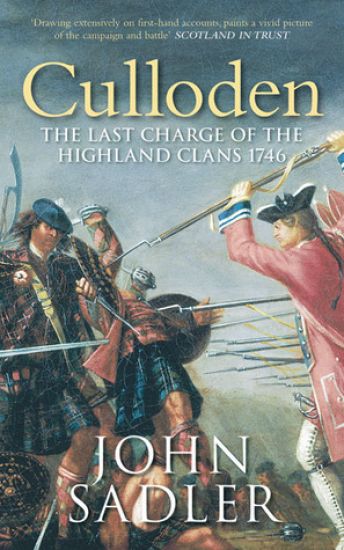
Culloden

Culloden

John Sadler

The History Press Ltd
2008
nidottu
A book about a battle, about the events that took place amidst the showers of sleet on that grim day Wednesday 16 April 1746, the last pitched battle to be fought on British soil, as 5,400 men of the Scottish Highland army fought 8,000 British army regulars. Not only did it mark the final ruin of the Jacobite cause that had erupted sporadically since the ousting of James II of England and VII of Scotland in 1689, it also witnessed the bitter death knell of the Highland clans.
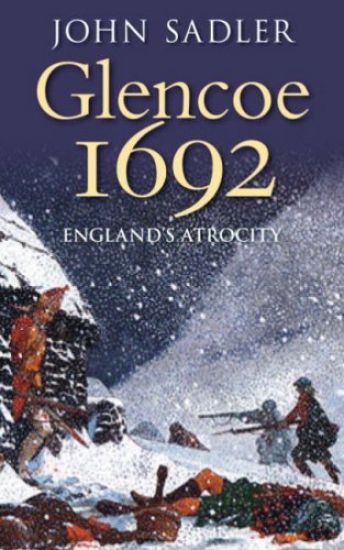
Glencoe 1692

Glencoe 1692

John Sadler

Tempus Publishing Ltd
2009
sidottu
This is the first new book on the subject for 40 years. Author's last book, "Culloden", was critically acclaimed: 'Drawing extensively on first-hand accounts, paints a vivid picture of the campaign and battle' - "Scotland In Trust": The magazine of the National Trust for Scotland. It is highly illustrated with over 50 illustrations, 25 in colour.The Massacre of Glencoe occurred in Glen Coe, early in the morning of 13 February 1692, when Clan Campbell sided with the English king and murdered members of Clan Macdonald. The massacre began simultaneously in three settlements along the glen - Invercoe, Inverrigan, and Achacon - although the killing took place all over the glen as fleeing MacDonalds were pursued. Thirty-eight MacDonalds from the Clan MacDonald of Glencoe were killed by the guests who had accepted their hospitality, on the grounds that the MacDonalds had not been prompt in pledging allegiance to the new king, William of Orange. Another forty women and children died of exposure after their homes were burned.
The Kingdoms of My Heart

The Kingdoms of My Heart

John Sadler

Christian Faith Publishing, Inc
2020
pokkari
After writing "Come Let Us Adore Him, " my first published book of poems of and about Jesus, I was at a stage of whether this endeavor was a "one and done" event. I was soon to find out it wasn't. The Holy Spirit kept giving me topics to run with and so I did. (Sometimes in the middle of the night.) After a short lull, I was back writing about more topics and insights about Jesus.I'm prayerful that some of what is in "The Kingdoms of my Heart" will have an intended effect for many someones to give their whole hearts to the one who gave us victory at the cross of calvary. For those who have already entered sainthood, this book is to reinforce and bolster your boldness for Jesus.
Border Fury

Border Fury

John Sadler

Routledge
2016
sidottu
Border Fury provides a fascinating account of the period of Anglo-Scottish Border conflict from the Edwardian invasions of 1296 until the Union of the Crowns under James VI of Scotland, James I of England in 1603.It looks at developments in the art of war during the period, the key transition from medieval to renaissance warfare, the development of tactics, arms, armour and military logistics during the period. All the key personalities involved are profiled and the typology of each battle site is examined in detail with the author providing several new interpretations that differ radically from those that have previously been understood.
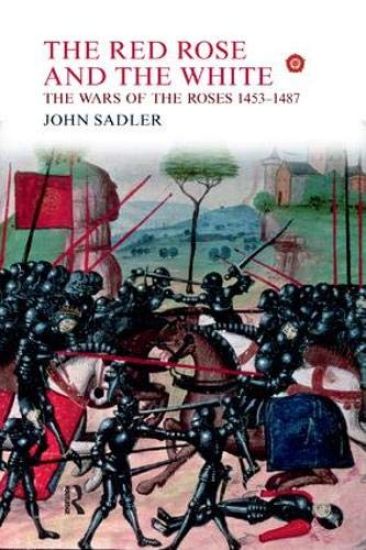
The Red Rose and the White

The Red Rose and the White

John Sadler

Routledge
2018
nidottu
If Richard III had not charged to his death at Bosworth, how different might the history of Britain have been?Beginning in 1453 and ending in 1487, The Red Rose and the White provides a gripping overview of the bitter dynastic struggle for supremacy that raged between the houses of York and Lancaster for thirty years, culminating in the dramatic events on Bosworth Field in 1485.As well as offering a comprehensive account of the campaigns, battles and sieges of the conflict, the book also assesses the commanders and men involved and considers the weapons and tactics employed. Photographs, maps and portraits of the principal characters help to bring the period to life, whilst the fast-paced narrative conveys a sense of what it was actually like to fight in battles such as Towton or Tewkesbury the effect of the arrow storm and the grim realities of hand-to-hand combat with edged and bladed weapons. Skilfully weaving in political and social events to place the conflict in its context, The Red Rose and the White is a fascinating exploration of the turbulent period that would change the course of British history forever.
The Hot Trod

The Hot Trod

John Sadler

AMBERLEY PUBLISHING
2022
sidottu
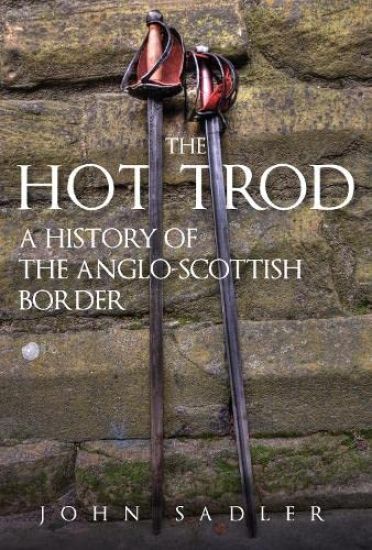
The 2014 Scottish independence debate and the re-ignition of the SNP’s call for a second vote in the wake of Brexit - and indeed Brexit itself - begs a reappraisal of what nationality and borderer identity actually mean in the twenty-first century and how the past affects this. As a borderer and historian John Sadler is uniquely qualified to examine the border from Roman times to today. He’s been in these Marches all his life, read about their wild inhabitants, traversed every inch and studied every castle, bastle, tower and battlefield. In July 2010 in Rothbury, a latter-day outlaw, Raoul Thomas Moat, a vicious petty criminal and murderer, holed up in Coquetdale as hundreds of police tried to flush him out. Nasty as he was, he became a kind of instant folk hero to some. Four centuries ago, Moat would barely have been noticed on the border - just another Reiver. From the Hammer of the Scots, William Wallace, Robert the Bruce and Mary, Queen of Scots, right through to today’s new nationalism, the story of the borderlands is tempestuous, bloody and fascinating. And a ‘Hot Trod’? If your cattle were stolen there was a legal requirement to pursue the rustlers within six days, otherwise you’re on a less enforceable Cold Trod.
D-Day

D-Day

John Sadler

AMBERLEY PUBLISHING
2022
pokkari
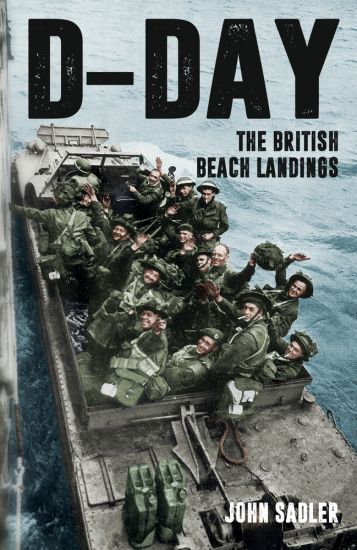
D-Day, the Allied invasion of Europe, began on the night of 5-6 June 1944. At 07.00 hours on the 6th, Britain's First Corps and XXX Corps came ashore on Sword and Gold beaches, to withering fire from the entrenched German forces. Within the initial and critical couple of hours some 30,000 soldiers, 300 guns and 700 armoured vehicles were landed, a magnificent achievement and, though the sands were soon choked with the mother of all logjams, exacerbated by a swelling tide, the British were firmly lodged; a bridgehead had been secured, albeit a rather flimsy one at this juncture. This is the story of the British soldiers’ experience of the beach landings on that fateful morning - the spearhead of Operation Overlord.
The Heavy Water War

The Heavy Water War

John Sadler

AMBERLEY PUBLISHING
2024
sidottu
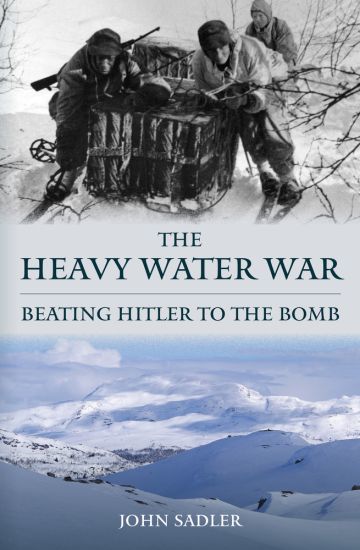
During the course of the Second World War, the Allies mounted a series of attempts to prevent Germany from manufacturing heavy water utilising hydroelectric plants in occupied Norway. These efforts comprised a mix of bomber and Commando raids. The overall aim was to stop Nazi Germany building a nuclear bomb. In fact, Hitler was never as close as the Allies thought, but the idea that his regime could construct and deploy such a device was the ultimate doomsday scenario, one that would have tilted the balance in favour of the Nazis. The mere threat might have been sufficient to force a negotiated peace with the perception of a Nazi bomb hanging over the world like a nuclear-powered sword of Damocles. Production, and therefore the Allied target, centred on the Vemork Power Station standing by the Rjukan Waterfall at Telemark. A series of daring raids – Operations Grouse, Freshman and Gunnerside – neutralised the plant’s capacity. In Operation Freshman, every single glider-borne paratrooper was either captured or killed. In February 1943, a force of SOE-trained Norwegian Commandos succeeded in sabotaging the plant’s production capacity. Further manufacturing effort was abandoned, and the Nazis attempted to spirit away the heavy water they had on the ferry SF Hydro. The Norwegians managed to sink the vessel in the deep waters of Lake Tinn. Using primary source material and published on the 80th anniversary of the sinking of the Hydro, The Heavy Water War tells a story of extraordinary courage and endurance. The stakes in any special forces raid in history have never been higher.
The Hot Trod

The Hot Trod

John Sadler

AMBERLEY PUBLISHING
2024
pokkari
The 2014 Scottish independence debate and the re-ignition of the SNP’s call for a second vote in the wake of Brexit - and indeed Brexit itself - begs a reappraisal of what nationality and borderer identity actually mean in the twenty-first century and how the past affects this. As a borderer and historian John Sadler is uniquely qualified to examine the border from Roman times to today. He’s been in these Marches all his life, studied and read about their wild inhabitants, traversed every inch and studied every castle, bastle, tower and battlefield. In July 2010 in Rothbury, a latter-day outlaw, Raoul Thomas Moat, a vicious petty criminal and murderer, holed up in Coquetdale as hundreds of police tried to flush him out. Nasty as he was, he became a kind of instant folk hero to some. Four centuries ago, Moat would barely have been noticed on the border - just another Reiver. From the Hammer of the Scots, William Wallace, Robert the Bruce and Mary, Queen of Scots, right through to today’s new nationalism, the story of the borderlands is tempestuous, bloody and fascinating. And a ‘Hot Trod’? If your cattle were stolen there was a legal requirement to pursue the rustlers within six days, otherwise you’re on a less enforceable Cold Trod.
Eric Bloodaxe The Viking

Eric Bloodaxe The Viking

John Sadler

AMBERLEY PUBLISHING
2025
sidottu
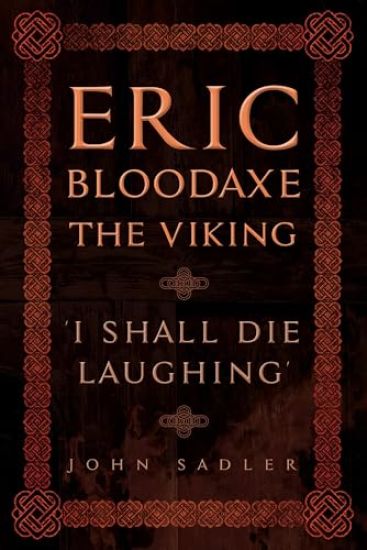
Eric Bloodaxe (or Brother-Slayer) might well claim to be the last of the Vikings, his career a real-life episode of Game of Thrones, his life a true Norse saga, the realities teased out by the author from sparse chronicle sources and enigmatic, often contradictory sagas. The whole picture nevertheless encapsulates the very tenor and essence of the Viking Age. Saga sources tell us that by the age of twelve Eric was already a fearsome warrior, leading murderous raids against the Balts and Scots, building his reputation and harvesting resources to pay his hird. He would be needing both if he was to rule. In a bloody civil war with several of his half-brothers, he defeated and killed them to rule Norway, but his personal dominion became increasingly oppressive and despotic. Forced into exile in Orkney, he became an overlord there and a pirate. As ruler of Northumbria, he would die at the battle of Stainmore in 954 at the incredible age of sixty-nine. In retelling the story of Eric Bloodaxe, John Sadler analyses the rise of the House of Wessex, the Norse kingdom of Jorvik, Athelstan and the battle of Brunanburh.
The Gurkha Way

The Gurkha Way

John Sadler

PEN SWORD BOOKS LTD
2023
sidottu
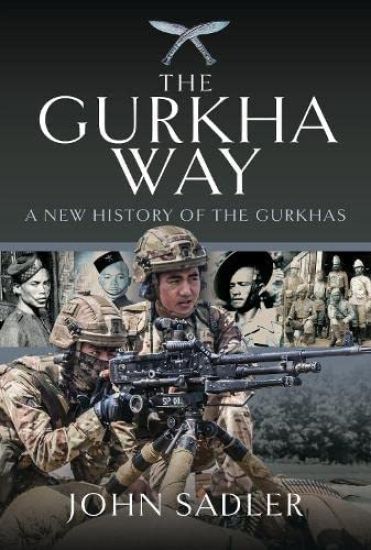
In the 18th century in the town of Gorkha, just north of Kathmandu, ruler Prithvi Narayan fought campaigns against his neighbours and the British. During the fighting his warriors, renowned for their aggression and courage, gained the respect of the British, who appreciated that the steadfast warriors would make excellent soldiers. Upon the declaration of peace in 1816, a partnership was born. This alliance would play a vital role in UK defence over the next two centuries, from surviving the Indian Mutiny of 1857 and fighting in the jungles of Burma to the Khyber Pass, which would keep the Gurkhas in action for ninety years. The First World War sent the Regiment to the trenches, where battalion after battalion was decimated. Some 20 Gurkha battalions were deployed in the Second World War, which was soon increased to 45 following Dunkirk. Around 250,000 Gurkha soldiers would serve and were deployed most significantly in North Africa but also served with distinction in the Italian Campaign and Monte Cassino, as well as the decisive battles of Imphal and Kohima in the Far East. Whilst the Gurkhas saw a drop in overall numbers post-war, they have continued to make integral contributions to many operations, including the Falklands and in Afghanistan, which this book examines extensively, with a special focus on Operation Herrick. In The Gurkha Way, John Sadler tells the story of the Gurkhas from their inception to modern day through interviews, unpublished diaries and correspondence. With over 200 years' experience, these steadfastly loyal soldiers are a link to an imperial past but also a key component of the modern British army. There is no other comparable unit in any of the world's armies, (with the obvious exception of the Indian Army), or one more respected and loved by the British.
The Second Baron's War

The Second Baron's War

John Sadler

PEN SWORD BOOKS LTD
2022
nidottu
For two years in the mid-thirteenth century England was torn by a bloody civil war between the king and his nobles. For a short time, the country came close to unseating the monarchy, and the outcome changed the course of English history. Yet this critical episode receives far less attention than the Wars of the Roses and the English Civil Wars that followed. John Sadler, in this highly readable and perceptive study of the Barons' War, describes events in vivid detail. He explores the leading personalities, whose bitter quarrel gave rise to the conflict - Henry III, his son Prince Edward, later Edward I, and their most famous opponent, Simon de Montfort, whose masterful charisma galvanized support among the discontented nobility. The clash of interests between the king and his overmighty subjects is reconsidered, as are the personal and political tensions that polarized opinion and tested loyalties to the limit. But the main emphasis of John Sadler's account is on events in the field, in particular the two major campaigns that determined the course of the war and indeed the future government of England - the battles fought at Lewes and Evesham.
Ghost Patrol

Ghost Patrol

John Sadler

Casemate Publishers
2020
nidottu
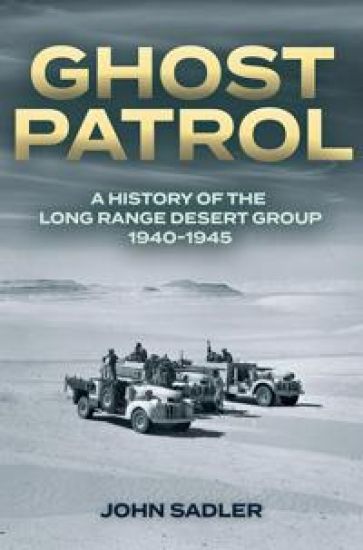
The origins of most of the west’s Special Forces can be traced back to the Long Range Desert Group which operated across the limitless expanses of the Libyan Desert, an area the size of India, during the whole of the Desert War from 1940 – 1943. After the defeat of the Axis in North Africa they adapted to serve in the Mediterranean, the Greek islands, Albania, Yugoslavia and Greece. They became the stuff of legend. The brainchild of Ralph Bagnold, a pre-war desert explorer, featured, in fictional terms in The English Patient, who put all of his expertise into the creation of a new and, by the standards of the day, highly unorthodox unit. Conventional tactical thinking shunned the deep heart of the vast desert as it was thought to be a different planet, a harsh, inhospitable wilderness where British forces could not possibly survive even less operate effectively. Bagnold, Pat Clayton and Bill Kennedy Shaw created a whole new type of warfare.Using specially adapted vehicles and the techniques they’d learned in the‘30s, recruiting only men of the right temperament and high levels of fitness and endurance, the first patrols set out bristling with automatic weapons. The 30-cwt Chevy truck and the famous Jeep have become iconic, the LRDG, in a dark hour, was the force which took the fight to the enemy, roving over the deep desert – a small raider’s paradise, attacking enemy convoys and outposts, destroying aircraft and supplies, forcing the Axis to expend more and more resources protecting their vulnerable lines.Their work was often dangerous, always taxing, exhausting and uncomfortable. They were a new breed of soldier. The Axis never managed to equip any similar unit, they never escaped their fear of the scorching wilderness. Once the desert war was won they transferred their skills to the Mediterranean sector, re-training as mountain guerrillas, serving in the ill-fated Dodecanese campaign, then in strife torn Albania, Yugoslavia and Greece, fighting alongside the mercurial partisans at a time the Balkans were sliding towards communist domination or civil war.In addition LRDG worked alongside the fledgling SAS and they established, beyond all doubt, the value of highly trained Special Forces, a legacy which resonates today.
Scottish Battles

Scottish Battles

John Sadler

Birlinn Ltd
2016
nidottu
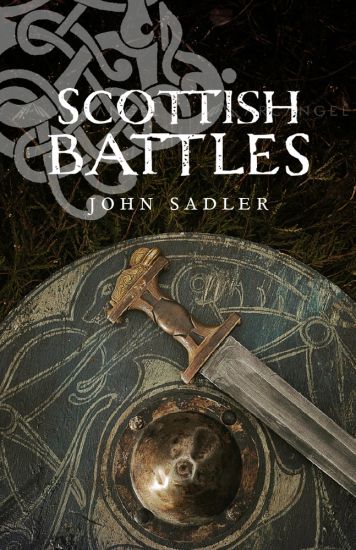
Scottish history has been shaped and defined by a series of great battles. John Sadler gives the first full military history of Scotland for many years. From Mons Graupius to Culloden, he shows how terrain and politics shaped the campaigns and decisive engagements we still remember today. Each chapter also features sections on the development of warfare - its tactics, equipment and styles of fighting. For the military historian, Scotland is a fascinating example of how a small country can fight off domination by a far larger neighbour. From Celtic warfare to the feudal host to the professional armies of the eighteenth century, from guerrilla warfare to the pitched battle, from siege to Border Reiver, Scotland is unique in having had almost every major type of warfare taking place within its frontiers. Battles such as Bannockburn, Flodden, and Culloden, have a resonance and impact far beyond Scotland. John Sadler weaves chronicle, narrative and analysis together in a masterly way, recreating the drama and passion of centuries past.
Blood Divide

Blood Divide

John Sadler

Lion Fiction
2014
nidottu
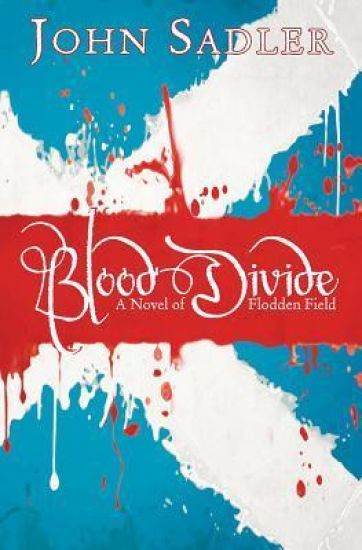
Flodden , September 1513. Across a boggy valley, two armies confront each other. The Scots, backed by European allies, have superior numbers and the latest cannon to challenge a depleted English force. The English are furious and humiliated that they are not fighting alongside King Henry against their real enemy in France. The Battle of Flodden would prove one of the bloodiest ever fought on British soil, shaping Scottish national identity to this day. Sir Thomas Howard, shrewd but ancient, leads the English forces. Alexander, 3rd Lord Hume, bold but impetuous, leads the Scots. Isabella Hoppringle, Abbess of Coldstream, young and determined, struggles to keep her footing among the tides of violence. John Heron, Bastard of Ford, swaggering, violent, and disreputable, the black sheep of a good English family, finds profit while men die. Blood Divide sets us right at the heart of the action; the stink, sweat and fear, the curtain of red mist.
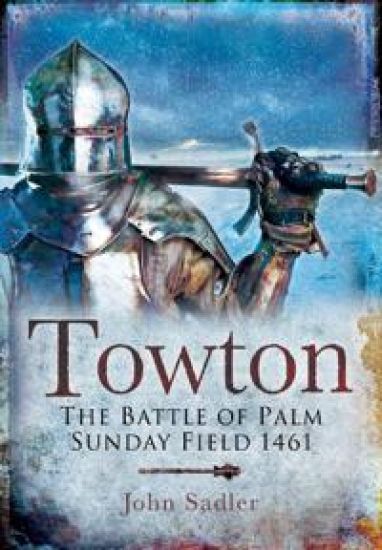
Towton: The Battle of Palm Sunday Field

Towton: The Battle of Palm Sunday Field

John Sadler

Pen Sword Military
2014
nidottu
'An astonishingly complete account of this most significant battle in the Wars of the Roses. Impeccable research, clear, concise and fascinating maps, and a narrative that persuades you you're an onlooker at the very time these astounding events took place, this is as complete a history of an English medieval battle as I have ever read. Staggering.' Books Monthly 'Towton is a masterful account of a subject which had been much written about over the years - John Sadler sets his book apart from the rest by bringing his own background research and imagination into play...[He brings] a battle which took place over 500 years ago vividly back to life.' Suite101.com 'Mr Sadler has achieved what he set out to do and has produced a readable and understandable account of the battle of Towton and the events leading up to it, especially for those less familiar with the subject. However, the more knowledgeable can find plenty of positive new aspects as well, in particular the chapters covering the period 1400-1460 and the subsequent war in the North between 1461 to 1464.' Medieval Warfare
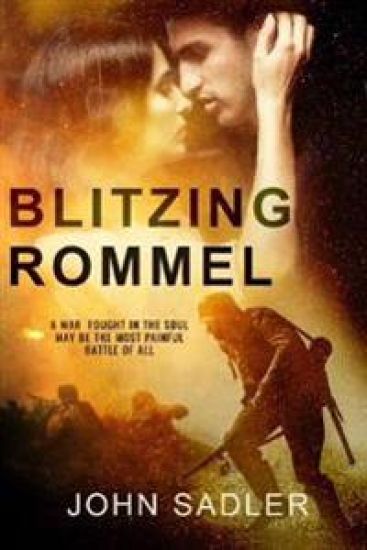
Blitzing Rommel

Blitzing Rommel

John Sadler

Lume Books
2020
nidottu
When Joe finds himself in North Africa, he finds not only war and comradeship, but also love. Could this be the turning point? Yet as he makes plans for a (slightly) safer future, one more challenge calls. What else can a man expect when he keeps company with the newly-born SAS?
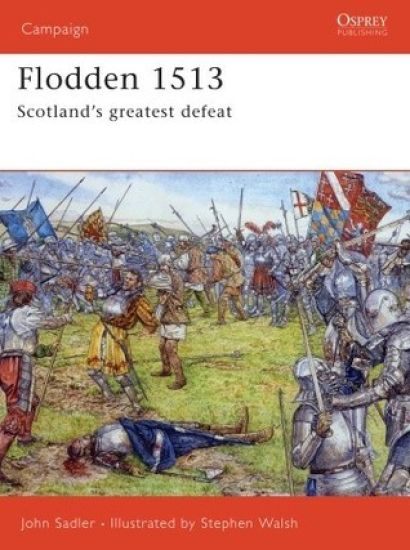
Flodden 1513

Flodden 1513

John Sadler

Osprey Publishing
2006
nidottu
The Scottish and English armies clashed on 9 September 1513 at Flodden. The Scots were superior in terms of artillery and well-trained in the new Renaissance tactics, whereas the English deployed more traditional methods. Historically, this battle is well-known as the last in which the longbow played a role and the first in which artillery had a considerable effect. Recognized as the greatest Scottish defeat in history, it resulted in the death of Scotland's king. It plunged the country into mourning and extinguished Scotland's threat to Henry VIII's reign for the next three decades. This book examines battle, the different tactics of the opposing armies and the personalities of the commanders.