
Kirjahaku
Etsi kirjoja tekijän nimen, kirjan nimen tai ISBN:n perusteella.
1000 tulosta hakusanalla John Street

The Life and Experience of and Some Traces of the Lord's Gracious Dealings Towards the Author John Gibbs, Minister of the Gospel, at the Chapel in Saint John Street, Lewes, Sussex
John Gibbs
Gale and the British Library
1827
pokkari

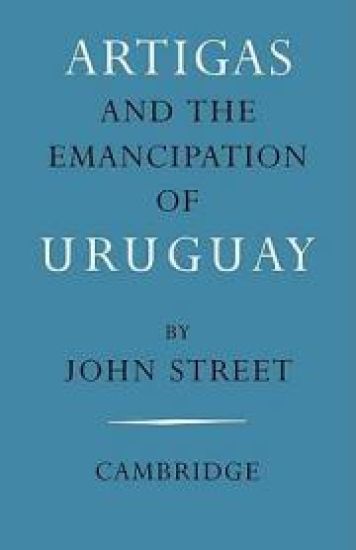
Jose Artigas, the national hero of Uruguay, fought in the years 1811–1820 for the creation and maintenance of an independent state on the banks of the River Plate. Dr Street's study takes Artigas as the principal figure and Uruguay as the chief state concerned, but it is also a history of the whole basin of the Plate during the period, giving proper weight to the Spanish and Portuguese influence, British commercial interests and military invasions, and the local rivalry between Montevideo and Buenos Aires. Uruguay eventually became a buffer state between the once Portuguese Brazil and the once Spanish Argentina. Dr Street shows that there had long been a feeling of Uruguayan nationalism, though this was at one time counterbalanced by a movement to federate the countries of the Plate. These tendencies, and the history of the region at this period are important in understanding the present status and relationships of Argentina, Uruguay and Brazil.
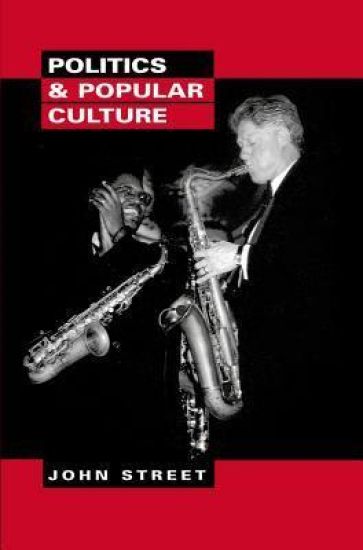
In an age where film stars become presidents and politicians appear in pop videos, politics and popular culture have become inextricably interlinked. In this exciting new book, John Street provides a broad survey and analysis of this relationship.


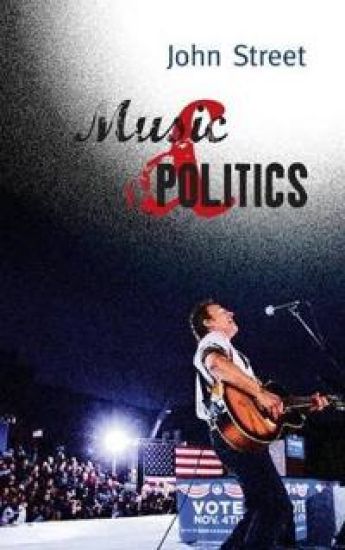
It is common to hear talk of how music can inspire crowds, move individuals and mobilise movements. We know too of how governments can live in fear of its effects, censor its sounds and imprison its creators. At the same time, there are other governments that use music for propaganda or for torture. All of these examples speak to the idea of music's political importance. But while we may share these assumptions about music's power, we rarely stop to analyse what it is about organised sound - about notes and rhythms - that has the effects attributed to it. This is the first book to examine systematically music's political power. It shows how music has been at the heart of accounts of political order, at how musicians from Bono to Lily Allen have claimed to speak for peoples and political causes. It looks too at the emergence of music as an object of public policy, whether in the classroom or in the copyright courts, whether as focus of national pride or employment opportunities. The book brings together a vast array of ideas about music's political significance (from Aristotle to Rousseau, from Adorno to Deleuze) and new empirical data to tell a story of the extraordinary potency of music across time and space. At the heart of the book lies the argument that music and politics are inseparably linked, and that each animates the other.
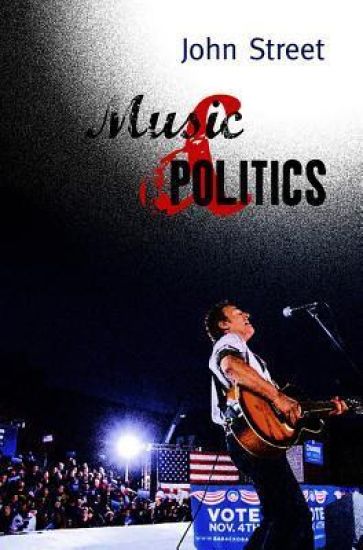
It is common to hear talk of how music can inspire crowds, move individuals and mobilise movements. We know too of how governments can live in fear of its effects, censor its sounds and imprison its creators. At the same time, there are other governments that use music for propaganda or for torture. All of these examples speak to the idea of music's political importance. But while we may share these assumptions about music's power, we rarely stop to analyse what it is about organised sound - about notes and rhythms - that has the effects attributed to it. This is the first book to examine systematically music's political power. It shows how music has been at the heart of accounts of political order, at how musicians from Bono to Lily Allen have claimed to speak for peoples and political causes. It looks too at the emergence of music as an object of public policy, whether in the classroom or in the copyright courts, whether as focus of national pride or employment opportunities. The book brings together a vast array of ideas about music's political significance (from Aristotle to Rousseau, from Adorno to Deleuze) and new empirical data to tell a story of the extraordinary potency of music across time and space. At the heart of the book lies the argument that music and politics are inseparably linked, and that each animates the other.
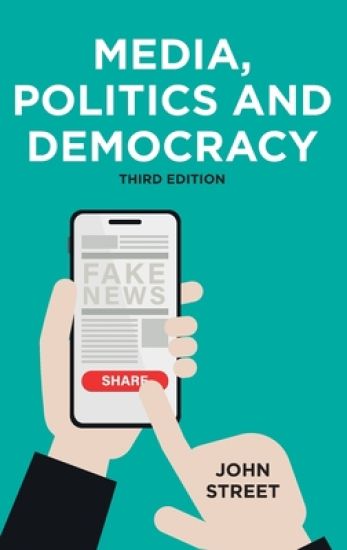
The third edition of Media, Politics and Democracy examines the fraught debate over media influence, who wields it and what effect social and traditional media has on what we think, how we behave, and how we vote. Charting the media conglomerates of old, the alarming rise of the Tech Giants in recent decades, concerns over ‘fake news’, and the use of social media by political candidates, this book places contemporary anxieties into historical context and compares the response to such issues across different states and societies. Using examples from around the world, Street tackles the changing nature of political communications and brings under scrutiny the question of how a democratic society can function alongside a democratic media.Suitable for students studying politics and the media, political communications and other related fields.New to this Edition:- Completely revised and updated version of Mass Media, Politics and Democracy.- Includes a new chapter on the power of the Tech Giants.- Contains detailed accounts of the significance of figures such as Donald Trump, Rupert Murdoch and Mark Zuckerberg.- Student questions and issues for debate interspersed throughout the book.
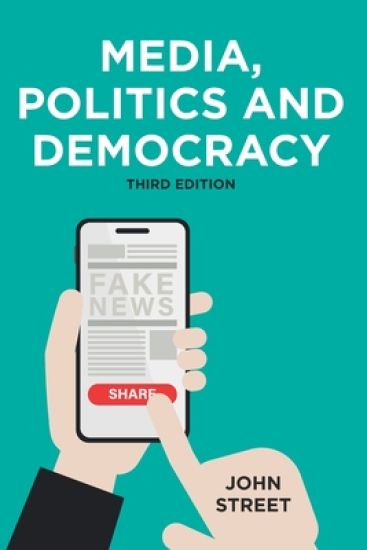
The third edition of Media, Politics and Democracy examines the fraught debate over media influence, who wields it and what effect social and traditional media has on what we think, how we behave, and how we vote. Charting the media conglomerates of old, the alarming rise of the Tech Giants in recent decades, concerns over ‘fake news’, and the use of social media by political candidates, this book places contemporary anxieties into historical context and compares the response to such issues across different states and societies. Using examples from around the world, Street tackles the changing nature of political communications and brings under scrutiny the question of how a democratic society can function alongside a democratic media.Suitable for students studying politics and the media, political communications and other related fields.New to this Edition:- Completely revised and updated version of Mass Media, Politics and Democracy.- Includes a new chapter on the power of the Tech Giants.- Contains detailed accounts of the significance of figures such as Donald Trump, Rupert Murdoch and Mark Zuckerberg.- Student questions and issues for debate interspersed throughout the book.
This widely used and popular text provides a broad-ranging analysis of the relationship between the media and politics. Revised and updated throughout, this second edition includes coverage of the mediatization of politics; of E-politics and governance; of the impact of 'reality TV'; and of issues raised by the reporting of war in Iraq.
This widely used and popular text provides a broad-ranging analysis of the relationship between the media and politics. Revised and updated throughout, this second edition includes coverage of the mediatization of politics; of E-politics and governance; of the impact of 'reality TV'; and of issues raised by the reporting of war in Iraq.

Our Subversive Voice
John Street; Oskar Cox Jensen; Alan Finlayson; Angela McShane; Matthew Worley
MCGILL-QUEEN'S UNIVERSITY PRESS
2025
sidottu
Whether accompanying a march, a sit-in, or a confrontation with police, songs and protest are inextricably linked. As a tool for political activism, the protest song spells out the issues at the heart of each cause. Over a surprisingly long history, it has been used to spread ideas, inspire political imagination, and motivate political action.The protest song is - and has always been - a form of political oratory as vital to political representation as it is to performance. Investigating five centuries of English history, Our Subversive Voice establishes that the protest song is not merely the preserve of singer-songwriters; it is a mode of political communication that has been used to confront many systems of oppression across its many genres, from street ballads to art song, grime to hymns, and music hall to punk. Our Subversive Voice traces the history of the protest song, examines its rhetorical forms, and explores the conditions of its genesis. It recounts how these songs have addressed discrimination and inequality, exploitation and the environment, and immigration and identity, and how institutions and organizations have sought both to facilitate and to suppress them. Drawing on a large and diverse corpus of songwriters, this book argues that song does more than accompany protest: it choreographs and communicates it.The protest song, Our Subversive Voice shows, is an enduring, affecting, and effective means of expression and an essential element in understanding the drive to create political change, in the past and for the future.
From Entertainment to Citizenship
John Street; Sanna Inthorn; Martin Scott
Manchester University Press
2013
sidottu
From entertainment to citizenship reveals how the young use shows like X-factor to comment on how power ought to be used, and how they respond to those pop stars - like Bono and Bob Geldof - who claim to represent them. It explores how young people connect the pleasures of popular culture to the world at large. For them, popular culture is not simply a matter of escapism and entertainment, but of engagement too. The place of popular culture in politics, and its contribution to democratic life, has too often been misrepresented or misunderstood. This book provides the evidence and analysis that will help correct this misperception. It documents the voices of young people as they talk about popular culture (what they love as well as what they dislike), and as they reveal their thoughts about the world they inhabit. It will be of interest to those who study media and culture, and those who study politics.
The First Officer's Report - Large Print Format: The Inside Account Of Flight 919 And Its Place In The Age Of Terror
John Street; Shawn Rhodes
Createspace Independent Publishing Platform
2011
nidottu