

Kirjahaku
Etsi kirjoja tekijän nimen, kirjan nimen tai ISBN:n perusteella.
1000 tulosta hakusanalla John T. Flanagan

James Hall, Literary Pioneer of the Ohio Valley
John T. Flanagan
University of Minnesota Press
1941
nidottu
James Hall, Literary Pioneer of the Ohio Valley was first published in 1941. Minnesota Archive Editions uses digital technology to make long-unavailable books once again accessible, and are published unaltered from the original University of Minnesota Press editions.For generations the attention of students of American literature has been directed toward the Atlantic seaboard, but the rise of regional literature and the development of genuine artists in various parts of the United States has caused them to turn their scrutiny westward. High on the western horizon of the early 1800's stands James Hall, a literary pioneer in the Ohio Valley, one of the minor literary figures whose influence on the artistic consciousness of the frontier was widely felt.Author, critic, journalist, editor, publisher, and historian—few men have had more to do with the early cultural development of the Middle West. Every historian of the Ohio and Mississippi valleys is indebted to Hall for facts and details of life in America in the early nineteenth century.A circuit judge when there were only 55,000 people in all Illinois—he had an unparalleled opportunity to observe the life and customs of the times. A publisher of the first literary magazine west of the Ohio when there were more Indians and horse thieves in the state than there were literate readers—he had a virgin field for awakening the artistic, literary, even scientific, interest of the frontier.He organized the first State Historical Society of Illinois, was state treasurer, published two newspapers, welcomed Lafayette on his triumphal tour, edited the first literary annual in the West, awarded a prize to Harriet Beecher (Stowe) for her "New England Sketch," published in his magazine. Moving to Cincinnati when it was at the peak of its sectional importance, an intellectual and cultural oasis on the frontier, Hall continued his sponsorship of education and culture.James Hall's own published works were multitudinous in the fields of fiction, biography, poetry, criticism, history, and anthropology. His picture of the prairies in his day is still one of the best accounts ever written and his Indian Tribes of North America a monumental volume, but none of his works is of first-rate importance. Nevertheless, because of the tremendous variety of his activities and the breadth of his influence, he left his stamp upon the history and the literature of the region.Hall's work is an honest, vigorous record of the path of the American pioneer in the days of the rapid growth and expansion of a new nation, and an understanding of his contribution is obligatory for every serious student of American literature.

John T. W. Mitchell, Pioneer of Consumers' Co-operation
Percy Redfern
Hutson Street Press
2025
sidottu
John T. W. Mitchell, Pioneer of Consumers' Co-operation
Percy Redfern
Hutson Street Press
2025
pokkari


John T. Toy Publisher: On The Christian Doctrine Of The Teac
John T. Toy Publisher
KESSINGER PUBLISHING, LLC
2009
nidottu
The Civil War Diary of John T. Buegel, Union Soldier, Part 2
John T. Buegel
Literary Licensing, LLC
2011
nidottu
Our schools and colleges. By Rev. John T. Huntington ...
John T Huntington
University of Michigan Library
2011
pokkari

John T. Racanelli was born in Lansdowne, Pennsylvania in 1925. The son of Italian immigrants, John Sr. and Mary Racanelli, he was raised in New York City and later in White Plains, New York. After high school, he enlisted in the United States Army Air Corps (now called the Air Force) and served as Lieutenant as an Aerial Navigator. He served in World War II and the Korean War for over 3 years in active duty.He was the first person in his family to attend college where he attended the University of California at Berkeley and later Hastings Law School. After college and law school, he started a private practice in San Francisco in 1953. In 1955, he moved to Sunnyvale and started practicing there. In his private practice, he specialized as a trial lawyer in all types of civil and criminal proceedings. His partners included the Honorable James Duvaras (1955 - 1963) and Anthony J. Treppel, Esq. (1963 - 1964).He was appointed to Superior Court Judge in Santa Clara County by Governor (Pat) Brown, Sr., and sworn in on October 16, 1964. He served in that capacity until he was appointed by Governor (Jerry) Brown, Jr. on May 6, 1977 to Presiding Justice, Court of Appeal, First Appellate District, Division One (succeeding Presiding Justice John B. Molinari). He was sworn in on June 3, 1977 and confirmed by electorate on November 7, 1978, and later reconfirmed by electorate on November 2, 1982. He retired from the bench on deferred retirement on January 31, 1991.Since his retirement, he has enjoyed his life with his wife of over 30 years, Betty Medsger. They live in New York City.
![Benjamin Franklin (1889). By: John T. (Torrey) Morse: Benjamin Franklin (January 17, 1706 [O.S. January 6, 1705] - April 17, 1790) was one of the Fo](/covers/9781540823199.jpg)
Benjamin Franklin (1889). By: John T. (Torrey) Morse: Benjamin Franklin (January 17, 1706 [O.S. January 6, 1705] - April 17, 1790) was one of the Fo
John T. Morse
Createspace Independent Publishing Platform
2016
nidottu
John Torrey Morse (1840-1937) was an American historian and biographer. He was born in Boston, Massachusetts on Jan. 9, 1840, and lived in that city as a lawyer. Morse was the editor of the 'American Statesmen Series, ' and published biographies of Alexander Hamilton in two volumes, considered his most significant work, He also wrote biographies on John and J. Q. Adams, Jefferson, Lincoln, Franklin, and Dr. Holmes. Morse also authored Banks and Banking, Arbitration and Award and Famous Trials....... Benjamin Franklin (January 17, 1706 O.S. January 6, 1705] - April 17, 1790) was one of the Founding Fathers of the United States. Franklin was a renowned polymath and a leading author, printer, political theorist, politician, freemason, postmaster, scientist, inventor, civic activist, statesman, and diplomat. As a scientist, he was a major figure in the American Enlightenment and the history of physics for his discoveries and theories regarding electricity. As an inventor, he is known for the lightning rod, bifocals, and the Franklin stove, among other inventions.He facilitated many civic organizations, including Philadelphia's fire department and The University of Pennsylvania, an Ivy League institution. Franklin earned the title of "The First American" for his early and indefatigable campaigning for colonial unity, initially as an author and spokesman in London for several colonies. As the first United States Ambassador to France, he exemplified the emerging American nation.Franklin was foundational in defining the American ethos as a marriage of the practical values of thrift, hard work, education, community spirit, self-governing institutions, and opposition to authoritarianism both political and religious, with the scientific and tolerant values of the Enlightenment. In the words of historian Henry Steele Commager, "In a Franklin could be merged the virtues of Puritanism without its defects, the illumination of the Enlightenment without its heat."To Walter Isaacson, this makes Franklin "the most accomplished American of his age and the most influential in inventing the type of society America would become." Franklin became a successful newspaper editor and printer in Philadelphia, the leading city in the colonies, publishing the Pennsylvania Gazette at the age of 23.He became wealthy publishing this and Poor Richard's Almanack, which he authored under the pseudonym "Richard Saunders". After 1767, he was associated with the Pennsylvania Chronicle, a newspaper that was known for its revolutionary sentiments and criticisms of the British policies. He pioneered and was first president of the The Academy and College of Philadelphia which opened in 1751 and later became the University of Pennsylvania. He organised and was the first secretary of the American Philosophical Society and was elected president in 1769. Franklin became a national hero in America as an agent for several colonies when he spearheaded an effort in London to have the Parliament of Great Britain repeal the unpopular Stamp Act. An accomplished diplomat, he was widely admired among the French as American minister to Paris and was a major figure in the development of positive Franco-American relations. His efforts proved vital for the American Revolution in securing shipments of crucial munitions from France. He was promoted to deputy postmaster-general for the British colonies in 1753, having been Philadelphia postmaster for many years, and this enabled him to set up the first national communications network. After the Revolution, he became the first US Postmaster General. He was active in community affairs and colonial and state politics, as well as national and international affairs. From 1785 to 1788, he served as governor of Pennsylvania. He initially owned and dealt in slaves but, by the 1750s, he argued against slavery from an economic perspective and became one of the most prominent abolitionists....
![John Adams. By: John T. (Torrey) Morse (1840-1937) was an American historian and biographer.: John Adams (October 30 [O.S. October 19]](/covers/9781540823434.jpg)
John Adams. By: John T. (Torrey) Morse (1840-1937) was an American historian and biographer.: John Adams (October 30 [O.S. October 19]
John T. Morse
Createspace Independent Publishing Platform
2016
nidottu
John Torrey Morse (1840-1937) was an American historian and biographer. He was born in Boston, Massachusetts on Jan. 9, 1840, and lived in that city as a lawyer. Morse was the editor of the 'American Statesmen Series, ' and published biographies of Alexander Hamilton in two volumes, considered his most significant work, He also wrote biographies on John and J. Q. Adams, Jefferson, Lincoln, Franklin, and Dr. Holmes. Morse also authored 'Banks and Banking, Arbitration and Award' and 'Famous Trials...... John Adams (October 30 O.S. October 19] 1735 - July 4, 1826) was an American patriot who served as the second President of the United States (1797-1801) and the first Vice President (1789-97).He was a lawyer, diplomat, and statesman, and, as a Founding Father, a leader of American independence from Great Britain.Adams was a political theorist in the Age of Enlightenment who promoted republicanism and a strong central government. His innovative ideas were frequently published. He was also a dedicated diarist and correspondent, particularly with his wife and key advisor Abigail. He collaborated with his cousin, revolutionary leader Samuel Adams, but he established his own prominence prior to the American Revolution. After the Boston Massacre, he provided a successful (though unpopular) legal defense of the accused British soldiers, in the face of severe local anti-British sentiment and driven by his devotion to the right to counsel and the "protect ion] of innocence". Adams was a delegate from Massachusetts to the Continental Congress, where he played a leading role in persuading Congress to declare independence. He assisted Thomas Jefferson in drafting the Declaration of Independence in 1776, and was its foremost advocate in the Congress. As a diplomat in Europe, he helped negotiate the eventual peace treaty with Great Britain, and acquired vital governmental loans from Amsterdam bankers. Adams was the primary author of the Massachusetts Constitution in 1780 which influenced American political theory, as did his earlier Thoughts on Government (1776). Adams' credentials as a revolutionary secured for him two terms as President George Washington's vice president (1789 to 1797) and also his own election in 1796 as the second president. In his single term as president, he encountered fierce criticism from the Jeffersonian Republicans, as well as the dominant faction in his own Federalist Party, led by his rival Alexander Hamilton. Adams signed the controversial Alien and Sedition Acts, and built up the army and navy in the face of an undeclared naval "Quasi-War" with France. The major accomplishment of his presidency was a peaceful resolution of the conflict in the face of Hamilton's opposition. Due to his strong posture on defense, Adams is "often called the father of the American Navy".He was the first U.S. president to reside in the executive mansion, now known as the White House.In 1800, Adams lost re-election to Thomas Jefferson and retired to Massachusetts. He eventually resumed his friendship with Jefferson upon the latter's own retirement by initiating a correspondence which lasted fourteen years. 6] He and his wife established a family of politicians, diplomats, and historians now referred to as the Adams political family. Adams was the father of John Quincy Adams, the sixth President of the United States. He died on the fiftieth anniversary of the adoption of the Declaration of Independence. Modern historians in the aggregate have favorably ranked his administration.....
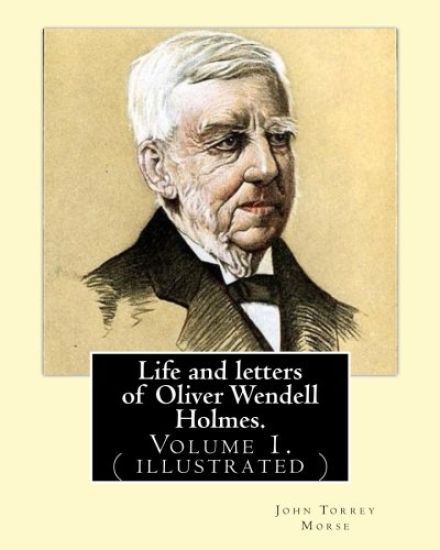
Life and letters of Oliver Wendell Holmes. By: John T. Morse (1840-1937) was an American historian and biographer.: Volume 1.( illustrated).Oliver Wen
John T. Morse
Createspace Independent Publishing Platform
2016
nidottu
John Torrey Morse (1840-1937) was an American historian and biographer. He was born in Boston, Massachusetts on Jan. 9, 1840, and lived in that city as a lawyer. Morse was the editor of the 'American Statesmen Series, ' and published biographies of Alexander Hamilton in two volumes, considered his most significant work, He also wrote biographies on John and J. Q. Adams, Jefferson, Lincoln, Franklin, and Dr. Holmes. Morse also authored 'Banks and Banking', 'Arbitration and Award' and 'Famous Trials........ Oliver Wendell Holmes Sr. (August 29, 1809 - October 7, 1894) was an American polymath based in Boston. A member of the Fireside Poets, his peers acclaimed him as one of the best writers of the day. His most famous prose works are the "Breakfast-Table" series, which began with The Autocrat of the Breakfast-Table (1858). He was also an important medical reformer. In addition to his work as an author and poet, Holmes also served as a physician, professor, lecturer, and inventor, and although he never practiced it, he received formal training in law. Born in Cambridge, Massachusetts, Holmes was educated at Phillips Academy and Harvard College. After graduating from Harvard in 1829, he briefly studied law before turning to the medical profession. He began writing poetry at an early age; one of his most famous works, "Old Ironsides", was published in 1830 and was influential in the eventual preservation of the USS Constitution. Following training at the prestigious medical schools of Paris, Holmes was granted his M.D. from Harvard Medical School in 1836. He taught at Dartmouth Medical School before returning to teach at Harvard and, for a time, served as dean there. During his long professorship, he became an advocate for various medical reforms and notably posited the controversial idea that doctors were capable of carrying puerperal fever from patient to patient. Holmes retired from Harvard in 1882 and continued writing poetry, novels and essays until his death in 1894. Surrounded by Boston's literary elite-which included friends such as Ralph Waldo Emerson, Henry Wadsworth Longfellow, and James Russell Lowell-Holmes made an indelible imprint on the literary world of the 19th century. Many of his works were published in The Atlantic Monthly, a magazine that he named. For his literary achievements and other accomplishments, he was awarded numerous honorary degrees from universities around the world. Holmes's writing often commemorated his native Boston area, and much of it was meant to be humorous or conversational. Some of his medical writings, notably his 1843 essay regarding the contagiousness of puerperal fever, were considered innovative for their time. He was often called upon to issue occasional poetry, or poems written specifically for an event, including many occasions at Harvard. Holmes also popularized several terms, including "Boston Brahmin" and "anesthesia".
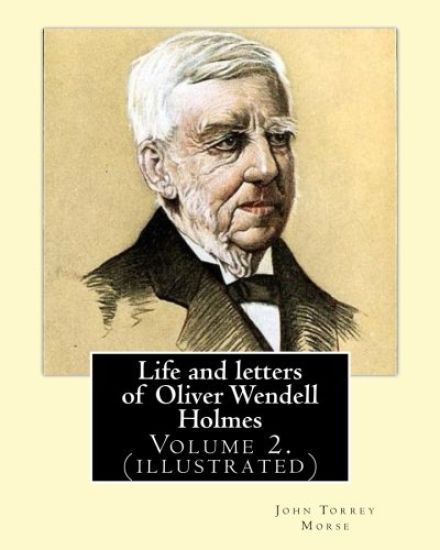
Life and letters of Oliver Wendell Holmes. By: John T. Morse (1840-1937) was an American historian and biographer.: Volume 2.( illustrated).Oliver Wen
John T. Morse
Createspace Independent Publishing Platform
2016
nidottu
John Torrey Morse (1840-1937) was an American historian and biographer. He was born in Boston, Massachusetts on Jan. 9, 1840, and lived in that city as a lawyer. Morse was the editor of the 'American Statesmen Series, ' and published biographies of Alexander Hamilton in two volumes, considered his most significant work, He also wrote biographies on John and J. Q. Adams, Jefferson, Lincoln, Franklin, and Dr. Holmes. Morse also authored 'Banks and Banking', 'Arbitration and Award' and 'Famous Trials............ Oliver Wendell Holmes Sr. (August 29, 1809 - October 7, 1894) was an American polymath based in Boston. A member of the Fireside Poets, his peers acclaimed him as one of the best writers of the day. His most famous prose works are the "Breakfast-Table" series, which began with The Autocrat of the Breakfast-Table (1858). He was also an important medical reformer. In addition to his work as an author and poet, Holmes also served as a physician, professor, lecturer, and inventor, and although he never practiced it, he received formal training in law. Born in Cambridge, Massachusetts, Holmes was educated at Phillips Academy and Harvard College. After graduating from Harvard in 1829, he briefly studied law before turning to the medical profession. He began writing poetry at an early age; one of his most famous works, "Old Ironsides", was published in 1830 and was influential in the eventual preservation of the USS Constitution. Following training at the prestigious medical schools of Paris, Holmes was granted his M.D. from Harvard Medical School in 1836. He taught at Dartmouth Medical School before returning to teach at Harvard and, for a time, served as dean there. During his long professorship, he became an advocate for various medical reforms and notably posited the controversial idea that doctors were capable of carrying puerperal fever from patient to patient. Holmes retired from Harvard in 1882 and continued writing poetry, novels and essays until his death in 1894. Surrounded by Boston's literary elite-which included friends such as Ralph Waldo Emerson, Henry Wadsworth Longfellow, and James Russell Lowell-Holmes made an indelible imprint on the literary world of the 19th century. Many of his works were published in The Atlantic Monthly, a magazine that he named. For his literary achievements and other accomplishments, he was awarded numerous honorary degrees from universities around the world. Holmes's writing often commemorated his native Boston area, and much of it was meant to be humorous or conversational. Some of his medical writings, notably his 1843 essay regarding the contagiousness of puerperal fever, were considered innovative for their time. He was often called upon to issue occasional poetry, or poems written specifically for an event, including many occasions at Harvard. Holmes also popularized several terms, including "Boston Brahmin" and "anesthesia".
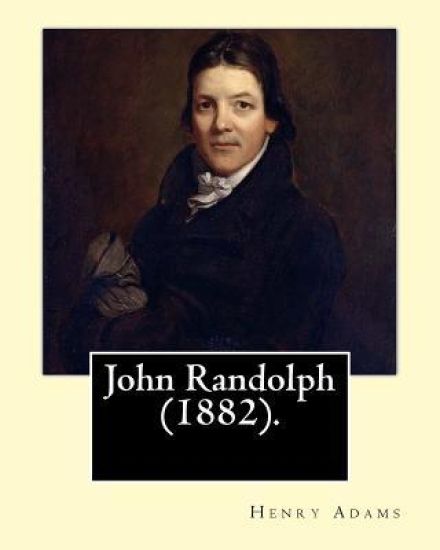
John Randolph (1882). By: Henry Adams, edited By: John T. Morse (1840-1937) was an American historian and biographer.: John Randolph (June 2, 17
John T. Morse; Henry Adams
Createspace Independent Publishing Platform
2017
nidottu
John Randolph (June 2, 1773 - May 24, 1833), known as John Randolph of Roanoke, was a planter, and a Congressman from Virginia, serving in the House of Representatives at various times between 1799 and 1833, the Senate (1825-1827), and also as Minister to Russia (1830). After serving as President Thomas Jefferson's spokesman in the House, he broke with the president in 1805 as a result of what he saw as the dilution of traditional Jeffersonian principles as well as perceived mistreatment during the impeachment of Samuel Chase, in which Randolph served as chief prosecutor. 1] Following this split, Randolph proclaimed himself the leader of the "Old Republicans" or "Tertium Quids", an arch-conservative wing of the Democratic-Republican Party who wanted to restrict the role of the federal government. Specifically, Randolph promoted the Principles of '98, which said that individual states could judge the constitutionality of central government laws and decrees, and could refuse to enforce laws deemed unconstitutional.... John Torrey Morse (1840-1937) was an American historian and biographer. He was born in Boston, Massachusetts on Jan. 9, 1840, and lived in that city as a lawyer. Morse was the editor of the 'American Statesmen Series, ' and published biographies of Alexander Hamilton in two volumes, considered his most significant work, He also wrote biographies on John and J. Q. Adams, Jefferson, Lincoln, Franklin, and Dr. Holmes. Morse also authored 'Banks and Banking', 'Arbitration and Award' and 'Famous Trials.'... Henry Brooks Adams (February 16, 1838 - March 27, 1918) was an American historian and member of the Adams political family, being descended from two U.S. Presidents. As a young Harvard graduate, he was secretary to his father, Charles Francis Adams, Abraham Lincoln's ambassador in London, a posting that had much influence on the younger man, both through experience of wartime diplomacy and absorption in English culture, especially the works of John Stuart Mill. After the American Civil War, he became a noted political journalist who entertained America's foremost intellectuals at his homes in Washington and Boston. In his lifetime, he was best known for his History of the United States During the Administrations of Thomas Jefferson and James Madison, a 9-volume work, praised for its literary style. His posthumously published memoirs, The Education of Henry Adams, won the Pulitzer Prize and went on to be named by the Modern Library as the top English-language nonfiction book of the 20th century.


Sir John T. Brunner, Bart., to the Parish Council of Barnton. Copy Conveyance of Land and Buildings to Be Used as a Village Hall and School, Etc.
John Tomlinson Brunner
British Library, Historical Print Editions
2011
pokkari
The Redemption of John T. is the story of a young man who was a great athlete but, due to his reputation as a young thug in his hometown of San Francisco, turns to becoming a member of a street gang under the control of the local Mafia family. His intelligence and cunning wits bring him success, and he rises rapidly in the Mafia family. The story follows his ascension to the very pinnacle of the Sicilian-American Mafia. It is at his pinnacle that for the first time in his life, he finds love and shortly thereafter has a miraculous recovery from a bullet wound that caused him to have an epiphany and wherein he finds his redemption.