Elpis Israel - An Exposition of the Kingdom of God (commonly called Elpis Israel (English transliteration of Greek for "the hope of Israel", taken from Acts 28:20)) is a theological book written by John Thomas, founder of the Christadelphians, in 1848-1849 and published in 1849. The book was based on a series of lectures given by Thomas in 1848 and is written in three parts, The Rudiments Of The World, The Things Of The Kingdom Of God And Of Jesus Christ and The Kingdoms Of The World In Their Relation To The Kingdom Of God.Thomas did not see, nor do the Christadelphians see, the book as inspired by God, but rather a deep and accurate study of The Bible. 3] 4] It is nevertheless widely read amongst Christadelphian believers and contains some of their core beliefs. There have been fifteen editions, albeit most Revised, of the book, four within the lifetime of Thomas. The most current one was published in 2000 by The Christadelphian Magazine & Publishing Association Ltd. Even later though is a reprinting by Logos Publications in Jan 2000 and then a further reprint in April 2009, of the Fourth Edition, it being the last Edited by the author John Thomas, just prior to his death.
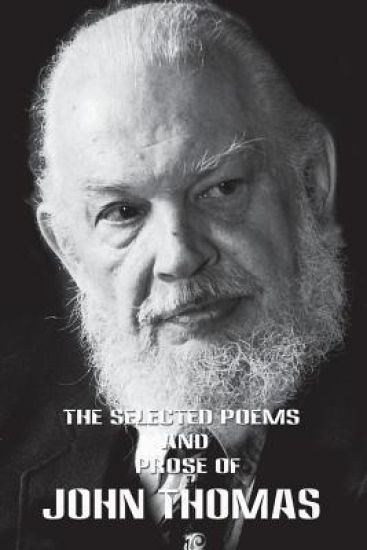
John Thomas, perhaps Los Angeles' greatest underground poet, in the years I came to know him, was a big man with a wise and lined countenance, piercing wit, deep, resonant voice, and always slightly stunned, gentle eyes. Inseparable from his wife, poet and filmmaker Philomene Long, his Muse, Thomas radiated a passion for books and poetry, watching from a respectful distance all that transpired around him. This fueled the poetry; it was as if he, with Philomene, filled with life that lost and real realm behind the cliche we call the bohemian life. They inhabited the depths. One early image is stuck in my mind: Thomas squeezing out of their tiny, classic Volkswagen beetle in front of Venice's poetry center, Beyond Baroque, for the debut of Stuart Perkoffs posthumous Voices of the Lady: Collected Poems. The couple had been close to Perkoff, Philomene as Perkoffs partner at the end, Thomas as his friend. Now, decades on, John and Philomene were like intertwined trunks in a single, majestic, flexible, and bending tree. They had withdrawn from ordinary society, following their vow of poverty, forming a compact with each other outside material considerations and virtually all practicality. When you entered their book and quote-lined refuge three stories up at The Ellison on Paloma Avenue, off the Venice boardwalk, you felt like you were enveloped in an incredible force; they made it safe again to talk about meaning. "The poem" bound them and permitted no rivals. Generally, Thomas spoke very little; he seemed more often like a bystander perplexed by extraordinary and sometimes horrible times. Two things were never in question: deference to the Muse, to Philomene, on all matters; second, tending to a precious cargo, carried, I suspect, from an early visit to Ezra Pound at St. Elizabeths. Thomas, had against the tumults of the years, a deep commitment to reading and to clear and poetic knowledge. Thomas in his very existence embodied a kind of deep, cultural transmission. I believe this was one of the grounding premises of his life's work. It required constant attention, learning, and a storyteller's sensibility-that the mundane and not so mundane, the reassuring and entirely embarrassing, the profound and very light, and all his companions, real and unreal, in this rich journey, be brought forward and told. With works ranging from Epopoeia and the Decay of Satire and John Thomas to the late chapbook Feeding the Animal, Thomas became the raconteur, generator of epigrams, tall tales, and haiku, a restless experimenter with language, subject matter, tone, and purpose, always acting, or as he said "pretending," as if "he doesn't care." Thomas in his way symbolized a clear and generally unexamined divergence of Los Angeles's historic underground from its better known Northern Californian and Eastern counterparts. Charles Bukowski, a close friend, and one never given to pretension, admired Thomas for his poetry and for digging. A diffidence, born of a hard-scrabble life contesting the machinery of money, success, and unreality meant that, for Thomas, in our vast and cruel desert, the poem is a "true and rooted cactus. / Most real and tough." Fred Dewey, writer. He was director of Beyond Baroque Literary / Arts Center in Venice from 1996 to 2010 and was curator of the Venice Poetry Walls.
John Thomas - First Baptist Missionary to Bengal from 1757 to 1801 is an unchanged, high-quality reprint of the original edition of 1893. Hansebooks is editor of the literature on different topic areas such as research and science, travel and expeditions, cooking and nutrition, medicine, and other genres. As a publisher we focus on the preservation of historical literature. Many works of historical writers and scientists are available today as antiques only. Hansebooks newly publishes these books and contributes to the preservation of literature which has become rare and historical knowledge for the future.
An engaging and insightful history of the Cupit family, tracing their origins and journey through the centuries. Filled with historical records, personal anecdotes, and genealogical data, this book offers a comprehensive and illuminating portrait of one family's story.This work has been selected by scholars as being culturally important, and is part of the knowledge base of civilization as we know it.This work is in the "public domain in the United States of America, and possibly other nations. Within the United States, you may freely copy and distribute this work, as no entity (individual or corporate) has a copyright on the body of the work.Scholars believe, and we concur, that this work is important enough to be preserved, reproduced, and made generally available to the public. We appreciate your support of the preservation process, and thank you for being an important part of keeping this knowledge alive and relevant.
The 18th century was a wealth of knowledge, exploration and rapidly growing technology and expanding record-keeping made possible by advances in the printing press. In its determination to preserve the century of revolution, Gale initiated a revolution of its own: digitization of epic proportions to preserve these invaluable works in the largest archive of its kind. Now for the first time these high-quality digital copies of original 18th century manuscripts are available in print, making them highly accessible to libraries, undergraduate students, and independent scholars.The eighteenth-century fascination with Greek and Roman antiquity followed the systematic excavation of the ruins at Pompeii and Herculaneum in southern Italy; and after 1750 a neoclassical style dominated all artistic fields. The titles here trace developments in mostly English-language works on painting, sculpture, architecture, music, theater, and other disciplines. Instructional works on musical instruments, catalogs of art objects, comic operas, and more are also included. ++++The below data was compiled from various identification fields in the bibliographic record of this title. This data is provided as an additional tool in helping to insure edition identification: ++++British LibraryT098928With an initial advertisement leaf and the final leaf consisting of a list of subscribers. Printer's name from colophon.London: printed by Joseph Downes] for, and sold by Nathaniel Smith, and I. T. Smith, 1797. 27, 3]p., plates; 4
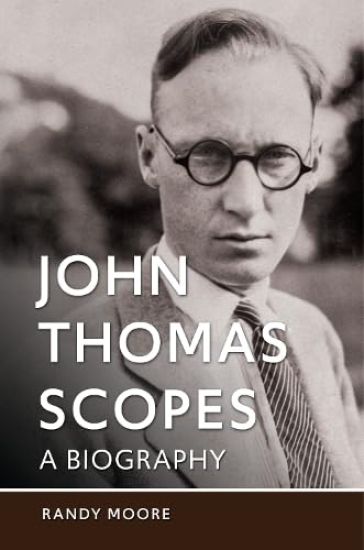
This is the first comprehensive, annotated biography of John Scopes, the famed defendant in the Scopes Monkey Trial. This biography uses new, never-before-published sources, photographs, and stories from untapped sources—John Scopes's family and friends. In 1967, John Scopes published his memoirs, which focused overwhelmingly on his eight-day trial and not on the rest of his life, ignoring several important events, such as his divorce and remarriage, his run for the U.S. Congress, and his challenges with his family. This volume is the first complete, annotated biography of John Scopes. It details his entire life and, where appropriate, those of his parents, siblings, wife, and children, all supported by hundreds of cited sources, quotations, and family stories. Ideal for readers with an interest in academic freedom, free speech, or the evolution-creationism controversy, this book uncovers the facts of Scopes's post-trial life, including the challenges that Scopes faced in his personal life, his conversion from a socialist to a political conservative, and his final years and death. Readers will be surprised to learn that John Scopes's life differed significantly from what has often been presented in the media.
An engaging and provocative history of John Thomas Geary, a London lawyer who left everything he knew to travel to the American West in the 1850s. Geary went from a life of privilege and ease in Victorian England to a rough-and-tumble experience settling the unexplored Utah Territory. This biography carefully documents Geary's life as he learns difficult lessons and overcomes many obstacles. "John Thomas Geary stood at the crossroads, looking toward the mountains. The landscape couldn't be more different than his British birthplace and he paused to find a connection to this bleak view. Utah Territory in the dead of winter did not feel welcoming. But he had made his choice. It took John and his wife, Sophia, the better part of three years to make it across the American plains to Great Salt Lake City and he intended to make it his home. When John arrived in Utah in December, 1856 he was 33 years old with two small children. John and Sophia came to the remote desert for religious reasons - they were Mormon emigrants following their prophet. They left England and their extended families behind, knowing they would never see them again. It seemed both a privilege and an immeasurable price to pay for their beliefs."