The 18th century was a wealth of knowledge, exploration and rapidly growing technology and expanding record-keeping made possible by advances in the printing press. In its determination to preserve the century of revolution, Gale initiated a revolution of its own: digitization of epic proportions to preserve these invaluable works in the largest archive of its kind. Now for the first time these high-quality digital copies of original 18th century manuscripts are available in print, making them highly accessible to libraries, undergraduate students, and independent scholars.The eighteenth-century fascination with Greek and Roman antiquity followed the systematic excavation of the ruins at Pompeii and Herculaneum in southern Italy; and after 1750 a neoclassical style dominated all artistic fields. The titles here trace developments in mostly English-language works on painting, sculpture, architecture, music, theater, and other disciplines. Instructional works on musical instruments, catalogs of art objects, comic operas, and more are also included. ++++The below data was compiled from various identification fields in the bibliographic record of this title. This data is provided as an additional tool in helping to insure edition identification: ++++British LibraryT098928With an initial advertisement leaf and the final leaf consisting of a list of subscribers. Printer's name from colophon.London: printed by Joseph Downes] for, and sold by Nathaniel Smith, and I. T. Smith, 1797. 27, 3]p., plates; 4
The 18th century was a wealth of knowledge, exploration and rapidly growing technology and expanding record-keeping made possible by advances in the printing press. In its determination to preserve the century of revolution, Gale initiated a revolution of its own: digitization of epic proportions to preserve these invaluable works in the largest archive of its kind. Now for the first time these high-quality digital copies of original 18th century manuscripts are available in print, making them highly accessible to libraries, undergraduate students, and independent scholars.The eighteenth-century fascination with Greek and Roman antiquity followed the systematic excavation of the ruins at Pompeii and Herculaneum in southern Italy; and after 1750 a neoclassical style dominated all artistic fields. The titles here trace developments in mostly English-language works on painting, sculpture, architecture, music, theater, and other disciplines. Instructional works on musical instruments, catalogs of art objects, comic operas, and more are also included. ++++The below data was compiled from various identification fields in the bibliographic record of this title. This data is provided as an additional tool in helping to insure edition identification: ++++British LibraryT100005Consists of an engraved titlepage and 96 unnumbered plates, dated 1791-1800.London: pubd. by J. Sewell, R. Faulder, J. Simco, J. Manson, Messrs. Molteno and Colnaghi and 2 others], 1791 -1800]. 97]plates; 4
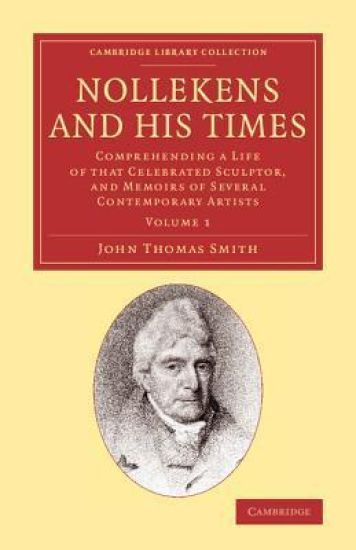
The sculptor Joseph Nollekens (1737–1823) was famed for his portrait busts of leading figures of his day. While working in Italy in the 1760s, he established contacts among a group of aristocratic British patrons, going on to become London's most fashionable sculptor upon his return to England in 1771. The draughtsman and antiquary John Thomas Smith (1766–1833) had been at one time a pupil of Nollekens. It is believed that this anecdotal two-volume biography, first published in 1828, was written as an act of revenge. Having been promised a considerable legacy in the sculptor's will, Smith was disappointed to receive only an executor's fee. The work contains little analysis concerning the sculptor's art, relating instead much gossip and anecdotes of a personal nature. Nonetheless, it presents a vivid picture of the London art world at that time. Volume 1 concentrates on aspects of Nollekens' character, habits and opinions.
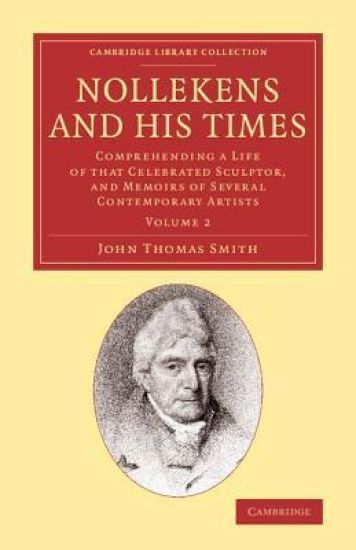
The sculptor Joseph Nollekens (1737–1823) was famed for his portrait busts of leading figures of his day. While working in Italy in the 1760s, he established contacts among a group of aristocratic British patrons, going on to become London's most fashionable sculptor upon his return to England in 1771. The draughtsman and antiquary John Thomas Smith (1766–1833) had been at one time a pupil of Nollekens. It is believed that this anecdotal two-volume biography, first published in 1828, was written as an act of revenge. Having been promised a considerable legacy in the sculptor's will, Smith was disappointed to receive only an executor's fee. The work contains little analysis concerning the sculptor's art, relating instead much gossip and anecdotes of a personal nature. Nonetheless, it presents a vivid picture of the London art world at that time. Volume 2 covers the infamous will and provides biographical sketches of Nollekens' contemporaries.
Title: A Book for a Rainy Day ... Second edition.Publisher: British Library, Historical Print EditionsThe British Library is the national library of the United Kingdom. It is one of the world's largest research libraries holding over 150 million items in all known languages and formats: books, journals, newspapers, sound recordings, patents, maps, stamps, prints and much more. Its collections include around 14 million books, along with substantial additional collections of manuscripts and historical items dating back as far as 300 BC.The GENERAL HISTORICAL collection includes books from the British Library digitised by Microsoft. This varied collection includes material that gives readers a 19th century view of the world. Topics include health, education, economics, agriculture, environment, technology, culture, politics, labour and industry, mining, penal policy, and social order. ++++The below data was compiled from various identification fields in the bibliographic record of this title. This data is provided as an additional tool in helping to insure edition identification: ++++ British Library Smith, John Thomas; 1845. iv. 311 p.; 8 . 010360.b.55.