Kirjojen hintavertailu. Mukana 11 627 463 kirjaa ja 12 kauppaa.

Kirjahaku

Etsi kirjoja tekijän nimen, kirjan nimen tai ISBN:n perusteella.

1000 tulosta hakusanalla John W Davis; Arthur J Brothers

Around the Corner

Around the Corner

John W Davis

Red Bike Publishing
2018
sidottu
Mr. Davis gives us a film noir collection of intriguing, heart breaking, and insightful essays. Real people and actual events emerge from this collection in ways you won't forget. Each draws us deeper into the questions we raise when we demand others serve in the secret world for their country.In Around the Corner we find more thought provoking true stories from the Cold War, its bloody aftermath, and our own America today. Rain swept streets and dark corners serve not only as background, but also as metaphor. Around dark corners on a rainy street, what seems at first glance clear, might not be so. We see only indistinct outlines, as through a glass darkly; what may be true, could as well be only partly so, or even tragically false. So too with our beliefs about who we are. He observes events, people, laws, chance, and history from the perspective of a soldier, historian, liaison officer, husband and father.Davis reminds us that actions in the secret world, especially against spies and terrorists, when conducted by a liberal democracy, give no one a free pass from basic right and wrong. You'll find a strange new world tantalizingly revealed here. You'll even find reason for hope.
Around the Corner

Around the Corner

John W Davis

Red Bike Publishing
2021
pokkari
Mr. Davis gives us a film noir collection of intriguing, heart breaking, and insightful essays. Real people and actual events emerge from this collection in ways you won't forget. Each draws us deeper into the questions we raise when we demand others serve in the secret world for their country.In Around the Corner we find more thought provoking true stories from the Cold War, its bloody aftermath, and our own America today. Rain swept streets and dark corners serve not only as background, but also as metaphor. Around dark corners on a rainy street, what seems at first glance clear, might not be so. We see only indistinct outlines, as through a glass darkly; what may be true, could as well be only partly so, or even tragically false. So too with our beliefs about who we are. He observes events, people, laws, chance, and history from the perspective of a soldier, historian, liaison officer, husband and father.Davis reminds us that actions in the secret world, especially against spies and terrorists, when conducted by a liberal democracy, give no one a free pass from basic right and wrong. You'll find a strange new world tantalizingly revealed here. You'll even find reason for hope.
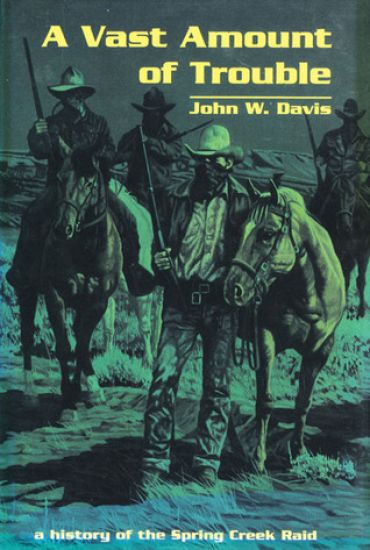
A Vast Amount of Trouble

A Vast Amount of Trouble

John W. Davis

University of Oklahoma Press
2005
nidottu
In late March 1909, five sheepmen headed east from the town of Worland, in north-central Wyoming, driving five thousand sheep. A few days later the men and their sheep camped on the banks of Spring Creek, where they thought they had brought the herd to safe grazing. That evening, however, seven cowboys raided the camp and brutally murdered three of the sheepmen. In A Vast Amount of Trouble, John W. Davis recounts the events leading up to this crime, the gripping trial that followed, and the trial's aftermath, which was no less than to bring an end to Wyoming's violent range wars.
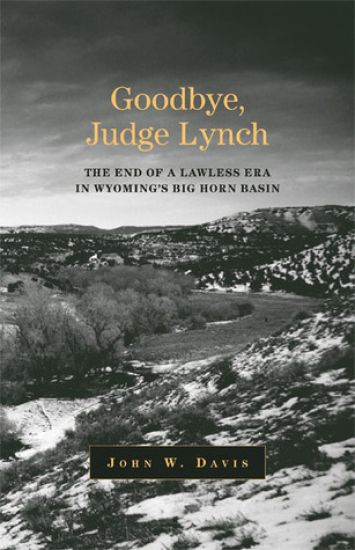
Goodbye, Judge Lynch

Goodbye, Judge Lynch

John W. Davis

University of Oklahoma Press
2005
nidottu
The big Horn Basin of northern Wyoming was one of the last frontiers in the continental United States. With settlers did not arrive until 1879, when cattlemen poured into the Basin to capture empty grasslands. In their haste to seize opportunity, the new residents did not establish an effective criminal justice system, and the consequence was rampant violence. In Goodbye, Judge Lynch, John W. Davis tells the fascinating story of how lawlessness finally came to an end in this remote corner of the West.The cattlemen who arrived in the Big Horn Basin in the 1880s were almost all young men, hardworking but impulsive. Without a legal system to control them, extralegal practices, such as lynching and sheep raids, grew at an alarming rate.Davis examines murders, assaults, and thefts in the region over the course of three decades, when the problems of prosecution were overwhelming. He highlights the infamous 1902 case of State v. Jim Gormon, in which Gormon, infatuated with his sister-in-law, killed his brother. Although Gormon received a first-degree murder conviction, a shocking breakdown of order ensued, when a mob attacked the Big Horn County jail and killed Gormon, another prisoner, and a deputy sheriff. Six years later, in another infamous case, raiders murdered three sheepherders. Impunity was the immediate result, and the defeat of law and order in the region seemed complete. But authorities fought the odds and finally gained guilty verdicts, the first convictions of sheep raiders in Wyoming. This legal victory marked the end of a brief but powerful vigilante tradition.The first in-depth assessment of vigilantism and justice in the region, Goodbye, Judge Lynch reveals the unique challenges faced by a western society attempting to build a social system from scratch.
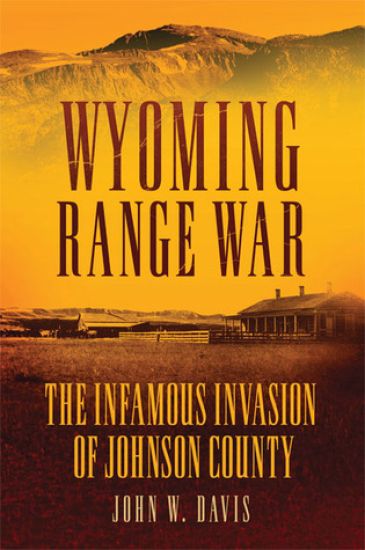
Wyoming Range War

Wyoming Range War

John W. Davis

University of Oklahoma Press
2012
nidottu
Wyoming attorney John W. Davis retells the story of the West's most notorious range war. Having delved more deeply than previous writers into land and census records, newspapers, and trial transcripts, Davis has produced an all-new interpretation. He looks at the conflict from the perspective of Johnson County residents - those whose home territory was invaded and many of whom the invaders targeted for murder - and finds that, contrary to the received explanation, these people were not thieves and rustlers but legitimate citizens.The broad outlines of the conflict are familiar: some of Wyoming's biggest cattlemen, under the guise of eliminating livestock rustling on the open range, hire two-dozen Texas cowboys and, with range detectives and prominent members of the Wyoming Stock Growers Association, ""invade"" north-central Wyoming to clean out rustlers and other undesirables. While the invaders kill two suspected rustlers, citizens mobilize and eventually turn the tables, surrounding the intruders at a ranch where they intend to capture them by force. An appeal for help convinces President Benjamin Harrison to call out the army from nearby Fort McKinley, and after an all-night ride the soldiers arrive just in time to stave off the invaders' annihilation. Though taken prisoner, they later avoid prosecution.The cattle barons' powers of persuasion in justifying their deeds have colored accounts of the war for more than a century. Wyoming Range War tells a compelling story that redraws the lines between heroes and villains.
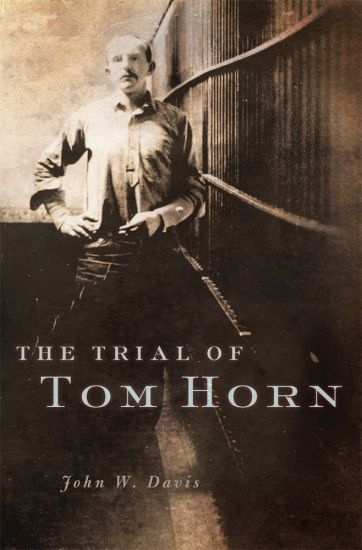
The Trial of Tom Horn

The Trial of Tom Horn

John W. Davis

University of Oklahoma Press
2016
sidottu
For weeks in 1902 it commanded headlines. All of Wyoming and much of the West followed the trial of Tom Horn for the murder of a fourteen-year-old boy. John W. Davis's book, the only full-length account of the trial, places it in perspective as part of a larger struggle for control of Wyoming's grazing land. Davis also portrays an enigmatic defendant who, more than a century after his conviction and hanging, perplexes us still. Tom Horn was one of the most fascinating figures in the history of the West. Employed as a Pinkerton and then as a range detective, he had a reputation as a loner and a braggart with a brutal approach to law enforcement even before he was accused of murdering young Willie Nickell. Cattlemen saw Horn as protecting their way of life, but most people in Wyoming saw him as a hired assassin, an instrument of oppression by cattle barons willing to use violent intimidation to protect their assets. The story began on July 18, 1901, when Willie Nickell was shot by a gunman lying in ambush; the killer was apparently after Willie's father, who had brought sheep into the area. Six months later Tom Horn was arrested. The trial pitted the Laramie County district attorney against a crack team of defense lawyers hired by big cattlemen. Against all predictions, the jury found Horn guilty of first-degree murder. Despite appeals that went all the way to the state supreme court and the governor, Horn was hanged in Cheyenne in 1903. The trial and conviction of Tom Horn marked a major milestone in the hard-fought battle against vigilantism in Wyoming. Davis, himself a trial lawyer, has mined court documents and newspaper articles to dissect the trial strategies of the participating attorneys. His detailed account illuminates a larger narrative of conflict between the power of wealth and the forces of law and order in the West.