

Kirjahaku
Etsi kirjoja tekijän nimen, kirjan nimen tai ISBN:n perusteella.
1000 tulosta hakusanalla John W. de Gruchy


Christianity, Art and Transformation explores the historical and contemporary relationship between the arts and Christianity with reference to the transformation of society. Several major themes are discussed, among them the power of images, the relationship between aesthetics and ethics, the nature of beauty and its redemptive capacity, aesthetic existence and Christian discipleship, and the role of art in the public square and in the life of the Church. The book is a contribution to the study of theological aesthetics from both an ecumenical and Reformed perspective, global in its scope yet rooted in the author's South African context.
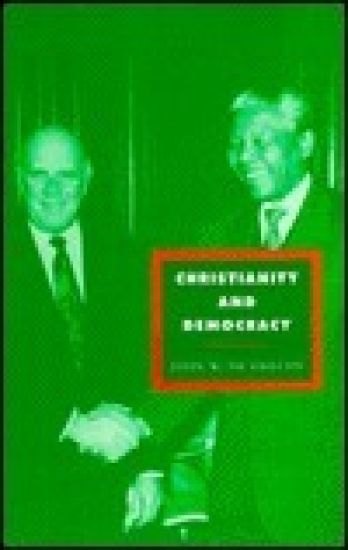
Christianity and Democracy: A Theology for a Just World Order
John W. De Gruchy
CAMBRIDGE UNIVERSITY PRESS_
1995
sidottu
In this important study John de Gruchy examines the past, present and future roles of Christianity in the development of democracy. He traces the relationship from its gestation in early Christendom to its virtual breakdown as democracy becomes the polity of modernity, and focuses on five twentieth-century case studies, including Nazi Germany and South Africa, which demonstrate the revival of the churches as a force in the struggle for democracy. His conclusions point the way to the development of a theology for a just world order.

The need for global democratisation is now widely recognised, but there is considerable debate about what this means and how it can be achieved. In this important study John de Gruchy examines the historic and contemporary roles of Christianity in the development of democracy. He traces the gestation of modern democracy in medieval Christendom, and then describes the virtual breakdown of the relationship as democracy becomes the polity of modernity. Five twentieth-century case studies - the USA, Nicaragua, sub-Saharan Africa, Germany and South Africa - demonstrate the extent to which ecumenical Christianity has begun to reconnect with democracy and act as its contemporary midwife. De Gruchy argues that democracy needs to rediscover its spiritual heritage, while Christianity needs to develop a theology adequate for its participation in the realisation of a just democratic world order.
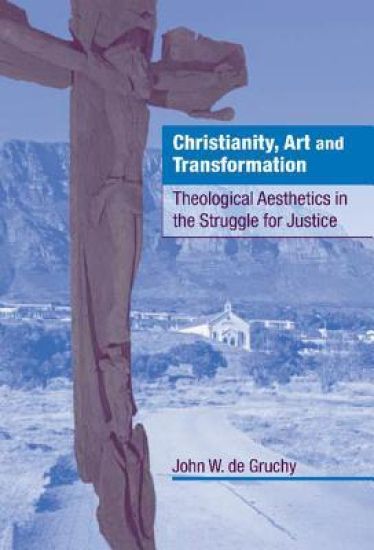
Christianity, Art and Transformation explores the historical and contemporary relationship between the arts and Christianity with reference to the transformation of society. Several major themes are discussed, among them the power of images, the relationship between aesthetics and ethics, the nature of beauty and its redemptive capacity, aesthetic existence and Christian discipleship, and the role of art in the public square and in the life of the Church. The book is a contribution to the study of theological aesthetics from both an ecumenical and Reformed perspective, global in its scope yet rooted in the author's South African context.
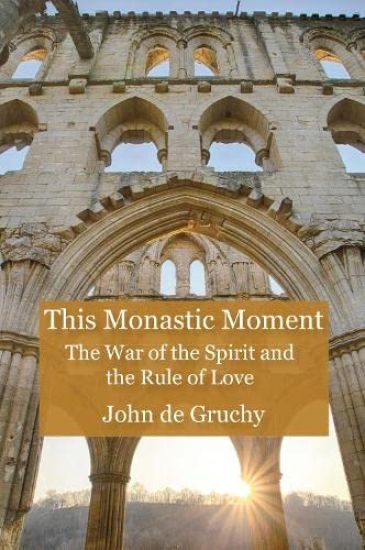
Kairos is used in the New Testament to signify a pivotal moment in history: a critical time of judgement and opportunity where chaos must be faced and one must change their ways before it becomes irreparable. Confronted by the Covid-19 pandemic and mandatory isolation, John de Gruchy felt a similar need to adapt and respond. In doing so, he found a deepening in his desire for authentic humanity, genuine community, and the opportunity affirm his conviction that true humanity is rooted in God, wisdom, and the struggle for justice. Mixing theology, history, anecdote, spirituality, social commentary, and practical suggestions, This Monastic Moment reflects on this period, and argues that now is the opportune time to embrace the opportunity God has given to receive the coming kingdom in greater fullness. This urgency echoes St Benedict of Nursia's call to 'listen', 'wake up', and 'run' while there is still light before 'the darkness of death'. With consideration given both to contemplation and action, to prayer and justice, de Gruchy's own personal pilgrimage provides the tools to embark upon, or aid, your own.

Whether born in the Mideast, Africa, Asia, or brought home to the streets of America, violent hatreds often threaten to swamp the minimal cooperation needed to foster life and health. Does Christianity have anything besides warmed-over pieties to offer a world torn by estrangement, alienation, and violently opposed worldviews? In this signal contribution to public theology, John de Gruchy, an internationally esteemed political theologian, emphatically affirms the possibility and necessity of reconciliation. For Christians, he says, reconciliation is the center and perennial test of their faith. De Gruchy expands reconciliation's relevance beyond personal piety and ecclesial harmony to encompass group relations, politics, and even the environment. In all cases, he argues, it involves the restoration of justice. Forged in the recent experience of South Africa, his work delineates the political and ecclesial significance of reconciliation and shows its importance for interreligious relations, addressing victimization, and international peace. Reconciliation will be welcomed by all whose faith leads them to help alleviate the world's mounting agonies.

When Dietrich Bonhoeffer was led into the courtyard of the concentration camp at Flossenburg on April 9, 1945, to be hanged, few would have guessed that his writings, indeed his most personal thoughts and fears, would attain worldwide fame and marked influence in just a few years. How did this happen? Much of the credit goes to Bonhoeffer's close friendship with his student and colleague Eberhard Bethge, says theologian John de Gruchy. It was Bethge to whom Bonhoeffer wrote most frequently from prison, he with whom he discussed his emergent theological writing, and he who organized and published the writings that would fall like a bombshell on the English-speaking religious world after World War II. In many respects, Bethge, working with his wife--Bonhoeffer's niece, Renate--was responsible for creating and shaping the reception of Bonhoeffer and his work. In this important and fascinating work, this Bonhoeffer expert narrates the course of that friendship, building on interviews and newly available primary sources. It provides testimony not only to a powerful friendship but to the eventual vindication of the life sacrificed that early spring morning.
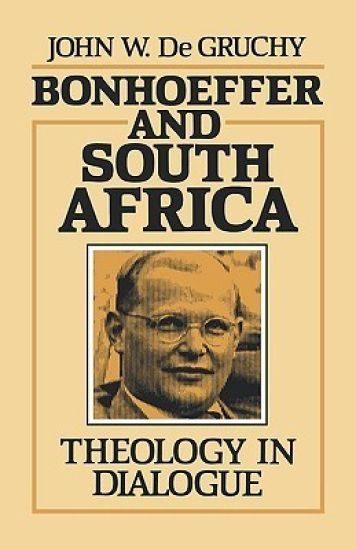
In this stimulating book, John W. de Gruchy points out the relevance of Dietrich Bonhoeffer's thought for the life of the church in South Africa, engaging in dialogue the theology of Bonhoeffer and the theology of South Africa. Both Bonhoeffer's theology and his life bore witness to the need for Christians to come face to face with the pressing political and social issues of the day. Bonhoeffer believed that to bear an authentic witness to Christ in certain settings was to go against the stream; the church in South Africa, says de Gruchy, faces the challenge to be just such a "troublesome witness." He finds in Bonhoeffer's theology direction and liberation for the oppressed -- as well s for the privileged, who need to be "freed for others." Throughout, the book demonstrates the abiding significance of Bonhoeffer's theology, which, according to de Gruchy, derives from the fact that he was, before all else, a witness to Jesus Christ. John de Gruchy is Robert Selby Taylor Professor of Christian Studies and Director of the Religion and Social Change Unit in the University of Cape Town.
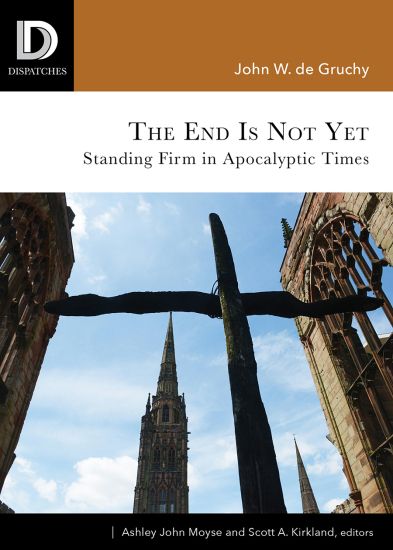
The title of this book comes from Matthew 24:6-8: "You will hear of wars and rumors of wars; see that you are not alarmed; for this must take place, but the end is not yet. . . . There will be famines and earthquakes in various places: all this is but the beginning of the birth pangs." This locates The End Is Not Yet within popular religious rhetoric about the "end times" and more sophisticated theological discourse on eschatology or Christian hope for a better world premised on faith in God. But is such faith still justified? And if so, how are we to describe and embody it in the life of the world? The framework of the book is the current global historical context with a particular focus on the West, and especially the political and social issues that have been highlighted by the election of Donald Trump. Among these are totalitarianism and democracy, right-wing nationalism, apocalypticism and patriotism, globalization and economic injustice, terrorism and warmongering, and political and prophetic leadership.
While in prison during the Third Reich, Dietrich Bonhoeffer raised several “core questions” in his correspondence with his close friend Eberhard Bethge: How shall future generations live? Who is Jesus Christ actually, for us, today? What does it mean to be truly human? And who am I? In Bonhoeffer’s Questions, John W. de Gruchy explores the development of each question in the course of Bonhoeffer’s life, how he attempted to answer them, and how each prompted further questions in an ongoing conversation with himself, with others, and now with us today. De Gruchy does this within the framework of his own life-long and life-changing conversation with Bonhoeffer in the context of South Africa from the beginning of the apartheid era to the present day. He also describes how he has come to know Bonhoeffer as a theological witness to Christ, a prophet of God’s justice, and a Christian humanist before proceeding with a series of questions addressed to Bonhoeffer with the reader in mind. These range from the debate about God and the future of Christianity to the involvement of Christians and the church in political struggles today.

Previously unpublished letters and essays presented in this volume that is key reading for students of Holocaust studies, as well as interfaith, social historical studies and theology.
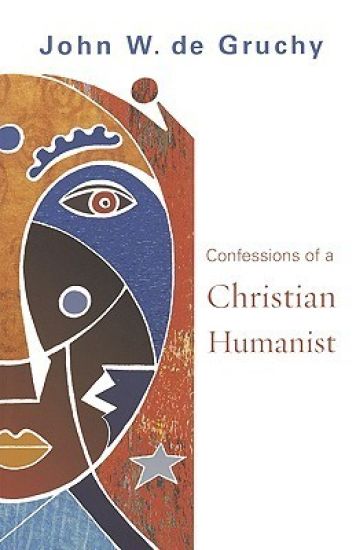
How can one genuinely follow Jesus today, and what does that mean about one's lifestyle, social and political commitments, and ethical stance? In this fine work, internationally renowned theologian John de Gruchy answers that question. Reviving an almost silenced tradition, he lifts the banner of Christian humanism - not secular humanism with a Christian veneer, but a critical retrieval of Christianity's core convictions and values in ways that are both critical of and yet constructively engaged with secular culture in serving the well-being of humanity.


""Kairos refers to moments in chronological time when all hell is breaking loose and we are called to change our ways before we are dragged into the abyss. Kairos is apocalyptic time, and it is here and now. ""Such is the time in which we need to listen again to . . . St Benedict of Nursia. ""Far too many of us Christians have either been seduced by the false values of the age and the spirit of Christian triumphalism, or else have been attracted to gnostic forms of spirituality that provide a means of escape from reality and responsibility. Any delay in responding to this kairos moment increases the danger that we fail to change our ways and grasp the opportunity God gives us to receive the coming kingdom in greater fullness now. So, St Benedict, fifteen hundred years after he wrote his Rule, continues to tell us to 'listen, ' 'wake up, ' and 'run' while there is still light. . . . This is a time for both contemplation and action, prayer and doing justice, a time for mystics and prophets to join hands and hearts for the sake of the world."" --From the Prologue

""Kairos refers to moments in chronological time when all hell is breaking loose and we are called to change our ways before we are dragged into the abyss. Kairos is apocalyptic time, and it is here and now. ""Such is the time in which we need to listen again to . . . St Benedict of Nursia. ""Far too many of us Christians have either been seduced by the false values of the age and the spirit of Christian triumphalism, or else have been attracted to gnostic forms of spirituality that provide a means of escape from reality and responsibility. Any delay in responding to this kairos moment increases the danger that we fail to change our ways and grasp the opportunity God gives us to receive the coming kingdom in greater fullness now. So, St Benedict, fifteen hundred years after he wrote his Rule, continues to tell us to 'listen, ' 'wake up, ' and 'run' while there is still light. . . . This is a time for both contemplation and action, prayer and doing justice, a time for mystics and prophets to join hands and hearts for the sake of the world."" --From the Prologue
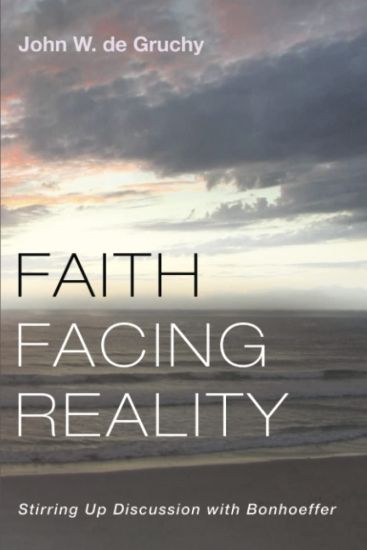
The COVID-19 pandemic and the war in Ukraine have starkly reminded us of the realities that threaten our future on planet Earth. Christian faith is not a way of escaping these realities, but of engaging them in the struggle for justice and peace--motivated by love, enabled by faith and sustained by hope. This is based on the conviction that in Jesus Christ the reality of God has become redemptively embodied within the reality of the world. Written within the context of South Africa but with global vision, and in conversation with the legacy of Dietrich Bonhoeffer, this book is an attempt to stir up discussion and inform action in connecting worldly and transcendent reality. Inevitably this will be controversial, not least because that is something that Bonhoeffer risked. This is certainly true when it comes to the five realities that provide much of the book's substance: the persistence of racism, the will-to-power, scientism and soulless technology, the conflict in Israel-Palestine, and the threat of wars and pandemics. Is it possible to believe in the God of Jesus Christ in such a world? If so, what does that mean, and how does it help us live creatively, redemptively, and faithfully? To answer these questions, the author examines the meaning of faith; the human desire for transcendence; and the need for conversion, wisdom, solidarity, and responsible freedom.