Kirjojen hintavertailu. Mukana 12 016 292 kirjaa ja 12 kauppaa.

Kirjahaku

Etsi kirjoja tekijän nimen, kirjan nimen tai ISBN:n perusteella.

1000 tulosta hakusanalla John Walker; Sarah Chaplin
Visual Culture

Visual Culture

John Walker; Sarah Chaplin

Manchester University Press
1997
nidottu
It is the only guide to the subject written specifically for undergraduates.. The authors draw upon many years of teaching experience in this field.. The coverage is systematic, and the writing accessible.
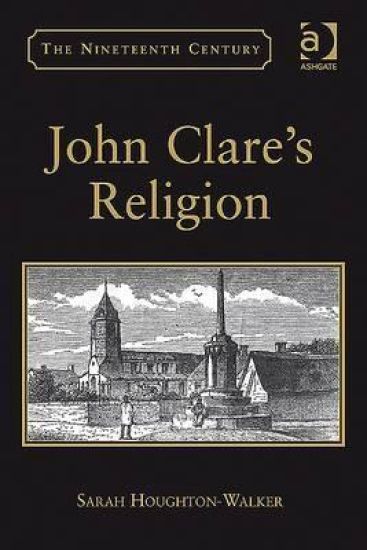
John Clare's Religion

John Clare's Religion

Sarah Houghton-Walker

Ashgate Publishing Limited
2009
sidottu
Addressing a neglected aspect of John Clare's history, Sarah Houghton-Walker explores Clare's poetry within the framework of his faith and the religious context in which he lived. While Clare expressed affection for the Established Church and other denominations on various occasions, Houghton-Walker brings together a vast array of evidence to show that any exploration of Clare's religious faith must go beyond pulpit and chapel. Phenomena that Clare himself defines as elements of faith include ghosts, witches, and literature, as well as concepts such as selfhood, Eden, eternity, childhood, and evil. Together with more traditional religious expressions, these apparently disparate features of Clare's spirituality are revealed to be of fundamental significance to his poetry, and it becomes evident that Clare's experiences can tell us much about the experience of 'religion', 'faith', and 'belief' in the period more generally. A distinguishing characteristic of Houghton-Walker's approach is her conviction that one must take into account all aspects of Clare's faith or else risk misrepresenting it. Her book thus engages not only with the facts of Clare's religious habits but also with the ways in which he was literally inspired, and with how that inspiration is connected to his intimations of divinity, to his vision of nature, and thus to his poetry. Belief, mediated through the idea of vision, is found to be implicated in Clare's experiences and interpretations of the natural world and is thus shown to be critical to the content of his verse.
John Clare

John Clare

Sarah Houghton-Walker

REAKTION BOOKS
2026
nidottu
John Clare’s life has often been told by casting him in various parts – rural genius, thwarted lover, environmentalist, lunatic poet. This biography revisits those familiar stories with a fresh perspective, setting Clare’s own words alongside a sharp reappraisal of his times. Drawing from his autobiographical writings, journals, letters and poetry, it presents a rich, grounded portrait of the man and the places that shaped him. Clare’s sense of identity, rooted in the land around him, was central to his voice as a poet. Through attentive readings of his verse, this book traces the creative and emotional arc of a life both ordinary and extraordinary. Clare emerges not as a tragic stereotype, but as a deeply thoughtful writer confronting change with clarity and care.
Reclaiming the Wesleyan Tradition: John Wesley's Sermons for Today

Reclaiming the Wesleyan Tradition: John Wesley's Sermons for Today

Douglas M. Strong; Sarah B. Dorrance; Robert McDonald-Walker

Discipleship Resources
2007
nidottu
Come back home to God Salvation is a central theme in John Wesley's writings. Wesley urged people to become and continually grow as committed disciples of Jesus Christ. His appeals and reasoning are just as relevant today as they were in the 18th century. "Wesley's 'Way of Salvation' is a road map of the journey of humanity toward God," write the authors. "It's a pathway of grace in which we respond to God with increasing self-awareness of our separation and our need to come back home. Our aim is to help people understand and apply Wesley's teachings to their lives...and to transform them from being 'almost Christians' to being 'altogether Christians.'" The authors are passionate about returning to the roots of Methodist tenets of salvation. Covering biblically based doctrinal topics such as sin, grace, justification, sanctification, and ethical living, Reclaiming the Wesleyan Tradition explains Wesleyan theology in an easy-to-understand way. The book's format makes this 13-week study especially accessible. Margin notes highlight excerpts from Wesley's sermons, hymns, and journal with the authors providing context and analysis of the themes. Daily reading and writing assignments are designed to open theological discussions and to deepen spiritual growth. Wesley's words can reshape your daily walk with God. Expect to be spiritually awakened and brought into a deeper communion with God while celebrating a powerful legacy.
John Walker

John Walker

THAMES HUDSON LTD
2025
sidottu
A long-overdue evaluation of John Walker’s work from the last half century. John Walker’s prolific painting career spans over sixty years. His practice is inspired by a range of visual references, notably the work of Goya, Matisse, the Abstract Expressionists and the art of Oceania, as well as by shapes and pattern motifs evoking history, time and place; however, his work cannot readily be defined as abstract or figurative, and his guiding thought is to have a conversation with the art of the past to embrace feeling and touch, and as Goya put it, to be aware of the sound of the brush. His desire to ‘own’ a subject is present in his engagement with the bay at Seal Point, Maine, near where he has lived for many years: ‘It’s about capturing something no one else has seen’. Walker’s works are in major museums and private collections internationally, and he has exhibited in museums in the UK, US, Australia, New Zealand and China. Despite winning the John Moores Painting Prize in 1976, and being nominated for 1985’s Turner Prize, he has exercised a resistance to reputation-building, and visualizes his studio practice as a slow, evolving process. His uncompromising judgments infuse the work, and are one reason he remains an artist respected and closely watched by many other artists, increasingly by younger admirers. Including essays by Catherine Lampert and Alex Bacon, this immersive new monograph is a long-overdue evaluation of Walker’s work from the past half century, connecting key works with new perspectives and historical influences, and examining the role of form, colour and presence in his masterly paintings.
A Critical Pronouncing Dictionary and Expositor of the English Language. ... To Which are Prefixed, Principles of English Pronunciation; ... Likewise Rules to be Observed by the Natives of Scotland, Ireland, and London, ... By John Walker,
The 18th century was a wealth of knowledge, exploration and rapidly growing technology and expanding record-keeping made possible by advances in the printing press. In its determination to preserve the century of revolution, Gale initiated a revolution of its own: digitization of epic proportions to preserve these invaluable works in the largest archive of its kind. Now for the first time these high-quality digital copies of original 18th century manuscripts are available in print, making them highly accessible to libraries, undergraduate students, and independent scholars.Western literary study flows out of eighteenth-century works by Alexander Pope, Daniel Defoe, Henry Fielding, Frances Burney, Denis Diderot, Johann Gottfried Herder, Johann Wolfgang von Goethe, and others. Experience the birth of the modern novel, or compare the development of language using dictionaries and grammar discourses. ++++The below data was compiled from various identification fields in the bibliographic record of this title. This data is provided as an additional tool in helping to insure edition identification: ++++British LibraryT146377Last line of text on A2 recto ends: 'pronunciation'. A variant, with leaves A2-3 in a different setting, has last line of text on A2 recto ending: 'alone'.London: sold by G. G. J. and J. Robinson; and T. Cadell, 1791. xvi,71, 489]p.; 4
Elements of Geography, and of Natural and Civil History. ... by John Walker. Third Edition
The 18th century was a wealth of knowledge, exploration and rapidly growing technology and expanding record-keeping made possible by advances in the printing press. In its determination to preserve the century of revolution, Gale initiated a revolution of its own: digitization of epic proportions to preserve these invaluable works in the largest archive of its kind. Now for the first time these high-quality digital copies of original 18th century manuscripts are available in print, making them highly accessible to libraries, undergraduate students, and independent scholars.Rich in titles on English life and social history, this collection spans the world as it was known to eighteenth-century historians and explorers. Titles include a wealth of travel accounts and diaries, histories of nations from throughout the world, and maps and charts of a world that was still being discovered. Students of the War of American Independence will find fascinating accounts from the British side of conflict. ++++The below data was compiled from various identification fields in the bibliographic record of this title. This data is provided as an additional tool in helping to insure edition identification: ++++British LibraryT119511London: printed by and for Darton and Harvey, for Longman and Rees, H. D. Symonds, Vernor and Hood, J. Walker, J. Cuthell and 12 others in London], 1800. viii, 4],620p.; 8
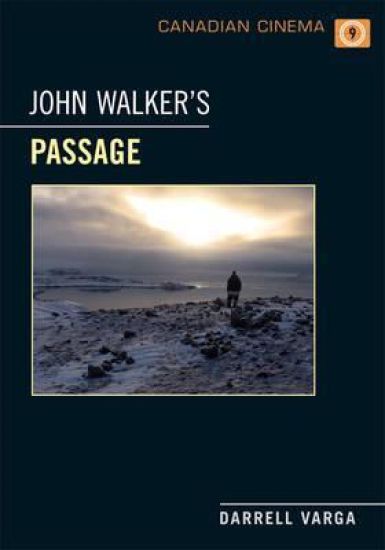
John Walker's Passage

John Walker's Passage

Darrell Varga

University of Toronto Press
2012
pokkari
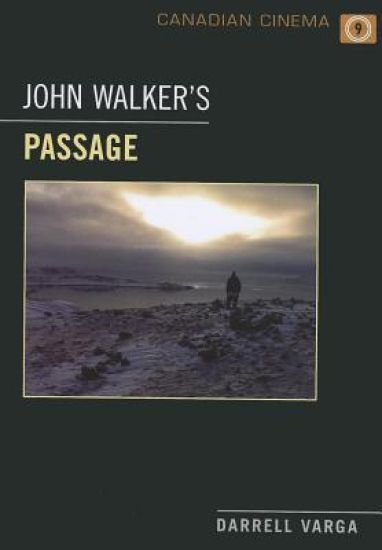
John Walker is one of Canada's most prolific and important documentary filmmakers and is known for his many thoughtful, personally inflected films. His masterwork, Passage, centres on Sir John Franklin's failed expedition to find the final link of the Northwest Passage connecting the Atlantic and Pacific oceans through the Canadian Arctic. It also gives us the story of John Rae, the Scottish explorer who discovered the fate of Franklin and the final link in the passage, but was left to the margins of history. Walker's film brings to this story a layering of dramatic action and behind-the-scenes documentary footage that build tension between the story of the past and interpretations of the present. Darrell Varga provides a close analysis of Passage, situating it within Walker's rich body of work and the Canadian documentary tradition. Varga illuminates how the film can be viewed through the lens of Harold Innis's theories of communication and culture, opening up the work of this great Canadian political economist to film studies.
John Walker's Passage

John Walker's Passage

Darrell Varga

University of Toronto Press
2012
sidottu
John Walker is one of Canada's most prolific and important documentary filmmakers and is known for his many thoughtful, personally inflected films. His masterwork, Passage, centres on Sir John Franklin's failed expedition to find the final link of the Northwest Passage connecting the Atlantic and Pacific oceans through the Canadian Arctic. It also gives us the story of John Rae, the Scottish explorer who discovered the fate of Franklin and the final link in the passage, but was left to the margins of history. Walker's film brings to this story a layering of dramatic action and behind-the-scenes documentary footage that build tension between the story of the past and interpretations of the present. Darrell Varga provides a close analysis of Passage, situating it within Walker's rich body of work and the Canadian documentary tradition. Varga illuminates how the film can be viewed through the lens of Harold Innis's theories of communication and culture, opening up the work of this great Canadian political economist to film studies.
John Walker Lindh

John Walker Lindh

VDM Publishing House
2010
nidottu
Observera att förlaget som ger ut denna produkt baserar innehållet i sina produkter på fria källor som Wikipedia. Boken är med stor sannolikhet endast ett utdrag ur dessa informationskällor, alltså inte en vanlig bok i den bemärkelsen.
Dr John Walker and The Sufferings of the Clergy

Dr John Walker and The Sufferings of the Clergy

G. B. Tatham

Cambridge University Press
2009
pokkari
This is a study of the origins, writing and reception of Dr John Walker's 'The Sufferings of the Clergy' (1714), which was an important account of the events of the Civil War period as they affected individual localities and parishes as well as the clergy themselves. Dr Tatham explores the circumstances in which Walker wrote the book, the nature of the sources used to compile it and the manner in which he used them as well as the contemporary criticism that greeted its publication. He also includes a calendar of Walker's collection of manuscripts in the Bodleian Library, two letters from Walker concerning the book and a list of the principal printed authorities cited by Walker.
Genealogy Of The Descendants Of John Walker Of Wigton, Scotland, With Records Of A Few Allied Families
This book has been considered by academicians and scholars of great significance and value to literature. This forms a part of the knowledge base for future generations. So that the book is never forgotten we have represented this book in a print format as the same form as it was originally first published. Hence any marks or annotations seen are left intentionally to preserve its true nature.