Kirjojen hintavertailu. Mukana 12 390 323 kirjaa ja 12 kauppaa.

Kirjahaku

Etsi kirjoja tekijän nimen, kirjan nimen tai ISBN:n perusteella.

1000 tulosta hakusanalla John Winthrop; Samuel Gardner Drake

Presentation of the Statues of John Winthrop and Samuel Adams. Speech of Hon. George F. Hoar, of Massachusetts, in the House of Representatives, Decem
This volume contains the speech of Hon. George F. Hoar delivered in the House of Representatives on December 19, 1876, during the presentation of statues of John Winthrop and Samuel Adams. Hoar, a prominent Massachusetts politician and intellectual, offers a compelling historical perspective on these two pivotal figures in early American history. The speech serves as both a biographical tribute and an exploration of their lasting impact on the nation's political and social fabric. Hoar eloquently articulates the contributions of Winthrop and Adams, emphasizing their roles in shaping the ideals of liberty, self-governance, and civic virtue. This document provides valuable insights into the historical context and enduring legacy of these influential leaders, making it an essential resource for students, historians, and anyone interested in the foundations of American political thought. This work has been selected by scholars as being culturally important, and is part of the knowledge base of civilization as we know it. This work was reproduced from the original artifact, and remains as true to the original work as possible. Therefore, you will see the original copyright references, library stamps (as most of these works have been housed in our most important libraries around the world), and other notations in the work. This work is in the public domain in the United States of America, and possibly other nations. Within the United States, you may freely copy and distribute this work, as no entity (individual or corporate) has a copyright on the body of the work. As a reproduction of a historical artifact, this work may contain missing or blurred pages, poor pictures, errant marks, etc. Scholars believe, and we concur, that this work is important enough to be preserved, reproduced, and made generally available to the public. We appreciate your support of the preservation process, and thank you for being an important part of keeping this knowledge alive and relevant.
John Winthrop

John Winthrop

Bremer

Oxford University Press Inc
2005
nidottu
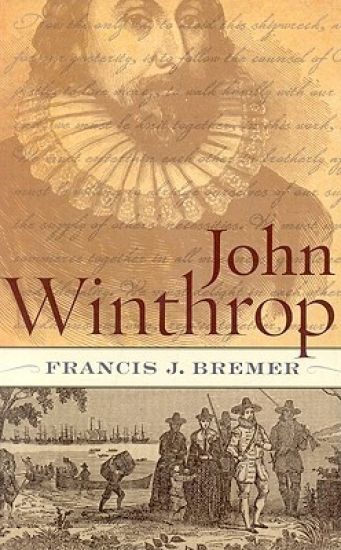
The preeminent figure of early New England, John Winthrop was the first governor of the Massachusetts Bay Colony. More than anyone else, he shaped the culture of New England and his effort to create a Puritan "City on a Hill" has had a lasting effect on American values. In John Winthrop, Francis J. Bremer draws on over a decade of research in England, Ireland, and the United States to offer a superb biography of Winthrop, one rooted in a detailed understanding of his first forty years in England. Indeed, Bremer provides an extensive, path-breaking treatment of Winthrop's family background, youthful development, and English career. His dissatisfaction with the decline of the "godly kingdom of the Stour Valley" in which he had been raised led him on his errand to rebuild such a society in a New England. In America, Winthrop would use the skills he had developed in England as he struggled with challenges from Roger Williams and Anne Hutchinson, among others, and defended the colony from English interference. We also see the personal side of Winthrop--the doubts and concerns of the spiritual pilgrim, his everyday labors and pleasures, his feelings for family and friends. And Bremer also sheds much light on important historical moments in England and America, such as the Reformation and the rise of Puritanism, the rise of the middling class, the colonization movement, and colonial relations with Native Americans. Incorporating previously unexplored archival materials from both sides of the Atlantic, here is the definitive portrait of one of the giants of our history.
John Winthrop

John Winthrop

Michael Parker

Routledge
2013
sidottu
Puritan politician, lawyer, and lay theologian John Winthrop fled England in 1630 when it looked like Charles I had successfully blocked all hopes of passing Puritan-inspired reforms in Parliament. Leading a migration, he came to New England in the hopes of creating an ideal Puritan community and eventually became the governor of Massachusetts. Winthrop is remembered for his role in the Puritan migration to the colonies and for delivering what is probably the most famous lay sermon in American history, "A Model of Christian Charity." In it he proclaimed that New England would be "a city upon a hill"--an example for future colonies. In John Winthrop: Founding the City upon a Hill, Michael Parker examines the political and religious history of this iconic figure. In this short biography, bolstered by letters, sermons, and maps, John Winthrop introduces students to the colonial world, the Pequot Wars, and the history of American Exceptionalism.
John Winthrop

John Winthrop

Michael Parker

Routledge
2013
nidottu
Puritan politician, lawyer, and lay theologian John Winthrop fled England in 1630 when it looked like Charles I had successfully blocked all hopes of passing Puritan-inspired reforms in Parliament. Leading a migration, he came to New England in the hopes of creating an ideal Puritan community and eventually became the governor of Massachusetts. Winthrop is remembered for his role in the Puritan migration to the colonies and for delivering what is probably the most famous lay sermon in American history, "A Model of Christian Charity." In it he proclaimed that New England would be "a city upon a hill"--an example for future colonies. In John Winthrop: Founding the City upon a Hill, Michael Parker examines the political and religious history of this iconic figure. In this short biography, bolstered by letters, sermons, and maps, John Winthrop introduces students to the colonial world, the Pequot Wars, and the history of American Exceptionalism.
The Journal of John Winthrop, 1630–1649

The Journal of John Winthrop, 1630–1649

John Winthrop

Harvard University Press
1996
sidottu
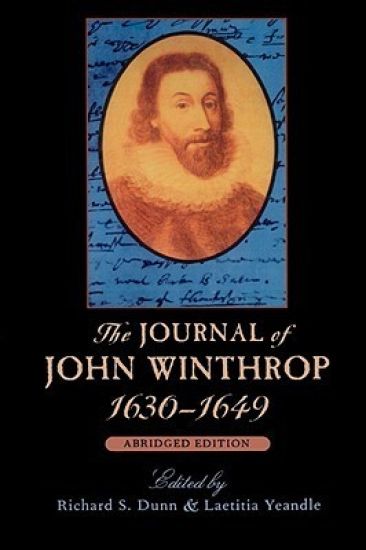
For 350 years Governor John Winthrop's journal has been recognized as the central source for the history of Massachusetts in the 1630s and 1640s. Winthrop reported events--especially religious and political events--more fully and more candidly than any other contemporary observer.The governor's journal has been edited and published three times since 1790, but these editions are long outmoded. Richard Dunn and Laetitia Yeandle have now prepared a long-awaited scholarly edition, complete with introduction, notes, and appendices. This full-scale, unabridged edition uses the manuscript volumes of the first and third notebooks (both carefully preserved at the Massachusetts Historical Society), retaining their spelling and punctuation, and James Savage's transcription of the middle notebook (accidentally destroyed in 1825).Winthrop's narrative began as a journal and evolved into a history. As a dedicated Puritan convert, Winthrop decided to emigrate to America in 1630 with members of the Massachusetts Bay Company, who had chosen him as their governor. Just before sailing, he began a day-to-day account of his voyage. He continued his journal when he reached Massachusetts, at first making brief and irregular entries, followed by more frequent writing sessions and contemporaneous reporting, and finally, from 1643 onward, engaging in only irregular writing sessions and retrospective reporting. Naturally he found little good to say about such outright adversaries as Thomas Morton, Roger Williams, and Anne Hutchinson. Yet he was also adept at thrusting barbs at most of the other prominent players: John Endecott, Henry Vane, and Richard Saltonstall, among others.Winthrop built lasting significance into the seemingly small-scale actions of a few thousand colonists in early New England, which is why his journal will remain an important historical source.
The Journal of John Winthrop, 1630–1649

The Journal of John Winthrop, 1630–1649

John Winthrop

The Belknap Press
1997
nidottu
The journal of Governor John Winthrop, one of the key documents of early New England history, records the first two crucial decades of the Bay Colony. Writing in a precise expository style, Winthrop details the myriad religious and political problems of the new settlement. The modernized abridgment incorporates about 40 percent of the text and includes a copy of Winthrop’s sermon, “A Model of Christian Charity.” This abridged edition, complete with introduction and annotations, also modernizes the governor’s spelling and punctuation.
John Winthrop

John Winthrop

Francis J. Bremer

Continuum International Publishing Group Ltd.
2009
sidottu
John Winthrop (1588-1649) was the first governor of the Massachusetts Bay Colony and is generally considered the principal architect of early New England society. He led the colonists through the initial struggles to survive in a new world, shaped the political organizations that gave the colonists the right to govern themselves through elected governors and representatives, worked to mediate between those who advanced radical religious and political ideas on the one hand and those who sought a very narrowly defined orthodoxy, and contributed to the development of a system of education which insured the preservation of the founders' heritage. The details of this brief biography is drawn from the author's larger, prize-winning study, John Winthrop: America's Forgotten Founding Father (Oxford University Press, 2003), though modified in minor ways by his ongoing research. To render it more accessible to an undergraduate audience, Bremer avoids in-depth discussion of theology and other specialized topics and focus instead on trying to provide students with an appreciation of how Winthrop's world differed from theirs, but how at the same time he dealt with issues that continue to resonate in our own society. In placing his life in the context of the times, Bremer discusses Winthrop's family life and the challenges of life faced by men, women, and children in the seventeenth century. The key themes that are integrated into the biographical narrative are how Winthrop's religion was shaped by the times and in turn how it influenced his family life and the moral outlook that he brought to his political career; his understanding of society as a community in which individuals had to subordinate their individual goals to the advancement of the common good; and his struggle to define where the line needed to be drawn between new or different ideas that enriched religious and political growth, and those that threatened the stability of a society.
John Winthrop

John Winthrop

Francis J. Bremer

Continuum International Publishing Group Ltd.
2009
nidottu
John Winthrop (1588-1649) was the first governor of the Massachusetts Bay Colony and is generally considered the principal architect of early New England society. In placing his life in the context of the times, Bremer discusses Winthrop's family life and the challenges of life faced by men, women, and children in the seventeenth century. John Winthrop (1588-1649) was the first governor of the Massachusetts Bay Colony and is generally considered the principal architect of early New England society. He led the colonists through the initial struggles to survive in a new world, shaped the political organizations that gave the colonists the right to govern themselves through elected governors and representatives, worked to mediate between those who advanced radical religious and political ideas on the one hand and those who sought a very narrowly defined orthodoxy, and contributed to the development of a system of education which insured the preservation of the founders' heritage. The details of this brief biography is drawn from the author's larger, prize-winning study of "John Winthrop: America's Forgotten Founding Father" (Oxford University Press, 2003), though modified in minor ways by his ongoing research. To render it more accessible to an undergraduate audience, Bremer avoids in-depth discussion of theology and other specialized topics and focus instead on trying to provide students with an appreciation of how Winthrop's world differed from theirs, but how at the same time he dealt with issues that continue to resonate in our own society. In placing his life in the context of the times, Bremer discusses Winthrop's family life and the challenges of life faced by men, women, and children in the seventeenth century. The key themes that are integrated into the biographical narrative are: how Winthrop's religion was shaped by the times and in turn how it influenced his family life and the moral outlook that he brought to his political career; his understanding of society as a community in which individuals had to subordinate their individual goals to the advancement of the common good; and, his struggle to define where the line needed to be drawn between new or different ideas that enriched religious and political growth, and those that threatened the stability of a society.
John Winthrop

John Winthrop

VDM Publishing House
2010
nidottu
Observera att förlaget som ger ut denna produkt baserar innehållet i sina produkter på fria källor som Wikipedia. Boken är med stor sannolikhet endast ett utdrag ur dessa informationskällor, alltså inte en vanlig bok i den bemärkelsen.
John Endecott and John Winthrop: Address

John Endecott and John Winthrop: Address

William Crowninshield 1860- Endicott

Hassell Street Press
2021
nidottu
This work has been selected by scholars as being culturally important and is part of the knowledge base of civilization as we know it.This work is in the public domain in the United States of America, and possibly other nations. Within the United States, you may freely copy and distribute this work, as no entity (individual or corporate) has a copyright on the body of the work.Scholars believe, and we concur, that this work is important enough to be preserved, reproduced, and made generally available to the public. To ensure a quality reading experience, this work has been proofread and republished using a format that seamlessly blends the original graphical elements with text in an easy-to-read typeface.We appreciate your support of the preservation process, and thank you for being an important part of keeping this knowledge alive and relevant.
John Endecott and John Winthrop: Address

John Endecott and John Winthrop: Address

William Crowninshield 1860- Endicott

Hassell Street Press
2023
sidottu
This famous address by William Crowninshield Endicott pays tribute to two of America's most important historical figures - John Endecott and John Winthrop. Through this speech, Endicott provides insight into the lives and legacies of these two pivotal figures, and explores their contributions to American history. This speech is a must-read for anyone interested in early American history and the founding of the country.This work has been selected by scholars as being culturally important, and is part of the knowledge base of civilization as we know it.This work is in the "public domain in the United States of America, and possibly other nations. Within the United States, you may freely copy and distribute this work, as no entity (individual or corporate) has a copyright on the body of the work.Scholars believe, and we concur, that this work is important enough to be preserved, reproduced, and made generally available to the public. We appreciate your support of the preservation process, and thank you for being an important part of keeping this knowledge alive and relevant.