

Kirjahaku
Etsi kirjoja tekijän nimen, kirjan nimen tai ISBN:n perusteella.
1000 tulosta hakusanalla John Worldpeace Jd
Dr. John WorldPeace JD Poems 1988
John Worldpeace Jd
Createspace Independent Publishing Platform
2018
pokkari
Dr. John WorldPeace JD Poems 1988. I am publishing 2400 +/- poems from 1970 through 2017. I have published some other books of selections of these poems. I expect to have them all published by the end of September. Search for all my books under Dr. John WorldPeace JD.
Dr. John WorldPeace JD Poems 1970 - 1976
John Worldpeace Jd
Createspace Independent Publishing Platform
2018
pokkari
Dr. John WorldPeace JD Poems 1970-1976. I am publishing 2400 +/- poems from 1970 through 2017. I have published some other books of selections of these poems. I expect to have them all published by the end of September. Search for all my books under Dr. John WorldPeace JD.Dr. John WorldPeace JD NOTESI was born in 1948, in Houston, Texas.In October 1970, I wrote my first poem of the poems that I am publishing. Over the next 48 years, I wrote about 2400 poems. Most of the poems could be looked at as a short biography of my life; one page snap-shots of what I was thinking or experiencing in the moment.I have at times published a selection of the poems. In June 2018, I began to self-publish the selections of poems and all the poems I have ever written to date (about 2400) in chronological order using Amazon's CreateSpace. There will be about 30 books in total. I jumped around and did not publish the various books in chronological order. I expect to finish this project in August 2018.I will continue to write poems and in fact, will probably increase the volume of poems over the coming years. I also intend to pick a theme like Santa Fe, New Mexico and write a book about my impressions there. The number of possible subjects is infinite.I have also published a book of Haiku which are 3 line poems with 5, 7, 5 syllables per line. I would expect to publish a book of these poems annually and also some theme books of Haiku.My genetics and my current state of health make me confident, barring some accident, that I will live past 100.I do not force my poems. I don't write unless I feel inspired. I have no desire to set a world record for number of poems written in a lifetime.The poems are written in a couple of minutes, 2-10, then put away in a binder by year. I have lost less than a dozen poems over the years. Usually within 5-10 minutes after writing the poem I have no real memory of what I wrote. However, if I reread it, I will have a familiarity with what I wrote. The changes I make when publishing are very few. (Maybe 1 word in every 10 poems)
Dr John WorldPeace JD Poems 1977
John Worldpeace Jd
Createspace Independent Publishing Platform
2018
pokkari
Dr. John WorldPeace JD Poems 1977.Dr. John WorldPeace JDDESCRIPTION FOR CREATESPACE FOR JWP POEM BOOKSI am publishing 2400 +/- poems from 1970 through 2017. I have published some other books of selections of these poems. I expect to have them all published by the end of September. Search for all my books under Dr. John WorldPeace JD.Dr. John WorldPeace JD NOTESI was born in 1948, in Houston, Texas.In October 1970, I wrote my first poem of the poems that I am publishing. Over the next 48 years, I wrote about 2400 poems. Most of the poems could be looked at as a short biography of my life; one page snap-shots of what I was thinking or experiencing in the moment.I have at times published a selection of the poems. In June 2018, I began to self-publish the selections of poems and all the poems I have ever written to date (about 2400) in chronological order using Amazon's CreateSpace. There will be about 30 books in total. I jumped around and did not publish the various books in chronological order. I expect to finish this project in August 2018.I will continue to write poems and in fact, will probably increase the volume of poems over the coming years. I also intend to pick a theme like Santa Fe, New Mexico and write a book about my impressions there. The number of possible subjects is infinite.I have also published a book of Haiku which are 3 line poems with 5, 7, 5 syllables per line. I would expect to publish a book of these poems annually and also some theme books of Haiku.My genetics and my current state of health make me confident, barring some accident, that I will live past 100.I do not force my poems. I don't write unless I feel inspired. I have no desire to set a world record for number of poems written in a lifetime.The poems are written in a couple of minutes, 2-10, then put away in a binder by year. I have lost less than a dozen poems over the years. Usually within 5-10 minutes after writing the poem I have no real memory of what I wrote. However, if I reread it, I will have a familiarity with what I wrote. The changes I make when publishing are very few. (Maybe 1 word in every 10 poems)
Dr. John WorldPeace JD Poems 1991 to 1999
John Worldpeace Jd
Createspace Independent Publishing Platform
2018
pokkari
Dr. John WorldPeace JD Poems 1991 to 1999.100 pagesI am publishing 2400 +/- poems from 1970 through 2017. I have published some other books of selections of these poems. I expect to have them all published by the end of September. Search for all my books under Dr. John WorldPeace JD.Dr. John WorldPeace JD NOTESI was born in 1948, in Houston, Texas.In October 1970, I wrote my first poem of the poems that I am publishing. Over the next 48 years, I wrote about 2400 poems. Most of the poems could be looked at as a short biography of my life; one page snap-shots of what I was thinking or experiencing in the moment.I have at times published a selection of the poems. In June 2018, I began to self-publish the selections of poems and all the poems I have ever written to date (about 2400) in chronological order using Amazon's CreateSpace. There will be about 30 books in total. I jumped around and did not publish the various books in chronological order. I expect to finish this project in August 2018.I will continue to write poems and in fact, will probably increase the volume of poems over the coming years. I also intend to pick a theme like Santa Fe, New Mexico and write a book about my impressions there. The number of possible subjects is infinite.I have also published a book of Haiku which are 3 line poems with 5, 7, 5 syllables per line. I would expect to publish a book of these poems annually and also some theme books of Haiku.My genetics and my current state of health make me confident, barring some accident, that I will live past 100.I do not force my poems. I don't write unless I feel inspired. I have no desire to set a world record for number of poems written in a lifetime.The poems are written in a couple of minutes, 2-10, then put away in a binder by year. I have lost less than a dozen poems over the years. Usually within 5-10 minutes after writing the poem I have no real memory of what I wrote. However, if I reread it, I will have a familiarity with what I wrote. The changes I make when publishing are very few. (Maybe 1 word in every 10 poems)
Jim Chrome I -The Eye Opens: A WorldPeace Sci-Fi Novel
John Worldpeace Jd
Createspace Independent Publishing Platform
2018
nidottu
Jim Chrome I - The Eye Opens A WorldPeace Sci-Fi Novel This novel is about Artificial Intelligence, Inter-dimensional manipulations, Colliding universes within a super universe. It is about immortality.
Love Poems by Dr. John WorldPeace JD 1982-1987. I am publishing 2400 +/- poems from 1970 through 2017. I have published some other books of selections of these poems. I expect to have them all published by the end of September. Search for all my books under Dr. John WorldPeace JD. Dr. John WorldPeace JD NOTES I was born in 1948, in Houston, Texas. In October 1970, I wrote my first poem of the poems that I am publishing. Over the next 48 years, I wrote about 2400 poems. Most of the poems could be looked at as a short biography of my life; one page snap-shots of what I was thinking or experiencing in the moment. I have at times published a selection of the poems. In June 2018, I began to self-publish the selections of poems and all the poems I have ever written to date (about 2400) in chronological order using Amazon's CreateSpace. There will be about 30 books in total. I jumped around and did not publish the various books in chronological order. I expect to finish this project in August 2018. I will continue to write poems and in fact, will probably increase the volume of poems over the coming years. I also intend to pick a theme like Santa Fe, New Mexico and write a book about my impressions there. The number of possible subjects is infinite. I have also published a book of Haiku which are 3 line poems with 5, 7, 5 syllables per line. I would expect to publish a book of these poems annually and also some theme books of Haiku. My genetics and my current state of health make me confident, barring some accident, that I will live past 100. I do not force my poems. I don't write unless I feel inspired. I have no desire to set a world record for number of poems written in a lifetime. The poems are written in a couple of minutes, 2-10, then put away in a binder by year. I have lost less than a dozen poems over the years. Usually within 5-10 minutes after writing the poem I have no real memory of what I wrote. However, if I reread it, I will have a familiarity with what I wrote. The changes I make when publishing are very few. (Maybe 1 word in every 10 poems)
The Book of Peace. This book is about increasing the level of peace in the world human society.In 1988, I began to look for a book about WorldPeace. I looked everywhere. This was when the internet was in its infancy and certainly before Amazon.There were books on peace but no global book on peace. One that covered all the areas I knew were creating impediments to peace. Actually, later on, I began to say and still do, increasing the level of peace in the world human society.Jesus, Ghandi, Martin Luther King, Mandela and others all worked in a certain religion, a certain country, a certain race, a certain religion. None worked in all nations, all races, all religions and all were male.So I decided I had to write the book myself. I had no real writing skills. I did not know what I was doing. But I knew I was meant to write this book and I knew it was going to develop as it should. I would end up with what I intended, A Book of Peace.A friend I had at the time, Charles Heineke, was setting up a message board, the forerunner of email, a very early forerunner, and he was skilled in writing. He knew English grammar far better than I did. We met in a place called Carmel Temple in South Houston, Texas in 1992.He worked without pay for huge numbers of hours and through a huge number of edits. It took us months between June 1992 and December 1992. He was the grammar and computer mechanic and I was the creator.The book was going to be put in a Chap format, basically an 8 x 10 stack of paper foldered in half with a staple in the middle. I knew it needed to be a short concise book that went to the core of all the impediments to WorldPeace and covered some critical paths to WorldPeace. The book ended up about 50 pages.This is that book virtually unchanged. Much later on, I realized I neededto update and expand the book. I am working on that expansion now. It is called The Book of WorldPeace and has more than double the number of topics. What I call secondary or collateral topics.There are areas in this book that need to be changed because they are not right on point or in line with what I believe now exactly. But those changes really only apply to about 7% of the book. And the changes I am talking about, with regards to the original 21 chapters, only expand and clarify the content of those chapters. I decided to print this book in its original form and then make the changes in The Book of WorldPeace.Now you have the history of this book. By the end of September 2018, I expect to have The Book of WorldPeace completed. And I expect that book will, in time, require additional editions.Dr John WorldPeace JD 180716
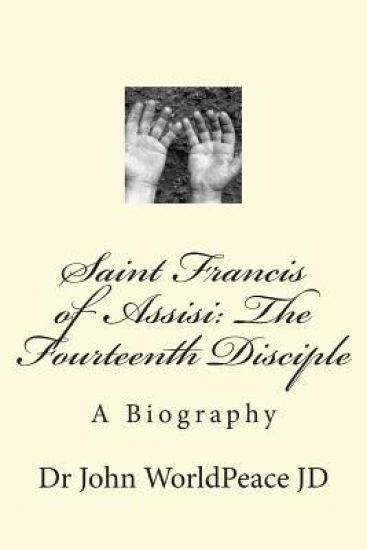
This is a biography of St. Francis of Assisi. I have organized this biography differently from the others I have read because in those biographies I could not get a feel for who St. Francis was due to all the legends, stories, mythical background, history of times, and author commentary mixed together. So I began with the story of St. Francis without interlineating the bios of his closest disciples, then continued with his wisdom, his miracles, his prayers, his relationship with animals and my commentary. I have written the St. Francis story from birth to death and then added the rest by categories at the end of the story. This biography is not a scholarly treatise. Many sources disagree on the actual fact and timing of certain events. Almost immediately after Francis' death, his story was recorded then later rewritten. The official story was written by St. Bonaventure who was healed by Francis as a child. It was foretold by Francis that Bonaventure would be a great friar minor... The reader of this bibliography should be able to get his or her bearing for further reading into St. Francis if so desired. St. Francis is much more than the Patron Saint of bird baths. I refer to St. Francis as the 14th apostle/disciple, St. Paul. was the 13th disciple. No one has actually tried to follow the gospel of Jesus in regards to the disciples spreading the good news of Jesus, except Francis. The original/initial Franciscan Order successfully followed the instructions of Jesus, proving it could be done. Today's Christians have come to support billion dollar Jesus shows where televangelists wear suits and charge $400 for front row seats in their entertainment centers. St. Francis would not have even entered such a circus where humans make millions talking about Jesus who had nothing. The hypocrisy, of these men of God is just too overwhelming. The Catholic Church has definitely honored Francis but it has not admitted just how important Francis was to rebuilding the Church of the 1200's that had become power-mad, materialistic, degenerate, and disconnected from its members who were overwhelmingly poor. The Franciscans healed the church. Significant numbers of friars have become Pope. The miracles that Francis performed were too well documented to be written off as myth. They gave us a glimpse of the reality of the greater miracles and healings of Jesus. It is not important to me whether Jesus walked on water or not, what is important is that I believe he could. It is not important to me whether Francis actually had the five wound stigmata of Jesus' crucifixion on his hands, feet and side. It is only important that I believe Francis loved Jesus enough to be worthy of them. The miracles of Jesus are 2000 years old and hard to believe for today's rational scientific technical minds. Especially since those miracles were not written down until thirty-five years after his death. Yet Francis performed almost all the same miracles over a period of eighteen years as Jesus did in the two years of his ministry. Like the gospels of Jesus, the actual literal Twenty-First century factual history is not critical. What is important is the general agreement about Francis. The stories and legends are believable even if they did not happen exactly how or when the many biographers related them. For me, Francis is critical in this age of reason and science in understanding Jesus. Francis life is an eight hundred year bridge back to the 2000 old ministry of Jesus. For me, the reality of Francis who is only eight hundred years in the past bolsters and certifies the reality of Jesus who is 2000 years in the past. Francis lived the life advocated by Jesus... D. John WorldPeace JD
A Book of Poems. These are selected poems written by Dr. John WorldPeace JD on a variety of subjects.I am publishing 2400 +/- poems from 1970 through 2017. I have published some other books of selections of these poems. I expect to have them all published by the end of September. Search for all my books under Dr. John WorldPeace JD.Dr. John WorldPeace JD NOTESI was born in 1948, in Houston, Texas.In October 1970, I wrote my first poem of the poems that I am publishing. Over the next 48 years, I wrote about 2400 poems. Most of the poems could be looked at as a short biography of my life; one page snap-shots of what I was thinking or experiencing in the moment.I have at times published a selection of the poems. In June 2018, I began to self-publish the selections of poems and all the poems I have ever written to date (about 2400) in chronological order using Amazon's CreateSpace. There will be about 30 books in total. I jumped around and did not publish the various books in chronological order. I expect to finish this project in August 2018.I will continue to write poems and in fact, will probably increase the volume of poems over the coming years. I also intend to pick a theme like Santa Fe, New Mexico and write a book about my impressions there. The number of possible subjects is infinite.I have also published a book of Haiku which are 3 line poems with 5, 7, 5 syllables per line. I would expect to publish a book of these poems annually and also some theme books of Haiku.My genetics and my current state of health make me confident, barring some accident, that I will live past 100.I do not force my poems. I don't write unless I feel inspired. I have no desire to set a world record for number of poems written in a lifetime.The poems are written in a couple of minutes, 2-10, then put away in a binder by year. I have lost less than a dozen poems over the years. Usually within 5-10 minutes after writing the poem I have no real memory of what I wrote. However, if I reread it, I will have a familiarity with what I wrote. The changes I make when publishing are very few. (Maybe 1 word in every 10 poems)
The Yoga Sutra of Patanjali
John Worldpeace Jd
Createspace Independent Publishing Platform
2018
pokkari
An interpretation of the Yoga Sutras of Patanjali. PREFACEWhat I have written is not definitive but a boot strap to help those who have an interest to further explore The Yoga Sutras.The goal of scholars who interpret sacred texts is to present a true rendition of ancient text. But this is very difficult because over many years the meaning of words change or the original word meanings are lost not to mention not having the original text or dealing with edits of the texts over the centuries or millennium.I am not a scholar but an Advocate for Peace and so I do not hold myself to a strict interpretation of these ancient scripts. What I intend to accomplish is to create a link between these ancient scripts and increasing of the peace in the world human society and this requires making changes to these texts that would be unacceptable to University scholars.This means that I taken the liberty of bending the words of the masters in sync with increasing of peace in the world human society whilte attempting to put the texts in contemporary modern English.Therefore, a scholar intends his version to create the closest possible interpretation at the time it was written and I am interested in how these words and interpreted concepts affect the level of peace in the world human society.So what I have written has been skewed with my filters and it's not to be confused with a literal interpretation which has no agenda with regards to using it to achieve any goal except to shed light on the closest meaning the original writer intended.To help me in this endeavor, I generally take about six or more scholarly interpretations and carefully read them and pick and choose parts and pieces of these interpretations line by line and then combine them and use some contemporary words and phrases to make the reading understandable by the reader.No matter what humans read, they put their own spin on it. So the idea is to put the reader on a close path to what the original writer said as it applies to contemporary society.No writing is set in stone. It is the product of all that has gone before but not a product of what will come after. Therefore, all important and sacred texts must be constantly undated over the millennium to keep them relevant. And if they cannot be so updated and applicable to contemporary society then they have to be discarded. Only time will tell whether they will be permanently discarded or discarded only for a time and then become relevant again.But texts that seem to apply to contemporary society after hundreds or thousands of years are ones that need to be considered and contemplated by society for the purpose of increasing the peace in that society. For the most part if the words no matter how young or old do not hold the prospect of increasing the peace in the world human society, they have no interest to me as a self-proclaimed Advocate for Peace and WorldPeace.Again in a nutshell, I am writing as an Advocate for Peace (someone with a social agenda) and not as a scholar whose only objective is to render as true an interpretation as possible to be used or not used by the world human society as it sees fit.
Reflections - Selected Poems 1982 to 1987 by Dr. John WorldPeace JD.I am publishing 2400 +/- poems from 1970 through 2017. I have published some other books of selections of these poems. I expect to have them all published by the end of September. Search for all my books under Dr. John WorldPeace JD.Dr. John WorldPeace JD NOTESI was born in 1948, in Houston, Texas.In October 1970, I wrote my first poem of the poems that I am publishing. Over the next 48 years, I wrote about 2400 poems. Most of the poems could be looked at as a short biography of my life; one page snap-shots of what I was thinking or experiencing in the moment.I have at times published a selection of the poems. In June 2018, I began to self-publish the selections of poems and all the poems I have ever written to date (about 2400) in chronological order using Amazon's CreateSpace. There will be about 30 books in total. I jumped around and did not publish the various books in chronological order. I expect to finish this project in August 2018.I will continue to write poems and in fact, will probably increase the volume of poems over the coming years. I also intend to pick a theme like Santa Fe, New Mexico and write a book about my impressions there. The number of possible subjects is infinite.I have also published a book of Haiku which are 3 line poems with 5, 7, 5 syllables per line. I would expect to publish a book of these poems annually and also some theme books of Haiku.My genetics and my current state of health make me confident, barring some accident, that I will live past 100.I do not force my poems. I don't write unless I feel inspired. I have no desire to set a world record for number of poems written in a lifetime.The poems are written in a couple of minutes, 2-10, then put away in a binder by year. I have lost less than a dozen poems over the years. Usually within 5-10 minutes after writing the poem I have no real memory of what I wrote. However, if I reread it, I will have a familiarity with what I wrote. The changes I make when publishing are very few. (Maybe 1 word in every 10 poems)
The Wisdom of the Buddha
John Worldpeace Jd
Createspace Independent Publishing Platform
2018
pokkari
The Dhammapada. This is the Buddhist Dhammapada which are the main sayings and wisdom of the Buddha.Buddha lived around 600 B.C.E. in India. He was raised as a prince. After the birth of his first son, he left his family and began a quest to seek out the source of suffering in the world.He tried all methods of meditation and is said to have fasted to the point of eating only one grain of rice or bean per day. This left him near exhaustion and no closer to the riddle of suffering. He sat down under a Bo tree and ate something and rested. He then began to see visions and became as he said, "awakened". He then went and found the 6 ascetics with whom he had been traveling and taught them what he had learned. Then for the next forty years taught his message: The eight-fold path.Toward the end of his life when his religion began to be established there was an attempt on his life. He survived and continued to teach. The bureaucratic power which always manifest around great religious figures had already begun to take over the message. When he was 82 he became ill while traveling from village to village. He sat down under a tree and sent out word that he was dying. Many came to see him. When he saw everyone, he went into mediation and left his body.Within a month after his death, his followers gathered together and wrote down his most famous sayings and teachings. These have come down to us as the Dhammapada which contains 423 verses.What I have done is not to interpret the original pictographs which have been most surely manipulated over the millennium, but have taken several translations and then put a peace and harmony WorldPeace orientation on them. What has manifested is more of an interpretation than a literaltranslation. This is what the saying of Buddha, as handed down over the millennia say to me.I have no intention to argue over the literal translation of what the Buddha said. The thrust of his message is contained within my words. Neither am I trying to convert anyone to my way of thinking. I am only presenting what I have personally found after years of studying the sayings of the Buddha. My objective is to increase the peace on earth. My goal is to find like minded souls to further explore these thoughts and to help manifest WorldPeace.THE FOUR NOBLE TRUTHSThe Four Noble Truths1. Every human being to some extent lives in confusion (sorrow) in the manifestations of the Infinite and this reality.2. The main cause of confusion is self centered desire because we think that we are not at one with all of humanity. 3. We can put an end to our confusion in the manifestations of the Infinite and this reality and begin to live in peace and harmony by overcoming ourself centered desire.4. Confusion can be put to an end by following the peaceful and harmonious eight fold path which consists of:1. Peaceful and harmonious Knowledge. Know in our minds that all things change. 2. Peaceful and harmonious Aspiration. Determination to live in the peace and harmony of the oneness of the Infinite and humanity by refusing to make distinctions that are the source of confusion in the manifestations of this reality.3. Peaceful and harmonious Speech. Always speak the truth and be charitable in speaking to others.4. Peaceful and harmonious behaviora. Do not kill.b. Do not steal.c. Do not lie.d. Practice sexual restrainte. Avoid alcohol and drugs5. Peaceful and harmonious livelihood. Pursue occupations that promote peace and harmony and uplift humanity as opposed to those that increase confusion within humanity.6. Peaceful and harmonious Effort. Remain centered in the Oneness of the Infinite. 7. Peaceful and harmonious Attention. Remaining moment to moment attentive to the oneness of the Infinite.8. Peaceful and harmonious Meditation to train the mind.
Poems with God Speaking by Dr. John WorldPeace JDI am publishing 2400 +/- poems from 1970 through 2017. I have published some other books of selections of these poems. I expect to have them all published by the end of September. Search for all my books under Dr. John WorldPeace JD.Dr. John WorldPeace JD NOTESI was born in 1948, in Houston, Texas.In October 1970, I wrote my first poem of the poems that I am publishing. Over the next 48 years, I wrote about 2400 poems. Most of the poems could be looked at as a short biography of my life; one page snap-shots of what I was thinking or experiencing in the moment.I have at times published a selection of the poems. In June 2018, I began to self-publish the selections of poems and all the poems I have ever written to date (about 2400) in chronological order using Amazon's CreateSpace. There will be about 30 books in total. I jumped around and did not publish the various books in chronological order. I expect to finish this project in August 2018.I will continue to write poems and in fact, will probably increase the volume of poems over the coming years. I also intend to pick a theme like Santa Fe, New Mexico and write a book about my impressions there. The number of possible subjects is infinite.I have also published a book of Haiku which are 3 line poems with 5, 7, 5 syllables per line. I would expect to publish a book of these poems annually and also some theme books of Haiku.My genetics and my current state of health make me confident, barring some accident, that I will live past 100.I do not force my poems. I don't write unless I feel inspired. I have no desire to set a world record for number of poems written in a lifetime.The poems are written in a couple of minutes, 2-10, then put away in a binder by year. I have lost less than a dozen poems over the years. Usually within 5-10 minutes after writing the poem I have no real memory of what I wrote. However, if I reread it, I will have a familiarity with what I wrote. The changes I make when publishing are very few. (Maybe 1 word in every 10 poems)
The Analects of Confucius
John Worldpeace Jd
Createspace Independent Publishing Platform
2018
pokkari
The Analects of Confucius. Confucius lived about 2500 years ago in China. His Analects or sayings, have been repeatedly translated over the last 25 centuries because they embody ideas that transcend time and apply to human behavior in all societies. The sayings of Confucius cannot be considered a religion in the strictest sense but are more of a philosophy for peaceful and harmonious living within society. The emphasis is on social interactions as opposed to the worship of God. Overall, Confucius tries to define how a good person should behave in society. Personally, I do not like to use the term "good person" because it indicates that some people are bad or evil. I personally believe that making distinctions of good and bad tend to empower righteousness and righteousness promotes judgment; the cause of conflict and war. If we are to foster peace within ourselves and peace among ourselves, we must see ourselves as one with each other and refuse to judge each other. Peace and harmony are neutral words that are essentially free of judgment. So if I were to say, "a good person does not steal," it indicates the righteousness of that person. But if I say, "a person who flows in peace and harmony does not steal," it indicates a non-judgmental state of peace and harmony within that person. Therefore, in this book in place of the word good, I have for the most part used the words peace and harmony; peace in truth being a function of harmony. In other words, if a person is in harmony with other people, she will tend to be at peace with herself and at peace with others. The goal of any translation is to not only, as concisely as possible, convey thoughts from one language to another but to also make the translation as readable and understandable as possible. Scholars tend to use words that are precise even though they are sometimes archaic. I am not a scholar and I did not actually translate the saying of Confucius from the original Chinese pictographs. What I did was to try to find a consensus among several translations. Therefore, what I have written is more of an interpretation than a translation. Further, I have not seen fit to interpret the most mundane sayings or the ones I considered inapplicable to contemporary society. My goal was to write a book that promotes peace and harmony in contemporary society as opposed to a literal translation of something that was written 2500 years ago. In essence, I have striven to bring the sayings of Confucius into the Third Millennium. In reading this book, it is important to keep in mind that this is my personal perspective of the sayings of Confucius and is not meant to demean in any way his sayings or to confront those who feel connected with other translations of the Analects. My only objective was and is to attempt to help manifest a higher level of peace and harmony on our planet.
The Contemporary Tao of Peace and Harmony
John Worldpeace Jd
Createspace Independent Publishing Platform
2018
pokkari
The Tao te Ching by Dr. John WorldPeace JD. The Tao te Ching was allegedly written by LaoTzu about 2,500 years ago. It is not known if hesimply wrote down oral traditions or whether hehad some unique insights. It is not even known ifthe Tao was written by Lao Tzu or compiled byseveral others after his death.We also do not know how many manipulationsthe text has endured over the last 2,500 years. We cannot even be sure that the traditional Tao isthe original Tao.What we do know is that this body of ideashas survived for 2,500 years. Therefore, we mustacknowledge that these ideas have validity whenapplied to humanity.The Tao has been translated by manycompetent scholars into English. However, thewords used in the various translations are ratherdiverse.A translation compares one language toanother. Translating Chinese into English istricky because one is translating abstractpictographs into a linear language. Words cannever fully translate a pictograph. This probablyaccounts for the wide variation in words used inthe various translations.I am not a scholar. I did not translate evenone pictograph. What I did was to look for theconsensus among the various translations. Therefore, the result is more an interpretationthan a translation.In addition, I tried to relate all the ideas toan underlying theme of peace and harmony. "Howdoes a particular passage relate to themanifestation of peace and harmony?", is thequestion I asked about every idea. I tried torelate every word to a peace and harmony themebecause I believe that this was the original intentof the Tao.Further, I tried, where appropriate, toreplace some of the abstract concepts withsomething more concrete. I believe this allowsmore of a consensus of what is being communicatedand makes it easier to determine whether or notwhat is being communicated fosters peace andharmony.In essence, I have simply done what manyothers have done over the last 2,500 years. Ihave tried to relate the Tao in contemporarylanguage with the hope that the level of peace andharmony in the world will increase.My objective has been peace and harmony andnot a literal translation. The following is simplymy personal perspective of peace and harmony asseen through the Tao te Ching.
Haiku by Dr. John WorldPeace JD. These are my first attempts at Haiku. I expect to add one or two books per year if not more.
The Bhavagad Gita. The Saying of Krishna.CHAPTER 1Arjuna's Despair1) The blind King Dhritarashtra said to the sage Sanjaya, Tell me, Sanjaya, what happened when my sons and the sons of Pandu assembled to war against each other on the field of sacred duty at Kurukshetra?2. Sanjaya said, After surveying the forces of the sons of Pandu, your son, prince Duryodhana, approached his teacher, Drona, and said,3. Teacher, look at this mighty army of Pandu's sons that has been assembled by your student, Drupada.4. Look at the heroes assembled there, the mighty archers who are equal to Bhima, Arjuna, Yuyudhana, and Virata. See the great warrior Drupada in his chariot.5. Over there is Dhrishtaketu, Chekitarra, the brave King of Kasi, Pureyit, Kuntibhaja and the great commander Saibya.6. And over there is the bold Yudhamanyu, the brave Uttamarjas, the sons of Subhadra and the sons of Drupadi; all great warriors and commanders. 7. Honored teacher, consider now the superb warriors and commanders on our side.8. Yourself, Bhisma, Karna, Kripa, a victor in many battles, Asvatthama, Vikarna and the son of Somadatta as well.9. I have many heroes and veterans of war and disciplined warriors skilled in the use of the weapons of war. All these are prepared to give their lives for me.10. Under Bhisma, the strength of our army is unlimited, while their army is weak under the command of Bhima.11. Then your son, Duryodhana, said to his commanders: Everyone take your positions of command and see to it that you protect our great commander Bhisma.12. Then to inspire and fortify Duryodhana, Bhisma, the great patriarch ofthe Kurus, roared like a lion and mightily blew his conch horn.13. At the sound of Bhisma's horn all the Kurus began to sound their conches, kettledrums, cymbals, tabors and trumpets; creating a great and ominous noise.14. Then Arjuna, son of Pandu, and Krishna, standing in their mighty chariot drawn by two magnificent white stallions, blew their divine conches.15. Krishna blew his conch named Panchajanya which he had taken from a demon. Arjuna blew his conch named Devadatta, which had been given to him by the gods. The fierce Bhima blew his great conch named Paundra.16. Yudhisshthire, son of King Junti, blew his conch named Anantavrjaya, meaning victory. Nakula and Sahadeva blew their conches, Sughosha, meaning resonant sound and Manipushpake, meaning decorated with jewels.17. Then the King of Kasi, the great archer, the great warrior Shikhandu in his chariot, Dhrishtodyumma, Virata and the invincible Satyake all blew their conches.18. Then Drupada and the sons of Drapadi and the powerful son of Subhadra, all joined in with their conches.19. The great sound echoed through heaven and earth and created fear throughout the Kuru army.20. Then Arjuna, with his rampant monkey banner, looked upon the Kuru army, lifted his bow and said to Krishna,21. Krishna halt my chariot between these two great armies.22. Take us far enough so that I might see these men who are intent upon doing battle against me.23. I want to see those who are eager to fight for Dhritarashtra's evil son Duryodhana.24. As commanded by Arjuna, Krishna halted their magnificent chariot between the two armies..
The Peace and Harmony Gospel of Jesus
John Worldpeace Jd
Createspace Independent Publishing Platform
2018
pokkari
The Peace and Harmony Gospel of Jesus. Jesus Speaks. 90 pages.The Christian Bible can be divided into three major sections; the Old Testament, the first four gospels of the New Testament, and the balance of the New Testament.The Old Testament begins with Adam and Eve and the story of Creation. It then moves to the beginning of Jewish history with the introduction of Abraham. The next major Jewish player is Moses who delivered the law, in the form of the Ten Commandments, to the Israelites after their Exodus from Egypt. This is the core of the Old Testament.The New Testament begins with a man called Jesus. He claims to be the Jewish Messiah who was foretold throughout the Old Testament. He states that he has come only to the Israelites. He says that he has come with a new doctrine, a new focus and a new understanding regarding the Israelites and their relationship to their God and to each other.This new doctrine had only two commandments: the first, love God; the second, love one another. The first four books of the New Testament consists of the gospels (good news) of Matthew, Mark, Luke, and John. All four gospels relate the story of Jesus' life. With a few very minor exceptions, they are the only books of the Bible which directly quote the sayings of Jesus.The balance of the New Testament consists of commentary on what Jesus said, what he did and how his words and acts relate to humanity. This commentary which began over 1900 years ago has never lost its momentum as Christians and non-Christians continue to seek an understanding of the words and deeds of Jesus.In this book, I have considered only those sayings attributed to Jesus in the first four gospels of the New Testament as well as the gospel of Thomas. I have not focused on what came before Jesus as recorded in the Old Testament and I have not attempted to comment on what others said after his ordeal on the cross. Consequently, I have ignored most of the traditional Bible.The gospel of Thomas is not one of the officially sanctioned books of the Bible but I have counted it as a fifth gospel because it is a collection of 114 sayings attributed to Jesus. Many of these sayings have parallels in the gospels of Matthew, Mark, Luke, and John. The gospel of Thomas is part of the Nag Hammadi Library which was rediscovered in 1945. The Nag Hammadi Library is a collection of the 1500-year-old texts which were copied from more ancient documents, some of which are believed to have been written within decades of Jesus' death. The gospel of Thomas is one of many rediscovered texts that are focusing new light on the life and sayings of Jesus.In reality, there is no way that we can know exactly what Jesus said because it was allegedly not written down at the time he said it. Each of the five gospels records what the authors believed were the most important sayings of Jesus. Obviously, there was some disagreement over which sayings were the most important because the gospels are not identical.For the purposes of this book, the valid sayings of Jesus are the ones which are quoted in at least two of the five gospels of Matthew, Mark, Luke, John, and Thomas. (Except for the conflict between Jesus and the Jewish religious bureaucrats) Also, I only considered the sayings having parallel wording and not the ones having parallel thoughts. Logically, I considered the most significant sayings to be the ones that are the most often quoted by the gospel authors. In this book, I have focused only on what Jesus allegedly said as recorded in the Bible and how his sayings relate to increasing the level of Peace in the world human society. I have generally declined to include the sayings that relate to the divinity of Jesus, the death on the cross, the many miracles ...