This is a biography of the President of Northern Michigan University, John X. Jamrich 1968-1983. This biography focuses on the challenges of his administration.
The 18th century was a wealth of knowledge, exploration and rapidly growing technology and expanding record-keeping made possible by advances in the printing press. In its determination to preserve the century of revolution, Gale initiated a revolution of its own: digitization of epic proportions to preserve these invaluable works in the largest archive of its kind. Now for the first time these high-quality digital copies of original 18th century manuscripts are available in print, making them highly accessible to libraries, undergraduate students, and independent scholars.The Age of Enlightenment profoundly enriched religious and philosophical understanding and continues to influence present-day thinking. Works collected here include masterpieces by David Hume, Immanuel Kant, and Jean-Jacques Rousseau, as well as religious sermons and moral debates on the issues of the day, such as the slave trade. The Age of Reason saw conflict between Protestantism and Catholicism transformed into one between faith and logic -- a debate that continues in the twenty-first century.++++The below data was compiled from various identification fields in the bibliographic record of this title. This data is provided as an additional tool in helping to insure edition identification: ++++British LibraryT094161The words "Christ .. bring." are enclosed in square brackets.- With a half-title.Edinburgh: printed by Neill and Company. Sold by W. Gray, and other booksellers, 1783. 46p.; 8
Molecular Sensors and Nanodevices: Principles, Designs and Applications in Biomedical Engineering, Second Edition is designed to be used as a foundational text, aimed at graduates, advanced undergraduates, early-career engineers and clinicians. The book presents the essential principles of molecular sensors, including theories, fabrication techniques and reviews. In addition, important devices and recently, highly-cited research outcomes are also cited. This differentiates the book from other titles on the market whose primary focus is more research-oriented and aimed at more of a niche market.
The delivery of real bottom-line results from manufacturing improvements has proven to be much harder than expected for most companies. TQM, Zero-Defect Manufacturing, and Business Process Re-engineering have dropped off the landscape for taking much too long and failing to deliver the promised results. Lean Six Sigma is now experiencing the same fundamental difficulty. Delineating a quantitative approach, Lean Manufacturing: Business Bottom-Line Based shows you how to revitalize Lean Six Sigma by aligning it with your business’ bottom line and thus delivering results that your executives, business leaders, and customers expect.Written by an expert who has transformed product design and manufacturing at companies ranging from Maytag and Visteon to General Electric, the book demonstrates that an awareness of manufacturing business metrics is absolutely essential for every lean manufacturing practitioner. The author has seen first-hand the limitation of traditional lean manufacturing driven by business bottom lines. He outlines case studies linking world events and manufacturing efficiency and presents lean manufacturing strategies and techniques designed to accelerate responses to current and future events on the floors of the world’s manufacturing facilities. Typically, advice on lean manufacturing comes in the form of techniques regarding a particular tool or tool-box, yet the factory floor, like everything in the global community, is profoundly driven by business bottom lines. This book presents a systematic approach to improve business bottom lines through identifying and eliminating waste, and adding value and fulfillment by flowing the product at the demand of the customer.
Covering the prediction of outcomes for engineering decisions through regression analysis, this succinct and practical reference presents statistical reasoning and interpretational techniques to aid in the decision making process when faced with engineering problems. The author emphasizes the use of spreadsheet simulations and decision trees as important tools in the practical application of decision making analyses and models to improve real-world engineering operations. He offers insight into the realities of high-stakes engineering decision making in the investigative and corporate sectors by optimizing engineering decision variables to maximize payoff.
Designing new products and improving existing ones is a continual process. Industrial design engineering is an industrial engineering process applied to product designs that are to be manufactured through techniques of production operations. Excellent industrial design engineering programs are essential for the nation’s industry to succeed in selling useful and ecologically justifiable and usable products on a market flooded with goods and services. This unique text on industrial design engineering integrates basic knowledge, insight, and working methods from industrial engineering and product design subjects. Industrial Design Engineering: Inventive Problem Solving provides a combination of engineering thinking and design skills that give the researchers, practitioners, and students an excellent foundation for participation in product development projects and techniques for establishing and managing such projects. The design principles are presented around examples related to the designing of products, goods, and services. Case studies are developed around real problems and are based on the customer’s needs.
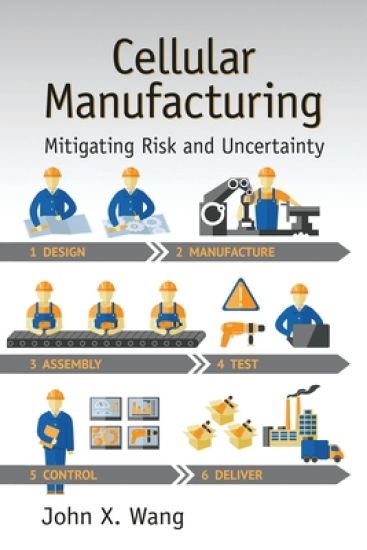
In today’s business world, competitiveness defines the industrial leading edge. Organizations and businesses of all sizes are adopting Lean manufacturing practices to increase efficiency and address worries about their bottom lines. In a detailed review of this staple of Lean manufacturing, Cellular Manufacturing: Mitigating Risk and Uncertainty outlines how cellular manufacturing can do just that. It demonstrates how this approach can help you and your teams build a variety of products with as little waste as possible.The book begins by presenting a survey of the current state of existing methods that can best be used in the handling of the bottleneck machines and parts problem, which results from the cellular manufacturing system design. It then explores how decision making under risk is used to help the designer select the best cell arrangement in case of probabilistic production volume and maximize the profit imposed by resource capacity constraints. The author then presents a method for the system design of a manufacturing cell that aims for profit maximization over a certain period of time. He also discusses robust design, illustrated with a real application.Put simply, cellular manufacturing integrates machinery and a small team of staff, directed by a team leader, so all the work on a product or part can be accomplished in the same cell eliminating resources that do not add value to the product. A concise yet unique reference, this book incorporates decision making under risk into cellular manufacturing. The text makes the link that ties cellular manufacturing to the bottom line. It helps you recognize savings opportunities from elimination of downtime between operations, decreased material handling costs, decreased work-in-progress inventory and associated costs, reduced opportunity for handling errors, decreased downtime spent waiting for supplies or materials, and reduced losses from defective or obsolete products.
Covering the prediction of outcomes for engineering decisions through regression analysis, this succinct and practical reference presents statistical reasoning and interpretational techniques to aid in the decision making process when faced with engineering problems. The author emphasizes the use of spreadsheet simulations and decision trees as important tools in the practical application of decision making analyses and models to improve real-world engineering operations. He offers insight into the realities of high-stakes engineering decision making in the investigative and corporate sectors by optimizing engineering decision variables to maximize payoff.
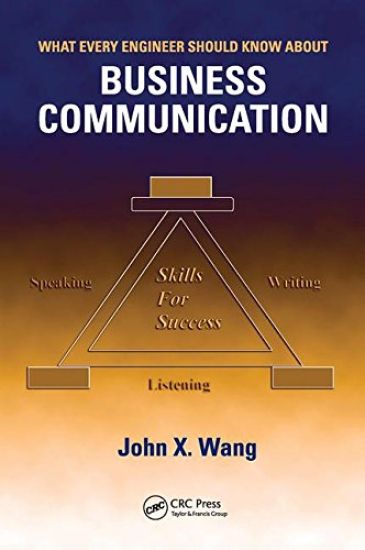
Engineers must possess a range of business communication skills that enable them to effectively communicate the purpose and relevance of their idea, process, or technical design. This unique business communication text is packed with practical advice that will improve your ability to— Market ideas Write proposals Generate enthusiasm for research Deliver presentations Explain a design Organize a project team Coordinate meetings Create technical reports and specifications Focusing on the three critical communication needs of engineering professionals—speaking, writing, and listening—the book delineates critical communication strategies required in many group settings and work situations. It demonstrates how to integrate a marketing strategy into every facet of engineering communication, from presentations, visual aids, proposals, and technical reports to e-mail and phone calls. Using situational examples, the book also illustrates how to use computers, graphics, and other engineering tools to effectively communicate with other engineers and managers.
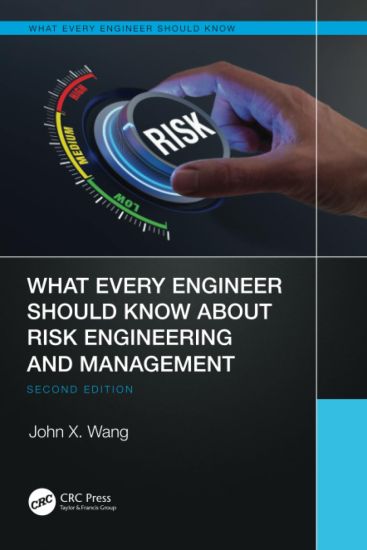
Completely updated, this new edition uniquely explains how to assess and handle technical risk, schedule risk, and cost risk efficiently and effectively for complex systems that include Artificial Intelligence, Machine Learning, and Deep Learning. It enables engineering professionals to anticipate failures and highlight opportunities to turn failure into success through the systematic application of Risk Engineering. What Every Engineer Should Know About Risk Engineering and Management, Second Edition discusses Risk Engineering and how to deal with System Complexity and Engineering Dynamics, as it highlights how AI can present new and unique ways that failures can take place. The new edition extends the term "Risk Engineering" introduced by the first edition, to Complex Systems in the new edition. The book also relates Decision Tree which was explored in the first edition to Fault Diagnosis in the new edition and introduces new chapters on System Complexity, AI, and Causal Risk Assessment along with other chapter updates to make the book current. Features Discusses Risk Engineering and how to deal with System Complexity and Engineering Dynamics Highlights how AI can present new and unique ways of failure that need to be addressed Extends the term "Risk Engineering" introduced by the first edition to Complex Systems in this new edition Relates Decision Tree which was explored in the first edition to Fault Diagnosis in the new edition Includes new chapters on System Complexity, AI, and Causal Risk Assessment along with other chapters being updated to make the book more currentThe audience is the beginner with no background in Risk Engineering and can be used by new practitioners, undergraduates, and first-year graduate students.
Completely updated, this new edition uniquely explains how to assess and handle technical risk, schedule risk, and cost risk efficiently and effectively for complex systems that include Artificial Intelligence, Machine Learning, and Deep Learning. It enables engineering professionals to anticipate failures and highlight opportunities to turn failure into success through the systematic application of Risk Engineering. What Every Engineer Should Know About Risk Engineering and Management, Second Edition discusses Risk Engineering and how to deal with System Complexity and Engineering Dynamics, as it highlights how AI can present new and unique ways that failures can take place. The new edition extends the term "Risk Engineering" introduced by the first edition, to Complex Systems in the new edition. The book also relates Decision Tree which was explored in the first edition to Fault Diagnosis in the new edition and introduces new chapters on System Complexity, AI, and Causal Risk Assessment along with other chapter updates to make the book current. Features Discusses Risk Engineering and how to deal with System Complexity and Engineering Dynamics Highlights how AI can present new and unique ways of failure that need to be addressed Extends the term "Risk Engineering" introduced by the first edition to Complex Systems in this new edition Relates Decision Tree which was explored in the first edition to Fault Diagnosis in the new edition Includes new chapters on System Complexity, AI, and Causal Risk Assessment along with other chapters being updated to make the book more currentThe audience is the beginner with no background in Risk Engineering and can be used by new practitioners, undergraduates, and first-year graduate students.
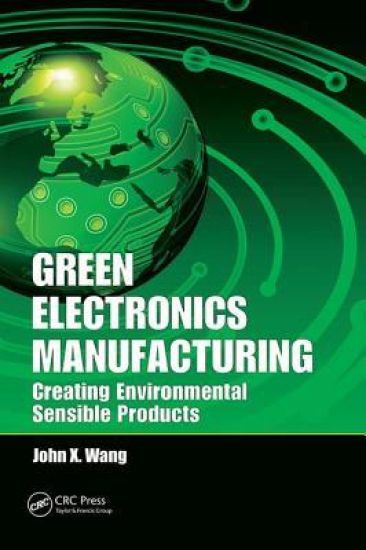
Going "green" is becoming a major component of the mission for electronics manufacturers worldwide. While this goal seems simplistic, it poses daunting dilemmas. Yet, to compete effectively in the global economy, manufacturers must take the initiative to drive this crucial movement. Green Electronics Manufacturing: Creating Environmental Sensible Products provides you with a complete reference to design, develop, build, and install an electronic product with special consideration for the product’s environmental impacts during its whole life cycle.The author discusses how to integrate the state-of-the-art technologies of finite element method (FEM) modeling, simulation, and testing to create environmental sensible products of satisfying global environmental regulations, such as Restriction of Hazardous Substances (ROHS) compliance. He covers enabling techniques such as advanced fatigue life modeling, crack propagation analysis, and probabilistic robust design of lead-free electronics. The book also explores how risk engineering methodology empowers practitioners with effective tools such as buckling analysis of tin whiskers.With its emphasis on reducing parts, rationing materials, and reusing components to make products more efficient to build, green electronics intertwines today’s electronics with manufacturing strategies of global sourcing, concurrent engineering, and total quality. Implemented through product and process design, it can help you achieve sustainability to support future generations and at the same time preserve our natural resources. Green Electronics Manufacturing: Creating Environmental Sensible Products gives you the tools to create environmental sensible products while maintaining electronics quality and reliability.
Engineers must possess a range of business communication skills that enable them to effectively communicate the purpose and relevance of their idea, process, or technical design. This unique business communication text is packed with practical advice that will improve your ability to Market ideas Write proposals Generate enthusiasm for research Deliver presentations Explain a design Organize a project team Coordinate meetings Create technical reports and specifications Focusing on the three critical communication needs of engineering professionals‘speaking, writing, and listening the book delineates critical communication strategies required in many group settings and work situations. It demonstrates how to integrate a marketing strategy into every facet of engineering communication, from presentations, visual aids, proposals, and technical reports to e-mail and phone calls. Using situational examples, the book also illustrates how to use computers, graphics, and other engineering tools to effectively communicate with other engineers and managers.
The delivery of real bottom-line results from manufacturing improvements has proven to be much harder than expected for most companies. TQM, Zero-Defect Manufacturing, and Business Process Re-engineering have dropped off the landscape for taking much too long and failing to deliver the promised results. Lean Six Sigma is now experiencing the same fundamental difficulty. Delineating a quantitative approach, Lean Manufacturing: Business Bottom-Line Based shows you how to revitalize Lean Six Sigma by aligning it with your business’ bottom line and thus delivering results that your executives, business leaders, and customers expect.Written by an expert who has transformed product design and manufacturing at companies ranging from Maytag and Visteon to General Electric, the book demonstrates that an awareness of manufacturing business metrics is absolutely essential for every lean manufacturing practitioner. The author has seen first-hand the limitation of traditional lean manufacturing driven by business bottom lines. He outlines case studies linking world events and manufacturing efficiency and presents lean manufacturing strategies and techniques designed to accelerate responses to current and future events on the floors of the world’s manufacturing facilities. Typically, advice on lean manufacturing comes in the form of techniques regarding a particular tool or tool-box, yet the factory floor, like everything in the global community, is profoundly driven by business bottom lines. This book presents a systematic approach to improve business bottom lines through identifying and eliminating waste, and adding value and fulfillment by flowing the product at the demand of the customer.
Going "green" is becoming a major component of the mission for electronics manufacturers worldwide. While this goal seems simplistic, it poses daunting dilemmas. Yet, to compete effectively in the global economy, manufacturers must take the initiative to drive this crucial movement. Green Electronics Manufacturing: Creating Environmental Sensible Products provides you with a complete reference to design, develop, build, and install an electronic product with special consideration for the product’s environmental impacts during its whole life cycle.The author discusses how to integrate the state-of-the-art technologies of finite element method (FEM) modeling, simulation, and testing to create environmental sensible products of satisfying global environmental regulations, such as Restriction of Hazardous Substances (ROHS) compliance. He covers enabling techniques such as advanced fatigue life modeling, crack propagation analysis, and probabilistic robust design of lead-free electronics. The book also explores how risk engineering methodology empowers practitioners with effective tools such as buckling analysis of tin whiskers.With its emphasis on reducing parts, rationing materials, and reusing components to make products more efficient to build, green electronics intertwines today’s electronics with manufacturing strategies of global sourcing, concurrent engineering, and total quality. Implemented through product and process design, it can help you achieve sustainability to support future generations and at the same time preserve our natural resources. Green Electronics Manufacturing: Creating Environmental Sensible Products gives you the tools to create environmental sensible products while maintaining electronics quality and reliability.
With applications ranging from medical diagnostics to environmental monitoring, molecular sensors (also known as biosensors, chemical sensors, or chemosensors), along with emerging nanotechnologies offer not only valuable tools but also unlimited possibilities for engineers and scientists to explore the world. New generation of functional microsystems can be designed to provide a variety of small scale sensing, imaging and manipulation techniques to the fundamental building blocks of materials. This book provides comprehensive coverage of the current and emerging technologies of molecular sensing, explaining the principles of molecular sensor design and assessing the sensor types currently available. Having explained the basic sensor structures and sensing principles, the authors proceed to explain the role of nano/micro fabrication techniques in molecular sensors, including MEMS, BioMEMS, MicroTAS among others. The miniaturization of versatile molecular sensors opens up a new design paradigm and a range of novel biotechnologies, which is illustrated through case studies of groundbreaking applications in the life sciences and elsewhere. As well as the techniques and devices themselves, the authors also cover the critical issues of implantability, biocompatibility and the regulatory framework. The book is aimed at a broad audience of engineering professionals, life scientists and students working in the multidisciplinary area of biomedical engineering. It explains essential principles of electrical, chemical, optical and mechanical engineering as well as biomedical science, intended for readers with a variety of scientific backgrounds. In addition, it will be valuable for medical professionals and researchers. An online tutorial developed by the authors provides learning reinforcement for students and professionals alike.