Kirjojen hintavertailu. Mukana 11 342 296 kirjaa ja 12 kauppaa.

Kirjahaku

Etsi kirjoja tekijän nimen, kirjan nimen tai ISBN:n perusteella.

1000 tulosta hakusanalla John van Wyhe

Darwin: A Companion - With Iconographies By John Van Wyhe

Darwin: A Companion - With Iconographies By John Van Wyhe

Paul Van Helvert; John Van Wyhe

World Scientific Publishing Co Pte Ltd
2021
sidottu
'This is a book that required a great many research hours, the kind of volume you may be glad someone took the time to compile.'The Quarterly Review of Biology This is the ultimate guide to the life and work of Charles Darwin. The result of decades of research through a vast and daunting literature which is hard for beginners and experts alike to navigate, it brings together widely scattered facts including very many unknown to even the most ardent Darwin aficionados. It includes hundreds of new discoveries and corrections to the existing literature. It provides the most complete summaries of his publications, manuscripts, lifetime itinerary, finances, personal library, friends and colleagues, opponents, visitors to his home, anniversaries, hundreds of flora, fauna, monuments and places named after him and a host of other topics. Also included are the most complete lists (iconographies) ever created of illustrations of the Beagle, over 1000 portraits of Darwin, his wife and home as well as all known Darwin photographs, stamps and caricatures. The book is richly illustrated with 350 images, most previously unknown.
Darwin: A Companion - With Iconographies By John Van Wyhe

Darwin: A Companion - With Iconographies By John Van Wyhe

Paul Van Helvert; John Van Wyhe

World Scientific Publishing Co Pte Ltd
2021
nidottu
'This is a book that required a great many research hours, the kind of volume you may be glad someone took the time to compile.'The Quarterly Review of Biology This is the ultimate guide to the life and work of Charles Darwin. The result of decades of research through a vast and daunting literature which is hard for beginners and experts alike to navigate, it brings together widely scattered facts including very many unknown to even the most ardent Darwin aficionados. It includes hundreds of new discoveries and corrections to the existing literature. It provides the most complete summaries of his publications, manuscripts, lifetime itinerary, finances, personal library, friends and colleagues, opponents, visitors to his home, anniversaries, hundreds of flora, fauna, monuments and places named after him and a host of other topics. Also included are the most complete lists (iconographies) ever created of illustrations of the Beagle, over 1000 portraits of Darwin, his wife and home as well as all known Darwin photographs, stamps and caricatures. The book is richly illustrated with 350 images, most previously unknown.
Charles Darwin

Charles Darwin

John van Wyhe

Welbeck Publishing Group
2020
pokkari
The Compact Guide: Charles Darwin reveals the famous scientist's life in compelling detail. From his expedition aboard the Beagle and his legendary research in the Galapagos Islands, to his marriage and illness and the publication of his groundbreaking works, this book sheds fascinating light on the most remarkable aspects of Darwin's life - the extraordinary adventure of discovery that led Darwin to some of his greatest breakthroughs; the controversy with Alfred Russel Wallace on who first originated the idea of evolution by natural selection; and the Darwin family's prosperous but often tragic home life, and how Charles became one of the first Victorians to reject religion and God.
Charles Darwin's Shorter Publications, 1829–1883

Charles Darwin's Shorter Publications, 1829–1883

John Van Wyhe

Cambridge University Press
2009
sidottu
Charles Darwin's words first appeared in print as a student at Christ's College, Cambridge in 1829, and in almost every subsequent year of his life he published essays, articles, letters to editors, or other brief works. These shorter publications contain a wealth of valuable material. They represent an important part of the Darwin visible to the Victorian public, alongside his ever present sense of humour, and reveal an even wider variety of his scientific interests and abilities, which continued to his final days. This book brings together all known shorter publications and printed items Darwin wrote during his lifetime, including his first and his last publications, and the first publication, with A. R. Wallace, of Darwin's theory of evolution by natural selection. With over seventy newly discovered items, the book is fully edited and annotated, and contains original illustrations and a comprehensive bibliography.
Phrenology and the Origins of Victorian Scientific Naturalism
Through a reassessment of phrenology, Phrenology and the Origins of Victorian Scientific Naturalism sheds light on all kinds of works in Victorian Britain and America which have previously been unnoticed or were simply referred to with a vague 'naturalism of the times' explanation. It is often assumed that the scientific naturalism familiar in late nineteenth century writers such as T.H. Huxley and John Tyndall are the effects of a 'Darwinian revolution' unleashed in 1859 on an unsuspecting world following the publication of The Origin of Species. Yet it can be misleading to view Darwin's work in isolation, without locating it in the context of a well established and vigorous debate concerning scientific naturalism. Throughout the nineteenth century intellectuals and societies had been discussing the relationship between nature and man, and the scientific and religious implications thereof. At the forefront of these debates were the advocates of phrenology, who sought to apply their theories to a wide range of subjects, from medicine and the treatment of the insane, to education, theology and even economic theories. Showing how ideas about naturalism and the doctrine of natural laws were born in the early phrenology controversies in the 1820s, this book charts the spread of such views. It argues that one book in particular, The Constitution of Man in Relation to External Objects (1828) by George Combe, had an enormous influence on scientific thinking and the popularity of the 'naturalistic movement'. The Constitution was one of the best-selling books of the nineteenth century, being published continuously from 1828 to 1899, and selling more than 350,000 copies throughout the world, many times more than Dawin's The Origin of Species. By restoring Combe and his work to centre stage it provides modern scholars with a more accurate picture of the Victorians' view of their place in Nature.
Phrenology and the Origins of Victorian Scientific Naturalism
Through a reassessment of phrenology, Phrenology and the Origins of Victorian Scientific Naturalism sheds light on all kinds of works in Victorian Britain and America which have previously been unnoticed or were simply referred to with a vague 'naturalism of the times' explanation. It is often assumed that the scientific naturalism familiar in late nineteenth century writers such as T.H. Huxley and John Tyndall are the effects of a 'Darwinian revolution' unleashed in 1859 on an unsuspecting world following the publication of The Origin of Species. Yet it can be misleading to view Darwin's work in isolation, without locating it in the context of a well established and vigorous debate concerning scientific naturalism. Throughout the nineteenth century intellectuals and societies had been discussing the relationship between nature and man, and the scientific and religious implications thereof. At the forefront of these debates were the advocates of phrenology, who sought to apply their theories to a wide range of subjects, from medicine and the treatment of the insane, to education, theology and even economic theories. Showing how ideas about naturalism and the doctrine of natural laws were born in the early phrenology controversies in the 1820s, this book charts the spread of such views. It argues that one book in particular, The Constitution of Man in Relation to External Objects (1828) by George Combe, had an enormous influence on scientific thinking and the popularity of the 'naturalistic movement'. The Constitution was one of the best-selling books of the nineteenth century, being published continuously from 1828 to 1899, and selling more than 350,000 copies throughout the world, many times more than Dawin's The Origin of Species. By restoring Combe and his work to centre stage it provides modern scholars with a more accurate picture of the Victorians' view of their place in Nature.
Wanderlust

Wanderlust

John van Wyhe

Ridge Books
2019
nidottu
Wanderlust is the true story of Ida Pfeiffer (1797-1858), one of the most remarkable female travellers who ever lived - a housewife who decided to follow her dreams despite the strong disapproval of society. At a time when it was considered utterly impossible, Pfeiffer set off alone to travel the world. Along the way, she survived storms at sea, parched deserts, plague, malaria, drowning, earthquakes, robbers, murderers, head hunters and cannibals. She became the first woman to circle the globe alone - and then the first to do so twice. As a result of her incredible exploits and her best-selling travel books, Pfeiffer became one of the most famous women in the world in the nineteenth century. Hers is a tale that culminates in spies, intrigue, a botched revolution and a remarkable career cut tragically short by one voyage too many.
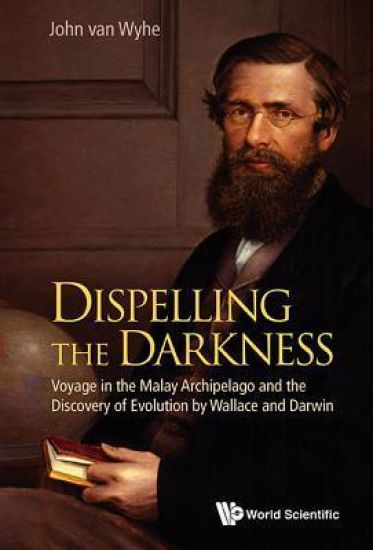
Dispelling The Darkness: Voyage In The Malay Archipelago And The Discovery Of Evolution By Wallace And Darwin
“The facts of variability, of the struggle for existence, of adaptation to conditions, were notorious enough; but none of us had suspected that the road to the heart of the species problem lay through them, until Darwin and Wallace dispelled the darkness.”T H Huxley (1887)Darwin is one of the most famous scientists in history. But he was not alone. Comparatively forgotten, Wallace independently discovered evolution by natural selection in Southeast Asia. This book is based on the most thorough research ever conducted on Wallace's voyage. Closely connected, but worlds apart, Darwin and Wallace's stories hold many surprises. Did Darwin really keep his theory a secret for twenty years? Did he plagiarise Wallace? Were their theories really the same? How did Wallace hit on the solution, and on which island? This book reveals for the first time the true story of Darwin, Wallace and the discovery that would change our understanding of life on Earth forever.
Dispelling The Darkness: Voyage In The Malay Archipelago And The Discovery Of Evolution By Wallace And Darwin
“The facts of variability, of the struggle for existence, of adaptation to conditions, were notorious enough; but none of us had suspected that the road to the heart of the species problem lay through them, until Darwin and Wallace dispelled the darkness.”T H Huxley (1887)Darwin is one of the most famous scientists in history. But he was not alone. Comparatively forgotten, Wallace independently discovered evolution by natural selection in Southeast Asia. This book is based on the most thorough research ever conducted on Wallace's voyage. Closely connected, but worlds apart, Darwin and Wallace's stories hold many surprises. Did Darwin really keep his theory a secret for twenty years? Did he plagiarise Wallace? Were their theories really the same? How did Wallace hit on the solution, and on which island? This book reveals for the first time the true story of Darwin, Wallace and the discovery that would change our understanding of life on Earth forever.
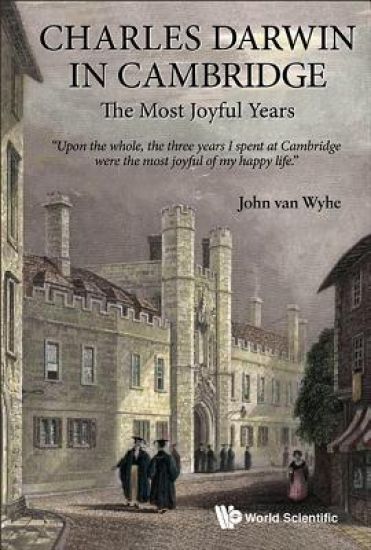
Charles Darwin In Cambridge: The Most Joyful Years

Charles Darwin In Cambridge: The Most Joyful Years

John Van Wyhe

World Scientific Publishing Co Pte Ltd
2014
sidottu
Charles Darwin's years as a student at the University of Cambridge were some of the most important and formative of his life. Thereafter he always felt a particular affection for Cambridge. For a time he even considered a Cambridge professorship as a career and sent three of his sons there to be educated. Unfortunately the remaining traces of what Darwin actually did and experienced in Cambridge have long remained undiscovered. Consequently his day-to-day life there has remained unknown and misunderstood. This book is based on new research, including newly discovered manuscripts and Darwin publications, and gathers together recollections of those who knew Darwin as a student. This book therefore reveals Darwin's time in Cambridge in unprecedented detail.
Charles Darwin In Cambridge: The Most Joyful Years

Charles Darwin In Cambridge: The Most Joyful Years

John Van Wyhe

World Scientific Publishing Co Pte Ltd
2014
nidottu
Charles Darwin's years as a student at the University of Cambridge were some of the most important and formative of his life. Thereafter he always felt a particular affection for Cambridge. For a time he even considered a Cambridge professorship as a career and sent three of his sons there to be educated. Unfortunately the remaining traces of what Darwin actually did and experienced in Cambridge have long remained undiscovered. Consequently his day-to-day life there has remained unknown and misunderstood. This book is based on new research, including newly discovered manuscripts and Darwin publications, and gathers together recollections of those who knew Darwin as a student. This book therefore reveals Darwin's time in Cambridge in unprecedented detail.
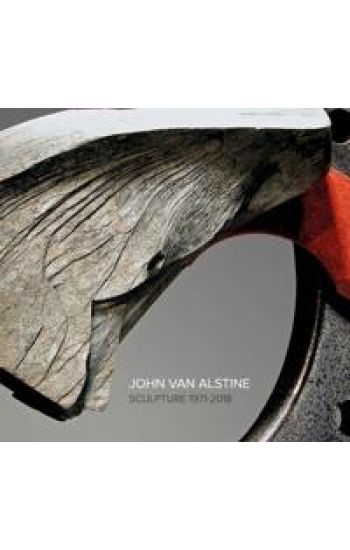
John Van Alstine

John Van Alstine

Howard Fox

The Artist Book Foundation
2019
sidottu
For nearly forty years, John Van Alstine has created abstract sculptures forged from steel and stone. In John Van Alstine: Sculpture, 1971-2018, three notable essayists explore the sculptor's abstract landscapes that reveal the complex synergy between natural forces and man-made elements; by grappling with the challenges of balancing stone and steel, Van Alstine's indoor, outdoor, and site-specific sculptures are measured and calculated, yet simultaneously poetic; their swooping angular lines create expansive spaces beyond the limits of their steel and stone frames to unveil our collective history and imagination, illuminating a deft interplay of natural energies and the human experience. The artist weaves into his works elements of mythology, celestial navigation, implements, human figures, movement, urban forms, and found objects, while using motion, balance, and inertia to incorporate the eternal forces of gravity, tension, and erosion. In an essay on his drawings, Van Alstine details the critical role they play in the initiation and planning of his projects, offering the reader a firsthand perspective on the artist's creative process. Van Alstine's works have been featured in numerous solo and group exhibitions and are found in the permanent collections of the Carnegie Museum of Art, the Hirshhorn Museum and Sculpture Garden, the Smithsonian's National Museum of American Art, and the Phillips Collection, to name but a few. His works are also found in numerous public and private collections. The Artist Book Foundation is gratified to announce the publication of this lavishly illustrated monograph on an esteemed and prolific contemporary artist.
Record of Ancestors Descendants of Cronelis C. Steketee / John Van Lente.
This work has been selected by scholars as being culturally important and is part of the knowledge base of civilization as we know it.This work is in the public domain in the United States of America, and possibly other nations. Within the United States, you may freely copy and distribute this work, as no entity (individual or corporate) has a copyright on the body of the work.Scholars believe, and we concur, that this work is important enough to be preserved, reproduced, and made generally available to the public. To ensure a quality reading experience, this work has been proofread and republished using a format that seamlessly blends the original graphical elements with text in an easy-to-read typeface.We appreciate your support of the preservation process, and thank you for being an important part of keeping this knowledge alive and relevant.
Sir John Van Olden Barnavelt

Sir John Van Olden Barnavelt

Richard Burton

Palala Press
2018
pokkari
This work has been selected by scholars as being culturally important, and is part of the knowledge base of civilization as we know it. This work was reproduced from the original artifact, and remains as true to the original work as possible. Therefore, you will see the original copyright references, library stamps (as most of these works have been housed in our most important libraries around the world), and other notations in the work.This work is in the public domain in the United States of America, and possibly other nations. Within the United States, you may freely copy and distribute this work, as no entity (individual or corporate) has a copyright on the body of the work.As a reproduction of a historical artifact, this work may contain missing or blurred pages, poor pictures, errant marks, etc. Scholars believe, and we concur, that this work is important enough to be preserved, reproduced, and made generally available to the public. We appreciate your support of the preservation process, and thank you for being an important part of keeping this knowledge alive and relevant.
Food for Hope: How John Van Hengel Invented Food Banks for the Hungry
Hunger continues to be an international problem. This true story of how one ordinary person did something extraordinary shows how everyone can do something to make a difference. Readers will feel encouraged to find their own way to make a difference. Real life experience plus social justice interests combine into a powerful solution, filling empty bellies with nourishing food, all without costing a lot of money. Recycling meets hunger in John van Hengel's ingenious, yet obvious solution to both food waste and widespread hunger.
Hubert and John Van Eyck, their life and work
This book has been considered by academicians and scholars of great significance and value to literature. This forms a part of the knowledge base for future generations. So that the book is never forgotten we have represented this book in a print format as the same form as it was originally first published. Hence any marks or annotations seen are left intentionally to preserve its true nature.