Hours before Tyler Bedlam's first day on the job, his latest client is a shattered corpse in a ruined Nashville house.Tyler can't accept that failure without knowing why. But the deeper he digs for resolution, the older and more tangled the mystery becomes. And Tyler isn't the only one looking.Billionaire antique collectors, rival private eyes, a shadowy philanthropic organization that may be far more sinister than it seems, and a bulletproof man-crushing colossus, all race Tyler toward answers nobody's been able to find for two-hundred years.When solving one of Tennessee's blackest, most persistent riddles, every clue is worth killing--or dying--for.
Tyler Bedlam isn't a private eye because he needs the money. But understanding rich people's problems won't help him survive them. Protecting a client from her desperate past puts Tyler in a crossfire between the FBI, rival mobs, and a trick-shot killer who protects his blackest secret one numbered bullet at a time. Never sure whether he's hunter or prey, Tyler chases clues from a Confederate cemetery, down Tennessee back roads, to the heights of half-finished Nashville skyscrapers. And in the end, the answers he needs stay alive may be buried in the tortured memories of a murderous show horse. It isn't the sort of thing they write in tour books.
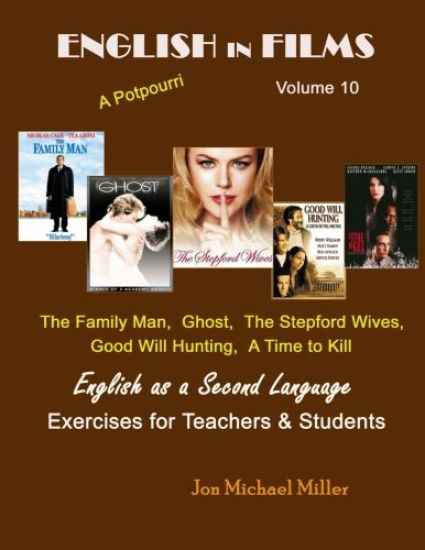
English in Films is a series of classroom exercises for teachers of English as a Second Language for study at home students. The movies have been carefully selected for their language and cultural value in learning and improving one's English--vocabulary, listening, conversation, writing, grammar and American culture. Our approach is to have fun while learning and to learn in a multidimensional way. Answers are provided, and the packets may be copied and edited for non-commercial use.Each film is broken into roughly 15-minute segments, which are divided into sections for vocabulary development, listening, writing, discussion and testing. Before watching the film segment, the student works on vocabulary words listed in the order they appear in the film. There is a matching or multiple choice exercise followed by fill-in-the-blanks sentences. For visual learners a drawing section is included. Answers are provided.After students have absorbed the vocabulary words, they read over the viewing questions, watch the film segment and answer the questions. Each viewing section has several ideas for discussion and writing. At the end of the film, a number of general questions are provided for the movie as a whole. Finally, students take the test.Jon Michael Miller is a veteran teacher of English as a Second Language. After years of teaching English on the secondary level and at Ohio State, Penn State and St. Petersburg College, he spent fifteen years focusing on ESL. Semi-retired, he now has an ESL-based website--www.EnglishInFlorida, from which he teaches international executives, students, travelers and immigrants online and in person. He created the English in Films series from materials used in his own classroom and consulting. Students enjoy the technique, and it is fabulously effective and fun to use.
This compelling memoir offers a candid look at the life of a billionaire entrepreneur, philanthropist, and public servant who has dedicated his fortune to fighting cancer and supporting charitable causes. Huntsman recounts the pivotal moments that shaped his values of faith, family, and service. He provides an insider's perspective on his tenure in the Nixon administration, his experiences with The Church of Jesus Christ of Latter-Day Saints, and the founding of the Huntsman Corporation, one of the largest petrochemical manufacturers in the world. More than just a business success story, Barefoot to Billionaire delves into Huntsman's commitment to giving away his entire fortune to charitable endeavors, including the billion-dollar funding of the Huntsman Cancer Institute. His reflections on integrity, respect, and the responsibility that comes with wealth offer timeless lessons for readers from all walks of life. In an era of increasing materialism, Huntsman's story is a refreshing reminder of the enduring power of traditional values and the impact one individual can make on the world. From humble beginnings to the heights of business success, Jon M. Huntsman shares his extraordinary journey in Barefoot to Billionaire.
The Communication Experience: A Guide to Successful Public Speaking introduces students to the study of public speaking by focusing on four foundational conclusions about the communication experience: that writing, reading, critical thinking, and speaking skills are needed to succeed in any academic or professional setting; that public speaking is just one of many communication skills needed to succeed; that speeches are more than something that you cut and paste together; and that public communication is often made more difficult than it has to be. The text helps students recognize the role of public speaking within the larger practice of communication, develop essential skills for and approaches to speechmaking, and understand and overcome communication apprehension. The text is organized into three units. Unit one focuses on the global communication experience. In unit two, students learn about academic and professional speechmaking. Unit three teaches readers how to personalize their speeches, addressing ways they can cultivate their own unique style and customize their content. Individual chapters address various communication environments; incorporating audience ethics into speechmaking; argumentation; hearing versus listening; tailoring a speech for a specific audience; organizational strategies for speeches; storytelling in academic and professional presentations; finding your voice; and more. The Communication Experience is an exemplary resource for courses and programs in public speaking and communication.
Liberals represent a large majority of American university and college faculty, especially in the social sciences and humanities. This is a consistent finding challenged by no serious student. Does minority status affect the work of conservative scholars or the academy as a whole? In Passing on the Right, Dunn and Shields explore the actual experiences of conservative academics, which have long been neglected. While partisans on both sides have been preoccupied with the narrow question of whether or not conservative professors are passed over in hiring and promotion decisions, Dunn and Shields argue that the liberal dominance of the academy may affect conservatives in ways that are far more open to verification - for example, in the case of conservative professors who may censor their comments in public forums and avoid controversial questions in their research, especially prior to tenure. Conversely, minority status may also have its benefits, perhaps allowing conservatives to discover more original research questions and interpretations due to not being able to share the ideological assumptions of most of their liberal colleagues. Drawing on a collection of revealing interviews with conservative professors and graduate students, Dunn and Shields discover how these scholars negotiate their worlds, asking questions such as: How often do conservatives remain closeted? Do they discourage conservative undergraduate students from pursuing academic careers? Do they avoid mentoring conservative student groups? Do they see any professional advantages to being part of a political minority? In short, how does the liberalism of the academy shape conservative scholars and influence their sense of academic freedom? By avoiding partisanship and offering an insightful portrayal of this misunderstood political minority, this book aims to persuade liberal elites to take the minority status of conservative academics more seriously and encourage conservatives to move beyond simplistic caricatures of life in the liberal academy.
Northern bobwhites are one of the most popular game birds in the United States. In Texas alone, nearly 100,000 hunters take to the field each fall and winter to pursue wild bobwhite quail. Texas is arguably the last remaining state with sufficient habitat to provide quail-hunting opportunities on a grand scale, and Texas ranchers with good bobwhite habitat often generate a greater proportion of their income from fees paid by quail hunters than from livestock production. Managing and expanding bobwhite habitat makes good sense economically, and it benefits the environment as well. The rangelands and woodlands of Texas that produce quail also support scores of other species of wildlife.Texas Bobwhites is a field guide to the seeds commonly eaten by northern bobwhites, as well as a handbook for conserving and improving northern bobwhite habitat. It provides identifying characteristics for the seeds of 91 species of grasses, forbs, woody plants, and succulents. Each seed description includes a close-up and a scale photo of the seed and the plant that produces it, along with a range map. Using this information, hunters can readily identify concentrations of plants that are most likely to attract quail. Landowners and rangeland managers will greatly benefit from the book's state-of-the-art guidance for habitat management and restoration, including improving habitat dominated by invasive and nonnative grasses.
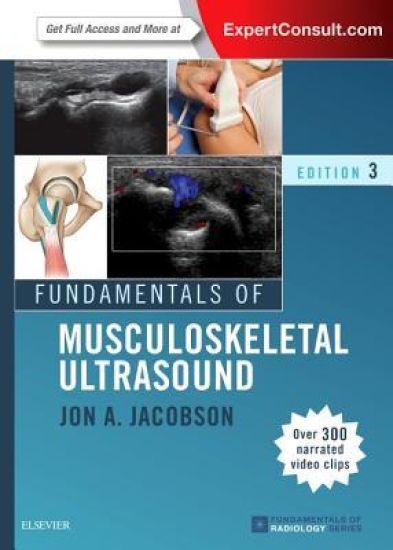
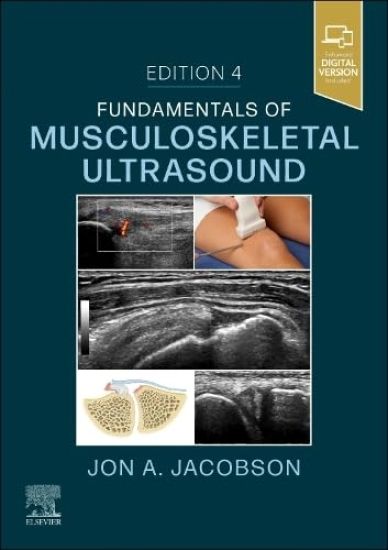
Effectively perform and interpret musculoskeletal ultrasound with this concise, highly illustrated resource by Jon A. Jacobson, MD. Fully revised, this bestselling title covers all the essential details of musculoskeletal ultrasound imaging, providing a solid understanding of the technique and how to make accurate diagnoses. It takes a concise, clear, and step-by-step approach to all of the most common musculoskeletal ultrasound applications, with specific details on anatomy, patient positioning, scanning techniques, normal and abnormal findings, tips, and pitfalls. A succinct, highly accessible writing style makes information easy to understand. Over 200 narrated video clips of real-time dynamic ultrasound imaging provide instruction in a succinct, didactic format, highlighting key findings. Common percutaneous ultrasound-guided musculoskeletal procedures are demonstrated, including transducer and needle positioning.
Fully revised, the new 4th edition of this bestselling title provides a comprehensive review of musculoskeletal ultrasound imaging. Ultrasound scanning details for each joint are described and illustrated using a protocol-driven approach that allows the reader to develop an efficient and comprehensive scanning technique. Examples show transducer placement and resulting normal ultrasound findings, essential anatomy is illustrated and reviewed, and common musculoskeletal pathology is discussed, along with ultrasound imaging examples and videos. Other topics include image optimization, color Doppler imaging, and ultrasound-guided interventional procedures. Reviews essential anatomy of each joint, including anatomical drawings and illustrations. Details a scanning protocol for each joint, including checklists of important anatomical structures. NEW in this 4th edition: live real-time narrated videos demonstrating scanning protocols for each joint with simultaneous ultrasound imaging. Includes more than 200 NEW and updated images of common musculoskeletal pathology. Features 335 updated and narrated video clips of real-time dynamic ultrasound imaging that provide instruction in a didactic format, highlighting key findings. Includes sample reports of normal and abnormal ultrasound exams that can be used as reporting templates. Reviews common ultrasound-guided musculoskeletal procedures, including transducer placement and needle positioning. Keeps you up to date with thoroughly revised text, references, and images. Provides quick and easy reference with reader-friendly lists, tables, and images. An eBook version is included with purchase. The eBook allows you to access all of the text, figures, and references, with the ability to search, customize your content, make notes and highlights, and have content read aloud. Additional digital ancillary content may publish up to 6 weeks following the publication date.
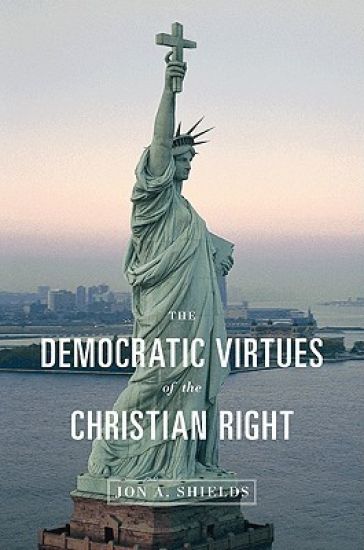
The Christian Right is frequently accused of threatening democratic values. But in The Democratic Virtues of the Christian Right, Jon Shields argues that religious conservatives have in fact dramatically increased and improved democratic participation and that they are far more civil and reasonable than is commonly believed. Shields interviewed leaders of more than thirty Christian Right organizations, observed movement activists in six American cities, and analyzed a wide variety of survey data and movement media. His conclusions are surprising: the Christian Right has reinvigorated American politics and fulfilled New Left ideals by mobilizing a previously alienated group and by refocusing politics on the contentious ideological and moral questions that motivate citizens. Shields also finds that, largely for pragmatic reasons, the vast majority of Christian Right leaders encourage their followers to embrace deliberative norms in the public square, including civility and secular reasoning. At the same time, Shields highlights a tension between participatory and deliberative ideals since Christian Right leaders also nurture moral passions, prejudices, and dogmas to propel their movement. Nonetheless, the Christian Right's other democratic virtues help contain civic extremism, sharpen the thinking of activists, and raise the level and tenor of political debate for all Americans.
Before the federal constitution was written, the Confederate Congress established a policy providing land grants for local and state governments to support public schools. Since 1802, when Ohio joined the Union, every new state has benefited from that policy. Yet today, despite the fact that states still hold 132 million acres in trust, very little is known about the management and use of these lands. Compiling information from the twenty-two states that still own such trust lands, the authors provide a rare look at public land management from a state rather than federal government perspective. Although much has been written on federal management, this is the first comprehensive look at the local administration of state trust lands which cover far more acreage than lands overseen by the National Park Service and nearly as much as those supervised by the U.S. Forest Service. Understanding and analyzing the state trust lands has always been difficult because they consist of twenty-two state programs and 200 years of history. In State Trust Lands, Jon A. Souder and Sally K. Fairfax examine the management programs instituted by each state, exploring them as models for public land administration. They investigate the nature and role of public resources; observe how states regulate grazing lands and mineral leases; provide insight into subsidizations and self-sustaining land uses; illustrate how state and federal policies differ; and evaluate the strength and weaknesses of market-based approaches to public resource management. State trust lands, they contend, tend to be managed more conservatively and with more environmental awareness than federal lands. This book provides an array of tested, viable alternatives to Bureau of Land Management and U.S. Forest Service management models and will be invaluable to anyone interested in the financial, use, and environmental planning of public resources. Exploring the diverse set of experiences of state land trust managers, Souder and Fairfax present successful and less successful management practices and offer new models and data for the debate on the future of public lands.
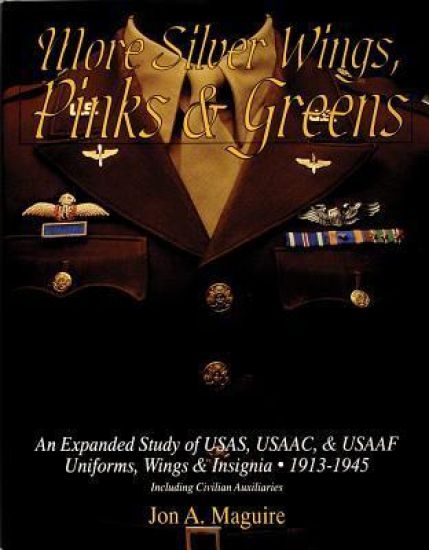
Jon Maguire's book Silver Wings, Pinks & Greens was a tremendous success and set a new standard for American uniform and insignia references. Following its publication there still remained among collectors and historians a desire for more information. There was also an outpouring from many serious collectors who made available a wealth of items-the result, More Silver Wings, Pinks & Greens. This book of all new material greatly expands on the wing qualification bagdes, uniforms, and patches presented in the first book. Additionally, this work covers totally new areas including Civil Air Patrol, W.A.S.P.s, Air Transport Command, Factory Techincal Representatives, and "Yanks" in the RAF an RCAF. Other new areas presented are uniforms and insignia of the First World War era, and the "Golden Age" of the 1920s-1930s. There is also a large section on Aviation Cadets and civilian contract flying schools and instructors. The book is presented in the detailed and thorough style typical of Jon Maguire's work. Original items are shown in over 1000 color photographs, as well as numerous unpublished period photographs showing the items as they were worn. Jon Maguire is also the author of Gear Up! Flight Clothing & Equipment of USAAF Airmen in World War II, American Flight Jackets, Airmen & Aircraft, and Art of the Flight Jacket(all available from Schiffer Publishing Ltd.).
The 27th Air Transport Group, part of the 302nd Transport Wing, supported the 8th and 9th Air Forces in World War II with ferry and transport services. Though their role was extremely vital to the success of the air and ground wars in Europe, their story has remained largely untold – until now. Flying primarily C-47s the 27th ATG performed a broad assortment of duties including resupply of frontline units, medical evacuation, transportation of VIPs and many others. The 27th supported Patton’s drive across Europe by hauling gasoline – an extremely hazardous undertaking – to the front lines. On Christmas Eve 1944 the Group flew a special, all-out mission to transport reinforcement troops from Marseille to the Battle of the Bulge front – this operation involved over 100 aircraft with the 302nd Wing receiving a commendation from Gen. Spaatz for their efforts. Elements of the 27th also participated in a secret mission to Sweden to support Norwegian underground forces – both American and German forces used the same Swedish airfield! Many first-person anecdotes, over 600 photographs, and a reprint of the “official” 302nd Wing unit history make this volume, by Group historian Jon Maguire, a fitting, and long-overdue tribute to the men and women of the 27th ATG.
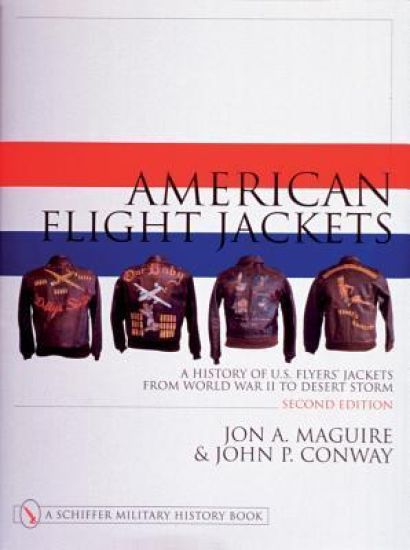
This new comprehensive look at the evolution of the American flight jacket from World War I to Desert Storm addresses not only the types worn, but focuses primarily on the art and adornment applied to the jackets. The most colorful and creative period for flight jacket art was World War II, and it is this era that comprises a major portion of this book. Additionally, many of the pieces are attributed to the original owner with biographical information, contemporary photographs of the individual, and the aircraft on which he served. Personal combat accounts are also included. Also covered are other military jackets used by flyers. American Flight Jackets, Airmen & Aircraft was compiled over a number of years by Jon Maguire and John Conway. The authors became friends through a mutual passion for aviation history and collecting. This book provides a valuable reference for the historians and collectors alike, and includes over 1000 photographs.
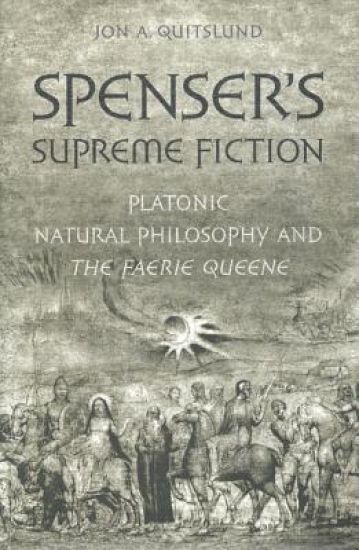
In Spenser's Supreme Fiction, Jon A. Quitslund offers a rich analysis of The Faerie Queene and of several texts contributing to the revival of Platonism stimulated by Marsilio Ficino's labours as a translator and interpreter of Plato and the ancient Neoplatonists. To the old issue of the scope and character of Spenser's Platonism, Quitslund brings fresh insights from contemporary views on gender and identity, intertextuality, and the centrality of fiction within all aspects of Renaissance culture. He argues that Spenser sought authority for his poem by grounding its narrative in a divinely ordained natural order, intelligible in terms derived from the ancient sources of poetry and philosophy. Passages central to the poet's world-making project are shown to be intertextually linked to Book VI of the Aeneid and to Plato's Symposium, regarded in the commentaries of Landino and Ficino as explanations of the gentile prisca theologia, a cosmology parallel to the tenets of Christianity. The first half of the book examines Spenser's representation of the macrocosm and its replication in human nature's lesser world in the light of divergent tendencies within humanism. The legacy of Plato is shown to be especially important in the esoteric tradition, which made the province of natural philosophy part of the soul's itinerary back to its otherworldly origins. In the second half, The Faerie Queene is interpreted as an unfolding pattern: the dynamic order of nature is flawed but not fallen, and seen against that background, human culture contains in its myths and images both corruptions of natural impulses and aspirations to transcend the limits imposed by mortality.
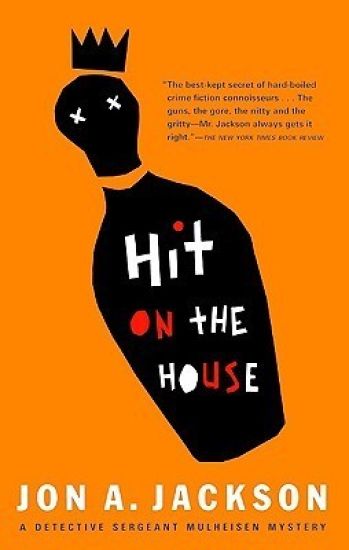
A puzzling string of mob slayings lead Fang Mulheisen into a cast of characters that includes a voluptuous centerfold and her unlikely husband, a professional killer, and a mobster's daughter, but none of these actors offer many clues as to just what is really going on. Reprint.