

Kirjahaku
Etsi kirjoja tekijän nimen, kirjan nimen tai ISBN:n perusteella.
1000 tulosta hakusanalla Jon B Cooke

John Severin: Two-Fisted Comic Book Artist
Jon B. Cooke; Greg Biga
TwoMorrows Publishing
2022
sidottu
The definitive biography of one of the most prolific creators in the history of American comics! From a start in 1947 at the Simon & Kirby shop, he co-created the legendary Western strip American Eagle with Will Elder, and became an EC Comics mainstay, working with Harvey Kurtzman on Mad and Two-Fisted Tales. In addition to a 40+ year association with Cracked magazine, his pivotal Marvel Comics work included an extended run inking Herb Trimpe on The Hulk, and teaming with sister Marie Severin to create the classic comics version of King Kull. Throughout his storied career, he freelanced for every major publisher, and remained a workhorse up till his final Dark Horse mini-series at age 90. Included in this volume is a special "American Eagle" section, an eye-popping art gallery, and extensive personal photos and artifacts (including WWII "Victory Mail" cartoons and handmade greeting cards for his family). Also featured are commentary from over 25 peers gathered just for this book, including Neal Adams, Richard Corben, John Byrne, Russ Heath, Walter Simonson, and many others. Written by Greg Biga and multiple Eisner Award-winner Jon B. Cooke, with an introduction by Howard Chaykin, Foreword by Mort Todd, and Afterword by Chuck Dixon, this profusely illustrated book celebrates the centennial of the two-fisted artist's birth!

An all-new definitive history of Connecticut’s notorious all-in-one comic book company! Often disparaged as a second-rate funny-book outfit, Charlton produced a vast array of titles that span from the 1940s Golden Age to the Bronze Age of the ’70s in many genres, from Hot Rods to Haunted Love. The imprint experienced explosive bursts of creativity, most memorably the “Action Hero Line” edited by Dick Giordano in the 1960s, which featured the renowned talents of Steve Ditko and a stellar team of creators, as well as the unforgettable ’70s “Bullseye” era that spawned E-Man and Doomsday +1, all helmed by veteran masters and talented newcomers—and serving as a training ground for an entire generation of comics creators thriving in an environment of complete creative freedom. From its beginnings with a handshake deal consummated in county jail, to the company’s accomplishments beyond comics, woven into this prose narrative are interviews with dozens of talented participants, including Giordano, DENNIS O’Neil, Alex Toth, Sanho Kim, Tom Sutton, Pat Boyette, Nick Cuti, John Byrne, Mike Zeck, Joe Staton, Sam Glanzman, Neal Adams, Joe Gill, and even some Derby residents who recall working in the sprawling company plant. Though it gave up the ghost over three decades ago, Charlton’s influence continues today with its Action Heroes serving as inspiration for Alan Moore’s cross-media graphic novel hit, Watchmen. By Jon B. Cooke with Michael Ambrose & Frank Motler.
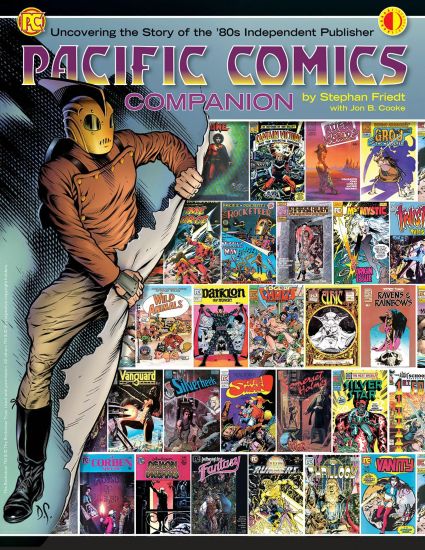
2024 EISNER AWARD NOMINEE Author Stephan Friedt shares the story of the meteoric rise of the Schanes brothers’ California-based imprint Pacific Comics, which published such legends as Jack Kirby, Sergio Aragonés, Steve Ditko, Neal Adams, Mike Grell, Bernie Wrightson, and Dave Stevens. From its groundbreaking 1981 arrival in the fledgling direct sales market, to a catastrophic, precipitous fall after only four years, The Pacific Comics Companion reveals the inside saga, as told to Friedt by Bill and Steve Schanes, David Scroggy, and many of the creators themselves. It also focuses on the titles and the amazing array of characters they introduced to an unsuspecting world, including The Rocketeer, Captain Victory, Ms. Mystic, Groo the Wanderer, Starslayer, and many more. Written with the editorial assist of Eisner Award-winning historian Jon B. Cooke, this retrospective is the most comprehensive study of an essential publisher in the development of the creator’s rights movement. Main cover illustration by Dave Stevens.
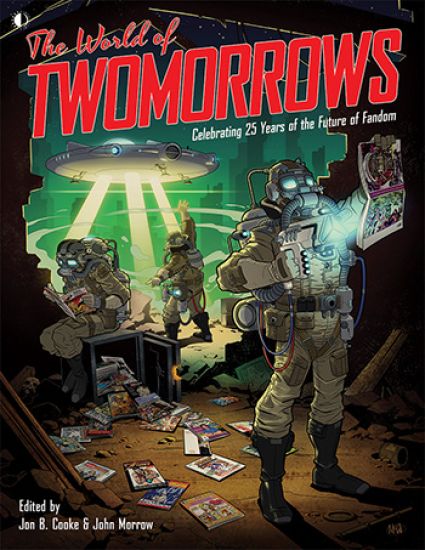
In 1994, amidst the boom-&-bust of comic book speculators, The Jack Kirby Collector #1 was published for true fans of the medium. That modest labor of love spawned TwoMorrows Publishing, today’s premier purveyor of publications about comics and pop culture. Celebrate their 25th anniversary with this special retrospective look at the company that changed fandom forever! Co-edited by and featuring publisher John Morrow and Comic Book Artist/Comic Book Creator magazine’s Jon B. Cooke, it gives the inside story and behind-the-scenes details of a quarter-century of looking at the past in a whole new way. Also included are Back Issue magazine’s Michael Eury, Alter Ego’s Roy Thomas, George Khoury (author of Kimota!, Extraordinary Works of Alan Moore, and other books), Mike Manley (Draw! magazine), Eric Nolen-Weathington (Modern Masters), and a host of other comics luminaries who’ve contributed to TwoMorrows’ output over the years. From their Eisner Award-winning Streetwise book, through their BrickJournal Lego magazine, up to today’s RetroFan magazine, every major TwoMorrows publication and contributor is covered with the same detail and affection the company gives to its books and magazines. With an Introduction by Mark Evanier, Foreword by Alex Ross, Afterword by Paul Levitz, and a new cover by Tom McWeeney!
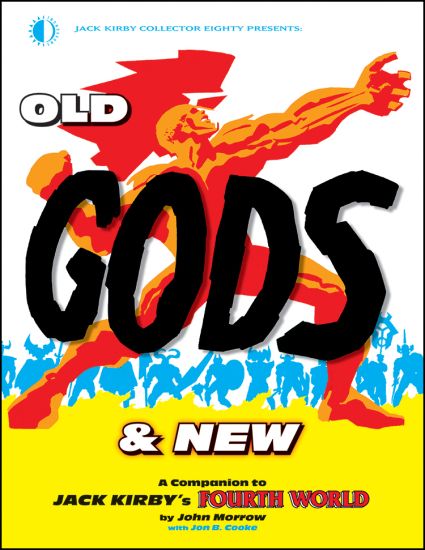
For its 80th issue, the Jack Kirby Collector magazine presents a double-sized 50th anniversary examination of Kirby’s magnum opus! Spanning the pages of four different comics starting in 1970 (New Gods, Forever People, Mister Miracle, and Jimmy Olsen), the sprawling “Epic for our times” was cut short mid-stream, leaving fans wondering how Jack would’ve resolved the confrontation between evil Darkseid of Apokolips, and his son Orion of New Genesis. This companion to that “Fourth World” series looks back at Jack Kirby’s own words, as well as those of assistants Mark Evanier and Steve Sherman, inker Mike Royer, and publisher Carmine Infantino, to determine how it came about, where it was going, and how Kirby would’ve ended it before it was prematurely cancelled by DC Comics! It also examines Kirby’s use of gods in Thor and other strips prior to the Fourth World, how they influenced his DC epic, and affected later series like The Eternals and Captain Victory. With an overview of hundreds of Kirby’s creations like Big Barda, Boom Tubes and Granny Goodness, and post-Kirby uses of his concepts, no Fourth World fan will want to miss it! Compiled, researched, and edited by John Morrow, with contributions by Jon B. Cooke.

The First Comics Companion is the only book dedicated to the history of Chicago’s groundbreaking independent comics publisher, which took on the Big Two by storm between 1983–1991. From a modest promotional comic hawking theater subscriptions, First soon blossomed into an ambitious, aggressive imprint with achievements that included adapting the fabled sci-fi play Warp; reviving beloved ’70s Charlton hero E-Man; luring Mike Grell over from Pacific Comics to continue Starslayer and launch Jon Sable, Freelance; and releasing one of the ’80s greatest comic book series, American Flagg! by Howard Chaykin. Soon followed Elric, Grimjack, Nexus, Shatter, Dreadstar, Lone Wolf and Cub, super-hero Alter Ego, and a resurrection of Classics Illustrated. Featuring the recollections of founders Mike Gold, Joe Staton, and dozens more, this book continues Richard J. Arndt and Jon B. Cooke’s exhaustive “carpet-bombing” approach to documenting comics history in fascinating detail—first, last, and always, THE definitive account! Featuring new Chaykin cover art!
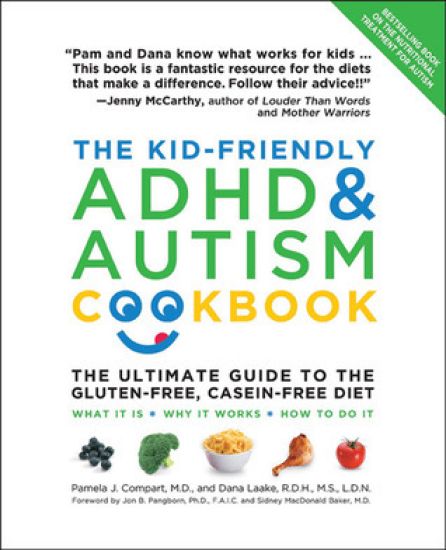
The Kid-Friendly ADHD & Autism Cookbook
Compart Pamela; Laake Dana; Jon B. Pangborn; Sidney MacDonald Baker
Fair Winds Press
2012
nidottu
Containing the best "kid-friendly" recipes, this is a complete, new-in-paperback guide to the gluten-free, milk-free diet for ADHD and autism. In addition to current research and findings, this book provides recommendations from the authors for packing school lunches and snacks, plus hundreds of recipes! One of the challenges that parents face is coping with children who have picky appetites and crave the very foods that affect their behavior, focus, and development. The other challenge is finding ways to get their children to eat healthy foods. The uniqueness of this book is that it not only provides gluten-free milk-free substitutes and recipes, it provides successful suggestions for feeding the picky eater. The specialty ingredients are explained and extensive sources provided. There are also testimonials from the parents and from the children themselves.

The Short Stories Of Jon B. Fish: Down At The Fishin' Hole
Jon B. Fish
Booksurge Publishing
2009
nidottu
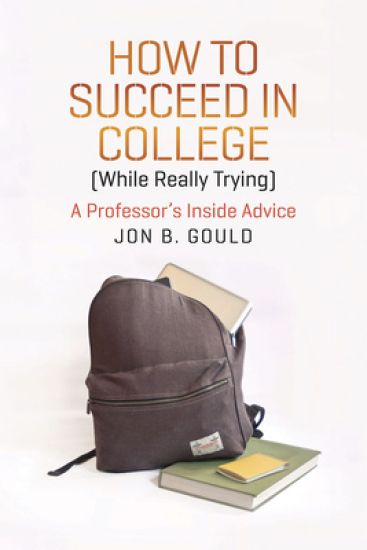
How to Succeed in College (While Really Trying)
Jon B. Gould
University of Chicago Press
2012
sidottu
After years of preparation and anticipation, many students arrive at college without any real knowledge of the ins and outs of college life. They've been focused on finding the right school and have been carefully guided through the nuances of the admissions process, but too often they have little knowledge about how college will be different from high school or what will be expected of them during that crucial first year and beyond. Written by an award-winning teacher, "How to Succeed in College (While Really Trying)" provides much-needed help to students, offering practical tips and specific study strategies that will equip them to excel in their new environment. Drawing on years of experience teaching at a variety of campuses, from large research universities to small liberal arts colleges, Jon B. Gould gives readers the lay of the land and demystifies the college experience. In the course of the book, students will learn how to identify the best instructors, how to choose classes and settle on a major, how to develop effective strategies for reading and note taking, and how to write good papers and successfully complete exams. Because much of the college experience takes place outside of the classroom, Gould also advises students on how to effectively manage their co curricular activities, work obligations, and free time, as well as how to take advantage of the typically untapped resources on every campus. With candid advice and insights from a seasoned insider, this guide will leave students better prepared not only to succeed in college but to enjoy it as well.
How to Succeed in College (While Really Trying)
Jon B. Gould
University of Chicago Press
2012
nidottu
After years of preparation and anticipation, many students arrive at college without any real knowledge of the ins and outs of college life. They've been focused on finding the right school and have been carefully guided through the nuances of the admissions process, but too often they have little knowledge about how college will be different from high school or what will be expected of them during that crucial first year and beyond. Written by an award-winning teacher, "How to Succeed in College (While Really Trying)" provides much-needed help to students, offering practical tips and specific study strategies that will equip them to excel in their new environment. Drawing on years of experience teaching at a variety of campuses, from large research universities to small liberal arts colleges, Jon B. Gould gives readers the lay of the land and demystifies the college experience. In the course of the book, students will learn how to identify the best instructors, how to choose classes and settle on a major, how to develop effective strategies for reading and note taking, and how to write good papers and successfully complete exams. Because much of the college experience takes place outside of the classroom, Gould also advises students on how to effectively manage their co curricular activities, work obligations, and free time, as well as how to take advantage of the typically untapped resources on every campus. With candid advice and insights from a seasoned insider, this guide will leave students better prepared not only to succeed in college but to enjoy it as well.

Opponents of speech codes often argue that liberal academics use the codes to advance an agenda of political correctness. But Jon B. Gould's provocative book, based on an enormous amount of empirical evidence, reveals that the real reasons for their growth are to be found in the pragmatic, almost utilitarian, considerations of college administrators. Instituting hate speech policy, he shows, was often a symbolic response taken by university leaders to reassure campus constituencies of their commitment against intolerance. In an academic version of "keeping up with the Joneses," some schools created hate speech codes to remain within what they saw as the mainstream of higher education. Only a relatively small number of colleges crafted codes out of deep commitment to their merits. Although college speech codes have been overturned by the courts, Speak No Evil argues that their rise has still had a profound influence on curtailing speech in other institutions such as the media and has also shaped mass opinion and common understandings of constitutional norms. Ultimately, Gould contends, this kind of informal law can have just as much power as the Constitution.
Opponents of speech codes often argue that liberal academics use the codes to advance an agenda of political correctness. But Jon B. Gould's provocative book, based on an enormous amount of empirical evidence, reveals that the real reasons for their growth are to be found in the pragmatic, almost utilitarian, considerations of college administrators. Instituting hate speech policy, he shows, was often a symbolic response taken by university leaders to reassure campus constituencies of their commitment against intolerance. In an academic version of "keeping up with the Joneses," some schools created hate speech codes to remain within what they saw as the mainstream of higher education. Only a relatively small number of colleges crafted codes out of deep commitment to their merits. Although college speech codes have been overturned by the courts, Speak No Evil argues that their rise has still had a profound influence on curtailing speech in other institutions such as the media and has also shaped mass opinion and common understandings of constitutional norms. Ultimately, Gould contends, this kind of informal law can have just as much power as the Constitution.

Restructuring Chronic Illness Management
Jon B. Christianson; Ruth A. Taylor; David J. Knutson
John Wiley Sons Inc
2010
nidottu
Caring for Chronically Ill Patients Building on a thoughtful understanding of the organizational, financial, and clinical issues involved in chronic illness, Christianson and his colleagues provide a useful road map to the design and implementation of team-based chronic illness management. A must read for policy makers and managers wishing to meet the challenge of providing quality and efficient care to the chronically ill. --Arnold D. Kaluzny, professor of health policy and administration, School of Public Health and Senior Research, University of North Carolina at Chapel Hill This practical new book offers the most current information on how leaders of top clinical programs have implemented exemplary and cost-conscious programs to manage the care of four key chronic diseases: asthma, arthritis, diabetes, and coronary artery disease. Grounded in research, the book introduces a model and practical tool that can be used by healthcare organizations to effectively treat chronically ill patients. And, because the model and tool are based on the actual experiences of ongoing programs, the authors discuss organizational strategies that will help overcome the inevitable resistance to change. A step-by-step program is outlined for health care executives and caregivers who want to implement these best practices in their institutions. With a wealth of information and illustrative examples, the authors explain how a health care organization can restructure and revitalize its approach to managing chronic illness...without breaking the bank.
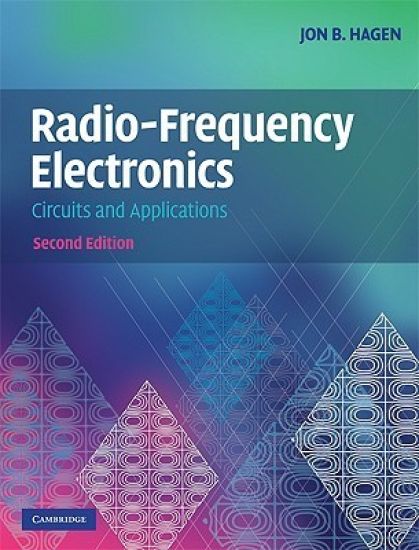
This second, updated edition of the best-selling Radio-Frequency Electronics introduces the basic concepts and key circuits of radio-frequency systems. It covers the fundamental principles applying to all radio devices, from wireless single-chip data transceivers to high-power broadcast transmitters. This new edition is extensively revised and expanded throughout, including additional chapters on radar, digital modulation, GPS navigation, and S-parameter circuit analysis. New worked examples and end-of-chapter problems are included to aid and test understanding of the topics covered, as well as numerous extra figures to provide a visual aid to learning. Key topics covered include filters, amplifiers, oscillators, modulators, low-noise amplifiers, phase lock loops, transformers, waveguides, and antennas. Assuming no prior knowledge of radio electronics, this is a perfect introduction to the subject. It is an ideal textbook for junior or senior courses in electrical engineering, as well as an invaluable reference for professional engineers in this area.

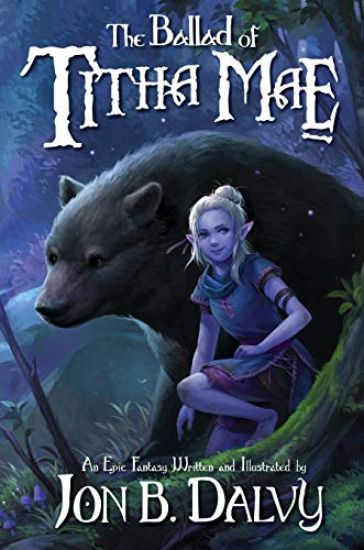
Experience Titha Mae with author & illustrator Jon B. Dalvy's magnificent full panel illustrations and map, all in color for the first time with this first edition hardback Titha loves her father, Theole, with all her excitable heart. The two are indigo-skinned Lunas: a spritely people forbidden to leave the treehalls of Yythengrey. So when their once friendly Dawnfather, the twisted dragon Vulduun, desecrates their homeland and kidnaps Theole, no one is willing to risk saving him - except his daughter, Titha Mae. Such a brash gesture leads the little Luna and her Bear-brother, Paw, on a fantastical journey far beyond the only foliage-filled mountains she's ever known.The result is an epic adventure featuring a brand new world ripe with its own rich mythology and eclectic characters, all born of fantastical races both new and old Join Titha and her companions on a journey you'll never want to end, and will surely never forget For more, visit tithamae.com
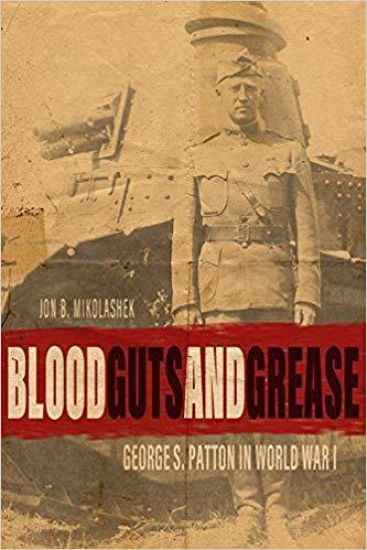
Blood, Guts, and Grease
Jon B. Mikolashek; Paul T. Mikolashek
The University Press of Kentucky
2019
sidottu
George S. Patton is one of the most controversial, celebrated, and popular military leaders in American history, and his accomplishments and victories have been greatly documented. Yet Patton spent years in the Army before garnering national attention and becoming a highly-regarded and respected military leader. This work explores Patton's beginnings as a driven and intrepid soldier and his battles leading up to the Great War -- military experiences which would be influential in his development as a commander.Drawing upon Patton's papers and archival documents in the National Archives, this is an early-career biography of the eminent military leader. It begins with his exploits as a relatively junior but ambitious Army officer who, due to his family's wealth and influence, was able to join General John J. Pershing's American Expeditionary Force (AEF). This assignment would ultimately change his life in two ways: it would make Pershing the mentor Patton would emulate for the rest of his life, and it would catapult his military career as the first tanker in the US Army.This study follows Patton's trajectory, from the creation of the Tank Corps and the Light Tank School, to Patton's eventual successes and injuries during the Battle of Saint Mihiel, the attack into Pannes, and the Meuse-Argonne Offensive. Revealed is that the experience Patton gained in World War I was seminal in his evolvement as a leader and laid the groundwork for not only his own personal future triumphs but also for the success of the entire United States Army armored forces in World War II.

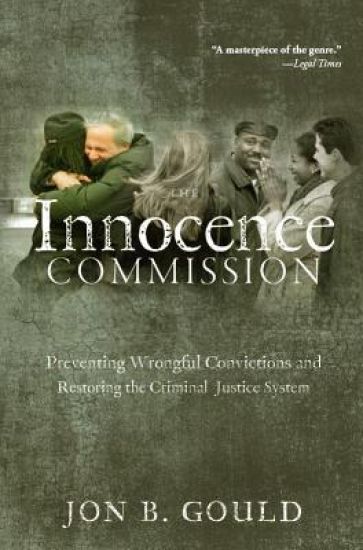
DNA testing and advances in forensic science have shaken the foundations of the U.S. criminal justice system. One of the most visible results is the exoneration of inmates who were wrongly convicted and incarcerated, many of them sentenced to death for crimes they did not commit. This has caused a quandary for many states: how can claims of innocence be properly investigated and how can innocent inmates be reliably distinguished from the guilty? In answer, some states have created "innocence commissions" to establish policies and provide legal assistance to the improperly imprisoned. The Innocence Commission describes the creation and first years of the Innocence Commission for Virginia (ICVA), the second innocence commission in the nation and the first to conduct a systematic inquiry into all cases of wrongful conviction. Written by Jon B. Gould, the Chair of the ICVA, who is a professor of justice studies and an attorney, the author focuses on twelve wrongful conviction cases to show how and why wrongful convictions occur, what steps legal and state advocates took to investigate the convictions, how these prisoners were ultimately freed, and what lessons can be learned from their experiences. Gould recounts how a small band of attorneys and other advocates — in Virginia and around the country — have fought wrongful convictions in court, advanced the subject of wrongful convictions in the media, and sought to remedy the issue of wrongful convictions in the political arena. He makes a strong case for the need for Innocence Commissions in every state, showing that not only do Innocence Commissions help to identify weaknesses in the criminal justice system and offer workable improvements, but also protect society by helping to ensure that actual perpetrators are expeditiously identified, arrested, and brought to trial. Everyone has an interest in preventing wrongful convictions, from police officers and prosecutors, who seek the latest and best investigative techniques, to taxpayers, who want an efficient criminal justice system, to suspects who are erroneously pursued and sometimes convicted. Free of legal jargon and written for a general audience, The Innocence Commission is instructive, informative, and highly compelling reading.
DNA testing and advances in forensic science have shaken the foundations of the U.S. criminal justice system. One of the most visible results is the exoneration of inmates who were wrongly convicted and incarcerated, many of them sentenced to death for crimes they did not commit. This has caused a quandary for many states: how can claims of innocence be properly investigated and how can innocent inmates be reliably distinguished from the guilty? In answer, some states have created "innocence commissions" to establish policies and provide legal assistance to the improperly imprisoned. The Innocence Commission describes the creation and first years of the Innocence Commission for Virginia (ICVA), the second innocence commission in the nation and the first to conduct a systematic inquiry into all cases of wrongful conviction. Written by Jon B. Gould, the Chair of the ICVA, who is a professor of justice studies and an attorney, the author focuses on twelve wrongful conviction cases to show how and why wrongful convictions occur, what steps legal and state advocates took to investigate the convictions, how these prisoners were ultimately freed, and what lessons can be learned from their experiences. Gould recounts how a small band of attorneys and other advocates — in Virginia and around the country — have fought wrongful convictions in court, advanced the subject of wrongful convictions in the media, and sought to remedy the issue of wrongful convictions in the political arena. He makes a strong case for the need for Innocence Commissions in every state, showing that not only do Innocence Commissions help to identify weaknesses in the criminal justice system and offer workable improvements, but also protect society by helping to ensure that actual perpetrators are expeditiously identified, arrested, and brought to trial. Everyone has an interest in preventing wrongful convictions, from police officers and prosecutors, who seek the latest and best investigative techniques, to taxpayers, who want an efficient criminal justice system, to suspects who are erroneously pursued and sometimes convicted. Free of legal jargon and written for a general audience, The Innocence Commission is instructive, informative, and highly compelling reading.