Kirjojen hintavertailu. Mukana 11 212 761 kirjaa ja 11 kauppaa.

Kirjahaku

Etsi kirjoja tekijän nimen, kirjan nimen tai ISBN:n perusteella.

1000 tulosta hakusanalla Jon Ericson

Notes and Comments on Robert's Rules, Fourth Edition

Notes and Comments on Robert's Rules, Fourth Edition

James Slaughter; James Ragsdale; Jon Ericson

Southern Illinois University Press
2012
nidottu
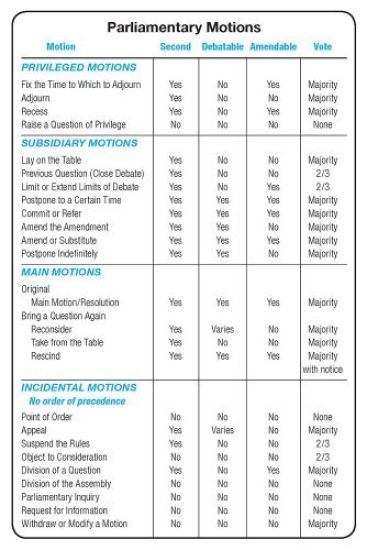
While Robert's Rules of Order has long been the standard guide to parliamentary procedure, many readers find the manual too daunting and complex to utilize its full potential. In Notes and Comments on "Robert's Rules", fourth edition, authors Jim Slaughter, Gaut Ragsdale, and Jon Ericson skillfully guide users through the intricate pathways of the latest edition of Robert's Rules, transforming the often intimidating parliamentary guidebook into an easy-to-use tool. Notes and Comments explains in simple terms the individual motions found in Robert's Rules, presents extensive tips and suggestions regarding possible modifications to Robert's practices; allows readers to witness the vigorous debate about the rules within the notes section; and compares major parliamentary authorities. A reader-friendly question-and-answer format provides immediate solutions to the most common quandaries that arise during the meeting process, and a card featuring simplified charts of parliamentary motions is available for the user's quick reference.An essential volume for members of nonprofits, voluntary associations, unions, condo and homeowner associations, student organizations, and government bodies, Notes and Comments on "Robert's Rules" makes parliamentary procedure accessible to meeting participants as never before. Each section of this authoritative, straightforward guide is designed to empower participants with the confidence and knowledge necessary to navigate any meeting, large or small, with the utmost efficiency. 2013 Winner of the Phifer Award from the National Communication Association
The Rhetoric of the Pulpit, Second Edition

The Rhetoric of the Pulpit, Second Edition

Jon Meyer Ericson

Wipf Stock Publishers
2020
sidottu
The Rhetoric of the Pulpit treats the sermon as the single most important factor in evangelism for a parish, and also the most important factor in the spiritual growth of both the congregation and the pastor. With emphasis on the Word as the foundation, the author adds music and liturgy to the sermon's structure to build a unified worship experience. Recognizing that the Word is truth, but that the truth needs to be made to seem true, the book offers sound, practical advice on sermon preparation based on both classical and contemporary communication theory. Sermon preparation is viewed as a process that begins with downloading the Word, followed by productive meditation. The process then moves through the rhetorical steps, from a search for content to the sermon's delivery. Throughout the book, the rhetorical principles are treated as a subordinate element to the Word, a means of giving effectiveness to the truth. The Rhetoric of the Pulpit aims to reflect the spirit of Aristotle, St. Augustine, St. Paul, and Kenneth Burke.
The Debater's Guide

The Debater's Guide

Jon M. Ericson

Southern Illinois University Press
2011
nidottu
Tens of thousands of readers have studied and applied this practical guide to instruction in argumentation and communication since it was first published in 1961. In this fourth edition-the Fiftieth Anniversary Edition-authors Jon M. Ericson, James J. Murphy, and Raymond Bud Zeuschner have made significant revisions to improve the depth, flow, and clarity of this popular debater's handbook.With straightforward explanations and specific applications geared toward contemporary debate practice, this compact volume offers students and teachers clear-cut assistance in resolving the key problem faced by debaters: the need to present arguments forcefully and cogently while reacting effectively to criticism. Beginning with a candid explanation of the basic principles of debate, The Debater's Guide then introduces the steps to building a case, from reviewing strategies for refutation and defense to engaging in cross-examination, solid research, and critical thinking. It advises readers on a wide range of important topics, from budgeting time in a debate to speaking in outline form by using a well-organized series of explanations, specific examples, and graphic presentations related to both policy and value issues. The authors apply these concepts to a variety of formats and situations commonly found in high school and collegiate debating.Avoiding jargon and complex theory discussions, The Debater's Guide offers sound advice on presenting an effective case in oral discourse, helps students build their understanding of how and why debate functions, and provides a solid foundation for success in any format. The expanded contents pages and new subheadings allow for quick reference to any particular aspect of debate, making this new edition an excellent choice for classroom use as well as a valuable hands-on tool during debates.
The Fate of the Object

The Fate of the Object

Jon Erickson

The University of Michigan Press
1995
sidottu
The Fate of the Object traces the historical shift in focus from the "difficult" essential object of modernist theater, art, and poetry to its transformation as a sign in a postmodern field of signs. In modern art, the central object had been the abstract painting; in theater, the body of the actor; in poetry, the sonic, visual and grammatical elements of the poem. Spanning several disciplinary boundaries, this ambitious and pioneering book examines how the very process of refinement to locate the essential modernist object dissolves the figure of that object into its signifying ground. Jon Erickson argues that this historical shift from modern object to postmodern sign reflects significant transformations in capitalist society--among them the shift from a production economy to a service economy, the change from a sensually rich to a conceptually alienated cultural consciousness, and the rise of poststructuralist theory as the predominant determiner of value within contemporary art culture.Erickson examines the body as the central object of theater and performance through the theories of Craig, Sartre, Brecht, Artaud, and Grotowski. The art chapter discusses such artists as Malevich, Ad Reinhardt, Duchamp, Warhol and Kosuth, tracing the progression of the abstract painting to its reduction or disappearance in conceptualism and minimalism. The poetry chapter examines Pound's Imagism, Concrete and Sound Poetry, and the contributions of Gertrude Stein and the recent Language Poets. Finally, the author questions the role poststructuralist theory has played in the shift from modern object to postmodern sign and how it may affect our attitudes toward the materiality of the world. Jon Erickson is Assistant Professor of Drama, Ohio State University.
Housing the Homeless

Housing the Homeless

Jon Erickson; Charles Wilhelm

Routledge
2017
sidottu
Homelessness has become a lasting issue of vital social concern. As the number of the homeless has grown, the complexity of the issue has become increasingly clear to researchers and private and public service providers. The plight of the homeless raises many ethical, anthropological, political, sociological, and public health questions. The most serious and perplexing of these questions is what steps private, charitable, and public organizations can take to alleviate and eventually solve the problem. The concept of homelessness is difficult to define and measure. Generally, persons are thought to be homeless if they have no permanent residence and seek security, rest, and protection from the elements. The homeless typically live in areas that are not designed to be shelters (e.g., parks, bus terminals, under bridges, in cars), occupy structures without permission (e.g., squatters), or are provided emergency shelter by a public or private agency. Some definitions of homelessness include persons living on a short-term basis in single-room-occupancy hotels or motels, or temporarily residing in social or health-service facilities without a permanent address. Housing the Homeless is a collection of case studies that bring together a variety of perspectives to help develop a clear understanding of the homelessness problem. The editors include information on the background and politics of the problem and descriptions of the current homeless population. The book concludes with a resource section, which highlights governmental policies and programs established to deal with the problem of homelessness.
Housing the Homeless

Housing the Homeless

Jon Erickson; Charles Wilhelm

AldineTransaction
2012
nidottu
Homelessness has become a lasting issue of vital social concern. As the number of the homeless has grown, the complexity of the issue has become increasingly clear to researchers and private and public service providers. The plight of the homeless raises many ethical, anthropological, political, sociological, and public health questions. The most serious and perplexing of these questions is what steps private, charitable, and public organizations can take to alleviate and eventually solve the problem. The concept of homelessness is difficult to define and measure. Generally, persons are thought to be homeless if they have no permanent residence and seek security, rest, and protection from the elements. The homeless typically live in areas that are not designed to be shelters (e.g., parks, bus terminals, under bridges, in cars), occupy structures without permission (e.g., squatters), or are provided emergency shelter by a public or private agency. Some definitions of homelessness include persons living on a short-term basis in single-room-occupancy hotels or motels, or temporarily residing in social or health-service facilities without a permanent address. Housing the Homeless is a collection of case studies that bring together a variety of perspectives to help develop a clear understanding of the homelessness problem. The editors include information on the background and politics of the problem and descriptions of the current homeless population. The book concludes with a resource section, which highlights governmental policies and programs established to deal with the problem of homelessness.
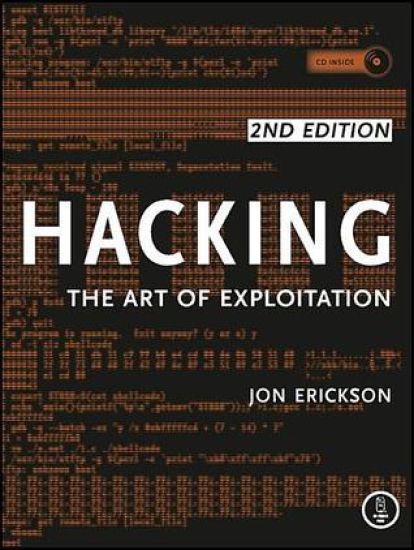
Hacking: The Art of Exploitation, 2nd Edition

Hacking: The Art of Exploitation, 2nd Edition

Jon Erickson

No Starch Press,US
2008
nidottu
Hacking is the art of creative problem solving, whether that means finding an unconventional solution to a difficult problem or exploiting holes in sloppy programming. Many people call themselves hackers, but few have the strong technical foundation needed to really push the envelope. Rather than merely showing how to run existing exploits, author Jon Erickson explains how arcane hacking techniques actually work. To share the art and science of hacking in a way that is accessible to everyone, Hacking: The Art of Exploitation, 2nd Edition introduces the fundamentals of C programming from a hacker's perspective. The included LiveCD provides a complete Linux programming and debugging environment all without modifying your current operating system. Use it to follow along with the book's examples as you fill gaps in your knowledge and explore hacking techniques on your own. Get your hands dirty debugging code, overflowing buffers, hijacking network communications, bypassing protections, exploiting cryptographic weaknesses, and perhaps even inventing new exploits. This book will teach you how to: Program computers using C, assembly language, and shell scripts Corrupt system memory to run arbitrary code using buffer overflows and format strings Inspect processor registers and system memory with a debugger to gain a real understanding of what is happening Outsmart common security measures like nonexecutable stacks and intrusion detection systems Gain access to a remote server using port-binding or connect-back shellcode, and alter a server's logging behavior to hide your presence Redirect network traffic, conceal open ports, and hijack TCP connections Crack encrypted wireless traffic using the FMS attack, and speed up brute-force attacks using a password probability matrix Hackers are always pushing the boundaries, investigating the unknown, and evolving their art. Even if you don't already know how to program, Hacking: The Art of Exploitation, 2nd Edition will give you a complete picture of programming, machine architecture, network communications, and existing hacking techniques. Combine this knowledge with the included Linux environment, and all you need is your own creativity.
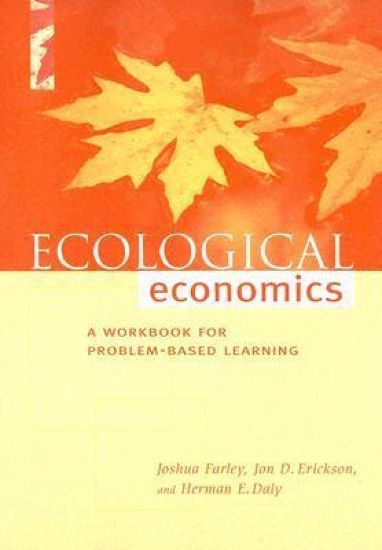
Ecological Economics

Ecological Economics

Joshua Farley; Jon Erickson; Herman E. Daly

Island Press
2005
nidottu
Ecological economics addresses one of the fundamental flaws in conventional economics-its failure to consider biophysical and social reality in its analyses and equations. Ecological Economics: Principles and Applications is an introductory-level textbook that offers a pedagogically complete examination of this dynamic new field. As a workbook accompanying the text, this volume breaks new ground in applying the principles of ecological economics in a problem- or service-based learning setting. Both the textbook and this workbook are situated within a new interdisciplinary framework that embraces the linkages among economic growth, environmental degradation, and social inequity in an effort to guide policy in a way that respects fundamental human values. The workbook takes the approach a step further in placing ecological economic analysis within a systems perspective, in order to help students identify leverage points by which they can help to effect change. The workbook helps students to develop a practical, operational understanding of the principles and concepts explored in the text through real-world activities, and describes numerous case studies
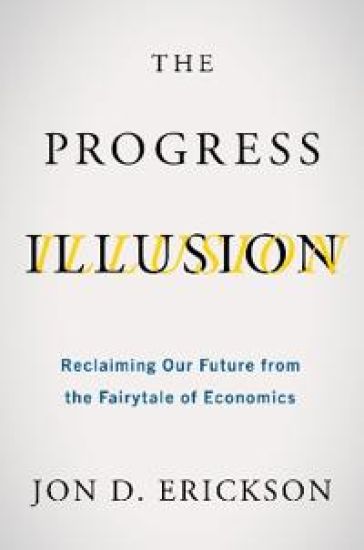
The Progress Illusion

The Progress Illusion

Jon D Erickson

ISLAND PRESS
2022
pokkari
We live under the illusion of progress: as long as GDP is going up and prices stay low, we accept poverty and pollution as unfortunate but inevitable byproducts of a successful economy. In fact, the infallibility of the free market and the necessity of endless growth are so ingrained in the public consciousness that they seem like scientific fact. Jon Erickson asks, why? With the planet in peril and humanity in crisis, how did we get duped into believing the fairytale of economics? And how can we get past the illusion to design an economy that is socially just and ecologically balanced? In The Progress Illusion, Erickson charts the rise of the economic worldview and its infiltration into our daily lives as a theory of everything. Drawing on his own experience as a young economist inoculated in the 1980s era of “greed is good,” Erickson shows how pseudoscience came to dominate economic thought. He pokes holes in the conventional wisdom of neo-classical economics, illustrating how flawed theories about financial decision-making and maximizing efficiency ignore human psychology and morality. Most importantly, he demonstrates how that thinking shaped our politics and determined the course of American public policy. The result has been a system that perpetually concentrates wealth in the hands of a few, while depleting the natural resources on which economies are based. While the history of economics is dismal indeed, Erickson is part of a vigorous reform effort grounded in the realities of life on a finite planet. This new brand of economics is both gaining steam in academia and supporting social activism. The goal is people over profit, community over consumption, and resilience over recklessness. Erickson shows crafting a new economic story is the first step toward turning away from endless growth and towards enduring prosperity.
Jon

Jon

Jacqueline Fredrickson

Mereo Books
2015
nidottu
Jon Fredrickson was 16 when he started to complain of headaches and sickness. An eyesight test revealed the shocking news that he had developed a brain tumour. Over the months and years that followed Jon and his devoted family endured a roller-coaster ride of treatment and therapy, diagnosis and disappointment, until finally no more could be done for Jon, and he died at the age of only 26 with his devoted parents at his bedside. Jon's illness did not prevent this brave young man from setting up home on his own, travelling around the country independently and embarking on a successful career. His mother Jacky kept a diary of her years of trial, and she has now developed it into this moving and inspiring book.