This is an incisive book about what has gone wrong with the social fabric of American society. Jon Huer postulates two models of society: one that pursues profit and self-interest, and the other that cherishes community values. Huer holds that these two types of ethics cannot coexist in a truly just society. One prominent result of the current dominance of the profit-driven model of behavior is that American society increasingly substitutes reality with illusion, happiness with pleasure, strength with brute force--highlighted by the now-obsessive demands for entertainment and overconsumption, and frequent calls for warlike ventures.The Wages of Sin is a major work of American cultural analysis that gives historical insights and suggests remedies to the current societal malaise. Calling attention to the United States' original purpose and resolve, the author challenges the generally accepted views in the United States. He is critical of American society--but expresses his view hopefully, regretfully, and sympathetically. Huer passionately uncovers the underpinnings of the unhappiness and dissatisfaction rampant in America--while at the same time providing historical and sociological insights and facts. This book will be of great interest to the educated or general reader, scholars, and students in sociology, American studies, political science, philosophy, psychology, and even literary criticism.
This modern day rags-to-riches story tells how one of the poorest nations in the world evolved into one of the most technologically advanced. How did South Korea do it? The `miracle' that occurred in South Korea was produced, in essence, by military men, many of whom had undergone extensive managerial training in the United States in the preceding decade, who gave `marching orders' to a responsive populace. Marching Orders, a historically factual, yet fast-paced and dramatic `page turner,' chronicles, in five parts, the history and events that led to General Park Chung Hee's 1961 coup d'etat and the transformations in Korean society that followed it during the next decade. Part One surveys Korea prior to 1961--a deprived colony during the Japanese occupation, then a war-devastated, barely industrialized nation whose existence depended heavily on U.S. economic aid. Part Two analyzes the military establishment--a crucial factor in Korea's economic prosperity even today. The military takeover of 1961 and the subsequent establishment of the Supreme Council for National Reconstruction (SCNR) were the turning points for this politically and economically bankrupt nation. These events led to the massive changes which are detailed in Parts Three and Four along with the `rationalization' of the political sphere and the various aspects of economic `rationalization,' including the now-famous New Village Movement, a model of agricultural development for other emerging nations. In Part Five, the role and potential of the military in national development are explained and South Korea is presented as a success story. Indeed, Marching Orders could well serve as a `How To' book for emerging countries.Highly readable, Marching Orders has been written for the generalist without sacrificing scholarship. It will also prove useful to specialists in sociology, political science, economics, and Southeast Asia; to entrepreneurs engaged in trade with South Korea; and to those interested in Third World Development. An excellent addition to the reading lists of courses in development, comparative history, and military-civil cooperation.
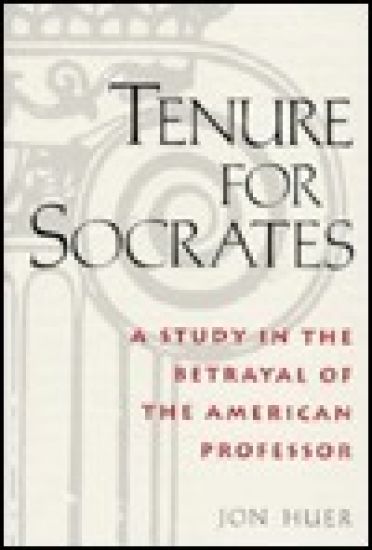
In this provocative criticism of the contemporary American professoriate, Jon Huer argues that tenure has created a kind of academic stupor in which those who have it no longer live up to the ideals of their profession. In Huer's view, the institution of tenure has created an economic sinecure, rendering the tenured professor irrelevant to the society that sustains him or her. The typical tenured career, Huer asserts, often degenerates into intellectual boredom, the routine publication of a series of narrowly specialized research papers, a pervasive dissatisfaction, and a search for monetary and other rewards outside the university. Huer proposes that the time has come to reexamine the issues surrounding tenure in an attempt to determine the best ways to reinvigorate the professoriate and reestablish a fruitful connection between academic and nonacademic society.Divided into four sections, Huer's work is written throughout in a refreshingly nonacademic style. He begins by examining the institution of academic tenure and its relevance given current market realities. Subsequent sections explore the impact of tenure on issues of academic freedom, on the relationship between the professor and the larger society, and on the professor and his or her career. Huer demonstrates that, in general, those who have tenure do not need it, and those who need it do not have it. In pursuit of tenure, professors are forced to produce meaningless scholarship relevant only to their specialized colleagues and immediate career goals. Tenured professors, on the other hand, far from using their academic freedom in service of truth and society, help perpetuate the academic insulation and irrelevance. Certain to spark controversy and debate, Tenure for Socrates serves as a much needed reevaluation of both the role of the American professoriate and the impact of tenure on that role.
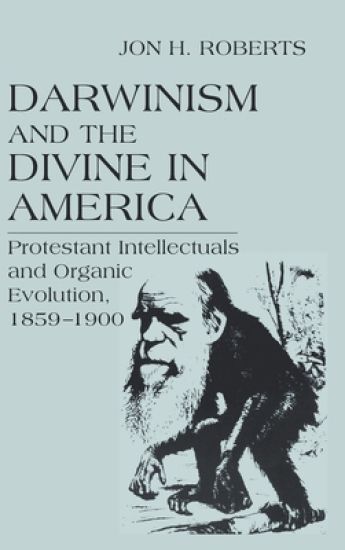
Originally published in 1988, Jon Roberts's book provided the first comprehensive analytical overview of public dialogue among nineteenth-century American Protestant intellectuals who struggled with the theory of organic evolution. Before the publication of Darwin's Origin of Species in 1859, most American Protestant intellectuals valued science, especially natural history, for supplying data that appeared to be invaluable for defending many major tenets of the Christian worldview. Arguments over the scientific merits of Darwin's theory gave way to discussions of its theological implications. Roberts's book reconstructs the course of that conversation from 1875 to 1900.
Originally published in 1988, Jon Roberts's book provided the first comprehensive analytical overview of public dialogue among nineteenth-century American Protestant intellectuals who struggled with the theory of organic evolution. Before the publication of Darwin's Origin of Species in 1859, most American Protestant intellectuals valued science, especially natural history, for supplying data that appeared to be invaluable for defending many major tenets of the Christian worldview. Arguments over the scientific merits of Darwin's theory gave way to discussions of its theological implications. Roberts's book reconstructs the course of that conversation from 1875 to 1900.
American higher education was transformed between the end of the Civil War and the beginning of World War I. During this period, U.S. colleges underwent fundamental changes--changes that helped to create the modern university we know today. Most significantly, the study of the sciences and the humanities effectively dissolved the Protestant framework of learning by introducing a new secularized curriculum. This secularization has long been recognized as a decisive turning point in the history of American education. Until now, however, there has been remarkably little attention paid to the details of how this transformation came about. Here, at last, Jon Roberts and James Turner identify the forces and explain the events that reformed the college curriculum during this era. The first section of the book examines how the study of science became detached from theological considerations. Previously, one of the primary pursuits of "natural scientists" was to achieve an understanding of the workings of the divine in earthly events. During the late nineteenth century, however, scientists reduced the scope of their inquiries to subjects that could be isolated, measured, and studied objectively. In pursuit of "scientific truth," they were drawn away from the larger "truths" that they had once sought. On a related path, social scientists began to pursue the study of human society more scientifically, attempting to generalize principles of behavior from empirically observed events. The second section describes the revolution that occurred in the humanities, beginning in the mid-nineteenth century, when the study of humanities was largely the study of Greek and Latin. By 1900, however, the humanities were much more broadly construed, including such previously unstudied subjects as literature, philosophy, history, and art history. The "triumph of the humanities" represented a significant change in attitudes about what constituted academic knowledge and, therefore, what should be a part of the college curriculum. The Sacred and the Secular University rewrites the history of higher education in the United States. It will interest all readers who are concerned about American universities and about how the content of a "college education" has changed over the course of the last century. "[Jon Roberts and James Turner's] thoroughly researched and carefully argued presentations invite readers to revisit stereotypical generalizations and to rethink the premises developed in the late nineteenth century that underlie the modern university. At the least, their arguments challenge crude versions of the secularization thesis as applied to higher education."--From the foreword by William G. Bowen and Harold T. Shapiro
Control theory has applications to a number of areas in engineering and communication theory. This introductory text on the subject is fairly self-contained, and consists of a wide range of topics that include realization problems, linear-quadratic optimal control, stability theory, stochastic modeling and recursive estimation algorithms in communications and control, and distributed system modeling. In the early chapters methods based on Wiener--Hopf integral equations are utilized. The fundamentals of both linear control systems as well as stochastic control are presented in a unique way so that the methods generalize to a useful class of distributed parameter and nonlinear system models. The control of distributed parameter systems (systems governed by PDEs) is based on the framework of linear quadratic Gaussian optimization problems. Additionally, the important notion of state space modeling of distributed systems is examined. Basic results due to Gohberg and Krein on convolution are given and many results are illustrated with some examples that carry throughout the text. The standard linear regulator problem is studied in the continuous and discrete time cases, followed by a discussion of (dual) filtering problems. Later chapters treat the stationary regulator and filtering problems using a Wiener--Hopf approach. This leads to spectral factorization problems and useful iterative algorithms that follow naturally from the methods employed. The interplay between time and frequency domain approaches is emphasized. "Foundations of Deterministic and Stochastic Control" is geared primarily towards advanced mathematics and engineering students in various disciplines.
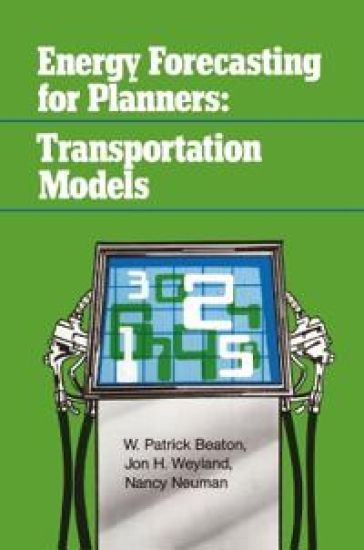
With the increased public awareness of a deepening energy crisis, governments at all levels have begun to examine their ability to act meaningfully in response to forms of short- and long-term energy-related political pressures. Emergency preparedness, conservation programs, and contingency planning have become watchwords in our new energy bureaus. The existence of a model provides an element of objectivity to the agency's policy pronouncements and, through the overlap in the energy agency's scope with that of other departments, the views of the energy agency are now made a part of regional development plans.This volume provides the tools to shape and implement community plans and programs relating to energy use in vehicular travel. Fully documented and effective fuel consumption forecasting models are clearly presented. These models range from static and flow adjustment equations delineating fuel consumption to analyses that explain patterns of change for vehicular use.This book shows the statistical procedures used to estimate the models, as well as the procedures used to test the models' significance. The authors include computer algorithms along with full, working examples; both are presented together with an analysis of all the principal alternative approaches. Finally, problems such as the distribution of fuel reserves to meet needs in particular areas within a jurisdiction are explored.
In the Midwest, wetlands can be seen as a nuisance to farmers as they can severely increase production costs. Wetlands are however are a major part of ecology for migratory waterfowl and drainage of these wetlands could have dire consequences on the population of waterfowl as well as other wildlife. Originally published in 1971, this report attempts to break down the economic factors of competition for wetlands in Minnesota and surrounding areas in a policy-relevant way and to suggest new policy alternatives. This title will be of interest to students of Environmental Studies.
In the Midwest, wetlands can be seen as a nuisance to farmers as they can severely increase production costs. Wetlands are however are a major part of ecology for migratory waterfowl and drainage of these wetlands could have dire consequences on the population of waterfowl as well as other wildlife. Originally published in 1971, this report attempts to break down the economic factors of competition for wetlands in Minnesota and surrounding areas in a policy-relevant way and to suggest new policy alternatives. This title will be of interest to students of Environmental Studies.
Written by the foremost authorities, The Canadian Federal Election of 2011 provides a complete investigation of all aspects of the campaigns and the outcome of the election. The Canadian Federal Election of 2011 is a comprehensive analysis of all aspects of the campaign and election outcome. The chapters, written by leading academics, examine the strategies, successes, and failures of the major political parties the Conservatives (Faron Ellis and Peter Woolstencroft), the Liberals (Brooke Jeffrey), the New Democrats (David McGrane), the Bloc Qubcois (Eric Belanger and Richard Nadeau), and the Green Party (Susan Harada).Also featured in this volume are chapters on the nature of local campaigning (Alex Marland), the polls (André Turcotte), the campaign in the new social media (Mary Francoli, Josh Greenberg and Christopher Waddell), and the nature of modern conservatism (Jonathan Malloy and Jim Farney). The book concludes with a detailed analysis of voting behaviour in 2011 (Harold Clarke and Tom Scotto) and an assessment of whether Canada is headed for a Stephen Harper dynasty (Jon H. Pammett and Lawrence LeDuc). Appendices contain all of the election results.
The Hill Times: Best Books of 2016 Written by the foremost authorities, The Canadian Federal Election of 2015 provides a complete investigation of the election. A comprehensive analysis of the campaigns and the election outcome, this collection of essays examines the strategies, successes, and failures of the major political parties: the Conservatives, the Liberals, the New Democrats, the Bloc Québécois, and the Green Party. Also featured are chapters on the changes in electoral rules, the experience of local campaigning, the play of the polls, the campaign in the new media, the role of the debates, and the experience of women in the campaign. The book concludes with a detailed analysis of voting behaviour in 2015 and an assessment of the Stephen Harper dynasty. Appendices contain all of the election results. The Canadian Federal Election of 2015 is the tenth volume in a series that has chronicled every national election campaign since 1984.
Broadly organized around the applications of Fourier analysis, Methods of Applied Mathematics with a MATLAB Overview covers both classical applications in partial differential equations and boundary value problems, as well as the concepts and methods associated to the Laplace, Fourier, and discrete transforms. Transform inversion problems are also examined, along with the necessary background in complex variables. A final chapter treats wavelets, short-time Fourier analysis, and geometrically-based transforms. The computer program MATLAB is emphasized throughout, and an introduction to MATLAB is provided in an appendix. Rich in examples, illustrations, and exercises of varying difficulty, this text can be used for a one- or two-semester course and is ideal for students in pure and applied mathematics, physics, and engineering.
Control theory has applications to a number of areas in engineering and communication theory. This introductory text on the subject is fairly self-contained, and consists of a wide range of topics that include realization problems, linear-quadratic optimal control, stability theory, stochastic modeling and recursive estimation algorithms in communications and control, and distributed system modeling. In the early chapters methods based on Wiener--Hopf integral equations are utilized. The fundamentals of both linear control systems as well as stochastic control are presented in a unique way so that the methods generalize to a useful class of distributed parameter and nonlinear system models. The control of distributed parameter systems (systems governed by PDEs) is based on the framework of linear quadratic Gaussian optimization problems. Additionally, the important notion of state space modeling of distributed systems is examined. Basic results due to Gohberg and Krein on convolution are given and many results are illustrated with some examples that carry throughout the text. The standard linear regulator problem is studied in the continuous and discrete time cases, followed by a discussion of (dual) filtering problems. Later chapters treat the stationary regulator and filtering problems using a Wiener--Hopf approach. This leads to spectral factorization problems and useful iterative algorithms that follow naturally from the methods employed. The interplay between time and frequency domain approaches is emphasized. "Foundations of Deterministic and Stochastic Control" is geared primarily towards advanced mathematics and engineering students in various disciplines.