

Kirjahaku
Etsi kirjoja tekijän nimen, kirjan nimen tai ISBN:n perusteella.
1000 tulosta hakusanalla Jon L. Ericson

This third edition of Jon L. Ericson's Notes and Comments on Robert's Rules updates all references and page numbers to the tenth edition of Robert's Rules of Order Newly Revised, published in 2000.

The disturbing reality of contemporary life is that technology has laid bare the private facts of most people's lives. Email, cell phone calls, and individual purchasing habits are no longer secret. Individuals may be discussed on a blog, victimized by an inaccurate credit report, or have their email read by an employer or government agency without their knowledge. Government policy, mass media, and modern technology pose new challenges to privacy rights, while the law struggles to keep up with the rapid changes. Privacy: The Lost Right evaluates the status of citizens' right to privacy in today's intrusive world. Mills reviews the history of privacy protections, the general loss of privacy, and the inadequacy of current legal remedies, especially with respect to more recent privacy concerns, such as identity theft, government surveillance, tabloid journalism, and video surveillance in public places. Mills concludes that existing regulations do not adequately protect individual privacy, and he presents options for improving privacy protections.

Far from being a monolith with unanimous leadership loyalty to the cause of a separate nation, the Confederacy was in reality deeply divided over how to achieve independence. Many supposedly loyal leaders, civilian as well as elected officials, opposed governmental policies on the national and state levels, and their actions ultimately influenced non-support for military policies. Congressional differences over arming the slaves and bureaucratic squabbles over how to conduct the war disrupted the government and Cabinet of President Jefferson Davis. Rumors of such irreconcilable differences spread throughout the South, contributing to an overall decline in morale and support for the war effort and causing the Confederacy to come apart from within.When asked to make sacrifices, civilian leaders found themselves caught in the dilemma of either aiding the Confederacy or losing money through poor utilization of slave labor. To sustain profits, the business and planter classes often traded with the enemy. Upon consideration of arming the slaves, many members of Congress proclaimed that the war effort was not worth the demise of slavery and preferred instead to take their chances with the Northern government. Cultural leaders, clergy, newspapermen, and men of letters claimed their loyalty to the war effort, but often criticized government policies in public. By asking for financial support and instituting a military draft, the national government infuriated local patriots who wanted to defend their own states more than they desired to defeat the enemy.
Archaic Earthworks of the Lower Mississippi Valley
Jon L. Gibson
Louisiana State University Press
2019
sidottu
Drawing on over fifty years of research and study, archaeologist Jon L. Gibson comes to well-founded yet bold conclusions about the Archaic mounds in the Lower Mississippi Valley and the peoples who made them. Examining topics ranging from the architectural incorporation of cosmic cycles and standard measures to traditional native myths and magical beliefs, Archaic Earthworks of the Lower Mississippi Valley is the definitive study of the history and ethos of a much-debated era.
Identifies and annotates 239 books about mystery and detective fiction published through the end of 1981.
In this collection of original essays, several prominent writers and critics of the genre examine the interface of theology and detection. Edward D. Hoch discusses Roman Catholic sleuths; James Yaffe discusses Jews in detective fiction; Marvin Lachman discusses the use of religious cults as mystery story backgrounds; co-editor Breen writes of Protestant religious mysteries and on Mormonism in the mystery; and four authors of mysteries about religious detectives—William X. Kienzle, Ellis Peters, Harry Kemelman, and Sister Carol Anne O'Marie—respond to a series of questions about their work.
The advent of Court TV and the increasing news coverage of high-profile trials have pushed legal proceedings to the forefront of public interest today. Jon L. Breen has answered a growing demand for information with a second edition of Novel Verdicts: A Guide to Courtroom Fiction, a critical bibliography of courtroom fiction. This new edition not only updates old annotations, but explores the literary response to new areas of focus and development that have emerged in the law since 1984. The original 421 entries have been retained among the 790 in the present volume, and Breen's guide also highlights a number of specialists who have recently emerged, including John Grisham, Steve Martini, William Bernhardt, Paul Levine, and Richard North Patterson. Annotations provide general information about the author and indicate the proportion of trial action included in each book. A critical bibliography for librarians, lawyers and courtroom enthusiasts alike, Novel Verdicts is a useful and easy-to-use reference tool that captures the changes in the law as depicted in courtroom fiction.
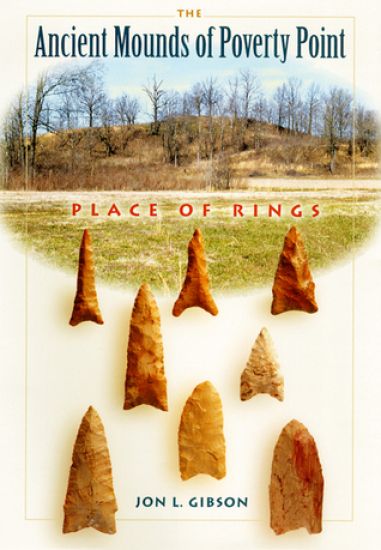
The Ancient Mounds of Poverty Point
Jon L. Gibson; Jerald T. Milanich
University Press of Florida
2001
nidottu
Jon Gibson confronts the intriguing mystery of Poverty Point, the ruins of a large prehistoric Indian settlement that was home to one of the most fascinating ancient cultures in eastern North America. The 3,500-year-old site in northeastern Louisiana is known for its large, elaborate earthworks - a series of concentric, crescent-shaped dirt rings and bird-shaped mounds. With its imposing 25-mile core, it is one of the largest archaic constructions on American soil. It's also one of the most puzzling - perplexing questions haunt Poverty Point, and archaeologists still speculate about life and culture at the site, its age, how it was created, and if it was at the forefront of an emerging complex society. Gibson's engaging, well-illustrated account of Poverty Point brings to life one of the oldest earthworks of its size in the Western Hemisphere, the hub of a massive exchange network among native American peoples reaching a third of the way across the present-day United States.

Balancing personal dignity and first amendment concerns has become increasingly challenging in the new media age, when, for example, bloggers have no editors and perhaps no moral restraints. Unlimited and unrestricted internet speech has left thousands of victims in its wake, most of them silenced after the media cycle moves on. While the history of free speech and press has noble origins rooted in democratic theory, can society protect those who are harassed, stalked, and misrepresented online while maintaining a free society?Jon Mills, one of the nation's top provacy experts and advocates, maps out this complex problem. He discuses the need for forethought and creative remedies, looking at solutions already implemented by the European Union and comparing them to the antiquated provacy laws still extant in the United States. In his search for solutions, Mills closely examines an array of cases, some of them immediately recognizable beacuse of their notoriety and extensive media coverage. In a context of almost instantaneous global communications, where technology moves faster than the law, Mills traces the sharp edge between freedom of expression and the individual dignity that privacy preseves.
Human bodily existence is at the core of the Torah and the rest of the Hebrew Scriptures—from birth to death. From God’s creation of Adam out of clay, to the narratives of priests and kings whose regulations governed bodily practices, the Hebrew Bible focuses on the human body. Moreover, ancient Israel’s understanding of the human body has greatly influenced both Judaism and Christianity. Despite this pervasive influence, ancient Israel’s view of the human body has rarely been studied and, until now, has been poorly understood. In this beautifully written book, Jon L. Berquist guides the reader through the Hebrew Bible, examining ancient Israel’s ideas of the body, the unstable roles of gender, the deployment of sexuality, and the cultural practices of the time. Conducting his analysis with reference to contemporary theories of the body, power, and social control, Berquist offers not only a description and clarification of ancient Israelite views of the body, but also an analysis of how these views belong to the complex logic of ancient social meanings. When this logic is understood, the familiar Bible becomes strange and opens itself to a wide range of new interpretations.
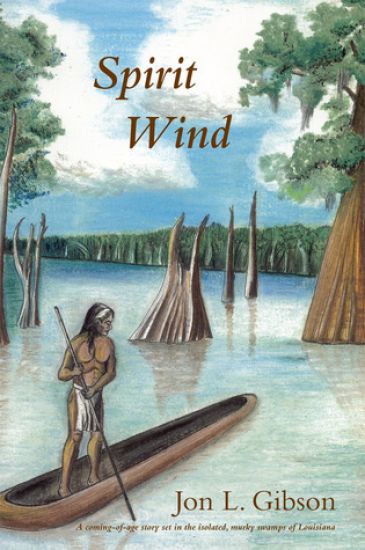
When the mighty wind blows through the swamps of southern Louisiana, it changes not only the land, but the inhabitants as well. Just such a wind brought a lone infant into the care of the Chitimacha Indians deep in the Atchafalaya swamp. Raised by the tribal holy man, Storm Rider grows to adolescence as a respected tribal member, steeped in the wisdom and traditions of his adopted people. Their clan competitions, life-cycle rituals, social interactions, and subsistence labors are well explained in this anthropological novel. When captured by an enemy raiding party, Storm Rider and his nemesis, the village bully, forge a bond that delivers them from danger and charts their futures. Love, hate, friendship, and loyalty ride the dark bayou waters and converge at the sacred Rain Tree. Swamps, hurricanes, cannibals, and unforgettable characters are interwoven as tightly as one of old Cane Basket's watertight baskets in this anthropologically accurate story of American Indian cultures in conflict.

"Scholarly and of broad general interest. Its balanced treatment provides the reader with concise yet accurate information, and its application of statistics to the study pf collective biography and political leadership will prove of interest to the student and scholar of the Civil War. . . . Recommended for public and academic libraries." Booklist

Of big-screen names today, Tom Cruise is one of the biggest. His increasingly brilliant and mature performances in films such as Magnolia, Vanilla Sky, Eyes Wide Shut and Minority Report have kept him at the top of his game. And yet there is so much about this elusive character that the fans do not know. In this biography, Wensley Clarkson promises to reveal the truth about his involvement with the Church of Scientology, the controversial beliefs that masked a secret political ambition, the real reason he and Nicole Kidman adopted children and the excruciating truth about their break up.

Psychological Ownership and the Organizational Context
Jon L. Pierce; Iiro Jussila
Edward Elgar Publishing Ltd
2011
sidottu
Psychological ownership as a phenomenon and construct attracts an increasing number of scholars in a variety of fields. This volume presents a comprehensive and up-to-date review of the psychological ownership literature with particular attention paid to the theory, research evidence, and comments on managerial applications. The authors address key elements that examine an employee's ownership feelings for his or her employing organization. The chapters address, among others, the following themes: the meaning of psychological ownership, the genesis of ownership feelings, the experiences and paths down which people travel that give rise to experiences of ownership, and the consequences (the personal and work outcomes) that stem from the sense of ownership. While the majority of the book is focused on feelings of ownership that exist at the individual-level, the authors introduce the construct of collective psychological ownership as well. This work acknowledges that teamwork has become increasingly commonplace in organizations and that like individuals, teams can come to a collective sense of ownership for a variety of targets within their work environment. The book closes by drawing upon the existing science of psychological ownership to provide a perspective on its applied (managerial) implications. This book will make a noteworthy addition to scholars' libraries: university libraries will also value it among their collections. Students of organizational psychology, management, organizational behavior, sociology and communication and their professors will find much of interest here.
Psychological Ownership and the Organizational Context
Jon L. Pierce; Iiro Jussila
Edward Elgar Publishing Ltd
2012
nidottu
Psychological ownership as a phenomenon and construct attracts an increasing number of scholars in a variety of fields. This volume presents a comprehensive and up-to-date review of the psychological ownership literature with particular attention paid to the theory, research evidence, and comments on managerial applications. The authors address key elements that examine an employee's ownership feelings for his or her employing organization. The chapters address, among others, the following themes: the meaning of psychological ownership, the genesis of ownership feelings, the experiences and paths down which people travel that give rise to experiences of ownership, and the consequences (the personal and work outcomes) that stem from the sense of ownership. While the majority of the book is focused on feelings of ownership that exist at the individual-level, the authors introduce the construct of collective psychological ownership as well. This work acknowledges that teamwork has become increasingly commonplace in organizations and that like individuals, teams can come to a collective sense of ownership for a variety of targets within their work environment. The book closes by drawing upon the existing science of psychological ownership to provide a perspective on its applied (managerial) implications. This book will make a noteworthy addition to scholars' libraries: university libraries will also value it among their collections. Students of organizational psychology, management, organizational behavior, sociology and communication and their professors will find much of interest here.
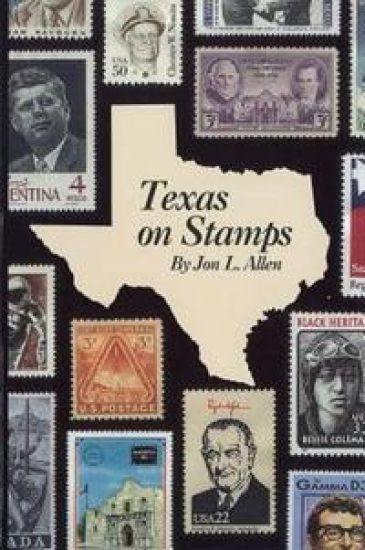
From explorer Cabeza de Vaca, who was shipwrecked on Galveston Island in 1528, to singer Willie Nelson and baseball superstar Nolan Ryan, Texas history, the people who made it, and the places it was made come alive on postage stamps. In over a hundred entries, Texas on Stamps displays stamps from the United States and foreign countries; the stamps are accompanied by explanatory text. First issued in May 1840, postage stamps soon became collectibles. Until about 1900, most portrayed reigning monarchs or, in this country, former presidents. Then pictorials were introduced featuring events, places, animals, any subject of national significance. Rather than collecting stamps by countries, some philatelists began topical or thematic collections. Published in the year of the Texas Philatelic Association's centennial, Texas on Stamps offers an unusual way to look at Texas history and a guide for topical collectors.

Until now, there has not been a single, full-color guide to some of the most recognizable genera of the southwestern United States: Agave, Dasylirion, Hechtia, Hesperaloe, Hesperoyucca, Nolina, and Yucca (the century plants, sotols, false agaves, chaparral yuccas, beargrasses, and yuccas). Some of the species treated in this guide have previously appeared scattered throughout a dozen other field guides, often split roughly between wildflowers and woody plants, or they have been confined to studies of small geographic regions. Still others have appeared virtually nowhere other than in the Flora of North America or in various state floras.Intended for the layperson, Agaves, Yuccas, and Their Kin covers all currently recognized taxa of these seven genera, in alphabetical order, ranging from Texas to the Pacific. Geographically, this guide covers all of the southwestern United States, encompassing southern California, southern Nevada, all of Utah, Arizona, Colorado, and New Mexico, plus western Texas, from Brownsville north through the Panhandle into Colorado, including the Edwards Plateau. It includes forms that may have been discounted at some time by various authors, as well as recently published or as yet unpublished taxa not previously presented in any other book.Complete with almost four hundred color photographs of species in various life cycle stages, Agaves, Yuccas, and Their Kin is a comprehensive, accessible, and much needed field guide for xerophile enthusiasts all across the Southwest
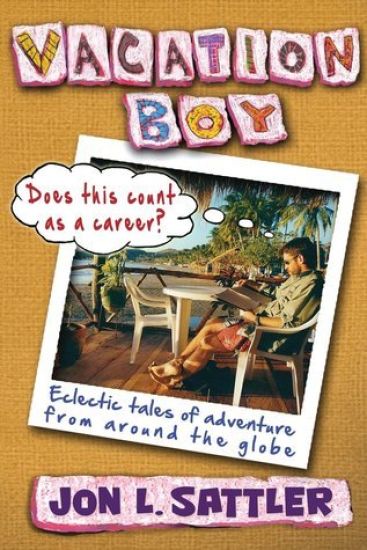
Vacation Boy: Does This Count as a Career?: Eclectic Tales of Adventure from Around the Globe
Jon L. Sattler
allCLEAR LLC
2013
nidottu