
Kirjahaku
Etsi kirjoja tekijän nimen, kirjan nimen tai ISBN:n perusteella.
1000 tulosta hakusanalla Jon M. Isaak
A detailed study of one theological concept (divine mediation) that was central to the Christological controversy of the early fourth century. By analysing the views of three participants at the Council of Nicaea (325), Jon M. Robertson demonstrates the variety of perspectives in a way that questions popular approaches to the period that see the controversy as having only two sides. His analysis constitutes a new approach to the early Arian controversy, as well as showing the theological backdrop of Athanasius' insight on Christ as mediator. It further demonstrates the contemporary relevance of the issue by giving an Athanasian critique of the modern Christology of Roger Haight.
Early Hunter-Gatherers of the California Coast
Jon M. Erlandson
Kluwer Academic/Plenum Publishers
1994
sidottu
Based on detailed excavation data, the author reconstructs the paleography of the Santa Barbara coast ca. 8500 years ago, makes comparisons to other early California sites, and applies his findings to current theories of hunter-gatherers and coastal environments. With an emphasis on paleographic reconstructions, site formation processes, chronological studies, and integrated faunal analyses, the work will be of interest to a wide range of scholars working in shell middens, hunter-gatherer ecology, geoarchaeology, and coatal or aquatic adaptations.
Product information not available.
The first and only collection of its kind, Sacred Symphony contains 100 transcriptions of muscial excerpts from the chanted sermons of contemporary black preachers. In his introduction to the pieces that follow, author John Michael Spencer argues that there is an observable correlation between the chanted sermons of today's black preachers and the antebellum spiritual. He shows that the pieces collected here, each of which spontaneously evolved during the course of a sermon or prayer service, are themselves spirituals containing similar musical components--melody, rhythm, call and response, counterpoint, harmony, form, and improvisation.
The book provides a comprehensive approach to configuration management from a variety of product development perspectives, including embedded and IT. It provides authoritative advice on how to extend products for a variety of markets due to configuration options. The book also describes the importance of configuration management to other parts of the organization. It supplies an overview of configuration management and its process elements to provide readers with a contextual understanding of the theory, practice, and application of CM. The book illustrates the interplay of configuration and data management with all enterprise resources during each phase of a product lifecycle.

Continuous and Embedded Learning for Organizations
Jon M. Quigley; Shawn P. Quigley
CRC Press
2020
sidottu
There is considerable connection between growth of the personnel in the organization and the ability for the company to compete over time. Looking outside for help training may be required but looking within for opportunities for enhanced training and growth, will foster a continually improving and growing organization. This book examines the opportunities for learning, within the organization and its’ activities, along with the connection to motivation. Additionally, it provides information on the characteristics of organizations that are able to quickly disseminate, along with approaches for improving this distribution of that learning throughout the organization.

The riveting story of Pope St. Celestine V, the pope who retired from the papacy. At the close of the tumultuous Middle Ages, there lived a man who seemed destined from birth to save the world. His name was Peter Morrone, a hermit, a founder of a religious order, and, depending on whom you talk to, a reformer, an instigator, a prophet, a coward, a saint, and possibly the victim of murder. A stroke of fate would, practically overnight, transform this humble servant of God into the most powerful man in the Catholic Church. Half a year later, he would be the only pope in history to abdicate the chair of St. Peter, an act that nearly brought the papacy to its knees. What led him to make that decision and what happened afterward would be shrouded in mystery for centuries. The Pope Who Quit pulls back the veil of secrecy on this dramatic time in history and showcases a story that involves deadly dealings, apocalyptic maneuverings, and papal intrigue.

This title is part of UC Press's Voices Revived program, which commemorates University of California Press’s mission to seek out and cultivate the brightest minds and give them voice, reach, and impact. Drawing on a backlist dating to 1893, Voices Revived makes high-quality, peer-reviewed scholarship accessible once again using print-on-demand technology. This title was originally published in 1981.

This title is part of UC Press's Voices Revived program, which commemorates University of California Press’s mission to seek out and cultivate the brightest minds and give them voice, reach, and impact. Drawing on a backlist dating to 1893, Voices Revived makes high-quality, peer-reviewed scholarship accessible once again using print-on-demand technology. This title was originally published in 1981.

Natural Resource Economics
Jon M. Conrad; Colin Whitcomb Clark
Cambridge University Press
1987
sidottu
In this book, Jon Conrad and Colin Clark develop the theory of resource economics. To begin, they provide an introduction to the required techniques of dynamic optimization. Throughout the book they build the reader’s understanding with many fully-worked problems and numerical examples. The authors have written this text in the belief that the theory and concepts of resource are more quickly learned, more effectively made operational, and more truly understood if the reader is exposed to carefully explained numerical examples. By working through the problems at the end of each chapter, students will learn the techniques to be used in empirical studies of natural resource systems. The first chapter provides an introduction to optimization, including constrained optimization, dynamic allocation problems, dynamic programming, continuous time problems, and the maximum principle, and a discussion of various numerical and graphical techniques. The remaining chapters deal in depth with the economics of renewable resources, nonrenewable resources, with environmental management and with stochastic resource models.

Natural Resource Economics
Jon M. Conrad; Colin Whitcomb Clark
Cambridge University Press
1987
pokkari
In this book, Jon Conrad and Colin Clark develop the theory of resource economics. To begin, they provide an introduction to the required techniques of dynamic optimization. Throughout the book they build the reader’s understanding with many fully-worked problems and numerical examples. The authors have written this text in the belief that the theory and concepts of resource are more quickly learned, more effectively made operational, and more truly understood if the reader is exposed to carefully explained numerical examples. By working through the problems at the end of each chapter, students will learn the techniques to be used in empirical studies of natural resource systems. The first chapter provides an introduction to optimization, including constrained optimization, dynamic allocation problems, dynamic programming, continuous time problems, and the maximum principle, and a discussion of various numerical and graphical techniques. The remaining chapters deal in depth with the economics of renewable resources, nonrenewable resources, with environmental management and with stochastic resource models.
Resource Economics is a text for students with a background in calculus and intermediate microeconomics and a familiarity with the spreadsheet software Excel. The book covers basic concepts (Chapter 1), shows how to set up spreadsheets to solve simple dynamic allocation problems (Chapter 2), and presents economic models for fisheries, forestry, nonrenewable resources, and stock pollutants (Chapters 3–6). Chapter 7 examines the maximin utility criterion when the utility of a generation depends on consumption of a manufactured good, harvest from a renewable resource, and extraction from a nonrenewable resource. Within the text, numerical examples are posed and solved using Excel's Solver. Exercises are included at the end of each chapter. These problems help make concepts operational, develop economic intuition, and serve as a bridge to the study of real-world problems in resource management.
Resource Economics is a text for students with a background in calculus and intermediate microeconomics and a familiarity with the spreadsheet software Excel. The book covers basic concepts (Chapter 1), shows how to set up spreadsheets to solve simple dynamic allocation problems (Chapter 2), and presents economic models for fisheries, forestry, nonrenewable resources, and stock pollutants (Chapters 3–6). Chapter 7 examines the maximin utility criterion when the utility of a generation depends on consumption of a manufactured good, harvest from a renewable resource, and extraction from a nonrenewable resource. Within the text, numerical examples are posed and solved using Excel's Solver. Exercises are included at the end of each chapter. These problems help make concepts operational, develop economic intuition, and serve as a bridge to the study of real-world problems in resource management.
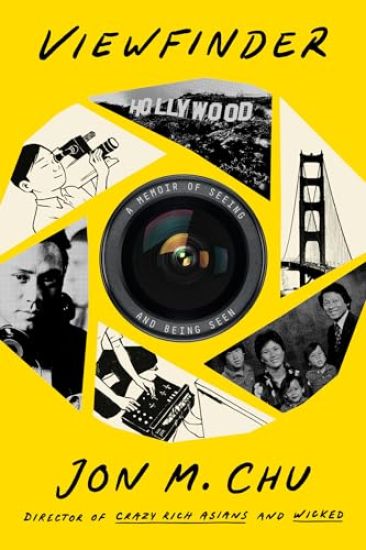
From visionary director Jon M. Chu comes a powerful, inspiring memoir of belonging, creativity, and learning to see who you really are. Long before he directed Wicked, In The Heights, or the groundbreaking film Crazy Rich Asians, Jon M. Chu was a movie-obsessed first-generation Chinese American, helping at his parents' Chinese restaurant in Silicon Valley and forever facing the cultural identity crisis endemic to children of immigrants. Growing up on the cutting edge of twenty-first-century technology gave Chu the tools he needed to make his mark at USC film school, and to be discovered by Steven Spielberg, but he soon found himself struggling to understand who he was. In this book, for the first time, Chu turns the lens on his own life and work, telling the universal story of questioning what it means when your dreams collide with your circumstances, and showing how it's possible to succeed even when the world changes beyond all recognition. With striking candor and unrivaled insights, Chu offers a firsthand account of the collision of Silicon Valley and Hollywood--what it's been like to watch his old world shatter and reshape his new one. Ultimately, Viewfinder is about reckoning with your own story, becoming your most creative self, and finding a path all your own.

Tens of thousands of readers have studied and applied this practical guide to instruction in argumentation and communication since it was first published in 1961. In this fourth edition-the Fiftieth Anniversary Edition-authors Jon M. Ericson, James J. Murphy, and Raymond Bud Zeuschner have made significant revisions to improve the depth, flow, and clarity of this popular debater's handbook.With straightforward explanations and specific applications geared toward contemporary debate practice, this compact volume offers students and teachers clear-cut assistance in resolving the key problem faced by debaters: the need to present arguments forcefully and cogently while reacting effectively to criticism. Beginning with a candid explanation of the basic principles of debate, The Debater's Guide then introduces the steps to building a case, from reviewing strategies for refutation and defense to engaging in cross-examination, solid research, and critical thinking. It advises readers on a wide range of important topics, from budgeting time in a debate to speaking in outline form by using a well-organized series of explanations, specific examples, and graphic presentations related to both policy and value issues. The authors apply these concepts to a variety of formats and situations commonly found in high school and collegiate debating.Avoiding jargon and complex theory discussions, The Debater's Guide offers sound advice on presenting an effective case in oral discourse, helps students build their understanding of how and why debate functions, and provides a solid foundation for success in any format. The expanded contents pages and new subheadings allow for quick reference to any particular aspect of debate, making this new edition an excellent choice for classroom use as well as a valuable hands-on tool during debates.

Life on the Malecón is a narrative ethnography of the lives of street children and youth living in Santo Domingo, Dominican Republic, and the non-governmental organizations that provide social services for them. Writing from the perspective of an anthropologist working as a street educator with a child welfare organization, Jon M. Wolseth follows the intersecting lives of children, the institutions they come into contact with, and the relationships they have with each other, their families, and organization workers.Often socioeconomic conditions push these children to move from their homes to the streets, but sometimes they themselves may choose the allure of the perceived freedoms and opportunities that street life has to offer. What they find, instead, is violence, disease, and exploitation—the daily reality through which they learn to maneuver and survive. Wolseth describes the stresses, rewards, and failures of the organizations and educators who devote their resources to working with this population.The portrait of Santo Domingo’s street children and youth population that emerges is of a diverse community with variations that may be partly related to skin color, gender, and class. The conditions for these youth are changing as the economy of the Dominican Republic changes. Although the children at the core of this book live and sleep on avenues and plazas and in abandoned city buildings, they are not necessarily glue- and solvent-sniffing beggars or petty thieves on the margins of society. Instead, they hold a key position in the service sector of an economy centered on tourism.Life on the Malecón offers a window into the complex relationships children and youth construct in the course of mapping out their social environment. Using a child-centered approach, Wolseth focuses on the social lives of the children by relating the stories that they themselves tell as well as the activities he observes.
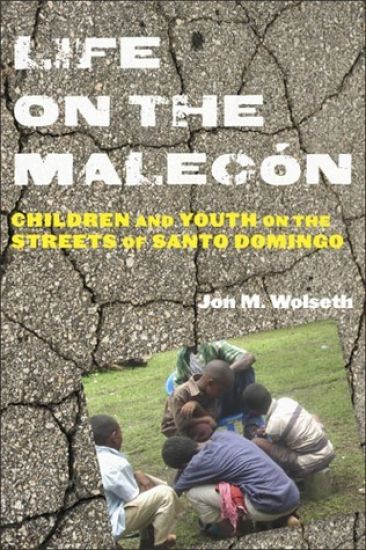
Life on the Malecón is a narrative ethnography of the lives of street children and youth living in Santo Domingo, Dominican Republic, and the non-governmental organizations that provide social services for them. Writing from the perspective of an anthropologist working as a street educator with a child welfare organization, Jon M. Wolseth follows the intersecting lives of children, the institutions they come into contact with, and the relationships they have with each other, their families, and organization workers.Often socioeconomic conditions push these children to move from their homes to the streets, but sometimes they themselves may choose the allure of the perceived freedoms and opportunities that street life has to offer. What they find, instead, is violence, disease, and exploitation—the daily reality through which they learn to maneuver and survive. Wolseth describes the stresses, rewards, and failures of the organizations and educators who devote their resources to working with this population.The portrait of Santo Domingo’s street children and youth population that emerges is of a diverse community with variations that may be partly related to skin color, gender, and class. The conditions for these youth are changing as the economy of the Dominican Republic changes. Although the children at the core of this book live and sleep on avenues and plazas and in abandoned city buildings, they are not necessarily glue- and solvent-sniffing beggars or petty thieves on the margins of society. Instead, they hold a key position in the service sector of an economy centered on tourism.Life on the Malecón offers a window into the complex relationships children and youth construct in the course of mapping out their social environment. Using a child-centered approach, Wolseth focuses on the social lives of the children by relating the stories that they themselves tell as well as the activities he observes.

Servant of God Nicholas Black Elk (1863—1950) is popularly celebrated for his fascinating spiritual life. How could one man, one deeply spiritual man, serve as both a traditional Oglala Lakota medicine man and a Roman Catholic catechist and mystic? How did these two spiritual and cultural identities enrich his prayer life? How did his commitment to God, understood through his Lakota and Catholic communities, shape his understanding of how to be in the world? To fully understand the depth of Black Elk’s life-long spiritual quest requires a deep appreciation of his life story. He witnessed devastation on the battlefields of Little Bighorn and the Massacre at Wounded Knee, but also extravagance while performing for Queen Victoria as a member of “Buffalo Bill” Cody’s Wild West Show. Widowed by his first wife, he remarried and raised eight children. Black Elk’s spiritual visions granted him wisdom and healing insight beginning in his childhood, but he grew progressively physically blind in his adult years. These stories, and countless more, offer insight into this extraordinary man whose cause for canonization is now underway at the Vatican.