This unique and practical book provides a clear introduction to clinical supervision and support in primary care. Supervision and Support in Primary Care provides practical information and guidance on the nature and purpose of clinical supervision. It uses examples and perspectives from the world of mental health, Balint groups and self-directed learning, and examines the benefits and challenges of supervision within the primary care setting. Numerous case studies are used throughout to describe the wide range of current approaches to supervision for general practitioners, illustrating how this can contribute towards more effective clinical work and training. All those working within primary care will find this book valuable reading.
What do you need to know to teach computing in primary schools? How do you teach it? This book offers practical guidance on how to teach the computing curriculum in primary schools, coupled with the subject knowledge needed to teach it. This Seventh Edition is a guide to teaching the computing content of the new Primary National Curriculum. It includes many more case studies and practical examples to help you see what good practice in teaching computing looks like. It also explores the use of ICT in the primary classroom for teaching all curriculum subjects and for supporting learning in every day teaching. New chapters have been added on physical computing and coding and the importance of web literacy, bringing the text up-to-date. Computing is both a subject and a powerful teaching and learning tool throughout the school curriculum and beyond into many areas of children’s learning lives. This book highlights the importance of supporting children to become discerning and creative users of digital technologies as opposed to passive consumers.
What do you need to know to teach computing in primary schools? How do you teach it? This book offers practical guidance on how to teach the computing curriculum in primary schools, coupled with the subject knowledge needed to teach it. This Seventh Edition is a guide to teaching the computing content of the new Primary National Curriculum. It includes many more case studies and practical examples to help you see what good practice in teaching computing looks like. It also explores the use of ICT in the primary classroom for teaching all curriculum subjects and for supporting learning in every day teaching. New chapters have been added on physical computing and coding and the importance of web literacy, bringing the text up-to-date. Computing is both a subject and a powerful teaching and learning tool throughout the school curriculum and beyond into many areas of children’s learning lives. This book highlights the importance of supporting children to become discerning and creative users of digital technologies as opposed to passive consumers.
Too often Bible stories are familiar to us in the simplified version we learnt as children, or through the lessons they are supposed to teach us in religious homilies. Yet the actual stories are the products of a highly developed literary culture, narrated in an articulate and expressive Hebrew language, and nested within collections of diverse writings with which they are in constant dialogue. To underestimate the many facets of these narratives, their universal appeal and contemporary significance, is truly our loss. We will examine with adult eyes the dimensions, often overlooked or misunderstood, the wit and even humour, within some familiar and less familiar Biblical narratives, and allow them to surprise us.
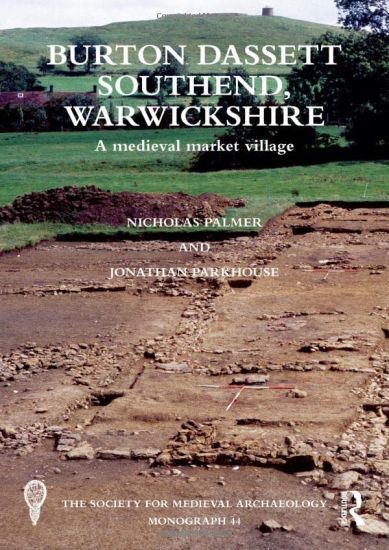
Southend, one of five medieval settlements in Burton Dassett parish, Warwickshire, was the site of a market promoted by the manorial lord Bartholomew de Sudeley, with a charter being obtained in 1267. The settlement prospered, becoming known as Chipping Dassett, and approached urban status, but then declined throughout the 15th century. It was subjected to depopulation in 1497. The site survived as earthworks in pasture until construction of the M40 motorway necessitated the archaeological programme described here. The only building to survive was the 13th-century chapel of St James, reduced, along with an adjacent post-medieval priest’s house, to a cow-shed.Open area excavations at Southend investigated parts of ten medieval properties. There was some prehistoric and Romano-British activity, with evidence for woodland regeneration and subsequent clearance in the post-Roman period, despite the Feldon area being one often considered to have little in the way of tree-cover since the Roman period. The main period of occupation lasted from the mid-13th century to the late 15th century, reflecting the rise and decline of Chipping Dassett. Over 20 complete plans of houses and outbuildings were recorded, exhibiting a range of building techniques. The remains were well preserved, the surviving stratigraphy protected by demolition rubble. In most houses successive building phases were revealed and many internal features survived. A door jamb inscribed with the name of a tenant family ‘Gormand’ suggests a degree of functional literacy. One of the properties was recognised as a smithy during the excavation and a pioneering sampling and analysis of the ironworking evidence was carried out. The site was also sampled extensively for charred plant remains and, unusually for Warwickshire with its slightly acid soils, a large assemblage of animal bone was collected. Work on these provides direct evidence of medieval agricultural practice, to be compared with the local historical evidence. The large quantities of finds recovered, probably the largest assemblage from a medieval rural settlement in the West Midlands, enable the reconstruction of the material culture of a late medieval Warwickshire Feldon village.Although the excavated area lay away from the original settlement nucleus, the investigation revealed the mechanics of 13th-century market development with two separate stages of planned development apparent. After the mid-14th century the tenements show a complex pattern of decline leading up to the depopulation of 1497. The different properties followed varying development paths and the excavations chart a process of general community decline against a background of increasing individual prosperity. The evidence of material culture and settlement morphology, taken together, are relevant to the discussion about differentiation and similarities between urban and rural settlement. The medieval pottery has been crucial to the development of the Warwickshire type series. Identification of the pottery sources provides evidence for trade connections between the settlement and the wider market network, with the quantities of material from the Chilvers Coton kilns suggesting that manorial connections with North Warwickshire, where the Sudeley family also held land, were significant. The summary narrative and thematic discussions (focused upon material culture, spatial organisation, buildings and economy) in this volume are supplemented by detailed stratigraphic description and specialist reports available online through the Archaeology Data Service.
Southend, one of five medieval settlements in Burton Dassett parish, Warwickshire, was the site of a market promoted by the manorial lord Bartholomew de Sudeley, with a charter being obtained in 1267. The settlement prospered, becoming known as Chipping Dassett, and approached urban status, but then declined throughout the 15th century. It was subjected to depopulation in 1497. The site survived as earthworks in pasture until construction of the M40 motorway necessitated the archaeological programme described here. The only building to survive was the 13th-century chapel of St James, reduced, along with an adjacent post-medieval priest’s house, to a cow-shed.Open area excavations at Southend investigated parts of ten medieval properties. There was some prehistoric and Romano-British activity, with evidence for woodland regeneration and subsequent clearance in the post-Roman period, despite the Feldon area being one often considered to have little in the way of tree-cover since the Roman period. The main period of occupation lasted from the mid-13th century to the late 15th century, reflecting the rise and decline of Chipping Dassett. Over 20 complete plans of houses and outbuildings were recorded, exhibiting a range of building techniques. The remains were well preserved, the surviving stratigraphy protected by demolition rubble. In most houses successive building phases were revealed and many internal features survived. A door jamb inscribed with the name of a tenant family ‘Gormand’ suggests a degree of functional literacy. One of the properties was recognised as a smithy during the excavation and a pioneering sampling and analysis of the ironworking evidence was carried out. The site was also sampled extensively for charred plant remains and, unusually for Warwickshire with its slightly acid soils, a large assemblage of animal bone was collected. Work on these provides direct evidence of medieval agricultural practice, to be compared with the local historical evidence. The large quantities of finds recovered, probably the largest assemblage from a medieval rural settlement in the West Midlands, enable the reconstruction of the material culture of a late medieval Warwickshire Feldon village.Although the excavated area lay away from the original settlement nucleus, the investigation revealed the mechanics of 13th-century market development with two separate stages of planned development apparent. After the mid-14th century the tenements show a complex pattern of decline leading up to the depopulation of 1497. The different properties followed varying development paths and the excavations chart a process of general community decline against a background of increasing individual prosperity. The evidence of material culture and settlement morphology, taken together, are relevant to the discussion about differentiation and similarities between urban and rural settlement. The medieval pottery has been crucial to the development of the Warwickshire type series. Identification of the pottery sources provides evidence for trade connections between the settlement and the wider market network, with the quantities of material from the Chilvers Coton kilns suggesting that manorial connections with North Warwickshire, where the Sudeley family also held land, were significant. The summary narrative and thematic discussions (focused upon material culture, spatial organisation, buildings and economy) in this volume are supplemented by detailed stratigraphic description and specialist reports available online through the Archaeology Data Service.
Introduces the history, civilization, and peoples of ancient South Asia and examines the legacy of this world on the contemporary cultures of the countries which make up South Asia today.
Brian O'Leary; Theresa Armstrong; Dr. Eva Brown; Will Burton; Jonathan Dueck; Bonnie Ferguson-Baird; Keith Fulford; Tom Lake; Dave Law; Glenys MacLeod; Jacob Mans; Bonnie Powers; Laura Sims; Sid Williamson; Alex Wilson
This book will inspire, challenge and engage you—and transform your teaching and learning. Each chapter in this book is written by a different educator or team about their experiences with project-based learning, both in and out of the classroom. They reflect not only on the how of project-based learning, but more importantly, on the what and the why. They offer insight into how connecting with learners, honouring their experiences, and promoting deep and rich questioning can be the path to powerful projects and learning. Their writing and thinking is saturated with empathy, expertise, a desire to improve their practice, and an acknowledgment of the need to collaborate.
Can economic globalization and environmental protection co-exist or does globalization inevitably lead to environmental degradation? How have firms in Europe responded to increased environmental regulation in the face of growing international competition, particularly from newly industrializing and transition economies?This book attempts to answer these questions using case studies of three pollution-intensive industries: iron and steel, leather tanning, and fertilizers. Based on in-depth interviews with managers and regulators in Western and Eastern Europe, Asia, Africa and Latin America, the book illustrates the variety of responses to the conflicting pressures of globalization and environmental protection at corporate and industry levels. It also considers the impact which shifting competitive advantage has on the environment in newly industrialized countries and transition economies.Environmental managers and regulators of national and international environmental agencies will find Environmental Regulation in the New Global Economy of great interest, as will, academics and students of economics, environmental management, business studies, geography and international relations.
Can economic globalization and environmental protection co-exist or does globalization inevitably lead to environmental degradation? How have firms in Europe responded to increased environmental regulation in the face of growing international competition, particularly from newly industrializing and transition economies?This book attempts to answer these questions using case studies of three pollution-intensive industries: iron and steel, leather tanning, and fertilizers. Based on in-depth interviews with managers and regulators in Western and Eastern Europe, Asia, Africa and Latin America, the book illustrates the variety of responses to the conflicting pressures of globalization and environmental protection at corporate and industry levels. It also considers the impact which shifting competitive advantage has on the environment in newly industrialized countries and transition economies.Environmental managers and regulators of national and international environmental agencies will find Environmental Regulation in the New Global Economy of great interest, as will, academics and students of economics, environmental management, business studies, geography and international relations.
"Michael, don't forget our Neverland."For nearly a century, the ghost of 17 year-old Rupert Buxton has been trapped in his childhood home. He spends his days reading, roaming, and trying desperately to recall his former life. Hope is restored when a boy his own age moves into the manor-a boy he quickly becomes fascinated by. This peculiar, modern boy is the first person that Rupert has been able to reveal himself to, and just might be the key to help him discover his mysterious past.The Ghost of Buxton Manor is a young adult, LGBT paranormal fiction centered around historical figures Rupert Buxton and Michael Davies-the inspiration behind the real Peter Pan.
Button, was a normal pet mouse who always wanted to be a hero. He loved to tell tall tales about adventure to other mice, and pretend he was the hero of the stories. However, when a thief steals precious earrings from his beloved owner, Molly, he must find the courage to become like the great mouse knight of his stories and retrieve her stolen jewelry.
Navel Gazing, The Art of Psychic Belly Button Reading is the title of this book and it pretty much teaches exactly what it says on the tin. Dr. Jonathan Royle is an International Celebrity Life Coach, Hypnotherapist and Psychic Entertainer and within the pages of this Amusing, Entertaining and Educational Guide he teaches you the True Inside Secrets of Belly Button Reading. Not only does he explain the kinds of physical traits to look for in Navels and what those can mean, but also he examines how to connect to the Belly Buttons Base Chakra Energy Point to get improved accuracy with Intuitive Psychic Style Readings to be able to tell people about their Pasts, Present and Futures as well as their true personalities and intended direction in life for success. Further Royle also discusses "Cold Reading", "Body Language" and "Astrology" and explains how these can be used to make your readings more accurate when your Intuitive Psychic Powers and Skills may be having a bad day. And then from an Entertaining people and being the life and soul of the Party point of view, he teaches you several "Mind Reading" stunts and tricks which can be done by examining a persons Navel. And finally he also teaches you how the Human Navel can be used for "Spiritual Style Healing" in a SAFE, Ethical and Positive Manner to help people in their life's. Plus you'll learn tons of interesting and unusual facts about the Human Belly Button that will make for stimulating conversation subject matter. Arguably the most comprehensive treatise on the Human Belly Button ever released.
The nation-states and peoples of South and Central America, Cuba, Haiti and the Dominican Republic, that together form the political geographical region of Latin America, encompass a wide range of societies, politics and economies. This text exposes the differences between places, regions and countries, individuals and societies, offering an invaluable insight into the themes of political and economic development, and provides a guide to understanding power and space relations. From the Antarctic to the tropical jungles, the coastal communities to the highland villages, the mega-cities to isolated rural existence, the political geographies of lives, localities, cities and rurality are too sophisticated to be subjected to generalizations. Adopting a critical human geography perspective, Jonathon Barton provides an understanding of similarities, difference and sophisticated human geographies.
The nation-states and peoples of South and Central America, Cuba, Haiti and the Dominican Republic, that together form the political geographical region of Latin America, encompass a wide range of societies, politics and economies. This text exposes the differences between places, regions and countries, individuals and societies, offering an invaluable insight into the themes of political and economic development, and provides a guide to understanding power and space relations. From the Antarctic to the tropical jungles, the coastal communities to the highland villages, the mega-cities to isolated rural existence, the political geographies of lives, localities, cities and rurality are too sophisticated to be subjected to generalizations. Adopting a critical human geography perspective, Jonathon Barton provides an understanding of similarities, difference and sophisticated human geographies.
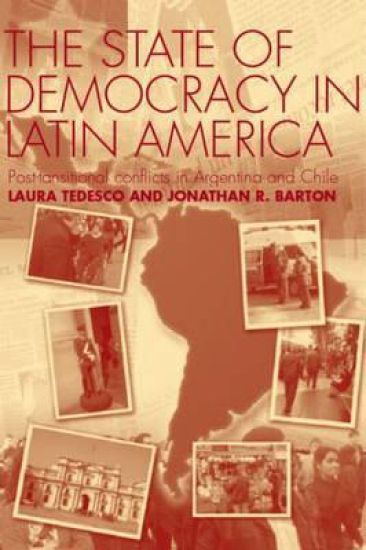
The State of Democracy in Latin America presents a critical analysis of the contemporary democratic state in Latin America.In a shift away from the more typical analyses of Latin American political change during the 1990s, this book presents a more state-centric perspective that seeks to explain why transitions to democracy and trends towards better governance have failed to provide more political and social stability in the continent. Through a deeper analysis of underlying social relations and values and how these manifest themselves through institutions, the state is understood not purely as an institutional form but rather as a set of interdependent relations that are shaped by particular collective and individual interests.