

Kirjahaku
Etsi kirjoja tekijän nimen, kirjan nimen tai ISBN:n perusteella.
1000 tulosta hakusanalla Jonathan K Wade
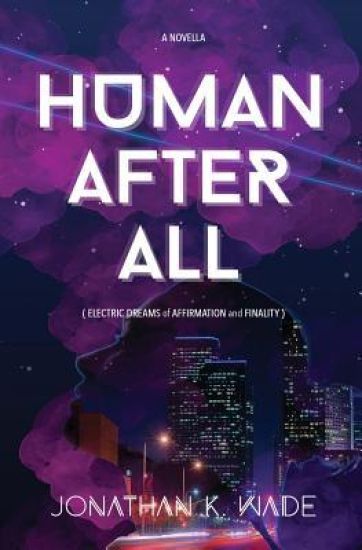

In 1986 a US cargo plane carrying humanitarian aid was shot down over Nicaragua. On board was not food and clothing but crates of guns and equipment intended to arm CIA-backed rebel fighters scattered throughout the jungles of Central America. Scattered amongst the wreckage was a diary listing CIA names, secret airstrips, and a cocaine trail leading from Colombia all the way to the White House.Known as the Iran-Contra scandal and spanning almost a decade of corruption, collusion, and conspiracy, it would see President Reagan admitting on national television to an unsanctioned and unapproved covert war in Nicaragua.This incredible story begins in 1981, traverses time and treachery across continents and real life characters, before ending in the infamous indictment of some of the most senior CIA and White House officials. Told through a series of intertwining first-person perspectives, step into the lives of the agents, Nicaraguan revolutionaries, and LA drug dealers who were embroiled in a saga that brought the President to his knees and crack cocaine to America.Captivating, gritty, humorous, and with characters so real the distinction between fact and fiction is impossible to find. This novel will leave you astounded at who the US Government was willing to get into bed with to stop the threat of Communism spreading through Latin America.

Anglo-Karen Dictionary
Jonathan Wade; J G Binney; George Blackwell
Benediction Classics
2011
sidottu
Anglo-Karen Dictionary by Rev. Jonathan Wade, D.D., Mrs. J. G. Binney and Rev. George Blackwell.


Anglo-Karen Dictionary
Rev. Jonathan Wade; J. G. Binney; Rev. George Blackwell
Benediction Classics
2011
pokkari

Among the many consequences of Spain's annexation of Portugal from 1580 to 1640 was an increase in the number of Portuguese authors writing in Spanish. One can trace this practice as far back as the medieval period, although it was through Gil Vicente, Jorge de Montemayor, and others that Spanish-language texts entered the mainstream of literary expression in Portugal. Proficiency in both languages gave Portuguese authors increased mobility throughout the empire. For those with literary aspirations, Spanish offered more opportunities to publish and greater readership, which may be why it is nearly impossible to find a Portuguese author who did not participate in this trend during the dual monarchy. Over the centuries these authors and their works have been erroneously defined in terms of economic opportunism, questions of language loyalty, and other reductive categories. Within this large group, however, is a subcategory of authors who used their writings in Spanish to imagine, explore, and celebrate their Portuguese heritage. Manuel de Faria e Sousa, Ângela de Azevedo, Jacinto Cordeiro, António de Sousa de Macedo, and Violante do Céu, among many others, offer a uniform yet complex answer to what it means to be from Portugal, constructing and claiming their Portuguese identity from within a Castilianized existence. Whereas all texts produced in Iberia during the early modern period reflect the distinct social, political, and cultural realities sweeping across the peninsula to some degree, Portuguese literature written in Spanish offers a unique vantage point from which to see these converging landscapes. Being Portuguese in Spanish explores the cultural cross-pollination that defined the era and reappraises a body of works that uniquely addresses the intersection of language, literature, politics, and identity.

What's holding your company back from the growth you know is possible? Every entrepreneurial leader eventually hits a ceiling. The skills and grit that fueled your start-up can't carry you through scale-up. Instead of freedom, you feel frustration-people problems, profit pressures, lack of control, or endless firefighting. In Grow , Expert EOS ImplementersⓇ Jonathan B. Smith and Jeanet L. Wade reveal a proven roadmap for breaking through those barriers. Drawing on decades of experience guiding hundreds of leaders, they introduce the Optimize for Growth Model. With this powerful tool, learn how to establish: A Company Operating System to create clarity, accountability, and traction A Community of Peers to provide perspective, wisdom, and support A Coach to challenge and develop your leadership capabilities When these three elements work together, growth accelerates-and not just in revenue. You'll gain freedom of time, stronger teams, and the ability to focus on what matters most. Packed with real-world case studies, practical tools, and inspiring success stories, Grow will help you transform from an overwhelmed founder into a confident, capable leader of a thriving, self-managing company. It's time to stop hitting the ceiling. It's time to optimize for growth.
What's holding your company back from the growth you know is possible? Every entrepreneurial leader eventually hits a ceiling. The skills and grit that fueled your start-up can't carry you through scale-up. Instead of freedom, you feel frustration-people problems, profit pressures, lack of control, or endless firefighting. In Grow , Expert EOS ImplementersⓇ Jonathan B. Smith and Jeanet L. Wade reveal a proven roadmap for breaking through those barriers. Drawing on decades of experience guiding hundreds of leaders, they introduce the Optimize for Growth Model. With this powerful tool, learn how to establish: A Company Operating System to create clarity, accountability, and traction A Community of Peers to provide perspective, wisdom, and support A Coach to challenge and develop your leadership capabilities When these three elements work together, growth accelerates-and not just in revenue. You'll gain freedom of time, stronger teams, and the ability to focus on what matters most. Packed with real-world case studies, practical tools, and inspiring success stories, Grow will help you transform from an overwhelmed founder into a confident, capable leader of a thriving, self-managing company. It's time to stop hitting the ceiling. It's time to optimize for growth.

The Haemorrhage of Health Professionals from South Africa
Wade Pendleton; Jonathan Crush; Kate Lefko-Everett
IDASA Publishers
2007
pokkari
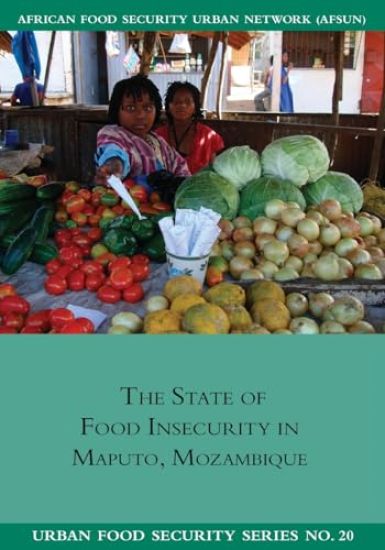
The State of Food Insecurity in Maputo, Mozambique
Ines Raimundo; Wade Pendleton; Jonathan Crush
Southern African Migration Programme
2014
pokkari
Food insecurity is a fact of life for the vast majority of households across Maputo's poverty belt. The Maputo urban food security survey done by AFSUN as part of its baseline survey of 11 Southern African cities found that households exist in a constant state of food insecurity manifested in a lack of access to sufficient affordable food, poor dietary quality and undernutrition. Income is meagre and only those households with access to wage income have any chance of holding food insecurity at bay. With a vibrant informal food economy, Maputo's poor are surrounded by fresh and processed food. Food availability is therefore not the primary determinant of food insecurity in Maputo. Certainly large-scale food import from South Africa and further afield makes the market price of food inherently volatile. But prices for the consumer are also driven down by the fact that there is intense competition among vendors on the streets and in the marketplaces. The real cause of food insecurity is high urban unemployment and a lack of regular and decent-paying work. Among its recommendations, AFSUN urges the city of Maputo to set up a food security strategy that is multisectoral and policy-oriented and based on a better understanding of food flows into and within the city, the operation of the city's informal food economy and the likely impacts of formal retailing for the food security of the urban poor.
A Preliminary Assessment of the Regionally Aligned Forces (RAF) Concept's Implications for Army Personnel Management
M. Wade Markel; Bryan W. Hallmark; Peter Schirmer; Louay Constant; Jaime L. Hastings; Henry A. Leonard; Kristin J. Leuschner; Lauren A. Mayer; Caolionn O'Connell; Christina Panis; Jose R. Rodriguez; Lisa Saum-Manning; Jonathan Welch
RAND
2015
pokkari
RAND Arroyo Center explored how the U.S. Army might need to adapt its personnel management policies and practices to support the Regionally Aligned Forces concept. Authors estimated the scope and scale of the requirement for regional expertise; modeled the Army s current ability to produce soldiers with the required expertise; and identified changes to the personnel management system to develop and match such soldiers with appropriate positions."

Why do we remember events from our childhood as if they happened yesterday, but not what we did last week? Why does our memory seem to work well sometimes and not others? What happens when it goes wrong? Can memory be improved or manipulated, by psychological techniques or even 'brain implants'? How does memory grow and change as we age? And what of so-called 'recovered' memories? This book brings together the latest research in neuroscience and psychology, and weaves in case-studies, anecdotes, and even literature and philosophy, to address these and many other important questions about the science of memory - how it works, and why we can't live without it. ABOUT THE SERIES: The Very Short Introductions series from Oxford University Press contains hundreds of titles in almost every subject area. These pocket-sized books are the perfect way to get ahead in a new subject quickly. Our expert authors combine facts, analysis, perspective, new ideas, and enthusiasm to make interesting and challenging topics highly readable.
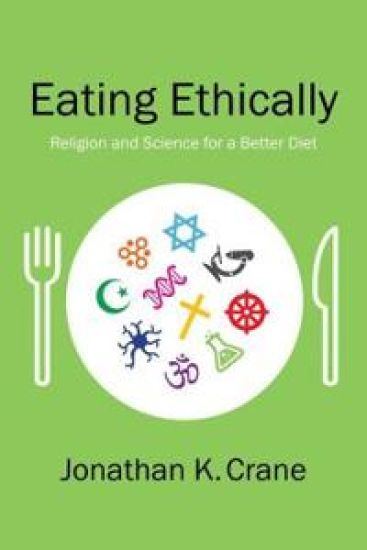
We are eating ourselves to death in many ways, both bodily and societally. Few activities are as essential to human flourishing as eating, and fewer still are as ethically intricate. Eating well is particularly confusing. Conflicting recommendations, contradictory scientific studies, and the confounding environmental and economic factors that surround us make choices difficult. Eating "just right" is complex for the contemporary American, living amid excess and faced with moral, medical, and environmental consequences that influence our eating choices. A different eating strategy is needed, one grounded in our biology but also philosophically sound, theologically cogent, and personally achievable. Eating Ethically provides evidence and arguments for more adaptive eating practices. Drawing on religion, medicine, philosophy, cognitive science, art, ethics, and more, Jonathan K. Crane distinguishes among the eater, the eaten, and eating to promote a radical reorientation away from external cues and toward internal ones. From classic philosophy on appetite to contemporary studies of satiation, from the science of metabolism to metaphysics and theology, Crane intertwines ancient wisdom and cutting-edge scholarship to show that eating well is not only a biological necessity but also an integral facet of spiritual and social health. He draws on insights from Judaism, Christianity, and Islam that promote personal health and social cohesion. Eating Ethically, grounded in science, tradition, and our internal necessities, points us toward eating well.

Did Jesus really beat death? That’s what Christians for hundreds of years have believed, that Jesus Christ returned to life after death and burial in a stone tomb. To the modern mind, “resurrection” is utterly implausible, but it was also doubtful to many first-century Greeks, Jews, and even some Christians. With such an incredible assertion at the heart of the Christian faith, it’s no wonder that some people struggle to believe. Unlike any other book on the resurrection, Raised? encourages you to doubt in order to believe. Too often Christians look down on doubt, but in Christ, we see a person who welcomes doubt and encourages faith. Jonathan Dodson and Brad Watson don’t shy away from the hard questions or settle for easy answers. They help you to see how the resurrection offers hope for the future and answers for the life and death questions we all face. “I encourage Christians and non-Christians alike to read this book. . . . provocative, illuminating, and succinct.”—Eileen Flynn, former religion reporter for Austin American-Statesman and Journalism and religion lecturer at the University of Texas “Wonderfully demonstrates the plausibility of the resurrection of Jesus and the possibilities for a life of hope.”—Sean McDonough, professor of New Testament at Gordon-Conwell Theological Seminary and author of Christ as Creator: Origins of a New Testament Doctrine
In The Unbelievable Gospel pastor Jonathan Dodson diagnoses the evangelistic paralysis of the modern church, pinpointing the reasons people don’t share their faith today and offering a desperately needed solution. Showing readers how to utilize the rich gospel metaphors found in Scripture and how to communicate a gospel worth believing--one that speaks to the heart-felt needs of diverse individuals--Dodson connects the gospel to the real issues people face each day by speaking to both the head and the heart.Filled with stories that reveal the long road of relational evangelism and guidance on how to listen to others well, The Unbelievable Gospel is a much-needed resource that will benefit both individuals and churches. Included are study questions for training and group discussion.