In January 1930 Her Privates We appeared in London, advertised as "a record of experience on the Somme and Ancre fronts in 1916" from the pen of "Private 10922, a well known man of letters, already distinguished in another kind of literature." Reviewers praised the novel as the most accurate and moving portrayal yet rendered of the common soldier, and the work quickly became a bestseller. Shortly thereafter the author was revealed as Frederic Manning, a reclusive and little-known author of narrative poetry, philosophical dialogues, and works on Epicurus. An early contributor to Criterion, Manning enjoyed considerable esteem among his peers-T. E. Lawrence, Ernest Hemingway, Ezra Pound, and T. S. Eliot, among others.How did a classical and noncommercial author come to write a grittily realistic war novel? Manning fled from the attendant publicity, avoiding the limelight assiduously and successfully. Marwil's search for the answer to this riddle and for the details of his life (in some ways the search is as interesting and revealing as the results) and his account of Manning's life and work reveal a great deal of the intellectual and social world of Edwardian and Georgian England.
"I found it filled with many interesting things . . . ."---Arthur Miller"For those of us who have admiration and affection for the university and the city of Ann Arbor, it is fascinating reading."---Gerald R. Ford, 38th President of the United States"Marwil clearly documents the great impact of the University of Michigan in shaping the town's history, but succeeds in portraying Ann Arbor's own character and identity. . . . a delightful book."---Robert M. Warner, Dean Emeritus, School of Information and Library Studies, University of Michigan, and former Archivist of the United StatesJonathan Marwil is a historian and the author of The Trials of Counsel: Francis Bacon in 1621 and Frederic Manning: An Unfinished Life.
Are you dreaming of working abroad? Imagining serving God in another land? Or are you already on the field, unsure about what to do next or how to manage the stresses of cross-cultural life? Or perhaps you've been on the field a while now, and you're weary, maybe so weary that you wonder how much longer you can keep going. If any of these situations describes you, there is hope inside this book. You'll find steps you can take to prepare for the field, as well as ways to find strength and renewal if you're already there. From the beginning to the end of the cross-cultural journey, Serving Well has something for you. ""'What is it I really need' is a key question raised in a chapter about sacrifice in Serving Well, a must read book for missionaries and for those who love them. This is a book you really need if you are 'called to go, or called to let go.' In Serving Well we read both the spiritual and practical, simple and profound, funny and compelling in chapters written by Elizabeth and then Jonathan Trotter; hearing from each their voices and their hearts, the struggles and the victories, 'the bad days and the good days' of preparing to go and serving well overseas. Their down-to-earth yet godly insights were born from living overseas and from authentically wrestling with the 'yays and yucks' of missionary life. They draw wisdom from both Scripture and sci-fi authors, Psalms and funny YouTube videos, encounters with Jesus and encounters with cops looking for a bribe. Take two books with you to the mission field: the Bible, and Serving Well. --Mark R. Avers, Barnabas International ""Serving Well is deep and rich, covering all aspects of an international life of service from multiple angles. It is full of comfort, challenge, and good advice for anyone who serves abroad, or has ever thought about it, no matter where they find themselves in their journeys. It is also really helpful reading for anyone who has loved ones, friends or family, serving abroad--or returning, to visit or repatriate. Jonathan and Elizabeth Trotter are both insightful and empathetic writers, full of humility and quick to extend grace--both to themselves and to others. Their writing covers sorrow and joy, hope and crisis, weariness and determination. Best of all, from my perspective as someone who has worked with TCKs for over 13 years, it contains an excellent collection of important advice on the topic of raising missionary kids. Choose particular topics, or slowly meander through the entire volume piece by piece, but whatever you do--read this book "" --Tanya Crossman, cross cultural consultant and author of Misunderstood: The Impact of Growing Up Overseas in the 21st Century ""Overseas workers face a barrage of junk when they arrive on their field location: identity issues, fear/anxiety issues, and faith issues. I have worked with missionaries for well over a decade now and see how these common themes cry out for a grace-filled approach to truth and authenticity. The Trotters live this out loud, intentionally seeking a way to minister out of their own pain, striving, humor, and failure. Keep this reference close at hand "" --Jeannie Hartsfield, Clinical Counselor, Global Member Care Coordinator, World Team ""This book is the definitive guide to thriving in cross-cultural ministry. The Trotters have distilled years of experience into pithy chapters filled with helpful tips and wise insights. Put it on your must-read list."" --Craig Greenfield, Founder, Alongsiders International, author of Subversive Jesus ""Serving Well is more than a book to sit down and read once. It is a tool box to return to over and over, a companion for dark and confusing days, and a guide for effective and long-lasting service. Elizabeth and Jonathan are the real deal and Serving Well, like the Trotters, is wise, compassionate, vulnerable, and honest. This needs to be on the shelves of everyone involved in international, faith-based ministry."" --Rachel Pieh Jones, au
"Flexible Urban Transportation" is a sweeping reassessment of American highway and transit policy. For the last half-century, this policy has been fixated on planning, designing and constructing the Interstate highway system, and then coping with the creative destruction it wrought. Aggressive construction of the Interstate divided and destroyed urban communities, and sparked a furious backlash, the "Freeway Revolt". The Interstate also facilitated widespread suburbanization of housing, retail and employment, which in turn gave rise to the tightly integrated, flexible supply chains characteristic of modern industry. American society faces a profound dilemma. The private automobile has never been more popular. The economy depends on highways. But communities are increasingly unwilling to build or expand them. Making transportation choices with a clear understanding of their consequences - protecting communities, fostering environmental stewardship, and supporting a dynamic and productive economy - is an urgent matter. But the regulations and procedures that govern those choices are severely outdated. And the interests vested in the current stalemate block the way towards serious reform. This cogent evaluation of how American transportation planning got to where it is today, and its proposal for an adaptive transportation decision-making process, is required reading for those concerned about the problems and prospects of transportation today.
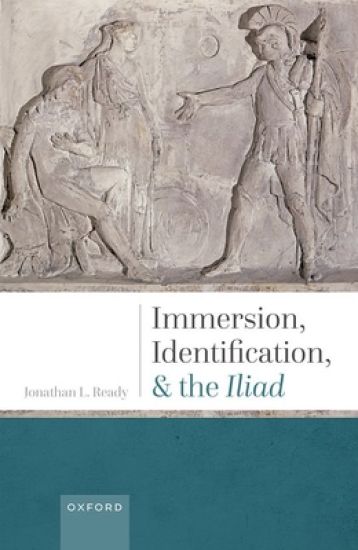
This is an open access title available under the terms of a CC BY-NC-ND 4.0 International licence. It is free to read at Oxford Scholarship Online and offered as a free PDF download from OUP and selected open access locations. Immersion, Identification, and the Iliad explains why people care about this foundational epic poem and its characters. It represents the first book-length application to the Iliad of research in communications, literary studies, media studies, and psychology on how readers of a story or viewers of a play, movie, or television show find themselves immersed in the tale and identify with the characters. Immersed recipients get wrapped up in a narrative and the world it depicts and lose track to some degree of their real-world surroundings. Identification occurs when recipients interpret the storyworld from a character's perspective, feel emotions congruent with those of the character, and root for the character to succeed. This volume situates modern research on these experiences in relation to ancient criticism on how audiences react to narratives. It then offers close readings of select episodes and detailed analyses of recurring features to show how the Iliad immerses both ancient and modern recipients and encourages them to identify with its characters. Accessible to students and researchers, to those inside and outside of classical studies, this interdisciplinary project aligns research on the Iliad with contemporary approaches to storyworlds in a range of media. It thereby opens new frontiers in the study of ancient Greek literature and helps investigators of audience engagement from antiquity to the present contextualize and historicize their own work.
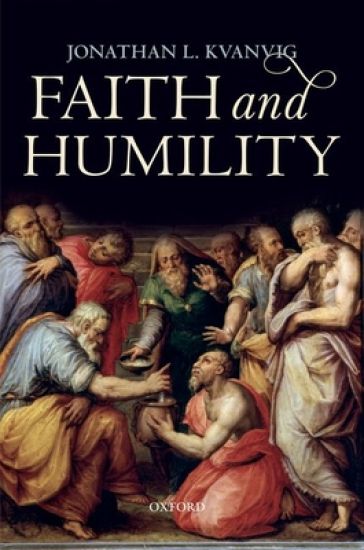
Faith and Humility is devoted to articulating the connections between the nature and value of faith and humility. The goal is to understand faith and humility in a way that does not discriminate between religious and mundane contexts, between sacred and secular. It arises from a conviction that these two character traits are important to a flourishing life, and intimately related to each other in such a way that the presence of one demands the presence of the other. In particular, the book defends the claim that each of these virtues provides a necessary, compensating balance to the potential downside of the other virtue. The result of such an inquiry, if that inquiry is successful, will require a re-orienting of discussions surrounding faith, including debates about the relationship between faith and reason.
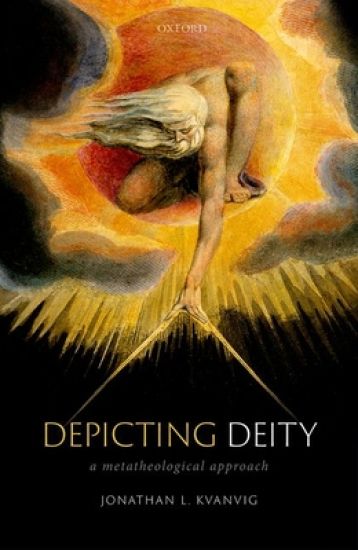
A theology aims to explicate the nature of God. A metatheology investigates more fundamental issues concerning how to structure such an intellectual endeavour, and where it should begin. Approaches that ignore this more fundamental investigation risk presupposing stances that do not withstand scrutiny, and perhaps would never have been endorsed if considered directly. Approaches that ignore the issue of fundamentality can also switch from one set of assumptions to another without noticing the change in perspective that results, giving rise to a chance of incoherence and an approach that is theoretically disorderly. This book begins with the more basic question of where to begin thinking about God and where it is best to start the project of theology. It does so in a way that offers some hope of a defensible metatheory from which a complete theology, displaying the kind of theoretical elegance and structure we find in our best scientific and philosophical theories, can be developed.
The doctrine of hell presents the most intractable version of the problem of evil, for though it might be argued that ordinary pain and evil can somehow be compensated for by the course of future experience, the pain and suffering of hell leads nowhere. This work develops an understanding of hell that is common to a broad variety of religious perspectives, and argues that the usual understandings of hell are incapable of solving the problem of hell. Kvanvig first argues that the traditional understanding of hell found in Christianity suffers from moral and epistemological inadequacies. Historically, these shortcomings lead to alternatives to the traditional doctrine of hell, such as universalism, annihilationism, or the second chance doctrine. Kvanvig shows, however, that the typical alternatives to the traditional understanding are inadequate as well. He argues that both the traditional understanding and the typical alternatives fail to solve the problem of hell because they share the common flaw of being constructed on a retributive model of hell. Kvanvig then develops a philosophical account of hell which does not depend on a retributive model and argues that it is adequate on both philosophical and theological grounds.
Jonathan L. Kvanvig presents a conception of rationality which answers to the need arising out of the egocentric predicament concerning what to do and what to believe. He does so in a way that avoids, on the one hand, reducing rationality to the level of beasts, and on the other hand, elevating it so that only the most reflective among us are capable of rational beliefs. Rationality and Reflection sets out a theory of rationality--a theory about how to determine what to think--which defends a significant degree of optionality in the story of what is reasonable for people to think, and thereby provides a framework for explaining what kinds of rational disagreement are possible. The theory is labelled Perspectivalism and it offers a unique account of rationality, one that cuts across the usual distinctions between Foundationalism and Coherentism and between Internalism and Externalism. It also differs significantly from Evidentialism, maintaining that, to the extent that rationality is connected to the notion of evidence, it is a function both of the evidence one has and what one makes of it.
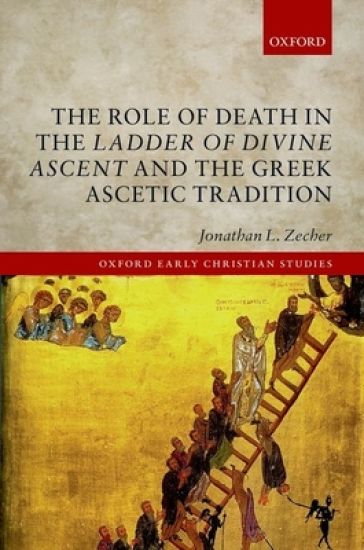
The Ladder of Divine Ascent, the work of an otherwise shadowy figure, John Climacus (meaning of the Ladder), abbot of St. Catherine's, Sinai (ca. 579-649 CE), is one of the most popular and enduring classics of Greek ascetic spiritual direction. Hailed as the great synthesis of early ascetic writings, the Ladder presents a spirituality self-consciously rooted in the literary and theological tradition of the Desert Fathers and the Great Old Men of Gaza. Despite its incredible popularity among monastic and lay readers, the Ladder is virtually unknown in scholarship. In this work, Jonathan L. Zecher offers a sustained study of the Ladder's spiritual vision, which is contextualized within an equally sustained genealogical survey of Climacus' own tradition. The Ladder is built up through the 'memory of death', a term referring to admonitions of early authors to remember one's inevitable but unknowable death and to contemplate the divine judgment which would follow to cultivate particular ascetic, Christian, lifestyles in their readers. In the literature that formed Climacus, every aspect of the 'memory of death' varied considerably, but Climacus draws these together in the Ladder so that death and the judgment which follows defines a symbolic framework within which monks reflect on their past and approach the future. Climacus also took up metaphorical practices of dying to oneself and others to craft an idea of spiritual progress in the imitation of Christ taking into account failure and frailty. At the heart of this study is the abiding question of how tradition forms, and in the Ladder is an outstanding example of how unflinching fidelity to tradition results in a creative, synthetic achievement.
Jonathan L. Kvanvig presents a conception of rationality which answers to the need arising out of the egocentric predicament concerning what to do and what to believe. He does so in a way that avoids, on the one hand, reducing rationality to the level of beasts, and on the other hand, elevating it so that only the most reflective among us are capable of rational beliefs. Rationality and Reflection sets out a theory of rationality--a theory about how to determine what to think--which defends a significant degree of optionality in the story of what is reasonable for people to think, and thereby provides a framework for explaining what kinds of rational disagreement are possible. The theory is labelled Perspectivalism and it offers a unique account of rationality, one that cuts across the usual distinctions between Foundationalism and Coherentism and between Internalism and Externalism. It also differs significantly from Evidentialism, maintaining that, to the extent that rationality is connected to the notion of evidence, it is a function both of the evidence one has and what one makes of it.
This book is devoted to articulating the connections between the nature and value of faith and humility. The goal is to understand faith and humility in a way that does not discriminate between religious and mundane contexts, between sacred and secular. It arises from a conviction that these two character traits are important to a flourishing life, and intimately related to each other in such a way that the presence of one demands the presence of the other. In particular, the book defends the claim that each of these virtues provides a necessary, compensating balance to the potential downside of the other virtue. The result of such an inquiry, if that inquiry is successful, will require a re-orienting of discussions surrounding faith, including debates about the relationship between faith and reason.
Written texts of the Iliad and the Odyssey achieved an unprecedented degree of standardization after 150 BCE, but what about Homeric texts prior to the emergence of standardized written texts? Orality, Textuality, and the Homeric Epics sheds light on that earlier history by drawing on scholarship from outside the discipline of classical studies to query from three different angles what it means to speak of Homeric poetry together with the word "text". Part I utilizes work in linguistic anthropology on oral texts and oral intertextuality to illuminate both the verbal and oratorical landscapes our Homeric poets fashion in their epics and what the poets were striving to do when they performed. Looking to folkloristics, part II examines modern instances of the textualization of an oral traditional work in order to reconstruct the creation of written versions of the Homeric poems through a process that began with a poet dictating to a scribe. Combining research into scribal activity in other cultures, especially in the fields of religious studies and medieval studies, with research into performance in the field of linguistic anthropology, part III investigates some of the earliest extant texts of the Homeric epics, the so-called wild papyri. By looking at oral texts, dictated texts, and wild texts, this volume traces the intricate history of Homeric texts from the Archaic to the Hellenistic period, long before the emergence of standardized written texts, in a comparative and interdisciplinary study that will benefit researchers in a number of disciplines across the humanities.
What expectations did the women and men living in early monastic communities carry into relationships of obedience and advice? What did they hope to achieve through confession and discipline? To explore these questions, this study shows how several early Christian writers applied the logic, knowledge, and practices of Galenic medicine to develop their own practices of spiritual direction. Evagrius reads dream images as diagnostic indicators of the soul's state. John Cassian crafts a nosology of the soul using lists of passions while diagnosing the causes of wet dreams. Basil of Caesarea pits the spiritual director against the physician in a competition over diagnostic expertise. John Climacus crafts pathologies of passions through demonic family trees, while equipping his spiritual director with a physician's toolkit and imagining the monastic space as a vast clinic. These different appropriations of medical logic and metaphors not only show us the thought-world of late antique monasticism, but they would also have decisive consequences for generations of Christian subjects who would learn to see themselves as sick or well, patients or healers, within monastic communities.
There are two common responses to skepticism, the epistemological claim that knowledge is at least non-existent and perhaps also unachievable, and both are to be avoided. So Jonathan Kvanvig argues here. The first response is to succumb to it, trying then to find some adequate basis for life that foregoes presumptions of knowledge. The second response is dismissive, viewing it as an overwrought, hyperbolic response to human limitations, so wrongheaded that nothing beyond a laconic response is needed before returning to important philosophical tasks. Avoiding these responses requires theory development on the part of skepticism and a way of characterizing sensitive fallibilism in contrast to complacent versions of it. These two tasks take up the majority of the chapters, several of which show how theory development on behalf of the skeptic needs to proceed. The hardest part of this project is to characterize the skeptical ideal for matters that we investigate through the use of defeasible reasoning, where the idea of finding an infallibilist standard looks impossible. In spite of this appearance, it is possible to characterize this ideal in terms of reasoning that puts one in full control over the possibility of error. The other task involves characterizing fallibilism in terms of this notion of full control over the possibilities of error, and then developing a version of this view that doesn't require such full control while at the same time acknowledging, predicting, and explaining how and why such full control appears whenever the language of knowledge is used. The result is an approximationist version of fallibilism that acknowledges that our knowledge is never ideal but is nonetheless close enough to the ideal to be present.
The paradox of knowability, derived from a proof by Frederic Fitch in 1963, is one of the deepest paradoxes concerning the nature of truth. Jonathan Kvanvig argues that the depth of the paradox has not been adequately appreciated. It has long been known that the paradox threatens antirealist conceptions of truth according to which truth is epistemic. If truth is epistemic, what better way to express that idea than to maintain that all truths are knowable? In the face of the paradox, however, such a characterization threatens to undermine antirealism. If Fitch's proof is valid, then one can be an antirealist of this sort only by endorsing the conclusion of the proof that all truths are known. Realists about truth have tended to stand on the sidelines and cheer the difficulties faced by their opponents from Fitch's proof. Kvanvig argues that this perspective is wholly unwarranted. He argues that there are two problems raised by the paradox, one that threatens antirealism about truth and the other that threatens everybody's view about truth, realist or antirealist. The problem facing antirealism has had a number of proposed solutions over the past 40 years, and the results have not been especially promising with regard to the first problem. The second problem has not even been acknowledged, however, and the proposals regarding the first problem are irrelevant to the second problem. This book thus provides a thorough investigation of the literature on the paradox, and also proposes a solution to the deeper of the two problems raised by Fitch's proof. It provides a complete picture of the paradoxicality that results from Fitch's proof, and presents a solution to the paradox that claims to address both problems raised by the original proof.
The paradox of knowability, derived from a proof by Frederic Fitch in 1963, is one of the deepest paradoxes concerning the nature of truth. Jonathan Kvanvig argues that the depth of the paradox has not been adequately appreciated. It has long been known that the paradox threatens antirealist conceptions of truth according to which truth is epistemic. If truth is epistemic, what better way to express that idea than to maintain that all truths are knowable? In the face of the paradox, however, such a characterization threatens to undermine antirealism. If Fitch's proof is valid, then one can be an antirealist of this sort only by endorsing the conclusion of the proof that all truths are known. Realists about truth have tended to stand on the sidelines and cheer the difficulties faced by their opponents from Fitch's proof. Kvanvig argues that this perspective is wholly unwarranted. He argues that there are two problems raised by the paradox, one that threatens antirealism about truth and the other that threatens everybody's view about truth, realist or antirealist. The problem facing antirealism has had a number of proposed solutions over the past 40 years, and the results have not been especially promising with regard to the first problem. The second problem has not even been acknowledged, however, and the proposals regarding the first problem are irrelevant to the second problem. This book thus provides a thorough investigation of the literature on the paradox, and also proposes a solution to the deeper of the two problems raised by Fitch's proof. It provides a complete picture of the paradoxicality that results from Fitch's proof, and presents a solution to the paradox that claims to address both problems raised by the original proof.
Jonathan Kvanvig presents a compelling new work in philosophical theology on the universe, creation, and the afterlife. Organised thematically by the endpoints of time, the volume begins by addressing eschatological matters--the doctrines of heaven and hell--and ends with an account of divine deliberation and creation. Kvanvig develops a coherent theistic outlook which reconciles a traditional, high conception of deity, with full providential control over all aspects of creation, with full providential control over all aspects of creation, with a conception of human beings as free and morally responsible. The resulting position and defense is labeled "Philosophical Arminianism," and deserves attention in a broad range of religious traditions.