Kirjojen hintavertailu. Mukana 11 342 296 kirjaa ja 12 kauppaa.

Kirjahaku

Etsi kirjoja tekijän nimen, kirjan nimen tai ISBN:n perusteella.

1000 tulosta hakusanalla Jonathan M Hughes

Reuben and the Amazing Mind Machine

Reuben and the Amazing Mind Machine

Jonathan M Hughes

Matador
2021
nidottu
Retirement can be boring, but not so for Reuben’s Gramps! In the time he now has to spare, this retired professor of neuroscience sets about to build a machine that can amazingly be programmed to change people’s behaviour! To make Reuben believe in the machine, Gramps tries it out on a pompous next-door neighbour. Apart from a few glitches, the machine seems to work successfully. Gramps treats Reuben and his best friend Simon and local, accident-prone gardener Bert, (known in the village as Blundergutts), to a day out in London to experiment more with the machine. In Victoria Station, they see Ted, an unpopular man from their village, is on his way to play the cymbals, for the first time, in a concert. Gramps uses this unexpected opportunity to interfere with Ted’s performance by causing him to clash the cymbals at the wrong moment, to disrupt the concert and turn proud Ted into an absolute failure. Reuben and Simon are always picked on at school by Mr. Pride, their horrible headteacher. During a government inspection at their school, Reuben 'borrows' Gramps' spare machine and creates absolute chaos, causing the immediate suspension of Mr. Pride. Is there a limit to the amazing mind machine - or should there be?! Find out as Reuben and co test their limits and discover what a mind machine can really do!
American Economic History: The Development of a National Economy

American Economic History: The Development of a National Economy

Lance Edwin Davis; Jonathan R. T. Hughes; Duncan M. McDougall

Literary Licensing, LLC
2012
sidottu
American Economic History: The Development Of A National Economy by Lance Edwin Davis is a comprehensive study of the economic history of the United States. The book covers the period from the colonial era to the present day, examining the development of the American economy from a small, agricultural society to a global economic superpower.The author explores the major economic events and trends that have shaped the American economy, including the Industrial Revolution, the Great Depression, and the rise of the service sector. He also examines the role of government in regulating the economy, the impact of technological innovation on economic growth, and the changing nature of work and employment.Throughout the book, Davis emphasizes the importance of understanding the historical context of economic events and policies. He argues that economic history provides valuable insights into the challenges and opportunities facing the American economy today.Written in a clear and accessible style, American Economic History is an essential resource for students, scholars, and anyone interested in understanding the economic history of the United States.Edited By Lloyd G. Reynolds. The Irwin Series In Economics.This scarce antiquarian book is a facsimile reprint of the old original and may contain some imperfections such as library marks and notations. Because we believe this work is culturally important, we have made it available as part of our commitment for protecting, preserving, and promoting the world's literature in affordable, high quality, modern editions, that are true to their original work.
The Vital Few

The Vital Few

Jonathan Hughes

Oxford University Press Inc
1986
nidottu
The Vital Few, a study of the contribution of entrepreneurs to the American economy, provides portraits of the men and women whose individual enterprise has helped to establish the character of the American businessperson and to carry our economy forward from colonial times. Examining such legendary figures as William Penn, Eli Whitney, Henry Ford, and J. Pierpont Morgan in their social and economic environment, Jonathan Hughes illuminates each period of American economic history and provides insights into the workings of American business and the special qualities required of its super-achievers. Taking into account such dramatic changes in the economy as the explosive growth of government and the puzzling effects of "stagflation," Hughes has now expanded his original volume. The new edition includes two additional biographies and a short essay on the nature of bureaucracy in both the government and the private sector. Both biographies are of "bureaucratic entrepreneurs", whose work in the federal government represents the two most prominent trends in government economics. Mary Switzer's 48-year career demonstrates the ways in which the modern welfare state has developed. First a catalyst then a major force in establishing social programs and institutions, she is in large part responsible for the existence of the American welfare state. Marriner Eccles's career, on the other hand, shows the evolution of "compensatory" fiscal and monetary policies from the New Deal to the Korean War. A self-made millionaire who was appointed to a high-level job in the federal government, Eccles quit his post after 1950, convinced that American economic policy was hopelessly inflationary and economically destructive. With these new additions, The Vital Few, long a source of inspiration and economic interest, is more accessible and useful than ever.
Ecology and Historical Materialism

Ecology and Historical Materialism

Jonathan Hughes

Cambridge University Press
2000
sidottu
This book challenges the widely-held view that Marxism is unable to deal adequately with environmental problems. Jonathan Hughes considers the nature of environmental problems, and the evaluative perspectives that may be brought to bear on them. He examines Marx's critique of Malthus, his method, and his materialism, interpreting the latter as a recognition of human dependence on nature. Central to the book's argument is an interpretation of the 'development of the productive forces' which takes account of the differing ecological impacts of different productive technologies while remaining consistent with the normative and explanatory roles that this concept plays within Marx's theory. Turning finally to Marx's vision of a society founded on the communist principle 'to each according to his needs', the author concludes that the underlying notion of human need is one whose satisfaction presupposes only a modest and ecologically feasible expansion of productive output.
Ecology and Historical Materialism

Ecology and Historical Materialism

Jonathan Hughes

Cambridge University Press
2000
pokkari
This book challenges the widely-held view that Marxism is unable to deal adequately with environmental problems. Jonathan Hughes considers the nature of environmental problems, and the evaluative perspectives that may be brought to bear on them. He examines Marx’s critique of Malthus, his method, and his materialism, interpreting the latter as a recognition of human dependence on nature. Central to the book’s argument is an interpretation of the ‘development of the productive forces’ which takes account of the differing ecological impacts of different productive technologies while remaining consistent with the normative and explanatory roles that this concept plays within Marx’s theory. Turning finally to Marx’s vision of a society founded on the communist principle ‘to each according to his needs’, the author concludes that the underlying notion of human need is one whose satisfaction presupposes only a modest and ecologically feasible expansion of productive output.
Arthurian Myths and Alchemy: The Kingship of Edward IV

Arthurian Myths and Alchemy: The Kingship of Edward IV

Jonathan Hughes

The History Press Ltd
2002
nidottu
Edward IV ruled England for twenty-three years through the Wars of the Roses but has always been overshadowed by his younger brother Richard III, who reigned for only two. In this controversial new book award-winning author Jonathan Hughes examines Edward's emotional and spiritual life for the first time and reveals an equally complicated and charismatic character: alongside great energy, intelligence, inspirational leadership and charm Edward displayed darker characteristics such as compulsive womanising and eating, and tendencies towards cruelty, avarice, inertia, indecision and melancholy. Hughes' explanation of the light and dark sides of Edward's personality highlights the cultural significance in the Yorkist court of Arthurian myths, classical legends and Roman history, and the concepts of friendship, courtly love and melancholia.
Dante’s Divine Comedy in Early Renaissance England

Dante’s Divine Comedy in Early Renaissance England

Jonathan Hughes

Bloomsbury Academic
2022
nidottu
Dante's Divine Comedy in Early Renaissance England compares the intellectual, emotional, and religious world of Dante in 13th-century Florence with that of a group of English intellectuals gathered around Humphrey, Duke of Gloucester, uncle of the King, Henry VI. Here, Jonathan Hughes establishes that there was a Renaissance in 15th-century England, encouraged by the discovery and translations of works of Greek philosophers and developments in science and medicine; and that vernacular writers in Gloucester’s circle, such as John Lydgate and Robert Hoccleve, were of fundamental importance in exploring the meaning of the self and man’s relationship with the natural world and the classical past. However, the appearance in 15th-century England of Dante’s 'Commedia', the most popular work of the Middle Ages, served to remind writers and readers of the cost of intellectual enquiry: the loss of faith in a harmonious and beautiful world; the redemptive power of the love of a woman; and the tangible presence of an afterlife.Engagingly written and meticulously researched, this innovative study shines a new perspective on Dante scholarship as well as offering a unique anaylsis of intellectual thought and culture in 15th-century England.
Dante’s Divine Comedy in Early Renaissance England

Dante’s Divine Comedy in Early Renaissance England

Jonathan Hughes

Bloomsbury Academic
2022
sidottu
Dante's Divine Comedy in Early Renaissance England compares the intellectual, emotional, and religious world of Dante in 13th-century Florence with that of a group of English intellectuals gathered around Humphrey, Duke of Gloucester, uncle of the King, Henry VI. Here, Jonathan Hughes establishes that there was a Renaissance in 15th-century England, encouraged by the discovery and translations of works of Greek philosophers and developments in science and medicine; and that vernacular writers in Gloucester’s circle, such as John Lydgate and Robert Hoccleve, were of fundamental importance in exploring the meaning of the self and man’s relationship with the natural world and the classical past. However, the appearance in 15th-century England of Dante’s 'Commedia', the most popular work of the Middle Ages, served to remind writers and readers of the cost of intellectual enquiry: the loss of faith in a harmonious and beautiful world; the redemptive power of the love of a woman; and the tangible presence of an afterlife.Engagingly written and meticulously researched, this innovative study shines a new perspective on Dante scholarship as well as offering a unique anaylsis of intellectual thought and culture in 15th-century England.
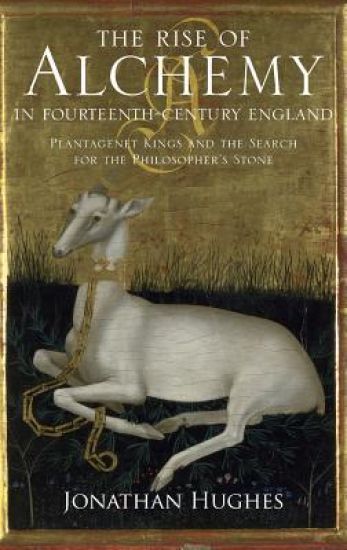
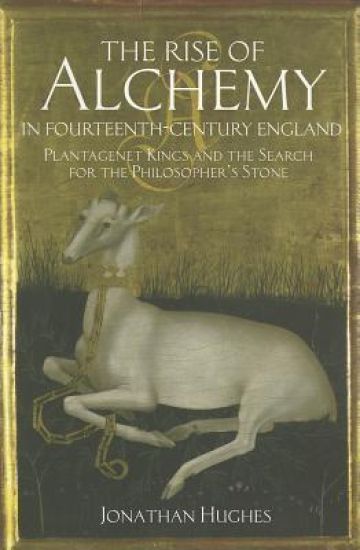
The Rise of Alchemy in Fourteenth-Century England

The Rise of Alchemy in Fourteenth-Century England

Jonathan Hughes

Continuum Publishing Corporation
2012
nidottu
This is the first book to explore the importance of alchemy and its links to the occult in the period between 1320 and 1400. Alchemists did more than try to transmute base metals into gold: they studied planetary influences on metals and people, refined plants and minerals in the search for medicines and advocated the regeneration of matter and spirit. This book illustrates how this new branch of thought became increasingly popular as the practical and theoretical knowledge of alchemists spread throughout England. Adopted by those in court and the circles of nobility for their own physical and spiritual needs, it was adapted for the diagnosis and therapeutic treatment of the illnesses of the body politic and its head, the king. This is the first work to synthesize all aspects of alchemy and show its contribution to intellectual, social and political life in the fourteenth century. Hughes explores a rich body of manuscripts to reveal the daily routines of the alchemist and his imaginative mindscape, and considers the contribution of alchemy to the vernacular culture and political debate, leading to a reassessment of the intellectual life of the middle ages.