Kirjojen hintavertailu. Mukana 11 244 527 kirjaa ja 12 kauppaa.

Kirjahaku

Etsi kirjoja tekijän nimen, kirjan nimen tai ISBN:n perusteella.

1000 tulosta hakusanalla Jonathan M. Hess

Middlebrow Literature and the Making of German-Jewish Identity

Middlebrow Literature and the Making of German-Jewish Identity

Jonathan M. Hess

Stanford University Press
2010
sidottu
For generations of German-speaking Jews, the works of Goethe and Schiller epitomized the world of European high culture, a realm that Jews actively participated in as both readers and consumers. Yet from the 1830s on, Jews writing in German also produced a vast corpus of popular fiction that was explicitly Jewish in content, audience, and function. Middlebrow Literature and the Making of German-Jewish Identity offers the first comprehensive investigation in English of this literature, which sought to navigate between tradition and modernity, between Jewish history and the German present, and between the fading walls of the ghetto and the promise of a new identity as members of a German bourgeoisie. This study examines the ways in which popular fiction assumed an unprecedented role in shaping Jewish identity during this period. It locates in nineteenth-century Germany a defining moment of the modern Jewish experience and the beginnings of a tradition of Jewish belles lettres that is in many ways still with us today.

Deborah and Her Sisters

Deborah and Her Sisters

Jonathan M. Hess

University of Pennsylvania Press
2017
sidottu
Before Fiddler on the Roof, before The Jazz Singer, there was Deborah, a tear-jerking melodrama about a Jewish woman forsaken by her non-Jewish lover. Within a few years of its 1849 debut in Hamburg, the play was seen on stages across Germany and Austria, as well as throughout Europe, the British Empire, and North America. The German-Jewish elite complained that the playwright, Jewish writer S. H. Mosenthal, had written a drama bearing little authentic Jewish content, while literary critics protested that the play lacked the formal coherence of great tragedy. Yet despite its lackluster critical reception, Deborah became a blockbuster, giving millions of theatergoers the pleasures of sympathizing with an exotic Jewish woman. It spawned adaptations with titles from Leah, the Forsaken to Naomi, the Deserted, burlesques, poems, operas in Italian and Czech, musical selections for voice and piano, a British novel fraudulently marketed in the United States as the original basis for the play, three American silent films, and thousands of souvenir photographs of leading actresses from Adelaide Ristori to Sarah Bernhardt in character as Mosenthal's forsaken Jewess. For a sixty-year period, Deborah and its many offshoots provided audiences with the ultimate feel-good experience of tearful sympathy and liberal universalism. With Deborah and Her Sisters, Jonathan M. Hess offers the first comprehensive history of this transnational phenomenon, focusing on its unique ability to bring Jews and non-Jews together during a period of increasing antisemitism. Paying careful attention to local performances and the dynamics of transnational exchange, Hess asks that we take seriously the feelings this commercially successful drama provoked as it drove its diverse audiences to tears. Following a vast paper trail in theater archives and in the press, Deborah and Her Sisters reconstructs the allure that Jewishness held in nineteenth-century popular culture and explores how the Deborah sensation generated a liberal culture of compassion with Jewish suffering that extended beyond the theater walls.
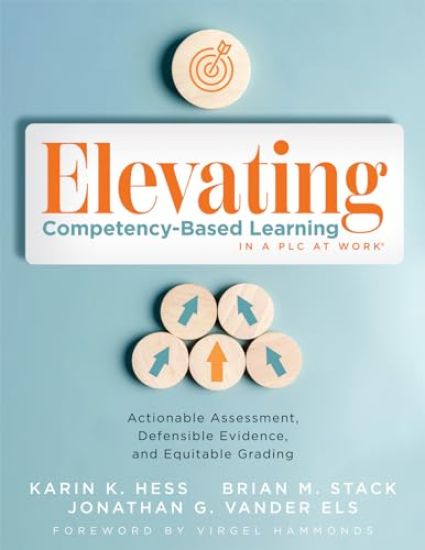
Elevating Competency-Based Learning in a PLC at Work(r): Actionable Assessment, Defensible Evidence, and Equitable Grading (Build a Defensible Body of
When it comes to tracking student progress, not all evidence is created equal. Using the IMPACT framework--illumination, multiple sources and opportunities, pedagogies that are learner-centered, assessment practices, collective actions, and transparency--K-12 leaders and teachers can forge a defensible body of evidence for learning that is central to competency-based learning systems. With tools and strategies, this book is an essential guide for deeper student-centered learning. K-12 school leaders and teachers will: Learn how IMPACT can help them build a rock-solid body of evidence, ensuring their schools meet all accountability measures Discover how PLCs can support evidence collection and drive data-driven decision making Design assessments that illuminate deep learning and empower learners, resulting in high-quality work Understand how to implement diverse evidence sources--from rubrics and portfolios to personalized learning plans--to paint a complete picture of student progress Master the art of equitable, evidence-based grading and reporting practices that support every learner's unique journey Contents: Introduction: A Guiding Framework to IMPACT Actionable Assessment, Defensible Evidence, and Equitable Grading Chapter 1: Shifting to Competency-Based Learning to Build Defensible Evidence Chapter 2: Supporting Building a Defensible Body of Evidence With PLC Structures and Processes Chapter 3: Exploring How a Student's Body of Evidence Represents Balanced Assessment Practices Chapter 4: Designing Assessments That Illuminate Deep Learning, Empower Learners, and Result in High-Quality Work Chapter 5: Designing and Using Competency-Based Evaluation Tools Chapter 6: Building a Defensible Body of Evidence Chapter 7: Building Protocols for Equitable, Evidence-Based Grading and Reporting Epilogue: Considering Final Thoughts to Assist Teams as They Refine and Deepen Their Work Appendix: Defensible Body of Evidence Tools References and Resources Index
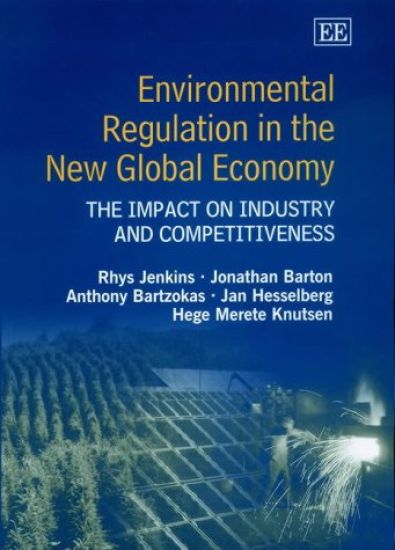
Environmental Regulation in the New Global Economy

Environmental Regulation in the New Global Economy

Rhys Jenkins; Jonathan Barton; Anthony Bartzokas; Jan Hesselberg; Hege Merete Knutsen

Edward Elgar Publishing Ltd
2002
sidottu
Can economic globalization and environmental protection co-exist or does globalization inevitably lead to environmental degradation? How have firms in Europe responded to increased environmental regulation in the face of growing international competition, particularly from newly industrializing and transition economies?This book attempts to answer these questions using case studies of three pollution-intensive industries: iron and steel, leather tanning, and fertilizers. Based on in-depth interviews with managers and regulators in Western and Eastern Europe, Asia, Africa and Latin America, the book illustrates the variety of responses to the conflicting pressures of globalization and environmental protection at corporate and industry levels. It also considers the impact which shifting competitive advantage has on the environment in newly industrialized countries and transition economies.Environmental managers and regulators of national and international environmental agencies will find Environmental Regulation in the New Global Economy of great interest, as will, academics and students of economics, environmental management, business studies, geography and international relations.
Environmental Regulation in the New Global Economy

Environmental Regulation in the New Global Economy

Rhys Jenkins; Jonathan Barton; Anthony Bartzokas; Jan Hesselberg; Hege Merete Knutsen

Edward Elgar Publishing Ltd
2004
nidottu
Can economic globalization and environmental protection co-exist or does globalization inevitably lead to environmental degradation? How have firms in Europe responded to increased environmental regulation in the face of growing international competition, particularly from newly industrializing and transition economies?This book attempts to answer these questions using case studies of three pollution-intensive industries: iron and steel, leather tanning, and fertilizers. Based on in-depth interviews with managers and regulators in Western and Eastern Europe, Asia, Africa and Latin America, the book illustrates the variety of responses to the conflicting pressures of globalization and environmental protection at corporate and industry levels. It also considers the impact which shifting competitive advantage has on the environment in newly industrialized countries and transition economies.Environmental managers and regulators of national and international environmental agencies will find Environmental Regulation in the New Global Economy of great interest, as will, academics and students of economics, environmental management, business studies, geography and international relations.
Decadence and decay : from ancient Rome to the present

Decadence and decay : from ancient Rome to the present

Faramerz Dabhiowala; Melanie Grundmann; Richard Whatmore; Mattias Hessérus; Adoreé Villany; Andrew Huddleston; Saul David; Andrew Preston; Daniela Cammack; Pernille Røge; Adam Tooze; J.R. McNeill; Jonathan Rees; Robert Beuregard; William O’Reilly; Michael Nelson; Peter Heather; Robert Coates-Stephans; Neil McLynn; Richard Miles

Bokförlaget Stolpe
2019
sidottu
The fear of living in the end times has a long history. In Decadence and Decay, a group of distinguished international scholars describe how societies over time have handled and interpreted the concept of decline. In times of unrest and transition, declinism the notion that a culture or civilisation is headed towards irreversible decline tends to capture the public imagination. The essays in this volume address how notions of decadence and decay have been used both as opprobrium and as a form of self-definition and empowerment an instrument to protect individualism against collectivistic oppression. From ancient Rome to the present, ideas and expressions of decadence and decay have played a critical role in how we perceive the world.
Jonathan M. Davis: Farmer in the State House

Jonathan M. Davis: Farmer in the State House

Roger Wheeler Corley

Hassell Street Press
2021
nidottu
This work has been selected by scholars as being culturally important and is part of the knowledge base of civilization as we know it.This work is in the public domain in the United States of America, and possibly other nations. Within the United States, you may freely copy and distribute this work, as no entity (individual or corporate) has a copyright on the body of the work.Scholars believe, and we concur, that this work is important enough to be preserved, reproduced, and made generally available to the public. To ensure a quality reading experience, this work has been proofread and republished using a format that seamlessly blends the original graphical elements with text in an easy-to-read typeface.We appreciate your support of the preservation process, and thank you for being an important part of keeping this knowledge alive and relevant.
A Burden of Genius: The Collected Plays of Jonathan M. Vick

A Burden of Genius: The Collected Plays of Jonathan M. Vick

Jonathan M. Vick

Createspace Independent Publishing Platform
2014
nidottu
Five of award-winning playwright, Jonathan M. Vick's plays, together in one volume. *INCLUDING THE NEVER-BEFORE PUBLISHED AWARD WINNING PLAY "BRIDGES TO NOWHERE"* Playwright and author, Jonathan M. Vick, explores the darker side of humanity through side-splitting humor and cutting drama in this collection of plays. This volume includes his most produced play, "An Empty Chest & A Drawer Full of Fingers", as well as his standing-room only hit holiday comedy, "Kentucky Claus & The Rebel Elves" and the never before published, award-winning, "Bridges To Nowhere". BroadwayWorld.com has called his work "twisted and seductive" that "really draws you in and makes you want more".
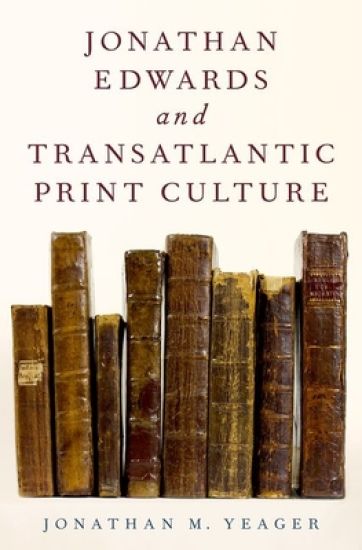
Jonathan Edwards and Transatlantic Print Culture

Jonathan Edwards and Transatlantic Print Culture

Jonathan M. Yeager

Oxford University Press Inc
2016
sidottu
On March 20, 1760, a fire broke out in the Cornhill district of Boston, destroying nearly 350 buildings in its wake. One of the ruined shops belonged to the eminent Boston bookseller Daniel Henchman, who had published some of Jonathan Edwards's most important works, including The Life of Brainerd in 1749. Less than one year after the Great Fire of 1760, Henchman died. Edwards's chief printer Samuel Kneeland and literary agent and editor, Thomas Foxcroft, had also passed away by the end of the decade, marking the end of an era. Throughout Edwards's lifetime, and in the years after his death in 1758, most of the first editions of his books had been published in Boston. But with the deaths of Henchman, Kneeland, and Foxcroft, the publications of Edwards's writings shifted to Britain, where a new crop of booksellers, printers, and editors took on the task of issuing posthumous editions and reprints of his books. In Jonathan Edwards and Transatlantic Print Culture, religious historian Jonathan Yeager tells the story of how Edwards's works were published, including the people who were involved in their publication and their motivations. This book explores what the printing, publishing, and editing of Jonathan Edwards's publications can tell us about religious print culture in the eighteenth century, how the way that his books were put together shaped society's understanding of him as an author, and how details such as the formats, costs, quality of paper, length, bindings, and the number of reprints and abridgements of his works affected their reception.
Innovators, Firms, and Markets

Innovators, Firms, and Markets

Jonathan M. Barnett

Oxford University Press Inc
2021
sidottu
Conventional wisdom holds that robust enforcement of intellectual property (IP) right suppress competition and innovation by shielding incumbents against the entry threats posed by smaller innovators. That assumption has driven mostly successful efforts to weaken US patent protections for over a decade. This book challenges that assumption. In Innovators, Firms, and Markets, Jonathan M. Barnett confronts the reigning policy consensus by analyzing the relationship between IP rights, firm organization, and market structure. Integrating tools and concepts from IP and antitrust law, institutional economics, and political science, real-world understandings of technology markets, and empirical insights from the economic history of the US patent system, Barnett provides a novel framework for IP policy analysis. His cohesive framework explains how robust enforcement of IP rights enables entrepreneurial firms, which are rich in ideas but poor in capital, to secure outside investment and form the cooperative relationships needed to transform a breakthrough innovation into a marketable product. The history of the US patent system and firms' lobbying tendencies show that weakening patent protections removes a critical tool for entrants to challenge incumbents that enjoy difficult-to-match commercialization and financing capacities. Counterintuitively, the book demonstrates that weak IP rights are often the best entry barrier the state can provide to protect entrenched incumbents against disruptive innovators. By challenging common assumptions and offering a powerful integrated framework for understanding how innovation happens and the law's role in that process, Barnett's Innovators, Firms, and Markets provides important insights into how IP law shapes our economy.
Twentieth Century Design

Twentieth Century Design

Jonathan M. Woodham

Oxford University Press
1997
nidottu
The most famous designs of the twentieth century are not those in museums, but in the marketplace. The Coca-Cola bottle and the McDonald's logo are known all over the world, and designs like the modernistic `Frankfurt Kitchen' of 1926, or the 1954 streamlined and tail-finned Oldsmobile, or `Blow', the inflatable chair ubiquitous in the late sixties, tell us more about our culture than a narrowly-defined canon of classics. Drawing on the most up-to-date scholarship (not only in design history but also in social anthropology and women's history), Jonathan Woodham takes a fresh look at the wider issues of design and industrial culture throughout Europe, Scandinavia, North America, and the Far East. He explores themes such as national identity, the `Americanisation' of ideology and business methods, the rise of the multi-nationals, Pop and Postmodernism, and contemporary ideas of nostalgia and heritage, and sets the proliferation of everyday design against the writing of critics as different as Nikolaus Pevsner, the champion of Modernism, and Vance Packard, author of The Hidden Persuaders. In the history which emerges design is clearly seen for what it is: the powerful and complex expression of aesthetic, social, economic, political, and technological forces.
Ancient Canaan and Israel

Ancient Canaan and Israel

Jonathan M Golden

Oxford University Press Inc
2009
nidottu
Where did the Israelites originate? What was the fate of the Canaanites? In this revealing introduction, Jonathan M. Golden tackles these and other hotly debated questions. Drawing on the extensive and often surprising archeological record, he looks at daily life in antiquity, providing rich portraits of the role of women, craft production, metallurgy, technology, political and social organization, trade, and religious practices. Golden traces the great religious traditions that emerged in this region back to their most ancient roots, drawing on the evidence of scriptures and other texts as well as the archeological record. Though the scriptures stress the primacy of Israel, the author considers the Canaanites and Philistines as well, examining the differences between highland and coastal cultures and the cross-fertilization between societies. He offers a clear, objective look at the evidence for the historical accuracy of the biblical narrative, based on the latest thinking among archeologists worldwide.
The Big Steal

The Big Steal

Jonathan M. Barnett

OXFORD UNIVERSITY PRESS INC
2025
sidottu
In The Big Steal, Jonathan Barnett documents the unusual confluence of ideological commitments and business interests behind the across-the-board dilution of legal protections for inventors and artists under U.S. patent and copyright law. Concurrently with the rise of the digital economy and platform-based markets, the Supreme Court, Congress, and antitrust regulators significantly weakened legal protections against the unauthorized use of technological inventions and creative works. Under the popular slogan that "information wants to be free," significant portions of the scholarly and tech communities advocated and welcomed the erosion of property rights in knowledge markets. This policy shift often relied on incomplete or premature findings that concerning the impact of robust intellectual property rights on innovation markets. Through a rich analysis that draws on law, economics, and political science, and using evidence from a wide range of technology and creative markets, Barnett shows that the depropertization of intellectual assets poses a risk to the U.S. and global innovation ecosystem by shifting economic value toward digital intermediaries and vertically integrated entities and away from the technology and content originators that drive the most robust knowledge economies.
Andrew Jackson

Andrew Jackson

Jonathan M. Atkins

Oxford University Press
2025
sidottu
Few today think of Andrew Jackson, the American military hero and president, as a religious man. Nevertheless, Jackson considered himself a Christian throughout his life. Raised a "rigid presbeterian," Jackson's mother wanted her son to grow up to become a clergyman, and despite suffering tragedies and losing his family in the American Revolution, Jackson never rejected the fundamental Christian teachings of his youth. Although he gained notoriety as a rakish young man, religion's influence on him ebbed and flowed as he established himself as part of the South's planter elite. With his devout wife, Rachel, he attended church and knew his Bible and religious subjects well, and while his determination to preserve his reputation involved him in numerous personal conflicts--including a duel that led to his killing a rival--he blended the principles of the antebellum South's honor-based culture with his belief in a traditional, orthodox version of Christianity. Likewise, he easily reconciled his religion with his ownership of slaves and his advocacy of Native American removal, and while he equated his enemies with the forces of evil, he always attributed his military and political accomplishments to the blessings of Providence. As he aged, Jackson became more devout, but he never experienced a dramatic conversion--contradicting the expectations of the leading revivalists of his era's Second Great Awakening--and he consistently promoted religious liberty and separation of church and state as core republican principles. Ultimately, Jackson's faith reflected a version of Christianity widespread in his era, and his frequent appeals for divine guidance and for God's blessing on his nation further encouraged the development of an American civil religion.
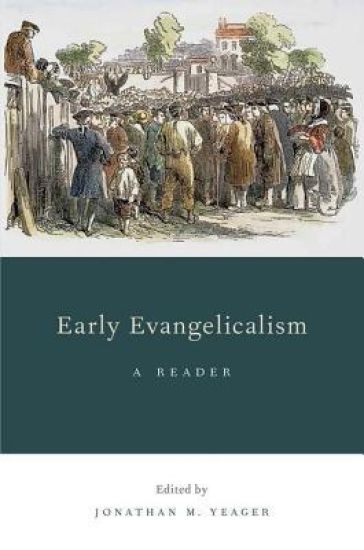
Early Evangelicalism

Early Evangelicalism

Jonathan M. Yeager

Oxford University Press Inc
2013
sidottu
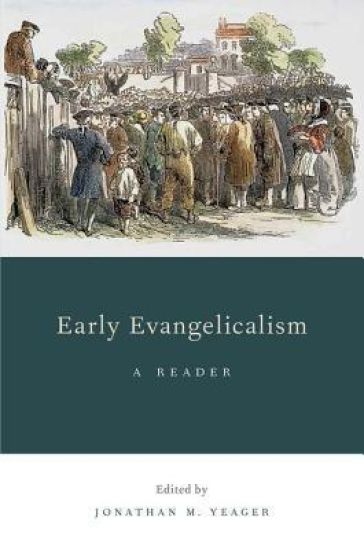
Evangelicalism has played a prominent role in western religion since the dawn of modernity. Coinciding with the emergence of the Enlightenment in America and Europe, evangelicalism flourished during the transatlantic revivals of the eighteenth century. In addition to adopting Protestantism's core beliefs of justification by faith, scripture alone, and the priesthood of believers, early evangelicals emphasized conversion and cross-cultural missions to a greater extent than Christians of previous generations. Most people today associate early evangelicalism with only a few of its leaders. Yet this was a religious movement that involved more people than simply Jonathan Edwards, John Wesley, and George Whitefield. Early evangelicals were Anglicans, Baptists, Congregationalists, Methodists, Moravians, and Presbyterians and could be found in America, Canada, Great Britain, and Western Europe. They published hymns, historical works, poems, political pamphlets, revival accounts, sermons, and theological treatises. They recorded their conversion experiences and kept diaries and journals that chronicled their spiritual development. Early Evangelicalism: A Reader is an anthology that introduces a host of important religious figures. After brief biographical sketches of each author, this book offers over sixty excerpts from a wide range of well-known and lesser-known Protestant Christians, representing a variety of denominations, geographical locations, and underrepresented groups in order to produce the most comprehensive sourcebook of its kind.
Early Evangelicalism

Early Evangelicalism

Jonathan M. Yeager

Oxford University Press Inc
2013
nidottu
Evangelicalism has played a prominent role in western religion since the dawn of modernity. Coinciding with the emergence of the Enlightenment in America and Europe, evangelicalism flourished during the transatlantic revivals of the eighteenth century. In addition to adopting Protestantism's core beliefs of justification by faith, scripture alone, and the priesthood of believers, early evangelicals emphasized conversion and cross-cultural missions to a greater extent than Christians of previous generations. Most people today associate early evangelicalism with only a few of its leaders. Yet this was a religious movement that involved more people than simply Jonathan Edwards, John Wesley, and George Whitefield. Early evangelicals were Anglicans, Baptists, Congregationalists, Methodists, Moravians, and Presbyterians and could be found in America, Canada, Great Britain, and Western Europe. They published hymns, historical works, poems, political pamphlets, revival accounts, sermons, and theological treatises. They recorded their conversion experiences and kept diaries and journals that chronicled their spiritual development. Early Evangelicalism: A Reader is an anthology that introduces a host of important religious figures. After brief biographical sketches of each author, this book offers over sixty excerpts from a wide range of well-known and lesser-known Protestant Christians, representing a variety of denominations, geographical locations, and underrepresented groups in order to produce the most comprehensive sourcebook of its kind.