Indigenous people in the New World referred to maize as 'Our Mother', 'Our Life' and 'She Who Sustains Us'. Originating in Mesoamerica 9,000 years ago, corn or maize now grows in 160 countries. Michael Owen Jones traces the transportation of corn to the Old World by Christopher Columbus, and its rapid distribution throughout Europe, Africa and Asia that followed. He describes many of the remarkable culinary uses of corn, from the Chilean savoury pie pastel de choclo to Japanese corn soup, Mexican tamales and the South African cracked hominy dish umngqusho, favoured by former president Nelson Mandela. While Jones addresses the controversies surrounding maize, he also writes about the many ways corn is celebrated.
A lavishly illustrated exploration of quilting across six generations. ""Mary Black's Family Quilts"" utilizes a remarkable collection of sixteen quilts to tell the story of a family through six generations and to document with scholarly and aesthetic insights the material behaviors associated with quilting traditions. The daughter of a prominent farmer, Mary Louisa Snoddy Black (1860-1927) is remembered in the Spartanburg, South Carolina, region for the hospital named in her honor and for the philanthropic foundation that continues to support community health and wellness. Laurel Horton explores the even more tangible legacy Black left to her descendants - trunks full of quilts made by the Black family women, each labeled with detailed information about its origin and significance. Pairing the information from the labels with research culled from interviews, letters, and public documents, Horton stitches together the family's history across the fabric of two centuries as she explores the roles of women as keepers of home, hearth, and history in nineteenth- and twentieth-century America. Valuable both as artistic creations and as historical artifacts, the Black family quilts reflect decades of work, familial interactions, economic philosophy, and personal and communal values. Suggesting that quilts were exchanged as a mode of currency in an informal, female-centered economy, Horton uncovers the clues they hold about the people who made and used them in their daily lives. From the whole-cloth quilt made by Black's great-grandmother around 1850 to examples from the early twentieth century, Horton traces changes in style, material, and functions of quilts. In doing so, she dispels popular misconceptions associated with these pieces of Americana. ""Mary Black's Family Quilts"" also includes a foreword by Michael Owen Jones, professor of culture and performance, University of California, Los Angeles, and author of Craftsman of the Cumberlands: Tradition and Creativity.
Gaining a better understanding of the way organizations work through the study of the symbols connected to them is the subject of Studying Organizational Symbolism. Michael Owen Jones briefly discusses the most obvious symbolic aspects of organizations--corporate logos, office sizes, use of titles--but focuses on the less obvious but crucial aspect of expressive forms of symbolism--storytelling, institutional jargon, and workplace personalization, among others. Jones carefully defines organizational symbolism and then explains the various methodologies that assist the researcher in documenting it. Finally, he examines the symbolism inherent in doing research on organizations. Researchers interested in any facet of organizational studies will find Studying Organizational Symbolism to be a useful and necessary guide.
In Frankenstein Was a Vegetarian: Essays on Food Choice, Identity, and Symbolism, Michael Owen Jones tackles topics often overlooked in foodways. At the outset he notes it was Victor Frankenstein’s "daemon" in Mary Shelley’s novel that advocated vegetarianism, not the scientist whose name has long been attributed to his creature. Jones explains how we communicate through what we eat, the connection between food choice and who we are or want to appear to be, the ways that many of us self-medicate moods with foods, and the nature of disgust. He presents fascinating case studies of religious bigotry and political machinations triggered by rumored bans on pork, the last meal requests of prisoners about to be executed, and the Utopian vision of Percy Bysshe Shelley, one of England’s greatest poets, that was based on a vegetable diet like the creature’s meals in Frankenstein.Jones also scrutinizes how food is used and abused on the campaign trail, how gender issues arise when food meets politics, and how eating preferences reflect the personalities and values of politicians, one of whom was elected president and then impeached twice. Throughout the book, Jones deals with food as symbol as well as analyzes the link between food choice and multiple identities. Aesthetics, morality, and politics likewise loom large in his inquiries. In the final two chapters, Jones applies these concepts to overhauling penal policies and practices that make food part of the pains of imprisonment, and looks at transforming the counseling of diabetes patients, who number in the millions.
In Frankenstein Was a Vegetarian: Essays on Food Choice, Identity, and Symbolism, Michael Owen Jones tackles topics often overlooked in foodways. At the outset he notes it was Victor Frankenstein’s "daemon" in Mary Shelley’s novel that advocated vegetarianism, not the scientist whose name has long been attributed to his creature. Jones explains how we communicate through what we eat, the connection between food choice and who we are or want to appear to be, the ways that many of us self-medicate moods with foods, and the nature of disgust. He presents fascinating case studies of religious bigotry and political machinations triggered by rumored bans on pork, the last meal requests of prisoners about to be executed, and the Utopian vision of Percy Bysshe Shelley, one of England’s greatest poets, that was based on a vegetable diet like the creature’s meals in Frankenstein.Jones also scrutinizes how food is used and abused on the campaign trail, how gender issues arise when food meets politics, and how eating preferences reflect the personalities and values of politicians, one of whom was elected president and then impeached twice. Throughout the book, Jones deals with food as symbol as well as analyzes the link between food choice and multiple identities. Aesthetics, morality, and politics likewise loom large in his inquiries. In the final two chapters, Jones applies these concepts to overhauling penal policies and practices that make food part of the pains of imprisonment, and looks at transforming the counseling of diabetes patients, who number in the millions.
Why do people consider aesthetic qualities as well as utilitarian ones in the making of everyday objects? Why do they maintain traditions? What is the nature of their creative process? These are some of the larger questions addressed by Michael Owen Jones in his book on craftsmen in the Cumberland Mountains of eastern Kentucky. Concentrating on the work of one man, woodworker and chairmaker Chester Cornett, Jones not only describes the tools and techniques employed by Cornett but also his aspirations and values. Cornett possessed a deep knowledge of his materials and a mastery of construction methods. Some of his chairs represent not objects of utility but aesthetic developments of the chair form. Cornett sought to cope with the problems of his life, Jones maintains; their massiveness provided a sense of security, the virtuosity of their design and construction, a feeling of self-esteem. Jones also compares other area craftsmen and their views about their work.
A lavishly illustrated exploration of quilting across six generations. ""Mary Black's Family Quilts"" utilizes a remarkable collection of sixteen quilts to tell the story of a family through six generations and to document with scholarly and aesthetic insights the material behaviors associated with quilting traditions. The daughter of a prominent farmer, Mary Louisa Snoddy Black (1860-1927) is remembered in the Spartanburg, South Carolina, region for the hospital named in her honor and for the philanthropic foundation that continues to support community health and wellness. Laurel Horton explores the even more tangible legacy Black left to her descendants - trunks full of quilts made by the Black family women, each labeled with detailed information about its origin and significance. Pairing the information from the labels with research culled from interviews, letters, and public documents, Horton stitches together the family's history across the fabric of two centuries as she explores the roles of women as keepers of home, hearth, and history in nineteenth- and twentieth-century America. Valuable both as artistic creations and as historical artifacts, the Black family quilts reflect decades of work, familial interactions, economic philosophy, and personal and communal values. Suggesting that quilts were exchanged as a mode of currency in an informal, female-centered economy, Horton uncovers the clues they hold about the people who made and used them in their daily lives. From the whole-cloth quilt made by Black's great-grandmother around 1850 to examples from the early twentieth century, Horton traces changes in style, material, and functions of quilts. In doing so, she dispels popular misconceptions associated with these pieces of Americana. ""Mary Black's Family Quilts"" also includes a foreword by Michael Owen Jones, professor of culture and performance, University of California, Los Angeles, and author of Craftsman of the Cumberlands: Tradition and Creativity.
"Excellent." —The Reader's Review "Anybody contemplating the study and pursuit of folklore . . . will benefit from reading this presentation thoroughly to determine your place in this most exciting scholastic world." —Come-All-Ye This is the most complete and up-to-date study of folklore and folklore methodologies available. The authors describe the pervasiveness of folklore, including its uses in literature, films, television, cartoons, comic strips, advertising, and other media in a variety of cultures.
The authors of this book demonstrate that fieldwork is first and foremost a human pursuit. They draw upon published and unpublished accounts of fieldworkers' personal experiences to develop the thesis that an appreciation of fieldwork as a unique mode of inquiry depends upon an understanding of the role the human element plays in it. They analyze the processes involved when people study people firsthand, focusing upon the recurrent human problems that arise and must be solved. The human processes and problems, they argue, are common to all fieldwork, regardless of the disciplinary backgrounds or the specific interests of individual researchers.
Among the provinces long occupied by Rome, Britain retained the slightest imprint of the invading civilization. To explain why this was true, Jones offers a lucid and thorough analysis of the economic, social, military, and environmental problems that contributed to the failure of the Romans. Drawing on literary sources and on recent archaeological evidence, Jones disputes the theory that the Anglo-Saxon invasions were the determining agent in the failure of Romanitas.
Immigrants come to the United States from all over Latin America in search of better lives. They obtain residency status, find jobs, pay taxes, and they have children who are American citizens by birth; yet decades may go by before they seek citizenship for themselves or become active participants in the American political process. Between Two Nations examines the lack of political participation among Latin American immigrants in the United States to determine why so many remain outside the electoral process. Michael Jones-Correa studied the political practices of first-generation immigrants in New York City's multiethnic borough of Queens. Through intensive interviews and participant observation, he found that immigrant participation was stymied both by lack of encouragement to participate and by the requirement to renounce former citizenship, which raised the fear of never being able to return to the country of origin. The hesitation to naturalize as American citizens can extend over decades, leaving immigrants adrift in a political limbo.Between Two Nations is the first qualitative study of how new immigrants assimilate into American political life. Jones-Correa reexamines assumptions about Latino politics and the diversity of Latino populations in the United States, about the role of informal politics in immigrant communities, and about gender differences in approaches to political activity.
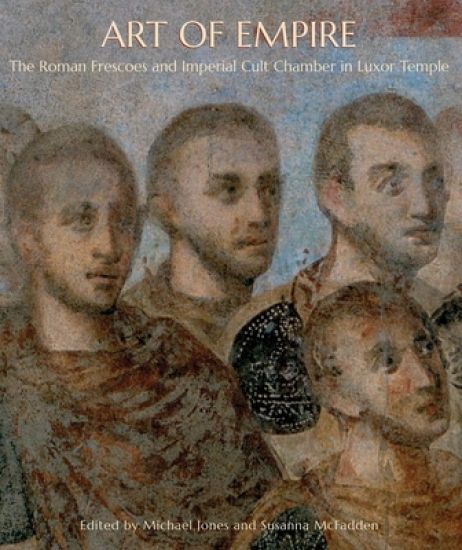
The Luxor Temple of Amun-Re, built to commemorate the divine power of the pharaohs, is one of the iconic monuments of New Kingdom Egypt. In the 4th century C.E., the Roman Imperial government, capitalizing on the site’s earlier significance, converted the temple into a military camp and constructed a lavishly painted cult chamber dedicated to the four emperors of the Tetrarchy. These frescoes provide fascinating insight into the political landscape of the late Roman Empire and, as the only surviving wall paintings from the tetrarchic period, into the history of Roman art. The culmination of a groundbreaking conservation project, this volume brings together scholars across disciplines for a comprehensive look at the frescoes and their architectural, archaeological, and historical contexts. More than 150 stunning illustrations present the paintings for the first time in their newly conserved state, along with a selection of 19th-century documentary watercolors. This remarkable publication illustrates how physical context, iconography, and style were used to convey ideology throughout Rome’s provinces.Published in association with the American Research Center in Egypt, Inc.
Sardinian Syntax presents the first comprehensive synchronic description of Sardinian syntax available in English. Michael Jones combines a detailed coverage of the language with a theoretical approach that draws on contemporary linguistic theory. The book provides an extensive reference grammar and an invaluable source of information for all linguists whose interests extend beyond the world's major languages.
Ten days that changed the course of history. On April 30, 1945, Adolf Hitler committed suicide in a bunker in Berlin. But victory over the Nazi regime was not celebrated in western Europe until May 8, and in Russia a day later, on the ninth. Why did a peace agreement take so much time? How did this brutal, protracted conflict coalesce into its unlikely endgame? After Hitler shines a light on ten fascinating days after that infamous suicide that changed the course of the twentieth century. Combining exhaustive research with masterfully paced storytelling, Michael Jones recounts the F hrer's frantic last stand; the devious maneuverings of his handpicked successor, Karl D nitz; the grudging respect Joseph Stalin had for Churchill and FDR, as well as his distrust of Harry Truman; the bold negotiating by General Dwight D. Eisenhower that hastened Germany's surrender but drew the ire of the Kremlin; the journalist who almost scuttled the cease-fire; and the thousands of ordinary British, American, and Russian soldiers caught in the swells of history, from the Red Army's march on Berlin to the liberation of the Nazis' remaining concentration camps. Through it all, Jones traces the shifting loyalties between East and West that sowed the seeds of the Cold War and nearly unraveled the Grand Alliance. In this gripping, eloquent, and even-handed narrative, the spring of 1945 comes alive--a fascinating time when nothing was certain, and every second mattered.... INCLUDES PHOTOS
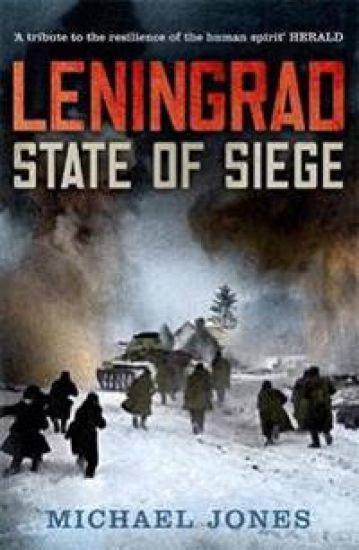
When the German High Command encircled Leningrad it was a deliberate policy to eradicate the city's civilian population by starving them to death. As winter set in and food supplies dwindled, starvation and panic set in. A specialist in battle psychology and the vital role of morale in desperate circumstances, Michael Jones tells the human story of Leningrad. Drawing on newly available eyewitness accounts and diaries, he shows Leningrad in its every dimension including taboo truths, long-suppressed by the Soviets, such as looting, criminal gangs and cannibalism. But, for many ordinary citizens, Leningrad marked the triumph of the human spirit. They drew deeply on their inner resources to inspire, comfort and help one another. At the height of the siege an extraordinary live performance of Shostakovich's Seventh Symphony profoundly strengthened the city's will to resist. When German troops heard it in their trenches one remarked: 'We began to understand we would never take Leningrad. Yet, Leningrad's self-defence came at a huge price. When the 900-day siege ended in 1944 almost a million people had died and those who survived would be permanently marked by what they had endured, as this superbly insightful and moving history shows.