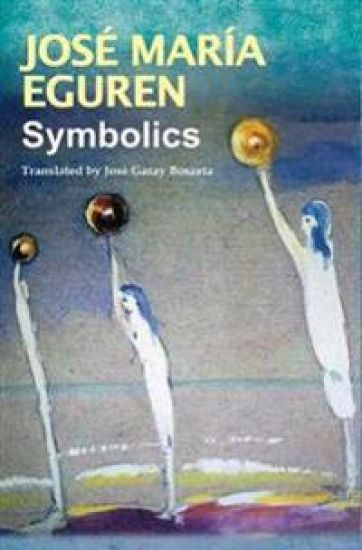
"He speaks to us; and his explanations of some of his symbols suggest to us the rarest of illusions. It occurs to me he is an oriental prince who travels in pursuit of impossible sacred bayaderes" - Cesar VallejoOriginally published in Peru in 1916, The Song of the Figures, Jose Maria Eguren's second volume of poetry, consolidated his reputation as one of the leading voices of his generation and earned him the unanimous praise of his contemporaries, such as Jose Carlos Mariategui, Cesar Vallejo and Abraham Valdelomar. Displaying a penchant for Oriental themes shrouded in mystery and sensuality, The Song of the Figures is an outstanding follow-up to the landmark success of Symbolics (1911), and remains as one of the highlights of Latin American poetry in the 20th century. This first English translation, long overdue, restitutes the figure of one of the most uniquely crafted voices of Latin American poetry and opens up a window to his timeless past.
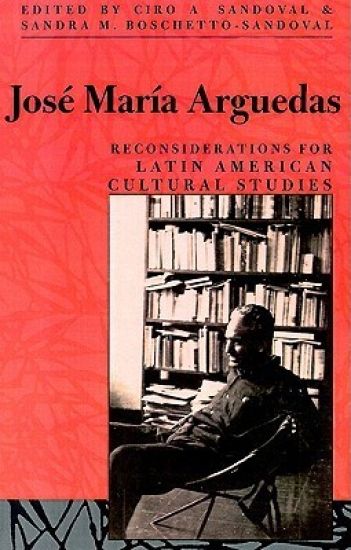
José María Arguedas (1911–1969) is one of the most important authors to speak to issues of the survival of native cultures. José María Arguedas: Reconsiderations for Latin American Cultural Studies presents his views from multiple perspectives for English-speaking audiences for the first time. The life and works of José María Arguedas reflect in a seminal way the drama of acculturation and transculturation suffered not only by what we think of as the indigenous and mestizo cultures of Peru, but by other Latin American societies as well. Intricately reflecting his pluricultural and bilingual life experience, Arguedas's illuminating poetic visions of Andean culture cross multidisciplinary borders to transfigure pedagogical and social practices. Few texts convey the complexity and contradictions of an Andean cosmopolitanism with the intense accuracy of Arguedas's anthropological, ethnographic essays and literary writings. The ramifications of Arguedas's cultural critiques have yet to be assessed, particularly as a response to the disruptive forces of modernity, acculturation, and essential identity. José María Arguedas was a Peruvian ethnographer, anthropologist, folklorist, poet, and novelist. He based his novels and stories on the life and outlook of the Quechua-speaking Indians and was a pioneer of modern Quechua poetry. The present anthology brings his work to the attention of broader audiences by pulling together diverse scholarly views on Arguedas's aesthetic and multicultural contributions to the contemporary and political archipelago. It is a synthesis of his views on cultural change as it impinges upon considerations and theories of Latin American cultural studies.
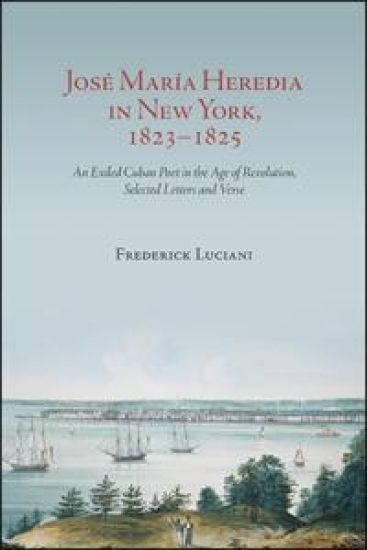
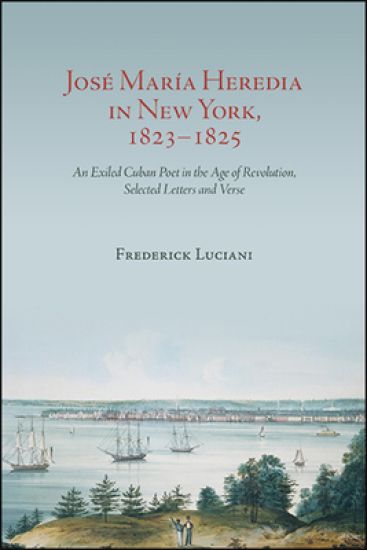
An English translation, with introduction and annotations, of a selection of the letters and verse that José María Heredia (b. Cuba, 1803; d. Mexico, 1839), wrote during his months of political exile in New York from November 1823 to August 1825.This volume offers the most complete English translation to date of the prose and poetry of José María Heredia (b. Cuba, 1803; d. Mexico, 1839), focusing on Heredia's political exile in the United States from November 1823 to August 1825. Frederick Luciani's introduction offers a complete biographical sketch that discusses the complications of Heredia's life in exile, his conflicted political views, his significance as a travel writer and observer of life in the United States, and his reception by nineteenth-century North American writers and critics. The volume includes thoroughly annotated letters that Heredia wrote to family and friends in Cuba, describing his struggles and adventures living among other young expatriates in New York City-fellow conspirators in a failed plot to overthrow Spanish rule on the island. His travel letters, especially those that describe his trip to the Niagara frontier in 1824 along the Hudson River and the Erie Canal, offer discerning reflections on American landscapes, technological advances, political culture, and social customs. The volume also offers translations of the verse that Heredia composed during his New York exile, in which he gave impassioned voice to Cuba's struggle for independence from Spain, and which reflected the emerging Romantic sensibilities in Spanish-language poetry. With accurate, clear translations, this volume serves as an introduction to a figure who is enshrined in the canon of Latin American literature, but scarcely known to Anglophone readers.
An English translation, with introduction and annotations, of a selection of the letters and verse that José María Heredia (b. Cuba, 1803; d. Mexico, 1839), wrote during his months of political exile in New York from November 1823 to August 1825.This volume offers the most complete English translation to date of the prose and poetry of José María Heredia (b. Cuba, 1803; d. Mexico, 1839), focusing on Heredia's political exile in the United States from November 1823 to August 1825. Frederick Luciani's introduction offers a complete biographical sketch that discusses the complications of Heredia's life in exile, his conflicted political views, his significance as a travel writer and observer of life in the United States, and his reception by nineteenth-century North American writers and critics. The volume includes thoroughly annotated letters that Heredia wrote to family and friends in Cuba, describing his struggles and adventures living among other young expatriates in New York City-fellow conspirators in a failed plot to overthrow Spanish rule on the island. His travel letters, especially those that describe his trip to the Niagara frontier in 1824 along the Hudson River and the Erie Canal, offer discerning reflections on American landscapes, technological advances, political culture, and social customs. The volume also offers translations of the verse that Heredia composed during his New York exile, in which he gave impassioned voice to Cuba's struggle for independence from Spain, and which reflected the emerging Romantic sensibilities in Spanish-language poetry. With accurate, clear translations, this volume serves as an introduction to a figure who is enshrined in the canon of Latin American literature, but scarcely known to Anglophone readers.
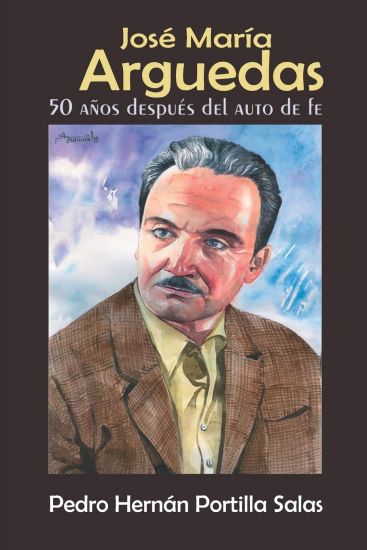
El prop sito del presente ensayo, est enmarcado en el contexto hist rico de una sociedad excluida de la cultura escrita, el Per ; donde la escritura, es aun patrimonio exclusivo de una clase criolla que durante siglos concentra el poder pol tico y econ mico y la cultura escrita es un instrumento de dominaci n. En este libro el autor, explica las vallas del poder que los pocos mestizos e ind genas, enfrentaron, cada uno en su poca y durante m s de 500 a os para empoderarse de las letras hispanas y pese a esas adversidades, han sido reconocidos como los grandes de la literatura hispanoamericana. Me estoy refiriendo a dos personalidades, ambos, gracias al conjuro del destino, proceden de la regi n Apur mac; ellos son son: Juan Espinosa Medrano, "El Lunarejo", quien alcanz el sitial m s alto de la literatura barroca en Hispanoam rica del siglo XVII; y, Jos Mar a Arguedas, nico pensador peruano no indigenista del siglo XX, culturalmente ind gena, quien irrumpi en la intelectualidad criolla de este pa s y de latino am rica, para mostrar al Per , un pa s fraccionado y sumido en contrastes que lindan con el avance del desarrollo social del mundo. En otras palabras, un Per Criollo o formal acaparadora del poder, con esmerada educaci n, recursos suficientes, apoyo del Estado y engarzamiento al mercado cultural del mundo; y contrariamente el Otro Per real, sector mayoritario, excluido del idioma espa ol y del conocimiento de sus letras, sin recursos, sin acceso o con acceso marginal a la educaci n "nacional" y subsiste, a la sombra de un Estado que deliberadamente soslaya al ind gena, mestizo y criollo pobre. Esta realidad demostrada en su novela Todas las sangres, perturb el pensamiento de la lite de escritores y pensadores criollos de este pa s; quienes a la vez, cuidando que tales conclusiones, trascendiera y trastocara las estructuras del estado olig rquico del siglo XX, emprendieron una cruzada de suplicio cultural en contra del pensador Jos Mar a Arguedas. En suma esta obra, retrata de cuerpo entero, el s rdido fuego cruzado al que este pu ado de intelectuales criollos y extranjeros, el 23 de junio de 1965, en la denominada Segunda Mesa Redonda sobre Todas las sangres, acicateados por la nostalgia colonial del Gran temor, sometieron a J.M. Arguedas a un Auto de fe, por imaginar en su novela, al ind gena, mestizo y criollo empobrecido, como actores pol ticos de cambio de este Per fracturado. Al extremo que tras esta emboscada cultural, el "acusado" pensador Arguedas, nauseado de la postura criolla, opt , por lo que ya todos conocen, se suicid . Inmol su vida en un suplicio cultural, por la redenci n de un pueblo ind gena maltratado. De eso trata esta obra.
Jose Maria Gil-Robles (18981980) was one of the major protagonists of twentieth-century Spanish politics. He founded the CEDA, the first modern party of the Spanish right, and did so during the Second Republic of 193136, at a critical moment for conservative Catholics opposed to several aspects of the new constitution. He sought to create a new legalist, possibilist right-wing movement that could win at the ballot box and demonstrate its strength in parliament. He achieved a great electoral victory in November 1933, but did not succeed in becoming prime minister. The left considered him a danger to the republican regime. In July 1936, after another election and a tense spring, there was an attempted coup detat, and the Civil War began. This brought a definitive end to party politics and, therefore, to the experience of the CEDA. From that point Gil-Robles lived in Portugal, and did not return to Spain until the 1950s. He supported the Allies during the Second World War, and argued for the restoration of the Spanish monarchy. He also played an important role in inspiring new movements for Christian Democracy. This book is an account of the republican period in the life of Gil-Robles. It is the first thoroughly-researched biography that examines in a balanced, well-documented manner the paramount, though still problematic, contribution he made to the democratization of Spanish conservative politics. It responds to certain crucial questions as to why the CEDA was unsuccessful, and what were the obstacles that it encountered in its attempts to amend the republican system. Equally, it also analyses the manner in which Gil-Robles led the forces of conservatism, one based on tenets that were clearly distant from fascism but equally opposed both to Marxism and liberal individualism.
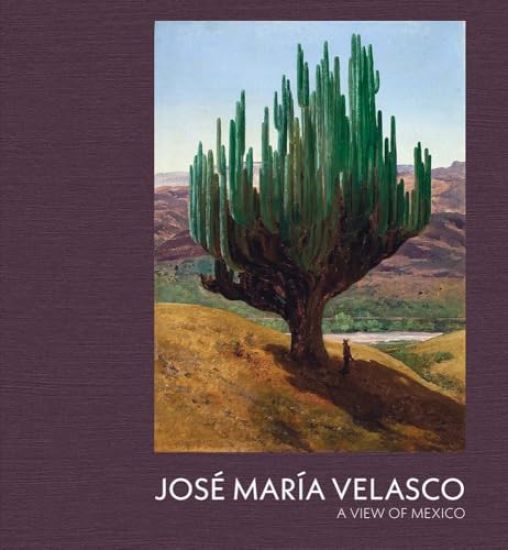
An overdue introduction to one of the Americas’ most eminent nineteenth-century artists, the Mexican painter José María Velasco José María Velasco (1840–1912) is considered the greatest Mexican landscape painter of the nineteenth century. In portraying his native country during decades of enormous societal change, he depicted its magnificent scenery, storied past, and rapid industrialisation, most famously in his monumental representations of the Valley of Mexico, the area surrounding modern Mexico City. Velasco was a true polymath, and much more than a painter of the national landscape. He was also a practising botanist, naturalist, and geologist with highly developed interests in archaeology and cartography. His curiosity about the natural world profoundly shaped his work. This book, the first monograph on Velasco to be published outside Mexico, provides a fresh appraisal of his work. Essays by scholars from the United States, Britain, and Mexico focus on his life and career, his interest in contemporary science, and his legacy for artists today.Published by National Gallery Global/Distributed by Yale University Press
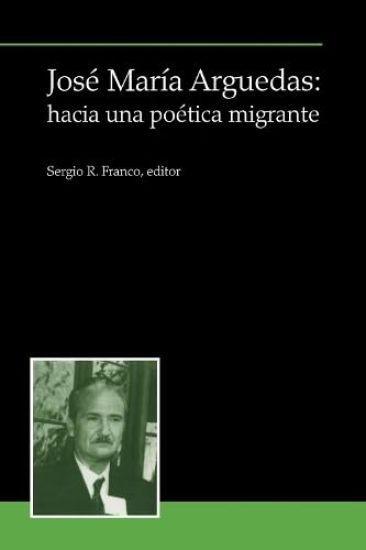
Colaboran: Sergio R. Franco | Estelle Tarica | Misha Kokotovic |Horacio Legrás | Julio Ortega | Mabel Moraña | Catalina Ocampo | Aymara de Llano | William Rowe | Fernando Rivera | Tomás G. Escajadillo | Isabelle Tauzin-Castellanos | Helena Usandizaga | Ciro A. Sandoval | Melisa Moore | Francisco Xavier Solé Zapatero | Anne Lambright | Gracia María Morales Ortiz | Mónica Bernabé ~ Contributors: Sergio R. Franco| Estelle Tarica| Misha Kokotovic| Horacio Legrás| Julio Ortega| Mabel Moraña| Catalina Ocampo| Aymara de Llano| William Rowe| Fernando Rivera| Tomás G. Escajadillo| Isabelle Tauzin-Castellanos| Helena Usandizaga| Ciro A. Sandoval| Melisa Moore| Francisco Xavier Solé Zapatero| Anne Lambright| Gracia María Morales Ortiz| Mónica Bernabé