Kirjojen hintavertailu. Mukana 12 016 292 kirjaa ja 12 kauppaa.

Kirjahaku

Etsi kirjoja tekijän nimen, kirjan nimen tai ISBN:n perusteella.

1000 tulosta hakusanalla Joseph A. Conforti

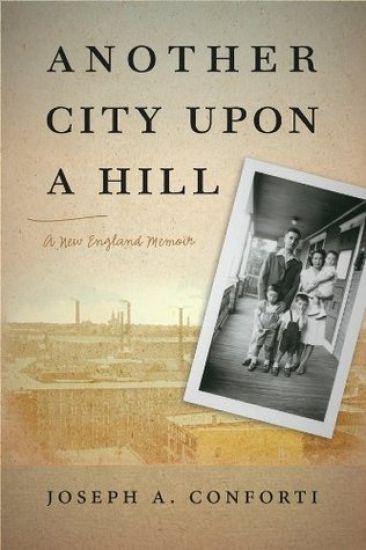
Another City upon a Hill

Another City upon a Hill

Joseph A. Conforti

University of Massachusetts Press
2013
nidottu
This gripping memoir is both a personal story and a portrait of a distinctive New England place--Fall River, Massachusetts, once the cotton cloth capital of America. Growing up, Joseph Conforti's world was defined by rolling hills, granite mills, and forests of triple-deckers. Conforti, whose mother was Portuguese and whose father was Italian, recounts how he negotiated those identities in a city where ethnic heritage mattered. Paralleling his own account, Conforti shares the story of his family, three generations of Portuguese and Italians who made their way in this once-mighty textile city.
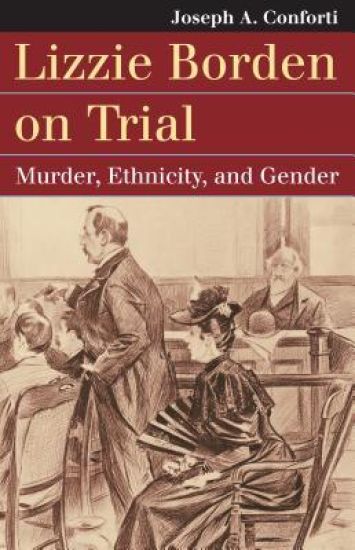
Lizzie Borden on Trial

Lizzie Borden on Trial

Joseph A. Conforti

University Press of Kansas
2015
sidottu
Most people could probably tell you that Lizzie Borden “took an axe and gave her mother forty whacks,” but few could say that, when tried, Lizzie Borden was acquitted, and fewer still, why. In Joseph A. Conforti’s engrossing retelling, the case of Lizzie Borden, sensational in itself, also opens a window on a time and place in American history and culture.Surprising for how much it reveals about a legend so ostensibly familiar, Conforti’s account is also fascinating for what it tells us about the world that Lizzie Borden inhabited. As Conforti—himself a native of Fall River, the site of the infamous murders—introduces us to Lizzie and her father and step-mother, he shows us why who they were matters almost as much to the trial’s outcome as the actual events of August 4, 1892. Lizzie, for instance, was an unmarried woman of some privilege, a prominent religious woman who fit the profile of what some characterized as a “Protestant nun.” She was also part of a class of moneyed women emerging in the late 19th century who had the means but did not marry, choosing instead to pursue good works and at times careers in the helping professions. Many of her contemporaries, we learn, particularly those of her class, found it impossible to believe that a woman of her background could commit such a gruesome murder.As he relates the details, known and presumed, of the murder and the subsequent trial, Conforti also fills in that background. His vividly written account creates a complete picture of the Fall River of the time, as Yankee families like the Bordens, made wealthy by textile factories, began to feel the economic and cultural pressures of the teeming population of native and foreign-born who worked at the spindles and bobbins. Conforti situates Lizzie’s austere household, uneasily balanced between the well-to-do and the poor, within this social and cultural milieu—laying the groundwork for the murder and the trial, as well as the outsize reaction that reverberates to our day. As Peter C. Hoffer remarks in his preface, there are many popular and fictional accounts of this still-controversial case, “but none so readable or so wellbalanced as this.”
Lizzie Borden on Trial

Lizzie Borden on Trial

Joseph A. Conforti

University Press of Kansas
2016
nidottu
Most people could probably tell you that Lizzie Borden ""took an axe and gave her mother forty whacks,"" but few could say that, when tried, Lizzie Borden was acquitted, and fewer still, why. In Joseph A. Conforti's engrossing retelling, the case of Lizzie Borden, sensational in itself, also opens a window on a time and place in American history and culture.Surprising for how much it reveals about a legend so ostensibly familiar, Conforti's account is also fascinating for what it tells us about the world that Lizzie Borden inhabited. As Conforti—himself a native of Fall River, the site of the infamous murders—introduces us to Lizzie and her father and step-mother, he shows us why who they were matters almost as much to the trial's outcome as the actual events of August 4, 1892. Lizzie, for instance, was an unmarried woman of some privilege, a prominent religious woman who fit the profile of what some characterized as a ""Protestant nun."" She was also part of a class of moneyed women emerging in the late 19th century who had the means but did not marry, choosing instead to pursue good works and at times careers in the helping professions. Many of her contemporaries, we learn, particularly those of her class, found it impossible to believe that a woman of her background could commit such a gruesome murder.As he relates the details, known and presumed, of the murder and the subsequent trial, Conforti also fills in that background. His vividly written account creates a complete picture of the Fall River of the time, as Yankee families like the Bordens, made wealthy by textile factories, began to feel the economic and cultural pressures of the teeming population of native and foreign-born who worked at the spindles and bobbins. Conforti situates Lizzie's austere household, uneasily balanced between the well-to-do and the poor, within this social and cultural milieu—laying the groundwork for the murder and the trial, as well as the outsize reaction that reverberates to our day. As Peter C. Hoffer remarks in his preface, there are many popular and fictional accounts of this still-controversial case, ""but none so readable or so well-balanced as this.
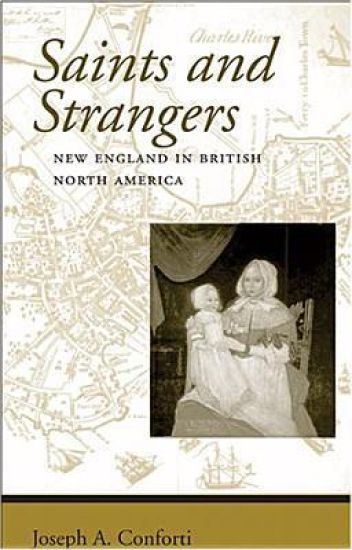
Saints and Strangers

Saints and Strangers

Joseph A. Conforti

Johns Hopkins University Press
2006
sidottu
In the first general history of colonial New England to be published in over twenty-five years, Joseph A. Conforti synthesizes current and classic scholarship to explore how Puritan saints and "strangers" to Puritanism participated in the making of colonial New England. Massachusetts Governor John Winthrop's famous description of New England as a "city upon a hill" has tended to reduce the region's history to an exclusively Pilgrim-Puritan drama, a world of narrow-minded founders, the First Thanksgiving, steepled churches, and the Salem witchcraft trials. In a concise volume aimed at general readers and college students as well as historians, Conforti shows that New England was neither as Puritan nor as insular as most familiar stories imply. As the region evolved into British America's preeminent maritime region, the Atlantic Ocean served as a highway of commercial and cultural encounter, connecting white English settlers to different races and religious communities of the transatlantic world. The Puritan elect-but also Natives, African slaves, and non-Puritan white settlers-became active participants in the creation of colonial New England. Conforti discusses how these subcommunities of white, red, and black strangers to Protestant piety retained their own cultures, coexisted, and even thrived within and beyond the domains of Puritan settlement, creating tensions and pressure points in the later development of early America.
Saints and Strangers

Saints and Strangers

Joseph A. Conforti

Johns Hopkins University Press
2006
pokkari
In the first general history of colonial New England to be published in over twenty-five years, Joseph A. Conforti synthesizes current and classic scholarship to explore how Puritan saints and "strangers" to Puritanism participated in the making of colonial New England. Massachusetts Governor John Winthrop's famous description of New England as a "city upon a hill" has tended to reduce the region's history to an exclusively Pilgrim-Puritan drama, a world of narrow-minded founders, the First Thanksgiving, steepled churches, and the Salem witchcraft trials. In a concise volume aimed at general readers and college students as well as historians, Conforti shows that New England was neither as Puritan nor as insular as most familiar stories imply. As the region evolved into British America's preeminent maritime region, the Atlantic Ocean served as a highway of commercial and cultural encounter, connecting white English settlers to different races and religious communities of the transatlantic world. The Puritan elect-but also Natives, African slaves, and non-Puritan white settlers-became active participants in the creation of colonial New England. Conforti discusses how these subcommunities of white, red, and black strangers to Protestant piety retained their own cultures, coexisted, and even thrived within and beyond the domains of Puritan settlement, creating tensions and pressure points in the later development of early America.
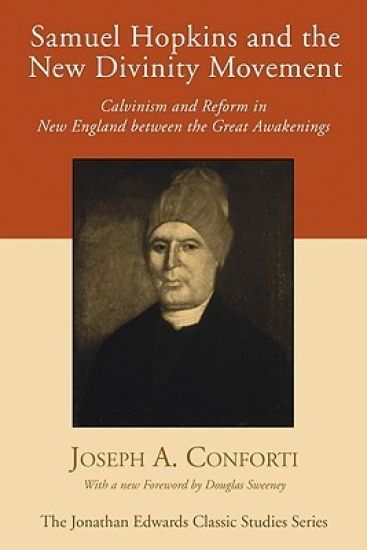
Samuel Hopkins and the New Divinity Movement

Samuel Hopkins and the New Divinity Movement

Joseph a. Conforti

Wipf Stock Publishers
2008
nidottu
Samuel Hopkins was the closest friend and disciple of the man generally considered to be the greatest religious thinker America has produced--Jonathan Edwards. Hopkins was also a founder and leading spokesman of the New Divinity Movement, a major religious movement in New England congregationalism from 1740 to 1800. The author here combines biographical detail with a balanced and scholarly assessment of the historical and theological significance of this influential Calvinist thinker.
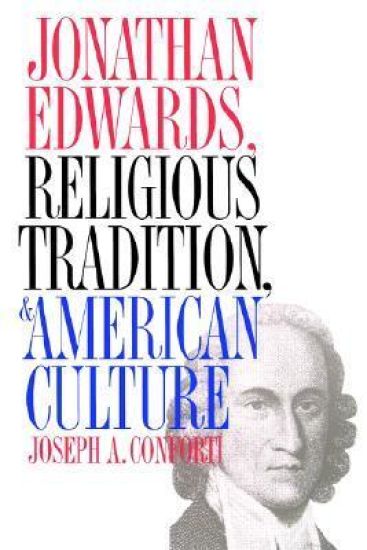
Jonathan Edwards, Religious Tradition, and American Culture

Jonathan Edwards, Religious Tradition, and American Culture

Conforti Joseph A.

The University of North Carolina Press
1995
nidottu
As the charismatic leader of the wave of religious revivals known as the Great Awakening, Jonathan Edwards (1703-58) is one of the most important figures in American religious history. However, by the end of the eighteenth century, his writings were generally dismissed as remnants of a moribund Puritan tradition. Focusing on the publishing history and appropriation of Edwards's works by succeeding generations, Joseph Conforti explores the construction and manipulation of the Edwards legacy and demonstrates its central place in American cultural and religious history. Most of Edwards's writings were not regularly republished or widely read until the early nineteenth century, when he emerged as a prominent thinker both in academic circles and in the new popular religious culture of the Second Great Awakening. Even after the Civil War, Edwards remained a popular figure from the Puritan past for colonial revivalists. But by the early twentieth century, scholars had again reinvented Edwards, this time deemphasizing his influence. These contrasting constructions of the one man, Conforti says, reveal the dynamic process of cultural change.
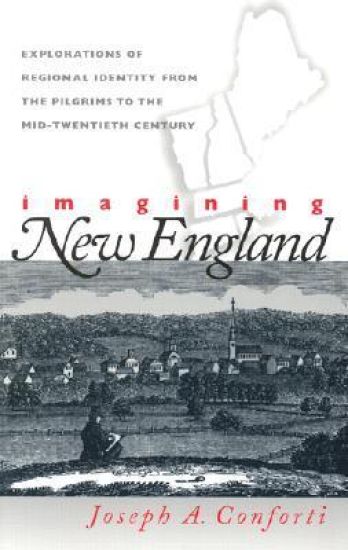
Imagining New England

Imagining New England

Conforti Joseph A.

The University of North Carolina Press
2001
nidottu
New England as a cultural invention; Say ""New England"" and you likely conjure up an image in the mind of your listener: the snowy woods or stone wall of a Robert Frost poem, perhaps, or that quintessential icon of the region - the idyllic white village. Such images remind us that, as Joseph Conforti notes, a region is not just a territory on the ground. It is also a place in the imagination. This ambitious work investigates New England as a cultural invention, tracing the region's changing identity across more than three centuries. Incorporating insights from history, literature, art, material culture, and geography, it shows how succeeding generations of New Englanders created and broadcast a powerful collective identity for their region through narratives about its past. Whether these stories were told in the writings of Frost or Harriet Beecher Stowe, enacted in historical pageants or at colonial revival museums, or conveyed in the pages of a geography textbook or Yankee magazine, New Englanders used them to sustain their identity, revising them as needed to respond to the shifting regional landscape.
Batchelder, Batcheller Genealogy. Descendants Of Rev. Stephen Bachiler, Of England A Leading Non-Conformist, Who Settled The Town Of New Hampton, N.H., And Joseph, Henry, Joshua And John Batcheller Of Essex Co., Mass
This book has been considered by academicians and scholars of great significance and value to literature. This forms a part of the knowledge base for future generations. So that the book is never forgotten we have represented this book in a print format as the same form as it was originally first published. Hence any marks or annotations seen are left intentionally to preserve its true nature.
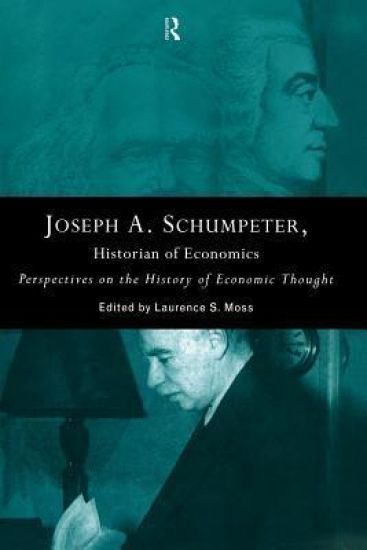
Joseph A. Schumpeter: Historian of Economics
Joseph A. Schumpeter was one of the great economists of the twentieth century. His History of Economic Analsyis is perhaps the greatest contribution to the history of economics, providing a magisterial account of the development of the subject from Ancient Greece to the mid-twentieth century. Schumpeter's views on his predecessors have proved to be a constant source of controversy. Here individual chapters examine such disparate questions as Schumpeter's apparent disregard for the American Institutionalists, his grudging respect for Adam Smith, the perspicacity of his views of Quesnay and his preference for Walras over Pareto. Four chapters are devoted to the early Medieval schools, neglected in all of his writings. Schumpeter's magnum opus is related to the rest of his economic output, especially his views on money and on methodology. With contributions by leading historians of economics from six countries, this volume analyses Schumpeter's contribution to the history of economics, considers its lasting significance, and uses it as a benchmark to assess the current state of the field.
Joseph A. Schumpeter: Historian of Economics
Joseph A. Schumpeter was one of the great economists of the twentieth century. His History of Economic Analsyis is perhaps the greatest contribution to the history of economics, providing a magisterial account of the development of the subject from Ancient Greece to the mid-twentieth century. Schumpeter's views on his predecessors have proved to be a constant source of controversy. Here individual chapters examine such disparate questions as Schumpeter's apparent disregard for the American Institutionalists, his grudging respect for Adam Smith, the perspicacity of his views of Quesnay and his preference for Walras over Pareto. Four chapters are devoted to the early Medieval schools, neglected in all of his writings. Schumpeter's magnum opus is related to the rest of his economic output, especially his views on money and on methodology. With contributions by leading historians of economics from six countries, this volume analyses Schumpeter's contribution to the history of economics, considers its lasting significance, and uses it as a benchmark to assess the current state of the field.
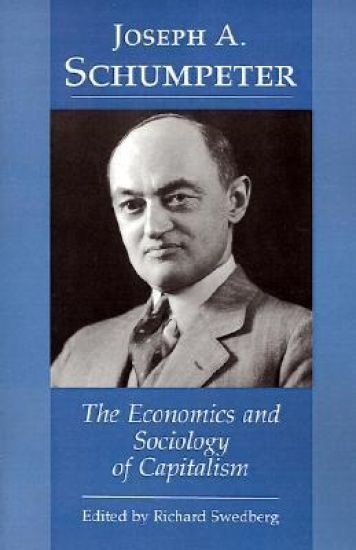
Joseph A. Schumpeter

Joseph A. Schumpeter

Princeton University Press
1991
pokkari
The renowned economist Joseph A. Schumpeter (1883-1950) made seminal contributions not only to economic theory but also to sociology and economic history. His work is now attracting wide attention among sociologists, as well as experiencing a remarkable revival among economists. This anthology, which serves as an excellent introduction to Schumpeter, emphasizes his broad socio-economic vision and his attempt to analyze economic reality from several different perspectives. An ambitious introductory essay by Richard Swedberg uses many new sources to enhance our understanding of Schumpeter's life and work and to help analyze his fascinating character. This essay stresses Schumpeter's ability to draw on several social sciences in his study of capitalism. Some of the articles in the anthology are published for the first time. The most important of these are Schumpeter's Lowell Lectures from 1941, "An Economic Interpretation of Our Time." Also included is the transcript of his lecture "Can Capitalism Survive?" (1936) and the high-spirited debate that followed. The anthology contains many of Schumpeter's classical sociological articles, such as his essays on the tax state, imperialism, and social classes. And, finally, there are lesser known articles on the future of private enterprise, on the concept of rationality in the social sciences, and on the work of Max Weber, with whom Schumpeter collaborated on several occasions.
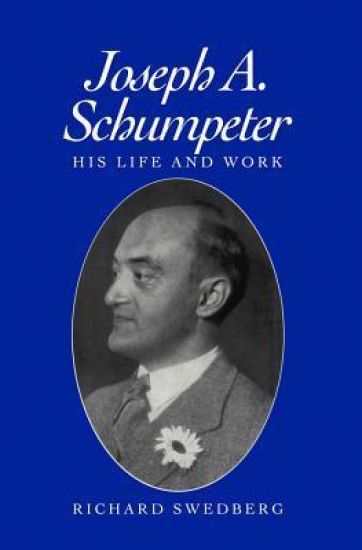
Joseph A. Schumpeter

Joseph A. Schumpeter

Richard Swedberg

Polity Press
1993
nidottu
Joseph A. Schumpeter (1883-1950) is one of the most celebrated authors on the economics and sociology of the twentieth century. Richard Swedberg's new biography provides an engaging and vivid account of Schumpeter's varied life, including his ventures into politics and private banking as well as his academic career. As a backdrop to these, Swedberg also discusses Schumpeter's tragic personal life. This book provides a thorough overview of Schumpeter's writings, and also introduces previously unpublished material based on his letters and interviews. Swedberg emphasizes that Schumpeter saw economics as a form of social investigation, consisting of four fields: economic theory, economic sociology, economic history and statistics. The author describes and analyses Schumpeter's theory of social classes and modern states as well as his more famous theory of the entrepreneur.
Joseph A. Schumpeter

Joseph A. Schumpeter

John Medearis

Continuum International Publishing Group Ltd.
2009
sidottu
This is the fourth volume in the "Major Conservative and Libertarian Thinkers" series. Joseph Schumpeter (1883-1950) was one of the foremost economic thinkers of the twentieth century. Today Schumpeter is most well-known for his idea of 'creative destruction'. This is the notion that a market economy is simultaneously creative and destructive and therein lies the process of renewal that is central to the endurance and also the unpopularity of capitalism. Schumpeter's work also contains one of the most important conservative critiques of mass democracy. Schumpeter argued that mass democracy had totalitarian tendencies and was likely to degenerate into the tyranny of the popular.
Joseph A. Goulden [Another Isue] 1917
This work has been selected by scholars as being culturally important, and is part of the knowledge base of civilization as we know it. This work was reproduced from the original artifact, and remains as true to the original work as possible. Therefore, you will see the original copyright references, library stamps (as most of these works have been housed in our most important libraries around the world), and other notations in the work.This work is in the public domain in the United States of America, and possibly other nations. Within the United States, you may freely copy and distribute this work, as no entity (individual or corporate) has a copyright on the body of the work.As a reproduction of a historical artifact, this work may contain missing or blurred pages, poor pictures, errant marks, etc. Scholars believe, and we concur, that this work is important enough to be preserved, reproduced, and made generally available to the public. We appreciate your support of the preservation process, and thank you for being an important part of keeping this knowledge alive and relevant.
Joseph A. Schumpeter

Joseph A. Schumpeter

John Medearis

Bloomsbury Academic USA
2013
nidottu
Joseph Schumpeter (1883 - 1950) was one of the foremost economic thinkers of the twentieth century. Today Schumpeter is most well-known for his idea of 'creative destruction'. This is the notion that a market economy is simultaneously creative and destructive and therein lies the process of renewal that is central to the endurance and also the unpopularity of capitalism. Schumpeter's work also contains one of the most important conservative critiques of mass democracy. Schumpeter argued that mass democracy had totalitarian tendencies and was likely to degenerate into the tyranny of the popular.