Kirjahaku
Etsi kirjoja tekijän nimen, kirjan nimen tai ISBN:n perusteella.
1000 tulosta hakusanalla Joseph Beatty Doyle
Steubenville. Sketch of Manufacturing, Educational and Other Institutions
Joseph Beatty Doyle
Sagwan Press
2018
pokkari
This work has been selected by scholars as being culturally important, and is part of the knowledge base of civilization as we know it. This work was reproduced from the original artifact, and remains as true to the original work as possible. Therefore, you will see the original copyright references, library stamps (as most of these works have been housed in our most important libraries around the world), and other notations in the work.This work is in the public domain in the United States of America, and possibly other nations. Within the United States, you may freely copy and distribute this work, as no entity (individual or corporate) has a copyright on the body of the work.As a reproduction of a historical artifact, this work may contain missing or blurred pages, poor pictures, errant marks, etc. Scholars believe, and we concur, that this work is important enough to be preserved, reproduced, and made generally available to the public. We appreciate your support of the preservation process, and thank you for being an important part of keeping this knowledge alive and relevant.
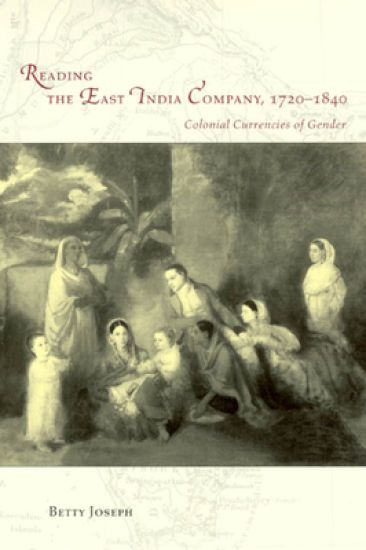
In Reading the East India Company, Betty Joseph offers an innovative account of how archives—and the practice of archiving—shaped colonial ideologies in Britain and British-controlled India during the eighteenth and nineteenth centuries.Drawing on the British East India Company's records as well as novels, memoirs, portraiture and guidebooks, Joseph shows how the company's economic and archival practices intersected to produce colonial "fictions" or "truth-effects" that strictly governed class and gender roles—in effect creating a "grammar of power" that kept the far-flung empire intact. And while women were often excluded from this archive, Joseph finds that we can still hear their voices at certain key historical junctures. Attending to these voices, Joseph illustrates how the writing of history belongs not only to the colonial project set forth by British men, but also to the agendas and mechanisms of agency—of colonized Indian, as well as European women. In the process, she makes a valuable and lasting contribution to gender studies, postcolonial theory, and the history of South Asia.
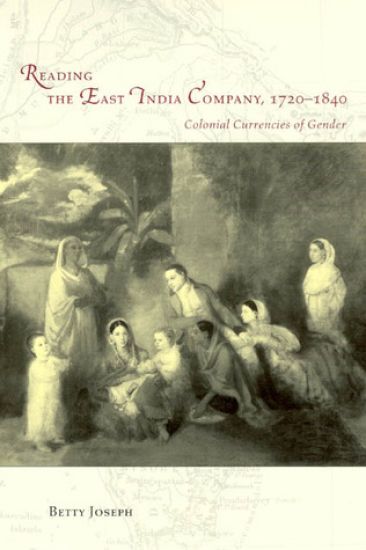
Betty Joseph offers an account of how archives - and the practice of archiving - shaped colonial ideologies in Britain and British-controlled India during the eighteenth and nineteenth centuries.

How contemporary novels use narrative time to counter cultural homogenization and historical flattening.In From Empire to Anthropocene, Betty Joseph celebrates how contemporary fiction contributes to a novel framing of world literature by playing with our understanding of time. Bringing together an unusual constellation of writers—including Jamaica Kincaid, Teju Cole, Hari Kunzru, and Barbara Kingsolver—Joseph traces how the novelistic interplay of concrete and abstract temporalities offers a new theory of critical globality. Joseph examines time in contemporary life through five conceptual metaphors that have captivated literary, critical, and cultural studies: specters, attachments, networks, markets, and assemblages. Joseph demonstrates how these terms are embedded with their own temporal structures and linguistic complexity. She develops a mode of reading that she calls "conceptual-metaphorical performances," which embody the writers' complex chronopolitical commitments and their refusal to concede to the political paralysis implied in the synchronous and flattened world-time of globality. Time, rather than space, is the axis along which contemporary fiction challenges us to imagine forms of coexistence and social collectivity under the precarious conditions of global capitalism and environmental damage.From Empire to Anthropocene convincingly dispels the notion that so-called English-language "world literature" precludes the possibility of historical analysis and social collectivity. Bringing postcolonialism and Marxist theory into conversation with critical global and ecological perspectives, this book paves the way for a new literary theorization of contemporary Anglophone literature and contributes a fresh perspective to the field of cultural studies.
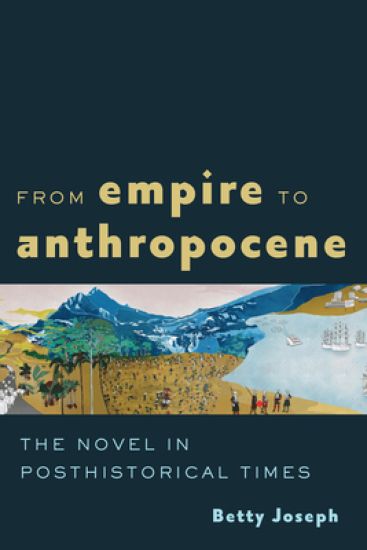
How contemporary novels use narrative time to counter cultural homogenization and historical flattening.In From Empire to Anthropocene, Betty Joseph celebrates how contemporary fiction contributes to a novel framing of world literature by playing with our understanding of time. Bringing together an unusual constellation of writers—including Jamaica Kincaid, Teju Cole, Hari Kunzru, and Barbara Kingsolver—Joseph traces how the novelistic interplay of concrete and abstract temporalities offers a new theory of critical globality. Joseph examines time in contemporary life through five conceptual metaphors that have captivated literary, critical, and cultural studies: specters, attachments, networks, markets, and assemblages. Joseph demonstrates how these terms are embedded with their own temporal structures and linguistic complexity. She develops a mode of reading that she calls "conceptual-metaphorical performances," which embody the writers' complex chronopolitical commitments and their refusal to concede to the political paralysis implied in the synchronous and flattened world-time of globality. Time, rather than space, is the axis along which contemporary fiction challenges us to imagine forms of coexistence and social collectivity under the precarious conditions of global capitalism and environmental damage.From Empire to Anthropocene convincingly dispels the notion that so-called English-language "world literature" precludes the possibility of historical analysis and social collectivity. Bringing postcolonialism and Marxist theory into conversation with critical global and ecological perspectives, this book paves the way for a new literary theorization of contemporary Anglophone literature and contributes a fresh perspective to the field of cultural studies.

Joseph Blenkinsopp presents an intertextual reading of Isaiah and the Psalms furthering his previous well-known work on the text of Isaiah. Blenkinsopp argues that, read together, these two biblical books can be shown to form a single religious vision, a way of experiencing and articulating a commitment to the fundamentals of the faith of Israel, with its own distinctive character. Blenkinsopp shows how the emphasis in Isaiah and the Psalms is on affect and emotion, the expression of joy and sorrow articulated in music, singing, and dancing; in praise, thanksgiving and lament. This represents a key difference from other parts of the Hebrew Bible where the focus is more on the Law and on the covenant at Sinai – in Isaiah and the Psalms these terms rarely occur, the focus is instead on Zion and on the Temple. Blenkinsopp shows how the temple singers, with their close connections with the circles which transmitted and eventually committed to writing the Book of Isaiah, demonstrate that the divine word is not incompatible with other forms of religious experience and expression, affective and even mystical, articulated and embodied in the performance of music, song, ritual prayer, and dance. The beauty of the Psalms is echoed strongly in Isaiah, and the Isaian vision of a Creator God, Lord of nature and history beyond the bounds of Israel, is joyfully proclaimed by the psalmists.
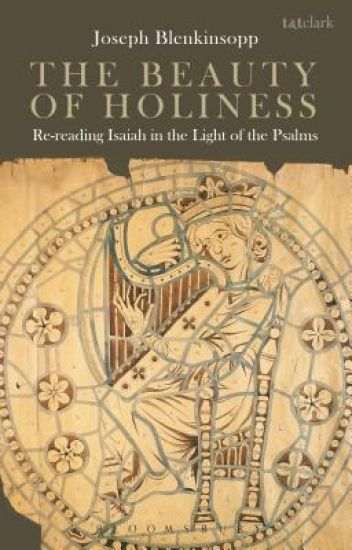
Joseph Blenkinsopp presents an intertextual reading of Isaiah and the Psalms furthering his previous well-known work on the text of Isaiah. Blenkinsopp argues that, read together, these two biblical books can be shown to form a single religious vision, a way of experiencing and articulating a commitment to the fundamentals of the faith of Israel, with its own distinctive character. Blenkinsopp shows how the emphasis in Isaiah and the Psalms is on affect and emotion, the expression of joy and sorrow articulated in music, singing, and dancing; in praise, thanksgiving and lament. This represents a key difference from other parts of the Hebrew Bible where the focus is more on the Law and on the covenant at Sinai – in Isaiah and the Psalms these terms rarely occur, the focus is instead on Zion and on the Temple. Blenkinsopp shows how the temple singers, with their close connections with the circles which transmitted and eventually committed to writing the Book of Isaiah, demonstrate that the divine word is not incompatible with other forms of religious experience and expression, affective and even mystical, articulated and embodied in the performance of music, song, ritual prayer, and dance. The beauty of the Psalms is echoed strongly in Isaiah, and the Isaian vision of a Creator God, Lord of nature and history beyond the bounds of Israel, is joyfully proclaimed by the psalmists.
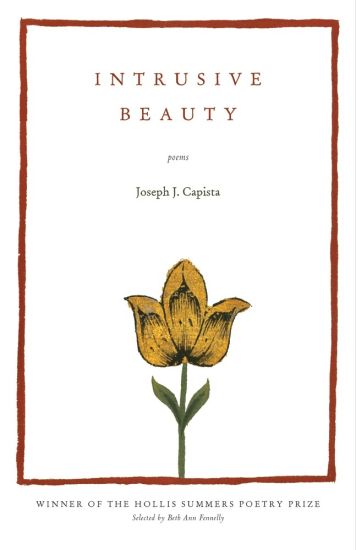
Joseph J. Capista's Intrusive Beauty reckons with reluctant ecstasy and the improbable forms that beauty assumes. In this powerful debut, Capista traverses earth and ether to yield poems that elucidate the space between one's life and one's livelihood. While its landscapes range from back-alley Baltimore to the Bitterroot Valley, this book remains close to unbidden beauty and its capacity to sway one's vision of the world. Whether a young father who won't lower the volume on the radio or a Victorian farm boy tasked with scaring birds from seed-sown furrows, the inhabitants of Intrusive Beauty are witness to the startling ease with which one's assorted lives come in time to comprise a singular life. Mortality, love, duty, desire, an acute longing for transcendence: here, old themes resound anew as they're uttered in a multiplicity of forms and means, holding fast always to the heart.


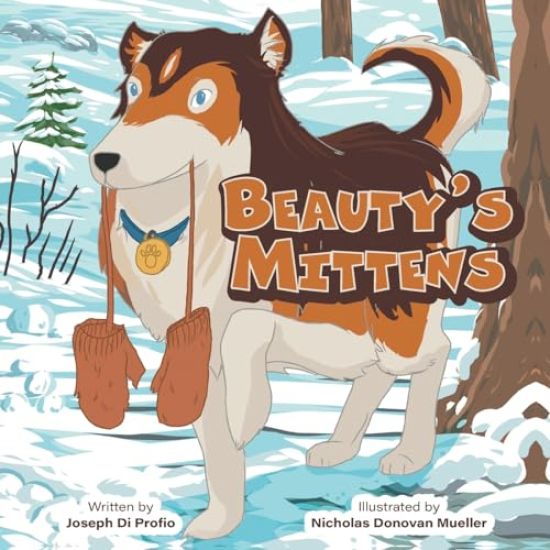
This book is all about love. It is the story of a family and its Collie dog, Beauty, as told by the dog. Beauty is a Rough Collie, with a classic layered coat and a real attitude. The theme of the story is the love of the family's children for Beauty and the return of that love by the Collie.In the story, the volume of Beauty's coat shedding presents many challenges, but also opportunities for the children's creativity. Jack and Kate collect the fur, shed by Beauty, until it fills their clothes closets. Mom's discovery of this treasure starts the adventure of finding a solution to "saving this part of Beauty". The family, and the extended family, must work together to produce a creative solution. And so, this story was born This is a Read Aloud book for children ages 3 -11, and their parents, grandparents, aunts, and uncles, who will read this book to them until they are able to read it for themselves.Additional activities and learning opportunities are included at the end of the story. These were provided by Primary school specialist Carollynn Desjardins. Young readers will enjoy the search and find puzzle in which they look for Beauty's paw print hidden in each of the 24 colourful illustrations. This search will help the story come alive for the children.
This book is all about love. It is the story of a family and its Collie dog, Beauty, as told by the dog. Beauty is a Rough Collie, with a classic layered coat and a real attitude. The theme of the story is the love of the family's children for Beauty and the return of that love by the Collie.In the story, the volume of Beauty's coat shedding presents many challenges, but also opportunities for the children's creativity. Jack and Kate collect the fur, shed by Beauty, until it fills their clothes closets. Mom's discovery of this treasure starts the adventure of finding a solution to "saving this part of Beauty". The family, and the extended family, must work together to produce a creative solution. And so, this story was born This is a Read Aloud book for children ages 3 -11, and their parents, grandparents, aunts, and uncles, who will read this book to them until they are able to read it for themselves.Additional activities and learning opportunities are included at the end of the story. These were provided by Primary school specialist Carollynn Desjardins. Young readers will enjoy the search and find puzzle in which they look for Beauty's paw print hidden in each of the 24 colourful illustrations. This search will help the story come alive for the children.