Kirjojen hintavertailu. Mukana 11 699 587 kirjaa ja 12 kauppaa.

Kirjahaku

Etsi kirjoja tekijän nimen, kirjan nimen tai ISBN:n perusteella.

1000 tulosta hakusanalla Joseph E LeBlanc

Oh Joe!

Oh Joe!

Joseph E LeBlanc

iUniverse
2003
pokkari
"Oh Joe!" is a must read for anyone who has experienced grief and loss and struggles to survive. Other books have been written about the stages of grief. This one eloquently conveys in poem the complex feelings of the grieving process that others describe with clinical observation. There are no platitudes, no easy answers here. Joseph LeBlanc speaks from the heart about the anguish of loss and how it feels. It is a father's personal struggle to survive the loss of his son so piercing you will feel you are there and fall to your knees in thanks that you are not. He speaks to us of feelings of loss we all have in a way that cannot help but leave you touched. It is rare that a man would expose this much of himself. It is rarer still that he would write about it for all to read. We should be thankful for this glimpse into the recesses of soul within us all.
Oh Joe!

Oh Joe!

Joseph E LeBlanc

iUniverse
2003
sidottu
"Oh Joe!" is a must read for anyone who has experienced grief and loss and struggles to survive. Other books have been written about the stages of grief. This one eloquently conveys in poem the complex feelings of the grieving process that others describe with clinical observation. There are no platitudes, no easy answers here. Joseph LeBlanc speaks from the heart about the anguish of loss and how it feels. It is a father's personal struggle to survive the loss of his son so piercing you will feel you are there and fall to your knees in thanks that you are not. He speaks to us of feelings of loss we all have in a way that cannot help but leave you touched. It is rare that a man would expose this much of himself. It is rarer still that he would write about it for all to read. We should be thankful for this glimpse into the recesses of soul within us all.
Selected Works of Joseph E. Stiglitz

Selected Works of Joseph E. Stiglitz

Joseph E. Stiglitz

Oxford University Press
2008
sidottu
This is the first volume in a new, definitive, six-volume edition of the works of Joseph Stiglitz, one of today's most distinguished and controversial economists. Stiglitz was awarded the Nobel Prize in Economics in 2001 for his work on asymmetric information and is widely acknowledged as one of the pioneers in the field of modern information economics and more generally for his contributions to microeconomics. Volume I includes a number of classic papers which helped to form the foundations for the field of the economics of information. Stiglitz reflects on his work and the field more generally throughout the volume by including substantial original introductions to the Selected Works, the volume as a whole, and each part within the volume. The volume includes a number of foundational papers, specifically looking at market equilibrium with adverse selection, moral hazard, and screening. This volume sets out the basic concepts underlying the economics of information, while volume II goes a step further by applying and extending these concepts in a number of different settings in labour, capital, and product markets.
Selected Works of Joseph E. Stiglitz

Selected Works of Joseph E. Stiglitz

Joseph E. Stiglitz

Oxford University Press
2013
sidottu
This is the second of six volumes in a series of selected scientific papers by one of the world's most distinguished economists. Volume I presented the basic concepts in the Economics of Information, showing that markets in which information was imperfect or asymmetric (where some individuals know things that others don't) behave markedly different from how they would if information were perfect. Volume II, with papers written between 1969 and 2009, explores the implications of the New Information Paradigm for labor, capital, and product markets. This New Paradigm, for which Stiglitz was awarded the Nobel Memorial Prize in Economics in 2001, has fundamentally changed the way we think about every aspect of economics, raising new questions on corporate governance, and leading us to reconsider old questions on corporate finance, the relationship between finance and the economy, and the theory of economic incentives. While this volume focuses on the application of basic principles, it also extends the theory in important ways, showing the fruitfulness of Stiglitz's research strategy. In doing so, the papers set the ground for questioning some prevailing doctrines: key market phenomena cannot be explained by markets with rational expectations, even when information is imperfect. It demonstrates that how societies organize the obtainment, processing, and transmitting of information is as important as how they organize the production and distribution of goods. Indeed, the two issues are inseparable. The papers thus lay the foundations of a New Institutional Economics, not only describing how institutions (like sharecropping or banks) work and affect resource allocations, but why they arise and take on particular forms.
Selected Works of Joseph E. Stiglitz

Selected Works of Joseph E. Stiglitz

Joseph E. Stiglitz

Oxford University Press
2019
sidottu
This is the third volume in a new, definitive, six-volume edition of the works of Joseph Stiglitz, one of today's most distinguished and controversial economists. Stiglitz was awarded the Nobel Prize in Economics in 2001 for his work on asymmetric information and is widely acknowledged as one of the pioneers in the field of modern information economics and more generally for his contributions to microeconomics. Volume III contains a selection of Joseph E. Stiglitz's work on microeconomics. It questions well-established tenets, including many that are so fundamental they are almost taken for granted, covering basic concepts of risk and markets; the management of risk; the theory of the firm; the economics of organization; and theory of human behaviour. Stiglitz reflects on his work and the field more generally throughout the volume by including substantial original introductions to the Selected Works, the volume as a whole, and each part within the volume.
Joseph E. Davies

Joseph E. Davies

Elizabeth Maclean

Praeger Publishers Inc
1992
sidottu
This biography is a complete reassessment of an important American envoy to the Soviet Union in years that were critical in determining postwar East-West relations. Using formerly untouched primary sources, Dr. MacLean sheds a different light on a controversial figure and on his relationship with world leaders, senior diplomats, and Soviet experts during the period under study. She offers intimate glimpses into the perceptions and motivations behind major U.S. and Soviet policies from 1936 to 1946. Her fascinating account of this practical idealist is good reading for all interested in diplomatic history and Soviet-American relations. This is a close study of the complex political, philosophical, and personal factors that guided Joseph Davies in his dealings with Roosevelt, Truman, Stalin and Lipvinov, Molotov, Kennan, and Bohlen, to name just a few. A more balanced interpretation can now be offered of Davies than the traditional two-dimensional stereotype.
Joseph E. Yoakum

Joseph E. Yoakum

Yale University Press
2021
sidottu
The extraordinary life of a captivating American artist, beautifully illustrated with his dreamlike drawings Much of Joseph Elmer Yoakum’s story comes from the artist himself—and is almost too fantastic to believe. At a young age, Yoakum (1891–1972) traveled the globe with numerous circuses; he later served in a segregated noncombat regiment during World War I before settling in Chicago. There, inspired by a dream, he began his artistic career at age seventy-one, producing some two thousand drawings over a decade. How did Yoakum gain representation in major museum collections in Chicago and New York? What fueled his process, which he described as a “spiritual unfoldment”? This volume delves into the friendships Yoakum forged with the Chicago Imagists that secured his place in art history, explores the religious outlook that may have helped him cope with a racially fractured city, and examines his complicated relationship to African American and Native American identities. With hundreds of beautiful color reproductions of his dreamlike drawings, it offers the most comprehensive study of the artist’s work, illuminating his vivid and imaginative creativity and giving definition and dimension to his remarkable biography.Distributed for the Art Institute of ChicagoExhibition Schedule:The Art Institute of Chicago (June 12–October 18, 2021)Museum of Modern Art, New York (November 28, 2021–March 18, 2022)Menil Collection, Houston (April 22–August 7, 2022)
Joseph E. Johnston

Joseph E. Johnston

Craig L. Symonds

WW Norton Co
1994
nidottu
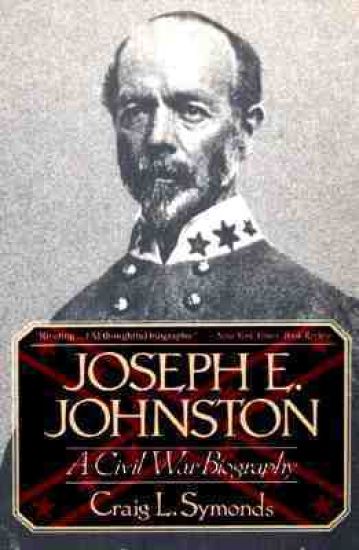
General Joseph E. Johnston was in command of Confederate forces at the South's first victory—Manassas in July 1861—and at its last—Bentonville in April 1965. Many of his contemporaries considered him the greatest southern field commander of the war; others ranked him second only to Robert E. Lee. But Johnston was an enigmatic man. His battlefield victories were never decisive. He failed to save Confederate forces under siege by Grant at Vicksburg, and he retreated into Georgia in the face of Sherman's march. His intense feud with Jefferson Davis ensured the collapse of the Confederacy's western campaign in 1864 and made Johnston the focus of a political schism within the government. Now in this rousing narrative of Johnston's dramatic career, Craig L. Symonds gives us the first rounded portrait of the general as a public and private man.
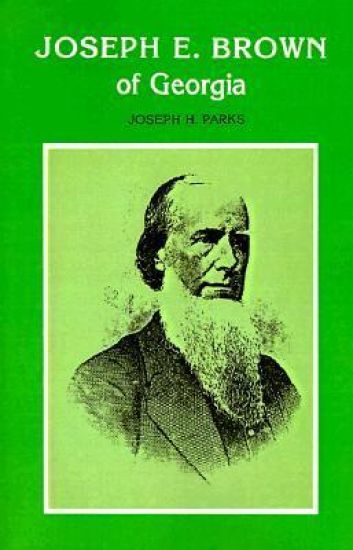
Joseph E. Brown of Georgia

Joseph E. Brown of Georgia

Joseph Howard Parks

Louisiana State University Press
1999
nidottu
Joseph Brown was a pivotal figure in southern history and a prototype of a new breed of southern politician in the mid-nineteenth century-the hill country newcomer who was considered to represent the ""common man.""As governor of Georgia from 1857 to 1865, Brown enthusiastically supported the Confederacy in the early years of the war, though he refused to sacrifice what he considered states' rights to the interest of a Confederate victory. Brown was constantly at odds with Jefferson Davis concerning Georgia's supply of Confederate troops and was openly hostile, to the .point of urging Davis' removal over the matters of conscription and the suspension of habeas corpus. When defeat came for the South, Brown accepted the collapse of the old economic order as quickly as he did the loss of slavery and states' rights. He advocated a new South and amassed a fortune in the development of real estate, mining, and railroads. He turned Republican and promoted congressional Reconstruction measures, temporarily losing his influence in Georgia. But in 1871 he rejoined the Democratic party and served in the United States Senate from 1880 to 1891.Here is the first full-scale biography of a man of meager education and limited political experience who worked his way from the North Georgia mountains to the positions of governor and United States senator. Drawing on previously unavailable documents, Parks captures the mood of Georgia as well as the personality of this astute and controversial politician.