Kirjojen hintavertailu. Mukana 11 244 527 kirjaa ja 12 kauppaa.

Kirjahaku

Etsi kirjoja tekijän nimen, kirjan nimen tai ISBN:n perusteella.

1000 tulosta hakusanalla Joseph McBride

How Did Lubitsch Do It?

How Did Lubitsch Do It?

Joseph McBride

Columbia University Press
2018
sidottu
Orson Welles called Ernst Lubitsch (1892–1947) “a giant” whose “talent and originality are stupefying.” Jean Renoir said, “He invented the modern Hollywood.” Celebrated for his distinct style and credited with inventing the classic genre of the Hollywood romantic comedy and helping to create the musical, Lubitsch won the admiration of his fellow directors, including Alfred Hitchcock and Billy Wilder, whose office featured a sign on the wall asking, “How would Lubitsch do it?” Despite the high esteem in which Lubitsch is held, as well as his unique status as a leading filmmaker in both Germany and the United States, today he seldom receives the critical attention accorded other major directors of his era.How Did Lubitsch Do It? restores Lubitsch to his former stature in the world of cinema. Joseph McBride analyzes Lubitsch’s films in rich detail in the first in-depth critical study to consider the full scope of his work and its evolution in both his native and adopted lands. McBride explains the “Lubitsch Touch” and shows how the director challenged American attitudes toward romance and sex. Expressed obliquely, through sly innuendo, Lubitsch’s risqué, sophisticated, continental humor engaged the viewer’s intelligence while circumventing the strictures of censorship in such masterworks as The Marriage Circle, Trouble in Paradise, Design for Living, Ninotchka, The Shop Around the Corner, and To Be or Not to Be. McBride’s analysis of these films brings to life Lubitsch’s wit and inventiveness and offers revealing insights into his working methods.
How Did Lubitsch Do It?

How Did Lubitsch Do It?

Joseph McBride

Columbia University Press
2020
pokkari
Orson Welles called Ernst Lubitsch (1892–1947) “a giant” whose “talent and originality are stupefying.” Jean Renoir said, “He invented the modern Hollywood.” Celebrated for his distinct style and credited with inventing the classic genre of the Hollywood romantic comedy and helping to create the musical, Lubitsch won the admiration of his fellow directors, including Alfred Hitchcock and Billy Wilder, whose office featured a sign on the wall asking, “How would Lubitsch do it?” Despite the high esteem in which Lubitsch is held, as well as his unique status as a leading filmmaker in both Germany and the United States, today he seldom receives the critical attention accorded other major directors of his era.How Did Lubitsch Do It? restores Lubitsch to his former stature in the world of cinema. Joseph McBride analyzes Lubitsch’s films in rich detail in the first in-depth critical study to consider the full scope of his work and its evolution in both his native and adopted lands. McBride explains the “Lubitsch Touch” and shows how the director challenged American attitudes toward romance and sex. Expressed obliquely, through sly innuendo, Lubitsch’s risqué, sophisticated, continental humor engaged the viewer’s intelligence while circumventing the strictures of censorship in such masterworks as The Marriage Circle, Trouble in Paradise, Design for Living, Ninotchka, The Shop Around the Corner, and To Be or Not to Be. McBride’s analysis of these films brings to life Lubitsch’s wit and inventiveness and offers revealing insights into his working methods.
Billy Wilder

Billy Wilder

Joseph McBride

Columbia University Press
2021
sidottu
The director and cowriter of some of the world's most iconic films—including Double Indemnity, Sunset Blvd., Some Like It Hot, and The Apartment—Billy Wilder earned acclaim as American cinema's greatest social satirist. Though an influential fixture in Hollywood, Wilder always saw himself as an outsider. His worldview was shaped by his background in the Austro-Hungarian Empire and work as a journalist in Berlin during Hitler's rise to power, and his perspective as a Jewish refugee from Nazism lent his films a sense of the peril that could engulf any society.In this critical study, Joseph McBride offers new ways to understand Wilder's work, stretching from his days as a reporter and screenwriter in Europe to his distinguished as well as forgotten films as a Hollywood writer and his celebrated work as a writer-director. In contrast to the widespread view of Wilder as a hardened cynic, McBride reveals him to be a disappointed romantic. Wilder's experiences as an exile led him to mask his sensitivity beneath a veneer of wisecracking that made him a celebrated caustic wit. Amid the satirical barbs and exposure of social hypocrisies, Wilder’s films are marked by intense compassion and a profound understanding of the human condition.Mixing biographical insight with in-depth analysis of films from throughout Wilder's career as a screenwriter and director of comedy and drama, and drawing on McBride's interviews with the director and his collaborators, this book casts new light on the full range of Wilder's rich, complex, and distinctive vision.
George Cukor's People

George Cukor's People

Joseph McBride

Columbia University Press
2025
sidottu
The director of classic films such as Sylvia Scarlett, The Philadelphia Story, Gaslight, Adam’s Rib, A Star Is Born, and My Fair Lady, George Cukor is widely admired but often misunderstood. Reductively stereotyped in his time as a “woman’s director”—a thinly veiled, disparaging code for “gay”—he brilliantly directed a wide range of iconic actors and actresses, including Cary Grant, Greta Garbo, Spencer Tracy, Joan Crawford, Marilyn Monroe, and Maggie Smith. As Katharine Hepburn, the star of ten Cukor films, told the director, “All the people in your pictures are as goddamned good as they can possibly be, and that’s your stamp.”In this groundbreaking, lavishly illustrated critical study, Joseph McBride provides insightful and revealing essayistic portraits of Cukor’s actors in their most memorable roles. The queer filmmaker gravitated to socially adventurous, subversively rule-breaking, audacious dreamers who are often sexually transgressive and gender fluid in ways that seem strikingly modern today. McBride shows that Cukor’s seemingly self-effacing body of work is characterized by a discreet way of channeling his feelings through his actors. He expertly cajoled actors, usually gently but sometimes with bracing harshness, to delve deeply into emotional areas they tended to keep safely hidden. Cukor’s wry wit, his keen sense of psychological and social observation, his charm and irony, and his toughness and resilience kept him active for more than five decades in Hollywood. George Cukor’s People gives him the in-depth, multifaceted examination his rich achievement deserves.
Billy Wilder

Billy Wilder

Joseph McBride

Columbia University Press
2024
pokkari
The director and cowriter of some of the world's most iconic films—including Double Indemnity, Sunset Blvd., Some Like It Hot, and The Apartment—Billy Wilder earned acclaim as American cinema's greatest social satirist. Though an influential fixture in Hollywood, Wilder always saw himself as an outsider. His worldview was shaped by his background in the Austro-Hungarian Empire and work as a journalist in Berlin during Hitler's rise to power, and his perspective as a Jewish refugee from Nazism lent his films a sense of the peril that could engulf any society.In this critical study, Joseph McBride offers new ways to understand Wilder's work, stretching from his days as a reporter and screenwriter in Europe to his distinguished as well as forgotten films as a Hollywood writer and his celebrated work as a writer-director. In contrast to the widespread view of Wilder as a hardened cynic, McBride reveals him to be a disappointed romantic. Wilder's experiences as an exile led him to mask his sensitivity beneath a veneer of wisecracking that made him a celebrated caustic wit. Amid the satirical barbs and exposure of social hypocrisies, Wilder’s films are marked by intense compassion and a profound understanding of the human condition.Mixing biographical insight with in-depth analysis of films from throughout Wilder's career as a screenwriter and director of comedy and drama, and drawing on McBride's interviews with the director and his collaborators, this book casts new light on the full range of Wilder's rich, complex, and distinctive vision.
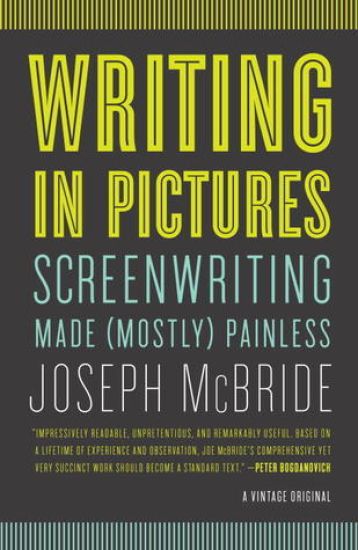
Writing in Pictures: Screenwriting Made (Mostly) Painless
Writing in Pictures is a refreshingly practical and entertaining guide to screenwriting that provides what is lacking in most such books: a clear, step-by-step demonstration of how to write a screenplay. Seasoned screenwriter and writing teacher Joseph McBride breaks down the process into a series of easy, approachable tasks, focusing on literary adaptation as the best way to learn the basics and avoiding the usual formulaic approach. With its wealth of useful tips, along with colorful insights from master screenwriters past and present, this book is invaluable for anyone who wants to learn the craft of screen storytelling. CONTENTS Introduction: Who Needs Another Book on Screenwriting? Part I: Storytelling1: So Why Write Screenplays?2: What Is Screenwriting? 3: Stories: What They Are and How to Find Them4: Ten Tips for the Road Ahead Part II: Adaptation5: Breaking the Back of the Book: or, The Art of AdaptationSTEP 1: THE STORY OUTLINE6: Research and Development STEP 2: THE ADAPTATION OUTLINE7: The Elements of ScreenwritingSTEP 3: THE CHARACTER BIOGRAPHY8: Exploring Your Story and How to Tell ItSTEP 4: THE TREATMENT Part III: Production9: Who Needs Formatting?10: Actors Are Your Medium 11: Dialogue as ActionSTEP 5: THE STEP OUTLINE12: The Final Script13: Epilogue: Breaking into Professional Filmmaking Appendix A: The Basic Steps in the Screenwriting ProcessAppendix B: "To Build A Fire" by Jack LondonSelected BibliographyAcknowledgments Index
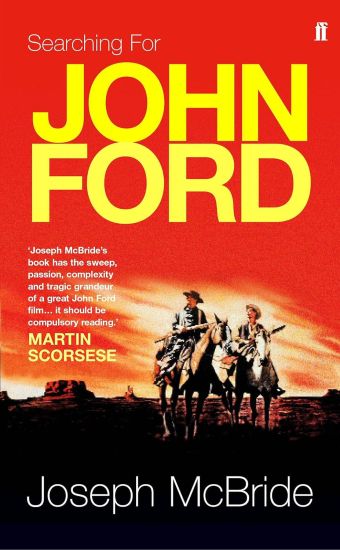
Searching for John Ford

Searching for John Ford

Joseph McBride

Faber Faber
2004
pokkari
'Joseph Mcbride's book has the sweep, passion, complexity and tragic grandeur of a great John Ford film - it should be compulsory reading.' Martin ScorseseJohn Ford's many classic movies - among them Stagecoach, The Grapes of Wrath, The Quiet Man, The Searchers, and The Man Who Shot Liberty Valance - earned him worldwide praise and renown. Now Joseph McBride presents us with the definitive account of the man's myriad complexities and contradictions, tracing Ford's life from his modest beginnings as 'Bull' Feeney, the nearsighted football-playing son of Irish immigrants in Maine, to his recognition, after a long, controversial, and much-decorated career, as America's national myth-maker. This deeply insightful and impeccably documented narrative is the epic tribute that Ford's stature merits.
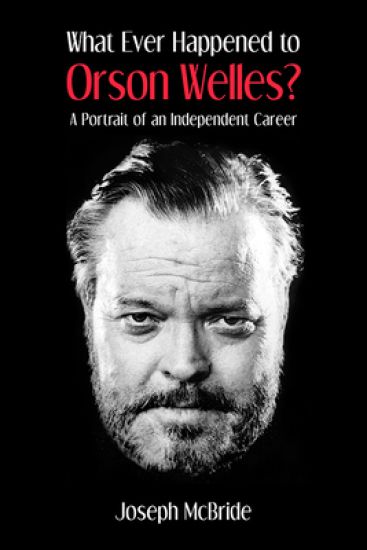
What Ever Happened to Orson Welles?: A Portrait of an Independent Career
In this intimate and often surprising personal portrait, Joseph McBride challenges the conventional wisdom that Welles's career after Citizen Kane, widely regarded as the greatest film ever made, fell into a long decline. The author shows instead how Welles never stopped directing radical, adventurous films and was always breaking new artistic ground as a filmmaker. McBride is the first author to provide a comprehensive examination of the films of Welles's artistically rich yet widely misunderstood later period in the United States (1970--1985), when McBride knew the director and worked with him as an actor. To put Welles's later years into context, the author reexamines the filmmaker's entire life and career. This newly updated edition rounds out the story with a final chapter analyzing The Other Side of the Wind, finally completed in 2018 -- Welles's personal testament on filmmaking -- and his rediscovered 1938 film, Too Much Johnson. McBride offers many fresh insights into the collapse of Welles's Hollywood career in the 1940s, his subsequent political blacklisting, and his long period of European exile. An enlightening and entertaining look at Welles's brilliant and enigmatic career as a filmmaker, What Ever Happened to Orson Welles? serves as a major reinterpretation of Welles's life and work. McBride's revealing portrait of this great artist changes the framework for how Orson Welles is understood as a man, an actor, a political figure, and a filmmaker.
Searching for John Ford

Searching for John Ford

Joseph McBride

University Press of Mississippi
2011
nidottu
John Ford's classic films--such as Stagecoach, The Grapes of Wrath, How Green Was My Valley, The Quiet Man, and The Searchers--have earned him worldwide admiration as America's foremost filmmaker, a director whose rich visual imagination conjures up indelible, deeply moving images of our collective past.Joseph McBride's Searching for John Ford, described as definitive by both the New York Times and the Irish Times, surpasses all other biographies of the filmmaker in its depth, originality, and insight. Encompassing and illuminating Ford's myriad complexities and contradictions, McBride traces the trajectory of Ford's life from his beginnings as ""Bull"" Feeney, the nearsighted, football-playing son of Irish immigrants in Portland, Maine, to his recognition, after a long, controversial, and much-honored career, as America's national mythmaker. Blending lively and penetrating analyses of Ford's films with an impeccably documented narrative of the historical and psychological contexts in which those films were created, McBride has at long last given John Ford the biography his stature demands.
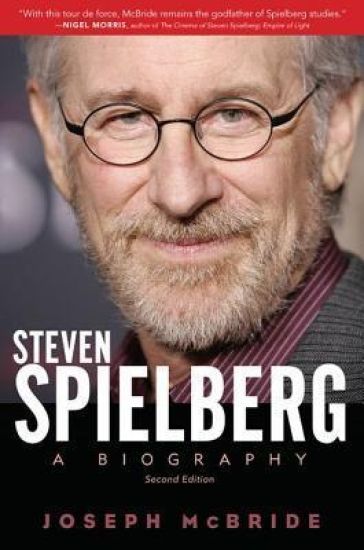
Steven Spielberg

Steven Spielberg

Joseph McBride

University Press of Mississippi
2011
nidottu
Until the first edition of Steven Spielberg: A Biography was published in 1997, much about Spielberg's personality and the forces that shaped it had remained enigmatic, in large part because of his tendency to obscure and mythologize his own past. But in this first full-scale, in-depth biography of Spielberg, Joseph McBride reveals hidden dimensions of the filmmaker's personality and shows how deeply personal even his most commercial work has been.This new edition adds four chapters to Spielberg's life story, chronicling his extraordinarily active and creative period from 1997 to the present, a period in which he has balanced his executive duties as one of the partners in the film studio DreamWorks SKG with a remarkable string of films as a director. Spielberg's ambitious recent work--including Amistad, Saving Private Ryan, A. I. Artifucial Intelligence, Minority Report, The Terminal and Munich--has continually expanded his range both stylistically and in terms of adventurous, often controversial, subject matter.Steven Spielberg: A Biography brought about a reevaluation of the great filmmaker's life and work by those who viewed him as merely a facile entertainer. This new edition guides readers through the mature artistry of Spielberg's later period in which he manages, against considerable odds, to run a successful studio while maintaining and enlarging his high artistic standards as one of America's most thoughtful, sophisticated, and popular filmmakers.
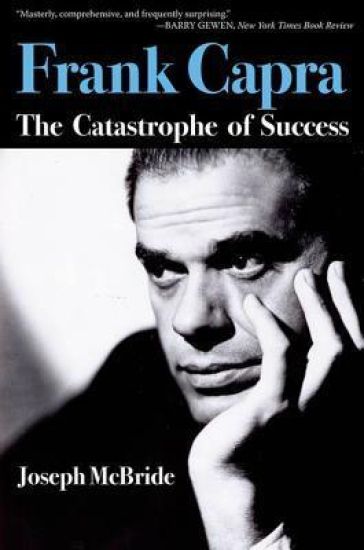
Frank Capra

Frank Capra

Joseph McBride

University Press of Mississippi
2011
nidottu
Moviegoers often assume Frank Capra's life resembled his beloved films (such as Mr. Smith Goes to Washington and It's a Wonderful Life). A man of the people faces tremendous odds and, by doing the right thing, triumphs! But as Joseph McBride reveals in this meticulously researched, definitive biography, the reality was far more complex, a true American tragedy. Using newly declassified U.S. government documents about Capra's response to being considered a possible ""subversive"" during the post-World War II Red Scare, McBride adds a final chapter to his unforgettable portrait of the man who gave us It Happened One Night, Mr. Deeds Goes to Town, and Meet John Doe.
The Whole Durn Human Comedy: Life According to the Coen Brothers
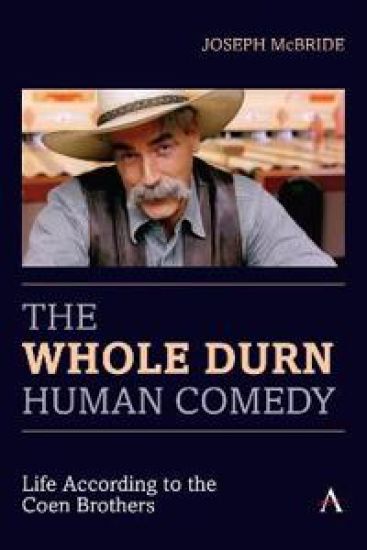
The Coen Bros. have attracted a wide following and been rewarded with Oscars and other honors. Some of their films are cult favorites and box office hits, such as Fargo, The Big Lebowski, and No Country for Old Men. Yet the team of filmmaking brothers remains misunderstood in some circles. Ethan and Joel Coen deliberately unsettle conventional expectations and raise disturbing questions about human nature while mischievously mixing film genres and styles. Their films display shocking tonal shifts as they blend comedy and drama and, most controversially, comedy and violence. This potent mélange of themes and stylistic approaches makes the Coens’ films adventurous, unpredictable probes into contemporary social anxieties. As brilliant satirists, they are heirs to Preston Sturges and Billy Wilder. But they resist easy definition and raise the ire of some critics who like films to fit more comfortably into preexisting formats. Film historian and critic Joseph McBride — author of acclaimed biographies of Frank Capra, John Ford, and Steven Spielberg, along with critical studies of Orson Welles, Ernst Lubitsch, and Wilder — jousts with the Coens’ detractors while defining the filmmakers’ freshness and originality. The quirkily individualistic Coens are the kind of personal filmmakers the increasingly conglomerated American cinema rarely fosters anymore, and this critical study illuminates their artistic personalities and contributions.
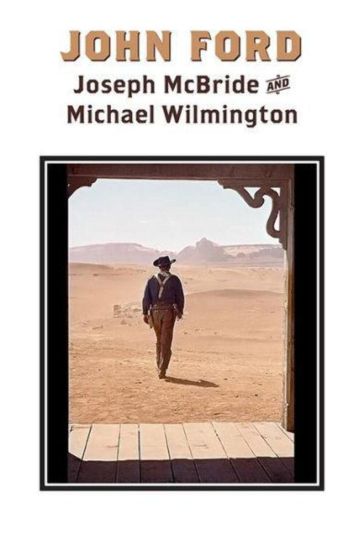
John Ford

John Ford

Joseph McBride; Michael Wilmington

THE UNIVERSITY PRESS OF KENTUCKY
2024
nidottu
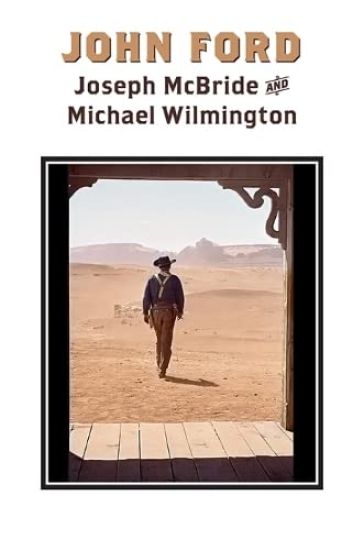
Orson Welles was once asked which directors he most admired. He replied: "The old masters. By which I mean John Ford, John Ford, and John Ford." A legend in his own time, John Ford (1894–1973) received a record four Academy Awards for best director, and two of his World War II documentaries won Oscars for the US Navy. He directed 136 films in a career that lasted from the early silent era through the late 1960s. Ford is celebrated throughout the world as the cinema's foremost chronicler of American history, the leading poet of the Western genre, and a wide-ranging filmmaker of profound emotional impact. His classic films - including Stagecoach (1939), The Grapes of Wrath (1940), How Green Was My Valley (1941), The Quiet Man (1952), The Searchers (1956), and The Man Who Shot Liberty Valance (1962) - remain widely popular, and he has been acknowledged as a major influence on filmmakers such as Jean Renoir, Ingmar Bergman, Akira Kurosawa, Howard Hawks, Frank Capra, Samuel Fuller, Elia Kazan, Sidney Lumet, Martin Scorsese, Steven Spielberg, and George Lucas. In this groundbreaking critical study, Joseph McBride and Michael Wilmington provide an overview of Ford's career as well as in-depth analyses of key Ford films. Analyzing recurring Fordian themes and relating each film to his entire body of work, the authors insightfully explore the full richness of Ford's tragicomic vision of history. This new and revised version includes a study of the twenty-seven Ford silent films now known to survive in whole or in part (more than double the number available when the original edition was published); essays on three controversial aspects of Ford: his tragicomic sensibility, his views of race, and the influence of his Irish heritage; and an expanded version of McBride's interview with Ford on the last day of his career.
John Ford

John Ford

Joseph McBride; Michael Wilmington

THE UNIVERSITY PRESS OF KENTUCKY
2024
sidottu
Orson Welles was once asked which directors he most admired. He replied: "The old masters. By which I mean John Ford, John Ford, and John Ford." A legend in his own time, John Ford (1894–1973) received a record four Academy Awards for best director, and two of his World War II documentaries won Oscars for the US Navy. He directed 136 films in a career that lasted from the early silent era through the late 1960s. Ford is celebrated throughout the world as the cinema's foremost chronicler of American history, the leading poet of the Western genre, and a wide-ranging filmmaker of profound emotional impact. His classic films - including Stagecoach (1939), The Grapes of Wrath (1940), How Green Was My Valley (1941), The Quiet Man (1952), The Searchers (1956), and The Man Who Shot Liberty Valance (1962) - remain widely popular, and he has been acknowledged as a major influence on filmmakers such as Jean Renoir, Ingmar Bergman, Akira Kurosawa, Howard Hawks, Frank Capra, Samuel Fuller, Elia Kazan, Sidney Lumet, Martin Scorsese, Steven Spielberg, and George Lucas. In this groundbreaking critical study, Joseph McBride and Michael Wilmington provide an overview of Ford's career as well as in-depth analyses of key Ford films. Analyzing recurring Fordian themes and relating each film to his entire body of work, the authors insightfully explore the full richness of Ford's tragicomic vision of history. This new and revised version includes a study of the twenty-seven Ford silent films now known to survive in whole or in part (more than double the number available when the original edition was published); essays on three controversial aspects of Ford: his tragicomic sensibility, his views of race, and the influence of his Irish heritage; and an expanded version of McBride's interview with Ford on the last day of his career.
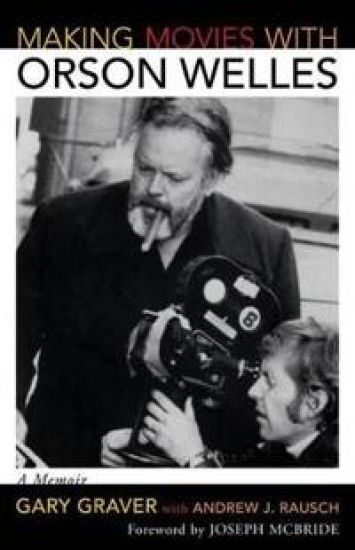
Making Movies with Orson Welles

Making Movies with Orson Welles

Gary Graver; Joseph McBride

Scarecrow Press
2008
sidottu
In 1958, Gary Graver moved from his hometown of Portland, Oregon to Los Angeles, California with dreams of an acting career in Hollywood. Soon after his arrival, he caught a double bill in a small theater on Hollywood Boulevard, the lower half of which was the recently released Touch of Evil. Upon viewing the B classic, Graver decided he wanted to be a director and spent many years honing his craft, as both a cinematographer and a director, not to mention writer, actor, and producer—much like his idol, Orson Welles. In 1970, when Graver learned that Welles was in town, he impulsively called up the director and offered him his services as a cameraman. It was only the second time in Welles's career that he had received such an offer from a cinematographer, the other being from Gregg Toland, who worked on one of the greatest films ever, Citizen Kane. In Making Movies with Orson Welles, Graver recounts the highs and lows of the moviemaking business as he and one of the most important and influential directors of all time struggled to get films produced. The two men collaborated on more than a dozen projects, including F for Fake, Filming Othello, and the still-unreleased The Other Side of the Wind. Their close friendship and creative filmmaking partnership would endure for 15 years, until Welles' death in 1985. Also including a filmography of works and 20 photos from Graver's personal collection, this fascinating memoir recalls what it was like to work with the legendary Welles and offers advice and tales of caution for future filmmakers.
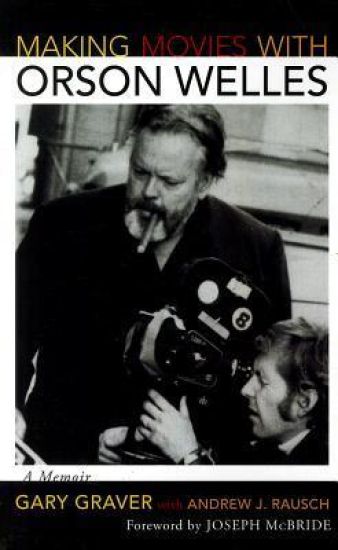
Making Movies with Orson Welles

Making Movies with Orson Welles

Gary Graver; Joseph McBride

Scarecrow Press
2011
nidottu
In 1958, Gary Graver moved from his hometown of Portland, Oregon to Los Angeles, California with dreams of an acting career in Hollywood. Soon after his arrival, he caught a double bill in a small theater on Hollywood Boulevard, the lower half of which was the recently released Touch of Evil. Upon viewing the B classic, Graver decided he wanted to be a director and spent many years honing his craft, as both a cinematographer and a director, not to mention writer, actor, and producer—much like his idol, Orson Welles.In 1970, when Graver learned that Welles was in town, he impulsively called up the director and offered him his services as a cameraman. It was only the second time in Welles's career that he had received such an offer from a cinematographer, the other being from Gregg Toland, who worked on one of the greatest films ever, Citizen Kane.In Making Movies with Orson Welles, Graver recounts the highs and lows of the moviemaking business as he and one of the most important and influential directors of all time struggled to get films produced. The two men collaborated on more than a dozen projects, including F for Fake, Filming Othello, and the still-unreleased The Other Side of the Wind. Their close friendship and creative filmmaking partnership would endure for 15 years, until Welles' death in 1985. Also including a filmography of works and 20 photos from Graver's personal collection, this fascinating memoir recalls what it was like to work with the legendary Welles and offers advice and tales of caution for future filmmakers.
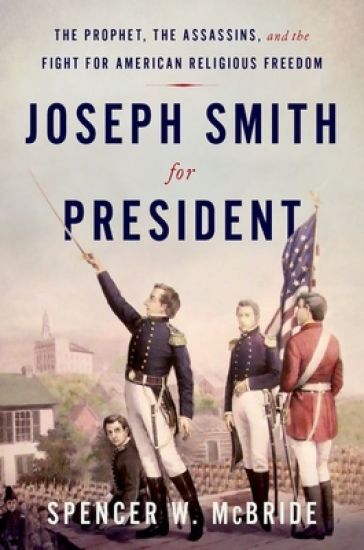
Joseph Smith for President

Joseph Smith for President

Spencer W. McBride

Oxford University Press Inc
2021
sidottu
By the election year of 1844, Joseph Smith, the controversial founder of the Church of Jesus Christ of Latter-day Saints, had amassed a national following of some 25,000 believers. Nearly half of them lived in the city of Nauvoo, Illinois, where Smith was not only their religious leader but also the mayor and the commander-in-chief of a militia of some 2,500 men. In less than twenty years, Smith had helped transform the American religious landscape and grown his own political power substantially. Yet the standing of the Mormon people in American society remained unstable. Unable to garner federal protection, and having failed to win the support of former president Martin Van Buren or any of the other candidates in the race, Smith decided to take matters into his own hands, launching his own bid for the presidency. While many scoffed at the notion that Smith could come anywhere close to the White House, others regarded his run—and his religion—as a threat to the stability of the young nation. Hounded by mobs throughout the campaign, Smith was ultimately killed by one—the first presidential candidate to be assassinated. Though Joseph Smith's run for president is now best remembered—when it is remembered at all—for its gruesome end, the renegade campaign was revolutionary. Smith called for the total abolition of slavery, the closure of the country's penitentiaries, and the reestablishment of a national bank to stabilize the economy. But Smith's most important proposal was for an expansion of protections for religious minorities. At a time when the Bill of Rights did not apply to individual states, Smith sought to empower the federal government to protect minorities when states failed to do so. Spencer W. McBride tells the story of Joseph Smith's quixotic but consequential run for the White House and shows how his calls for religious freedom helped to shape the American political system we know today.
Arts Education and Social-Emotional Learning Outcomes Among K-12 Students: Developing a Theory of Action

Arts Education and Social-Emotional Learning Outcomes Among K-12 Students: Developing a Theory of Action

Joseph Maurer; Meredith R. Aska McBride; Jenny Nagaoka

Consortium on Chicago School Research
2019
nidottu
Social and emotional learning is a topic of increasing focus in the education sector. Though definitions and terminology vary, at its core this trend reflects an increased interest among educators, administrators, parents, and other stakeholders in students' development of individual and interpersonal skills beyond the realm of academic achievement.This project, conducted as a partnership between Ingenuity and the University of Chicago Consortium on School Research, consists of two components: a review of literature on this topic and an interview-based fieldwork component with educators, administrators, students, and parents in Chicago Public Schools. The authors reviewed more than 200 studies on arts education spanning six decades. They also conducted focus groups and interviews with key participants in the arts education process-including educators, administrators, students, and parents-to evaluate evidence of the effects of arts education on social-emotional development in school and after-school settings. They found a widespread belief that arts education contributes to children's and adolescents' social-emotional development.