When Michael Bloomberg handed over the city to Bill de Blasio, New York and the country were experiencing record levels of income inequality. De Blasio was the first progressive elected to City Hall in twenty years. Invoking Fiorello La Guardia's name, he pledged to improve the lives of those marginalized by poverty and prejudice. Unlike La Guardia, de Blasio did not have allies in Washington like President Franklin D. Roosevelt who could effectively support his progressive agenda. As de Blasio approached the end of his first term, the situation worsened, with Donald Trump in the White House and a Republican-controlled Congress determined to further reduce social programs that help the needy. As a result, de Blasio's mayoralty is an illuminating case study of what mayors can and cannot do on their own to address economic and social inequality. As the Democratic Party attempts to reassemble a viable political coalition that cuts across boundaries of race, class and gender, de Blasio's efforts to redefine priorities in America's largest city is instructive. Joseph P. Viteritti's The Pragmatist is the first in-depth look at de Blasioboth the man himself and his policies in crucial areas such as housing, homelessness, education, and criminal justice. It is a test case for the viability of progressivism itself. Along the way, Viteritti introduces the reader to every NYC mayor since La Guardia. He covers progressives who breathed life into the "soul of the city" before the devastating fiscal crisis of 1975 put it on the brink of bankruptcy, and those post-fiscal crisis chief executives who served during times of limiting austerity. This engaging story of the rise, fall, and rebirth of progressivism in America's major urban center demonstrates that the road to progress has been a longand continuingjourney.
An immersive and authoritative history of the school choice movement--from its idealistic roots among Black activists to the costly unaccountable programs of today. Seventy years after Brown v. Board of Education and demands to desegregate public schools, race and class remain the most reliable predictors of educational achievement in America. In attempting to address this divide, many school reformers have championed school choice: solutions like charter schools, vouchers, and other innovations designed to build more options into the system. Today, at least thirty-three states have laws that enable parents to send their children to private and religious schools at public expense while forty-six states have legalized charter schools. In Radical Dreamers, Joseph P. Viteritti tells the definitive history of the school choice movement. In the 1990s, school choice emerged as an effort by a coalition of Black activists and conservative lawmakers seeking to offer economically disadvantaged students of color a way out of failing schools. As Viteritti shows, however, today's movement--championed by Republicans, conservatives, and faith-based organizations--has become less about placing disadvantaged children in better schools and more about providing public funding to students, irrespective of income, attending private--and frequently religious--schools. Viteritti, an education insider and supporter of school choice for underserved students, profiles six influential figures, the "radical dreamers," who were integral to understanding the movement for greater education equality and the role that choice can play in fully realizing the movement's potential. Radical Dreamers urges us to have an honest conversation about education in America and where we have gone wrong. Viteritti's compelling narrative of how some of the most passionate educators conceived of school choice provides a valuable context to our nation's long struggle to offer every child in America a good education, and how that goal was undermined by advocates on both the left and right.
The presidency of George W. Bush has polarized the church-state debate as never before. The Far Right has been emboldened to use religion to govern, while the Far Left has redoubled its efforts to evict religion from public life entirely. Fewer people on the Right seem to respect the church-state separation, and fewer people on the Left seem to respect religion itself--still less its free exercise in any situation that is not absolutely private. In The Last Freedom, Joseph Viteritti argues that there is a basic tension between religion and democracy because religion often rejects compromise as a matter of principle while democracy requires compromise to thrive. In this readable, original, and provocative book, Viteritti argues that Americans must guard against debasing politics with either antireligious bigotry or religious zealotry. Drawing on politics, history, and law, he defines a new approach to the church-state question that protects the religious and the secular alike. Challenging much conventional opinion, Viteritti argues that the courts have failed to adequately protect religious minorities, that the rights of the religious are under greater threat than those of the secular, and that democracy exacts greater compromises and sacrifices from the religious than it does from the secular. He takes up a wide range of controversies, including the pledge of allegiance, school prayer, school vouchers, evolution, abortion, stem-cell research, gay marriage, and religious displays on public property. A fresh and surprising approach to the church-state question, The Last Freedom is squarely aimed at the wide center of the public that is frustrated with the extremes of both the Left and the Right.
Joseph P. Kennedy's reputation as a savvy businessman, diplomat, and sly political patriarch is well-documented. But his years as a Hollywood mogul have never been fully explored until now. In Joseph P. Kennedy Presents, Cari Beauchamp brilliantly explores this unknown chapter in Kennedy's biography. Between 1926 and 1930, Kennedy positioned himself as a major Hollywood player. In two short years, he was running three studios simultaneously and then, in a bold move, he merged his studios with David Sarnoff to form the legendary RKO Studio. Beauchamp also tells the story of Kennedy's affair with Gloria Swanson; how he masterminded the mergers that created the blueprint for contemporary Hollywood; and made the fortune that became the foundation of his empire.
Joseph P. Kennedy reigned in Hollywood from 1926 to 1930, when he ran three movie studios, led the revolution in sound pictures, and created the first modern entertainment empire. Sorting through the archives of Kennedy deals, letters, and memos, Cari Beauchamp tells for the first time how he made it all happen, a miracle of smoke and mirrors that resulted in a gambit never seen before or since: the merger with RCA that resulted in RKO Studios. Beauchamp writes about the pictures Kennedy produced; the stars he made and ruined (including his lover, Gloria Swanson); and the Hollywood titans he charmed, cajoled, and battled, including William Randolph Hearst, in this fascinating tale of greed and business genius that shows how Kennedy not only made a fortune but changed the very nature of the business of moviemaking.
Joseph P. Kennedy reigned in Hollywood from 1926 to 1930, when he ran three movie studios, led the revolution in sound pictures, and created the first modern entertainment empire. Sorting through the archives of Kennedy deals, letters, and memos, Cari Beauchamp tells for the first time how he made it all happen, a miracle of smoke and mirrors that resulted in a gambit never seen before or since: the merger with RCA that resulted in RKO Studios. Beauchamp writes about the pictures Kennedy produced; the stars he made and ruined (including his lover, Gloria Swanson); and the Hollywood titans he charmed, cajoled, and battled, including William Randolph Hearst, in this fascinating tale of greed and business genius that shows how Kennedy not only made a fortune but changed the very nature of the business of moviemaking.
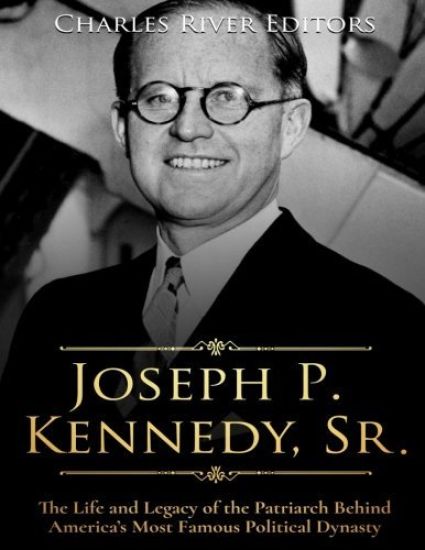
*Includes pictures *Includes online resources and a bibliography for further reading "We have a rich man, untrained in diplomacy, unlearned in history and politics, who is a great publicity seeker and who apparently is ambitious to be the first Catholic president of the U.S." - British MP Josiah Wedgwood's description of Joe Kennedy, Sr. as U.S. Ambassador to the United Kingdom In many ways, John Fitzgerald Kennedy and his young family were the perfect embodiment of the '60s. The decade began with a sense of idealism, personified by the attractive Kennedy, his beautiful and fashionable wife Jackie, and his young children. Months into his presidency, Kennedy exhorted the country to reach for the stars, calling upon the nation to send a man to the Moon and back by the end of the decade. In 1961, Kennedy made it seem like anything was possible, and Americans were eager to believe him. The Kennedy years were fondly and famously labeled "Camelot," by Jackie herself, suggesting an almost mythical quality about the young President and his family. As it turned out, the '60s closely reflected the glossy, idealistic portrayal of John F. Kennedy, as well as the uglier truths. The country would achieve Kennedy's goal of a manned moon mission, and the landmark Civil Rights Act of 1964 finally guaranteed minorities their civil rights and restored equality, ensuring that the country "would live out the true meaning of its creed." But the idealism and optimism of the decade was quickly shattered, starting with Kennedy's assassination in 1963. The '60s were permanently marred by the Vietnam War, and by the time Robert F. Kennedy and Martin Luther King, Jr. were assassinated in 1968, the country was irreversibly jaded. The events of the decade produced protests and countercultures unlike anything the country had seen before, as young people came of age more quickly than ever. While JFK was the member of the Kennedy dynasty to reach the White House, he was hardly the first to seek the presidency. In fact, that ambition was held by his father, Joseph P. Kennedy, Sr., the family's most controversial figure. The son of working class Irish Americans, Joe, Sr. fought his way to fame and fortune in every way available to him, both legal and illegally, morally and immorally. As he was in business, so he was with his family - devoted and underhanded, determined and cutthroat. He knew what he wanted for himself, his wife, and his children, and he was unwilling to let anyone or anything stand in the way. From his wife, he wanted children, devotion, and silence about his many affairs. From his sons, he wanted power and position. From his daughters, he expected beauty, grace, and absolute loyalty. For the most part, the Kennedy patriarch would get what he wanted, but he frequently paid a terrible price for it. Of course, Kennedy also had his own personal ambitions, which included residing in the White House. A mover and shaker in Democratic politics, he threw his support behind Franklin Roosevelt, a man he later came to hate. The most he got out of this alliance was a brief appointment as the U.S. Ambassador to the UK, where he made himself increasingly unpopular by devoutly opposing American involvement in World War II even as the situation got more desperate for the British by the day. Later, he wanted the presidency for his sons, three of which he would help bury. Finally, he wanted peace for himself and his family, a simple desire that proved to be more elusive than any of his more ambitious hopes. In the end, one of his peers may have summed it up best when he said, "I like Joe Kennedy but I have no illusions about him. He understands power. Everywhere he went, from Brahmin Boston to the Court of St. James's, he saw great hypocrisy about the philosophy of those who rule. Power is the end. What other delight is there but to enjoy the sheer sense of control?"
*Includes pictures *Includes online resources and a bibliography for further reading "We have a rich man, untrained in diplomacy, unlearned in history and politics, who is a great publicity seeker and who apparently is ambitious to be the first Catholic president of the U.S." - British MP Josiah Wedgwood's description of Joe Kennedy, Sr. as U.S. Ambassador to the United Kingdom In many ways, John Fitzgerald Kennedy and his young family were the perfect embodiment of the '60s. The decade began with a sense of idealism, personified by the attractive Kennedy, his beautiful and fashionable wife Jackie, and his young children. Months into his presidency, Kennedy exhorted the country to reach for the stars, calling upon the nation to send a man to the Moon and back by the end of the decade. In 1961, Kennedy made it seem like anything was possible, and Americans were eager to believe him. The Kennedy years were fondly and famously labeled "Camelot," by Jackie herself, suggesting an almost mythical quality about the young President and his family. As it turned out, the '60s closely reflected the glossy, idealistic portrayal of John F. Kennedy, as well as the uglier truths. The country would achieve Kennedy's goal of a manned moon mission, and the landmark Civil Rights Act of 1964 finally guaranteed minorities their civil rights and restored equality, ensuring that the country "would live out the true meaning of its creed." But the idealism and optimism of the decade was quickly shattered, starting with Kennedy's assassination in 1963. The '60s were permanently marred by the Vietnam War, and by the time Robert F. Kennedy and Martin Luther King, Jr. were assassinated in 1968, the country was irreversibly jaded. The events of the decade produced protests and countercultures unlike anything the country had seen before, as young people came of age more quickly than ever. While JFK was the member of the Kennedy dynasty to reach the White House, he was hardly the first to seek the presidency. In fact, that ambition was held by his father, Joseph P. Kennedy, Sr., the family's most controversial figure. The son of working class Irish Americans, Joe, Sr. fought his way to fame and fortune in every way available to him, both legal and illegally, morally and immorally. As he was in business, so he was with his family - devoted and underhanded, determined and cutthroat. He knew what he wanted for himself, his wife, and his children, and he was unwilling to let anyone or anything stand in the way. From his wife, he wanted children, devotion, and silence about his many affairs. From his sons, he wanted power and position. From his daughters, he expected beauty, grace, and absolute loyalty. For the most part, the Kennedy patriarch would get what he wanted, but he frequently paid a terrible price for it. Of course, Kennedy also had his own personal ambitions, which included residing in the White House. A mover and shaker in Democratic politics, he threw his support behind Franklin Roosevelt, a man he later came to hate. The most he got out of this alliance was a brief appointment as the U.S. Ambassador to the UK, where he made himself increasingly unpopular by devoutly opposing American involvement in World War II even as the situation got more desperate for the British by the day. Later, he wanted the presidency for his sons, three of which he would help bury. Finally, he wanted peace for himself and his family, a simple desire that proved to be more elusive than any of his more ambitious hopes. In the end, one of his peers may have summed it up best when he said, "I like Joe Kennedy but I have no illusions about him. He understands power. Everywhere he went, from Brahmin Boston to the Court of St. James's, he saw great hypocrisy about the philosophy of those who rule. Power is the end. What other delight is there but to enjoy the sheer sense of control?"
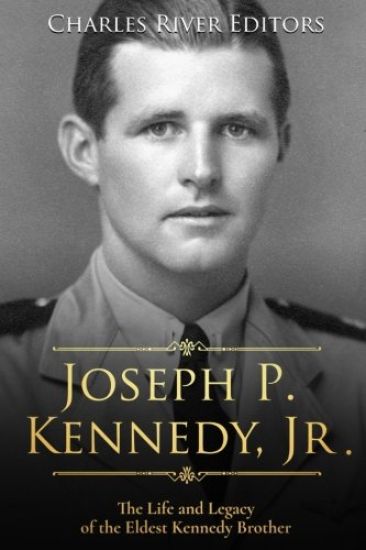
*Includes pictures *Includes online resources and a bibliography for further reading "This child is the future President of the nation." - John F. Fitzgerald, referring to his grandson, Joseph P. Kennedy, Jr. In many ways, John Fitzgerald Kennedy and his young family were the perfect embodiment of the '60s. The decade began with a sense of idealism, personified by the attractive Kennedy, his beautiful and fashionable wife Jackie, and his young children. Months into his presidency, Kennedy exhorted the country to reach for the stars, calling upon the nation to send a man to the Moon and back by the end of the decade. In 1961, Kennedy made it seem like anything was possible, and Americans were eager to believe him. The Kennedy years were fondly and famously labeled "Camelot," by Jackie herself, suggesting an almost mythical quality about the young President and his family. As it turned out, the '60s closely reflected the glossy, idealistic portrayal of John F. Kennedy, as well as the uglier truths. The country would achieve Kennedy's goal of a manned moon mission, and the landmark Civil Rights Act of 1964 finally guaranteed minorities their civil rights and restored equality, ensuring that the country "would live out the true meaning of its creed." But the idealism and optimism of the decade was quickly shattered, starting with Kennedy's assassination in 1963. The '60s were permanently marred by the Vietnam War, and by the time Robert F. Kennedy and Martin Luther King, Jr. were assassinated in 1968, the country was irreversibly jaded. The events of the decade produced protests and countercultures unlike anything the country had seen before, as young people came of age more quickly than ever. By the time Bobby Kennedy was killed, references to the infamous "Kennedy Curse" became more common, to the point that Americans are now familiar with the phrase, but if such a curse did truly exist, it did not originate with the fallen president or his younger brother. Instead, the first Kennedy to suffer an untimely death was the oldest brother, and the one originally expected to achieve a preeminent place in politics. Joseph Kennedy, Jr. was the expected heir to his father's dream of a Kennedy in the White House. His parents doted on their firstborn, even as more children followed in quick succession. They sent him to the best schools, made sure he made the right sort of friends, and constantly reminded him of his political destiny. Joseph Kennedy, Sr., who would reach the upper echelons of the federal government himself, groomed his son for a future in politics, encouraging him to refine his opinions and exposing him to the most important issues of the day. Handsome, bright, and charming, the rest of the Kennedy brothers looked up to Joe, Jr. Bobby would name his firstborn son after his oldest brother, and some of the time Bobby did serve in the Navy was aboard the USS Joseph P. Kennedy Jr., a Navy ship that would also form part of the blockade of Cuba ordered by President Kennedy at the height of the Cuban Missile Crisis. Unfortunately, as those facts suggest, Joe, Jr. would be one of millions of young men across the world who had to confront issues in the 1930s that proved more volatile than just about any other time in history. As he came of age, Joe was weighing in on Hitler and his Nazi followers, and when America entered World War II, there was no question he would fight in some capacity. For a young man with presidential aspirations, being a veteran with a sterling record was one of the best stepping stones to a nascent career in politics, and being viewed as one who was willing to fight for his country was crucial. Joe's ambitions and his well-cultivated sense of patriotism would lead him to volunteer as a Navy flier, and sadly, his future and that of his family's political dynasty would be irreversibly changed by an accident in the summer of 1944.
*Includes pictures *Includes online resources and a bibliography for further reading "This child is the future President of the nation." - John F. Fitzgerald, referring to his grandson, Joseph P. Kennedy, Jr. In many ways, John Fitzgerald Kennedy and his young family were the perfect embodiment of the '60s. The decade began with a sense of idealism, personified by the attractive Kennedy, his beautiful and fashionable wife Jackie, and his young children. Months into his presidency, Kennedy exhorted the country to reach for the stars, calling upon the nation to send a man to the Moon and back by the end of the decade. In 1961, Kennedy made it seem like anything was possible, and Americans were eager to believe him. The Kennedy years were fondly and famously labeled "Camelot," by Jackie herself, suggesting an almost mythical quality about the young President and his family. As it turned out, the '60s closely reflected the glossy, idealistic portrayal of John F. Kennedy, as well as the uglier truths. The country would achieve Kennedy's goal of a manned moon mission, and the landmark Civil Rights Act of 1964 finally guaranteed minorities their civil rights and restored equality, ensuring that the country "would live out the true meaning of its creed." But the idealism and optimism of the decade was quickly shattered, starting with Kennedy's assassination in 1963. The '60s were permanently marred by the Vietnam War, and by the time Robert F. Kennedy and Martin Luther King, Jr. were assassinated in 1968, the country was irreversibly jaded. The events of the decade produced protests and countercultures unlike anything the country had seen before, as young people came of age more quickly than ever. By the time Bobby Kennedy was killed, references to the infamous "Kennedy Curse" became more common, to the point that Americans are now familiar with the phrase, but if such a curse did truly exist, it did not originate with the fallen president or his younger brother. Instead, the first Kennedy to suffer an untimely death was the oldest brother, and the one originally expected to achieve a preeminent place in politics. Joseph Kennedy, Jr. was the expected heir to his father's dream of a Kennedy in the White House. His parents doted on their firstborn, even as more children followed in quick succession. They sent him to the best schools, made sure he made the right sort of friends, and constantly reminded him of his political destiny. Joseph Kennedy, Sr., who would reach the upper echelons of the federal government himself, groomed his son for a future in politics, encouraging him to refine his opinions and exposing him to the most important issues of the day. Handsome, bright, and charming, the rest of the Kennedy brothers looked up to Joe, Jr. Bobby would name his firstborn son after his oldest brother, and some of the time Bobby did serve in the Navy was aboard the USS Joseph P. Kennedy Jr., a Navy ship that would also form part of the blockade of Cuba ordered by President Kennedy at the height of the Cuban Missile Crisis. Unfortunately, as those facts suggest, Joe, Jr. would be one of millions of young men across the world who had to confront issues in the 1930s that proved more volatile than just about any other time in history. As he came of age, Joe was weighing in on Hitler and his Nazi followers, and when America entered World War II, there was no question he would fight in some capacity. For a young man with presidential aspirations, being a veteran with a sterling record was one of the best stepping stones to a nascent career in politics, and being viewed as one who was willing to fight for his country was crucial. Joe's ambitions and his well-cultivated sense of patriotism would lead him to volunteer as a Navy flier, and sadly, his future and that of his family's political dynasty would be irreversibly changed by an accident in the summer of 1944.
Second Edition: Set in the Gilded Age of New Orleans, this historical biography conveys J.P. Macheca's epic life story, as it finally sets the record straight on the 1890 assassination of Police Chief David Hennessy and the 1891 Crescent City lynchings. A longtime street warrior for the corrupt and ruthless New Orleans Democratic machine, Macheca was also the patron of the fledgling American Mafia in southern Louisiana. His underworld connections brought him into conflict with Hennessy and ultimately cost him his life. Macheca and ten other men implicated in Hennessy's assassination were killed while held within Orleans Parish Prison. The incident is remembered as the largest lynching in American history. However, the authors argue that Macheca's life was ended not through the spontaneous rage of a lynch mob but through a calculated act of betrayal by Macheca's former friends and allies. As Macheca's life story unfolds, Deep Water examines the many momentous events of his time and place, including Civil War, federal occupation, Reconstruction, violent political and racial division. The authors illustrate the deliberate influence of the Democratic "Ring" on the growth of the Mafia criminal society, and they underline the inextricability of organized politics and organized crime in the period. Comments on the book's First Edition: "Deep Water is a worthy addition to the organized crime canon and the greater body of books on Civil War-era America." - Scott M. Deitche, author and Blogcritics reviewer. "Deep Water is a memorable reading experience... This book will force a reassessment of a famous event in the history of American organized crime." - Dr. Peter Dale Scott, author. Deep Water was SILVER MEDAL winner, regional nonfiction category, 2008 Independent Publisher Book Awards.