In the epic poem "RATENG' AND BRIDE" by Joseph R Alila (the author of such novels as "Whisper to My Aching Heart" and "Sunset on Polygamy"), the poet pleads with the hero (Rateng') to abandon a lifelong ambition of reigning in an elusive Bride, to redeem his honor and Ramogi people's collective pride. Of Rateng's elusive Bride--call her Power, Leadership or The Presidency--Alila reminds his hero of her corrupting, material allure and deadly charms; that like a gem, a Powerful Presidency corrupts everybody it touches, and its corrupting effects linger like the nauseating smell of a scared skunk. Employing rich imagery and proverbs, and never shy to go Luo vernacular with proverbs, in "RATENG' AND BRIDE", Alila has played his satirical hand, again, and demonstrated his knowledge of the political landscape of Kenya.
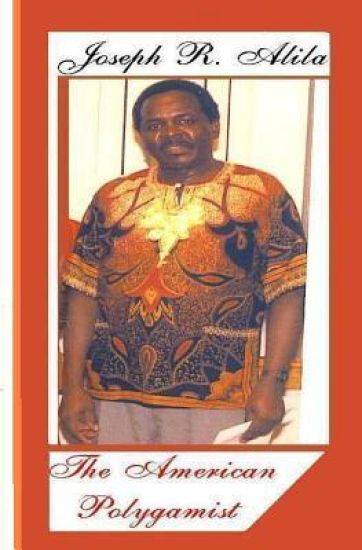
Billionaire American businessman Chief Chuki is a notable within the American high society and a venerable name in the African nation of Goldia, where he holds the highest honorary title of Chief among his Oyi people.When Chief Chuki gets entangled in a business deal with rival Goldian Army Generals, he finds himself held hostage in a land in which he is revered. Yet even with his proximity to the wheels of power on both sides of the pond, he cannot shout for help because of the desire to keep his good name. Second, his Goldian wife has delivered a son and becomes the beneficiary of the unique circumstances of his captivity. Because of her enhanced value as the mother of his only son, she gets part of his wealth. Chief Chuki gets his freedom and Jane continues with her silence over his marital status.Now, a desire for secrecy demands that Chuki engages the expertise of a fellow Iraqi War I Veteran and his high-tech buddies, who have created a lucrative business niche negotiating the release of Western hostages from the high-risk world of African warlords, terrorists, and sea pirates.In THE AMERICAN POLYGAMIST, J.R. Alila weaves a story with many twists and turns as family betrays family, honor is traded for wealth and a honorable man becomes a prisoner of his own secrets.Enter Chuki's American wife, Patty, who suspects that he has at least one wife and child in Africa. Mrs. Patty Chuki is ready to revisit old Brooklyn-High-School romance with a Major Frank to get to the truth while in a Harvard reunion with her billionaire husband in the Maasai Mara. But will Admiral Ndeki of the Goldian Navy let Patty taste the forbidden fruit in peace under Nairobi's sunny skies?
In "THE MILAYI CURSE, Joseph R. Alila (the Author of "Sunset on Polygamy") tells a story about a centuries-old conflict between two ancestral cousins, the Jamokos and Milayis, both members of the Jokamilayi-a fictional Luo (Kenyan) clan. The conflict is of a spiritual as well as social nature, with one early Christian Priest (Father James O'Kilghor) struggling to make sense of an alien culture and reconcile the Jokamilai. It is a tale about spirituality, honor, betrayal, pride, poverty, wealth, and uneasy kinship in fast-changing times, with Christianity and formal education breaking class barriers, bursting myths, and "turning things upside down." Poor Charles Milayi graduates out of middle school with excellent grades. Just when his widowed mother (Consolata Milayi) has lost hope of her gifted son ever stepping into a high school, he becomes a beneficiary of "a secret enemy hand of providence" only known to Father James. Father James protects the identity of Milayi's benefactor because a Jamoko publicly sponsoring a Milayi child could unsettle many souls on either side of the unhealthy blood-divide in Jokamilai, more so because the benefactor's son (Thomas Jamoko) cannot graduate out of middle school. Charles Milayi excels in his studies, joins college, and becomes a lawyer, a businessperson, and a cabinet minister. Having broken through the economic class barrier, Charles marries none other than the Prime Minister's daughter. However, back home, Hon. Milayi's people remain bitterly divided along bloodlines, thanks to the century-old curse with origins in old wars, pillage of war spoils, and ancestral wealth. The so-called "Milayi Curse" feeds a social schism and spiritual war blamed on the unsettled spirit of a fallen war hero named Milayi Raburu. The endless cold war among ancestral cousins has made Father James O'Kilghor's ministry to the Jokamilayi a trying experience, even for a man known for his controversial "Africanized-evangelizing strategies" that allow active traditional priests and witch doctors to receive baptism.
In Joseph R. Alila's anthropological spiritual novel, THE WISE ONE OF RAMOGILAND, the arrival of a colonial master in Kenya presents a new spiritual reality to a very religious people, who quickly adapt to the new spiritual situation in the land. Now, as a battery of "colonial forces" conspire against Africa's old way of life, wizards and prophets, who are losing clients of the ordinary kind to the new Christian houses of worship, quickly adapt to the new spiritual reality, even if it only means taking funny-sounding Greek names.The heroine in this novel, Angelina Nyangi (The Wise One) is born into the new spiritual reality at the dawn of Colonial Kenya. Born prematurely to a family of minor Luo priests, Nyangi survives only because her young father (Rajulu) ignores the advice of his father (Adoko) to throw the 'hono' (abomination) away, and he instead seeks help in a missionary hospital. Nyangi's father, Rajulu, soon abdicates from the Luo priesthood and becomes a Christian pastor, thanks to the influence of Wife Rachel's prayerful Christian life. Consequently, Nyangi grows up in a family under constant religious tension, pitting her grandfather, Adoko, the priest, on one side, and the rest of the family, who have walked away from the ancestral stool, on the other. Interestingly, Nyangi becomes a target of Grandpa Adoko's rage because in her he sees himself-a priest-except she is a girl who would walk away with his "special ancestral talents" to the land of her future husband. Hence the new rage.Talk of bedroom evangelism, like her mother, Nyangi marries a young Seer, Omogi, but she has a "soft spot" for Christianity, and she soon leads her husband, Omogi the Seer, to take a baptismal vow and a "Christian name," Mikael, to boot. But fate soon speaks, and Nyangi becomes a widow early into her marriage. Ironically, Nyangi, a clueless daughter of a Christian pastor, suddenly becomes the guardian of a priesthood, whose spiritual Stool is struggling to remain relevant in light of a strong Christian wave sweeping through the land at the dawn of Kenya's independence. Nyangi lives to be ninety-four years of age; she lives acting a Seer's role in Kamlai, and she even counsels restless politicians and other (elitist) fortune seekers who are groping for space in the treacherous multiethnic, multiparty democracy. For decades Nyangi would walk with secrets of the lowly and mighty of her time, while she awaits the nod to transfer the Stool of Wisdom to Son Thomas, who is anything but priestly in his conducts. If Angelina Nyangi's longevity has become abusive, the seedy extramarital escapades of her eldest son continue to hang around her neck like thorny chalice, with which she has to bear. Nyangi's lifetime experiences remind the reader that modern religious dispensations might have robbed soothsayers and wizards of a lot of clients of the ordinary kind but not the important ones: She discovers that the new political and business elites love to have their ancestors' "sixth sense" watching over their backs. She is their ancestral sixth sense, only she is a mere counselor, and not a prophet.
Author Joseph R. Alila's newest novel, BIRTHRIGHT, is a narrative of how one man's cruel silence over his son's ancestry almost destroys the latter among a people who value bloodlines, protocol, and order in marriage. The battle over birthright in the home of one Odongo Ougo of Thim Lich has turned tragic on many fronts. Atieno, a victim of a marriage protocol that destined her to the rank of second wife, even though she is the older and longer-married wife of Odongo, has had enough. Atieno swears her son, Okulu, on an oath to finish off Aura and her son Juma. Primed to kill, Okulu, an abused man Odongo only halfheartedly has embraced as his own son, seriously wounds Aura, his stepmother, necessitating emergency surgical intervention. Next, Okulu turns his nighttime rage on Juma, Odongo's juvenile son with Aura and the spiritual first son, who has just posted a perfect middle-school grade and is heading for a famous Kenyan high school. Talk of instant justice, Okulu's blind rage turns tragic, as he, for a period, loses the function of both hands after Grace, Juma's dog, bites him off a rabbit carcass. On a night of many unusual events, Juma, the boy running for his life, rescues a young woman, Eilzabeth, who is sinking into a hot volcanic quagmire in an alien land. Just when Juma thinks that he has met a future wife, he discovers that Elizabeth is his stepsister, through his father's youthful indiscretions.A couple of nights later, Abich, Atieno's youngest child, is on the prowl at the hospital, where Aura lay indisposed, when hospital security arrests her for impersonating a nurse with the intent to cause harm to a patient. Odongo declares no contest and pleads with a Dr. Otago to set Abich free. Talk of guts as an angler becomes fish, Abich moves on to marry the arresting doctor-in-charge (Dr. Otago), with Odongo looking on ashamed and in silence.It takes these tragic events, and the subsequent unraveling of Odongo's past of unsettling acts against women, including Atieno, to start real dialogue in his home and resolve historical injustices that have driven a woman and two of her children into desperate criminal acts. The center holds, Aura recovers, and the Odongo home sees four more baby boys, but Odongo must face his past demons to assuage the afflicted and reestablish his honor. It turns out Okulu is Odongo's biological son, and he is a man after all. But what restitution could Odongo pay to Okulu after all the years of communal abuse of the latter by his kin? Okulu the villain has become the invalid victim.In the novel, BIRTHRIGHT, JR Alila captures 'Luo birthright' as an imperfect spiritual vehicle to power and privilege in a polygamous Luo home.
In MAYA, Joseph R Alila, author of "Birthright (a Luo Tragedy)," brings yet another narrative about the lives of ordinary people with human flaws, from which each of them can only run away, or ignore, at his or her own peril.Maya Boone faces a legal quandary over a death she has witnessed from her hideout on Eagle Street, Harmony, New York. First, she watches Raul, the troublesome husband from whom she is hiding, kill a bulldog. When Maya crosses Eagle Street to enquire whether the dog's owner (Mike) is suing Raul, she instead falls in love with the heartbroken man, lures him to her bed, and even contemplates witnessing against Raul. The brief affair ends quickly because Mike becomes a victim to an enraged boyfriend's arrow of passion. Wounded and helpless, Mike falls into the hands of a moonlighting evangelist named Booker who has a score to settle with him. There is no mercy for Mike, only a slow death, because Booker wishes to maintain his cover while moonlighting at Bar Delirium.With Mike dead, Maya's distant past soon confronts her because, also witnessing the events leading to the murder on Eagle Street is Officer Jimmy Depuy-a child Maya abandoned at birth forty years before. Neither Raul nor Maya nor Officer Depuy knows about their shared bond. Then one Detective John unearths the blood knot linking Jimmy Depuy to the Rauls, and soon District Attorney Hess is advancing criminal motives against the trio.In MAYA, JR Alila weaves yet another intricate narrative that should appeal to those readers who seek to understand, in human character, matters beyond the mundane of daily life.
In JR Alila's "A FISHY MATTER", by a single unusual act, a beautiful witch, Kala, unsettles decades of peace between residents of Korondo Ridge and their neighbors on Osure Ridge. Obera of Korondo Ridge is an unhappy woman: every Friday evening, her fresh-fish dish sends Odingo, her alcoholic husband, fleeing to alcohol dens before she even serves her soup.Across the River Dolo, in one Chan's home, Kala, a beautiful witch, has a different problem: she wants a child she cannot get from Otis, her witch husband. Specifically complicating her situation is her being a witch, a night runner--a fact that has limited her options from within Chan's home. Didn't the Luo of old say, "Jaber jaula--the beautiful one has a fault"?Urged by her mother-in-law (Wilkista), who is anxious to cover her son's shame, Kala looks beyond Osure Ridge to neighboring Korondo Ridge for seeds for her field. Thanks to her nocturnal life, one night, Kala encounters Odingo returning from a late-night alcohol party. A few nocturnal sightings later, Kala nabs Odingo, charms him into a zombie, gets her wish, and dumps the dumb zombie into a dead well in Dolo Valley.The Luo say, "Jajuok ido gotieno to ing'eye--a witch charms people at night, but he or she eventually is known." That is what happens in the Kala/Odingo saga. A boy within Chan's home talks about Odingo's disappearance. Chan is rocked when he realizes that his first wife, Wilkista--a woman with whom he has lived for over thirty years and the mother of his six sons--is a practicing witch, and so is Otis, their last born. Odingo eventually regains speech, but only after religious ministers and a mysterious passerby play their spiritual hands in the case.The Kala-Odingo saga is not over on both ridges. On Korondo Ridge, Kala charms her way into the hearts of Odingo's family, principally by flaunting "a shared blood bond" at them. Call it the cat palling with the mouse, Kala soon is secretly dating Odingo, her victim, but a few pairs of eyes are watching from both ridges. On Osure Ridge, Kala turns rogue: she directs her charms at Chan; she even bats down the father-in-law in his own home. When Kala's pregnancy becomes obvious, a raging verbal war erupts between Wilkista and Chan over the swirling claim that she sent her daughter-in-law (and fellow witch) to the aliens of Korondo Ridge, to get seeds for her field. Angry over the scandalous exposure, Wilkista orders Otis to get rid of Kala, just as the pregnant belle walks on the conversation.Kala realizes her life is in danger, crosses Dolo Valley, and lands in brave Odingo's waiting hands. Both elope to a distant city, leaving residents of Korondo Ridge and Osure Ridge wondering what has hit them. It is a first: neither ridge ever before lost a wife to their cross-valley neighbors. Chan fights for his honor in legal courts, as Kala, now "born again", sets her roots in Korondo.
In Joseph R Alila's novel REBELS, set in Kenya's 1970s and early 1980s, a widowed bride (Betty Kinda), flees from the custody of her parents on realizing that her fate is in the hands of her in-laws, who must give her a replacement husband before the burial of her late fianc (Mika Olongo). Reaching Kisumu City, Betty meets one Nurse Rose, an annealed widow, who not only shields and adopts her but also enrolls her in a day secondary school (she is pregnant). Suddenly, the young widow has put her in-laws (the Ombos of Korondo Ridge) and her parents (the Kindas of Rabuor Ridge) in a culturally untenable situation. For a period, tempers flare across the Nyogunde Valley, over how the Ombos would meet their mourning obligations to the late Olongo when his widow/bride is in school tens of miles away. Betty eventually accepts one Luka Okiya-the replacement husband her in-laws 'post' to her. Okiya, the Luo jater (levirate), turns out to be a perfect match with Betty; after all, he is the man whose overtures she ignored in favor of the late Olongo. Thanks to Nurse Rose and Betty's hard-working 'husband', who is willing to play any supporting family role, Betty catches the metaphorical wind and flies with it: she eventually completes high school, with a college qualification (to study law) and two sons-one for the Ombos and, symbolically, the other for the Marikos (Okiya's family). Not to be left behind, Okiya, her dedicated jater (levirate), joins college to study government. These rebels, who even tie the knot in an unprecedented (at least on Korondo Ridge) sneak church wedding, graduate from college, with three sons and a daughter cheering them on While the Okiyas sweat it out among Kenya's urban diaspora, raising children as they climb the academic ladder and eventually become senior government officers, back home, on Okiya's Korondo Ridge, several verbal wars rage on over their high-visibility levirate union. These are wars over whether Betty's loyalty should belong with the Ombos (the late Olongo's family) or with the Marikos (Okiya's family); whether the two cultural rebels shouldn't have wedded in church; whether Okiya can override Luo cultural dictates and start a new home for the widow (Betty) before he marries his own wife and starts a home for her; whether, in matters of land, settlement and inheritance, Betty and her children belong with the Ombos or with the Marikos (Okiya's family). Betty discovers that these seemingly mundane matters (to her day's increasing liberal minds) can mean life or death-her brother-in-law (Ziki Ombo) attempts to kill her son Mark over the future of the Ombo family land.At its core, JR Alila's REBELS is about the modern Luo at war with her past that is not letting go easily. In this enduring heart-warming love story, we learn that even rebels eventually meet their match. When Okiya greases his hand, in anger, after their son Mark calls him an unthinkable name, Betty finds herself tested to the limit. She is split between building the legacy of her late husband (Olongo) and her continued loyalty to Okiya-the jater (levirate) who pulled her out of the spiritual dust cloud of her late husband and joined her in chasing a modern dream, formal education. Betty, the trained family lawyer, realizes that a Luo jater (levirate) can't be divorced But yes, he can be ejected. Will she do that at the expense of family unity?
In the novella WHISPER TO MY ACHING HEART, Joseph R. Alila, the author of "The Milayi Curse", tells a story about two eighteenth-century Luo widows who battle against great odds to become mothers of a future people. In this moving story, the desire of one woman to honor the wishes of a fallen husband, and another woman's resolution to establish a legacy of a fallen son, unify the widows into a purposeful whole; that oneness enables them to survive the pain and humiliation of rejection (by their husbands' male kin), and they triumph in the end. A young widow (Apiny) is the bearer of the damning spiritually untouchable label in a patriarchal eighteenth-century African (Luo) clan. Ejected alongside her widowed mother-in-law and ridiculed by friends, Apiny waits for fifteen years before she receives another man in her bed. Even then, Apiny's moment of triumph only comes after her old mother-in-law (Nyandeje) remarries and raises a miracle son (Otin), who answers the call to redeem his fallen brother's honor. Even after Apiny gets all the handsome sons and beautiful daughters she wishes to get from her youthful lover, she still is not at peace in her heart. She mourns and struggles, in her heart, as her youthful husband inevitably bows to Luo cultural demands and receives a virgin wife (Nyogola). In Apiny's senior years, the reality of her age and jealousy against young Nyogola (and her sons) motivate her (Apiny) to eject Otin from her home, publicly. She instead opts for the company of one Onjuo, an older man.
In JR Alila's NOT ON MY SKIN, the all-American Harmony City is not exactly harmonious. Individualism, prejudice and arms-length neighborliness greet Ochome--an alien poet and suburbanite, who has staked out his evenings in one of the city's downtown cafes. Harmony City's peace hardly is skin deep: There is a daily stalemate at the fertility clinic, and wherever Ochome turns, he sees, hears, and constantly feels souls cursing "Not on My Skin"-- a protest mantra against nuances of prejudice he sees, hears and feels in the city caf and beyond. The caf crowd has a few regulars who, like most urban neighbors, remain verbally unengaged individuals. But the sense of peace is often compromised by one Alex, a man considered a mad nuisance by all, but who, in reality, is the only mirror in which Harmony City perhaps can see herself. Alex is the lone gong off which the city can hear herself, the same way a child's innocent words are the real measure of the moral quality of life in a home.
In the historical novel, THE LUO DREAMERS' ODYSSEY: From the Sudan to American Power, a journey that started more than five centuries ago in the Sudan has ended in the White House. Along the way, a child and a troubled dreamer, Ajwang' the Dreamer (a.k.a. Ramogi) survives the knife of ire of a man robbed of his bead of wisdom. Decades later, the sons of Ajwang' must part ways with a child dead between them because of vengeance over a "bead of passion" and a "spear of power." Centuries later, an orphan must "develop wings," fly out of Colonial Kenya to Alaska, and plant his seed, a boy dreamer named Hassan Ajwang'. This boy lives to be the President of the United States of America.In the historical novel, Joseph R. Alila, the author of NOT ON MY SKIN, pens yet another drama of life, of survival against great odds, of victories as improbable as the sun rising from the west.
In Joseph R. Alila's first anthropological novel, SUNET ON POLYGAMY, marital cultural lore and spirituality combine to breed a tragic confusion in a land faced with a deadly new disease epidemic, with public debates raging as to whether the killer is ancestral chira (curse) or Acute Immunodeficiency Syndrome (AIDS). In this work of fiction, Joe Ochom, a young man testing his verbal skills in the art of seduction, soon realizes that corralling an educated girl (Megan) requires more than adorning his high school blazer in the marketplace. He proves cowardly-a weakness his principal competitor, polygamist Jim Kokech, is quick to exploit. With his attention on Megan, Jim suddenly faces a revolt from his wives. Felicia, the first wife, resolves to punish him; she locks him out of her bedroom, just when they must celebrate the planting season as the principal "spiritual co-owners" of the home. Jim's pastoral calendar comes to a sudden halt-reminding him that the Luo "Mikayi"-the first wife-is key to a healthy spiritual life in a home. The home enters a conjugal lockdown. However, the crafty second wife, Milka, comes to the rescue: she engages Jim in a believable romantic ruse that fools even Felicia. Wrought with jealousy at her female archenemy, Felicia yields to Jim-prompting a stampede for access to him. He is not having fun.Baby boom A year later, Felicia looks on in anger as the home welcomes three newborns, with Maria, Milka, and Nyapora presenting a child each to their shared husband. Felicia has reached menopause, but instead of embracing her new physiological reality, and aging gracefully as the matriarch of her home, she becomes angry at Jim and her co-wives. Struggling with a broiling bout of jealousy at her co-wives and nursing unpredictable desires of her husband, Felicia brews one immoral "romantic" mischief after another and nearly kills her husband while trying a cultic remedy to her marital problems. Depressed, Felicia flees to the Big City to escape the shameful spectacle she has become among the women of Korondo Ridge. Korondo Ridge still has no rest: Gina-a young widow who has just delivered the body of her late husband, George Amolo, from the Big City-refuses, to the utter dismay of elders, to welcome any man into her bed, arguing that her husband died of "a strange new disease." The elders refuse to listen, asserting that George died of his father's "chira" (curse), which only the very wise among them could cleanse. Amolo protests, saying Malaria killed George. Concerned for the spiritual health of their Korondo House, the elders eventually convince Gina to enter a one-night "marriage" with a "Jakowiny" (a vagabond) "to settle George's restless spirit." Reacting to the "technical marriage," men troop to Gina's house to proffer their applications, believing the vagabond (like the Biblical scapegoat), has wandered off with the "chira" that killed their fellow warrior. Tragedy The killer malady the elders call "Chira" is AIDS-the killer the Luo aptly nickname "Ayaki"-I loot you. Gina soon develops loose morals and dispatches one man after another to his grave, their wives in tow. Tragic: Ayaki kills people and "chira," with which it shares symptoms, gets the credit. Gina's misleadingly healthy look, beauty, and longevity only add to the tragedy.Felicia returns to Korondo Ridge amid the Ayaki epidemic in the land, but even the epidemic has not changed people's ways: men still embrace polygamy; men still inherit sick widows, and sure, Jim has married young Megan, capping his conquest over Joe Ochom (the narrator). But as the Luo of old said, the ferocious buffalo provides the hide for a brave warrior's shield-Jim dies holding a toxic jewel, leaving behind a bitter lesson in vanity and immoderation.
In the historical fiction novel, A DREAM UNFINISHED, Joseph R Alila (Birthright: a Luo Tragedy) bleeds his satirical pundit's pen to capture a glimpse of political maturity in democratic discourse in Africa, where dictatorial regimes are falling without firing guns. In this novel, the hero, Rateng, is fighting for his political life while he pursues his lifetime dream to become the President of Ebonia against a background of tension and dissent in his political base of Lolwe and coalition-Democratic Order National Alliance (DONA)-in which he has to manage rival ethnic kingpins with egos larger than Lucifer's and anxious disaffected youths envying his position. Tensions in DONA aside, Rateng's odds aren't great; he has to contend with President Prince, a battle-hardened, internet-communication-savvy royal from Central Ebonia and one Akamu, his deputy, both of whom have the advantage of incumbency, and ethnic numbers. After a bruising campaign full of criminal intrigues against Rateng and his allies, and fought in virtual and physical spaces, Rateng's Canaan caravan hits the same digital firewall President Prince erected against him five years before. Rateng claims his votes have vanished, yet again, in digital clouds in Europe And Ebonian courts agree but to no effect on Prince's win. Rateng is not done, yet: encouraged by events elsewhere in Africa, where incumbents have fallen without anyone firing a gun, Rateng switches tact and adopts fast-paced, Gandhi-style civic disobedience and selective economic boycotts against businesses associated with Prince and allies. Tension and uncertainty grip Ebonia, with businesses reporting stress. Prince and Rateng have to seek compromises, and publicly shake hands for the sake of Ebonia's future. Both Rateng and Prince emerge from the handshake fighting corruption and preaching love of country, national unity and other egalitarian principles. Once again, Rateng confounds naysayers, as he manages to extend his political shelf life, for yet another presidential run. When sanity returns to the land, Rateng engineers and alternative democratic path to Presidency of Ebonia, thanks to Prince's support.
Part of the acclaimed Mastery Series, Mastery of Cardiothoracic Surgery, Fourth Edition, prepares you for any surgical challenge with comprehensive coverage of thoracic, adult cardiac, and congenital cardiac procedures. Drs. Larry R. Kaiser, Irving L. Kron, Joseph B. Shrager, Gorav Ailawadi, and Stephanie M. Fuller lead a team of expert contributing authors and provide editorial commentary following each chapter. This fully revised edition is an invaluable reference for cardiothoracic fellows, as well as thoracic and cardiac surgeons. Follows the Mastery series style—with Editor’s Comments at the end of each chapter to help hone technique, improve results, and minimize error Addresses key details of each procedure, from indications and preoperative assessment to surgical technique, postsurgical follow-up, and management of complications Includes new and expanded content that addresses key disorders and surgical interventions, with chapters on Right-sided Video-assisted Thoracic Surgery (VATS) Lobectomy, Left-sided VATS Lobectomy, Right-sided Robotic Lobectomy, Left-sided Robotic Lobectomy, Segmentectomy, Lung Volume Reduction and Tracheobronchoplasty, VATS/Robotic Thymectomy, Advanced Endoscopic Esophageal Procedures, Diaphragmatic Paralysis and Pacing, Multiarterial Grafting, Minimally Invasive Multivessel Coronary Artery Bypass Grafting, Degenerative Mitral Valve Repair: Respecting the Leaflets, Chordal Sparing Mitral Replacement, Surgery for Mitral Endocarditis, Novel Transcatheter Mitral Repair Devices, Transcatheter Mitral Replacement, Minimally Invasive Tricuspid Valve Surgery, Transcatheter Tricuspid Valve Repair, Transcatheter Tricuspid Valve Replacement, Aortic Annular Enlargement, Minimally Invasive Aortic Valve Replacement, Transcatheter Aortic Valve Replacement, Bentall Procedure, Descending Thoracic and Thoracoabdominal Aneurysm and Dissection, Minimally Invasive Maze Procedures, Left Atrial Appendage Occlusion Techniques, Minimally Invasive Left Ventricular Assist Devices, Right Ventricular Assist Devices, Adult Congenital Heart Disease, and more Features a full-color design and artwork to facilitate visual learning Shares the knowledge and experience of three new associate editors: Drs. Joseph B. Shrager Gorav Ailawadi, and Stephanie M. Fuller new associate editors Enrich your eBook reading experienceRead directly on your preferred device(s),such as computer, tablet, or smartphone. Easily convert to audiobook,powering your content with natural language text-to-speech.