
Kirjahaku
Etsi kirjoja tekijän nimen, kirjan nimen tai ISBN:n perusteella.
1000 tulosta hakusanalla Joseph Sherman

In this book, the authors explore Peretz Markish's entire career from his famous early modernist poetry to his post-war Yiddish literature that responded to Nazi and Soviet state-sponsored violence, and everything in between.
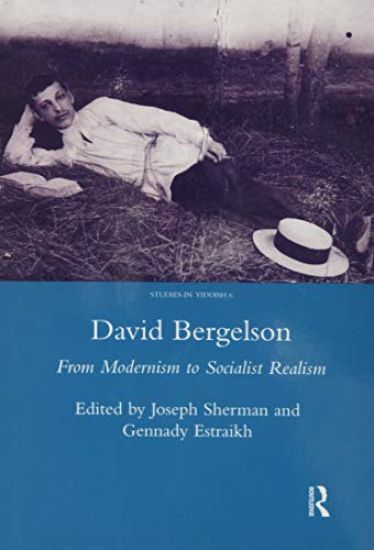
This book seeks to challenge conventionally accepted views of David Bergelson's achievement by examining his entire oeuvre. It offers a full-length biography, the first comprehensive bibliography of Bergelson's work, and translations of two of his most influential programmatic essays.
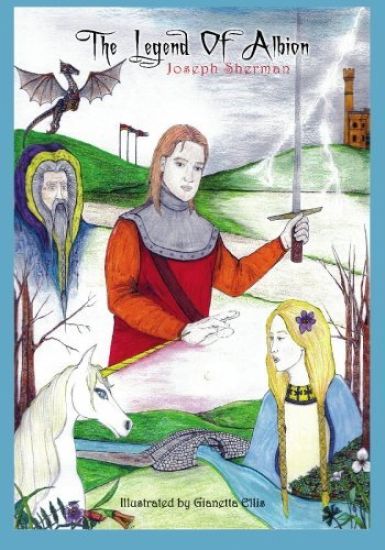
Pitch-perfect and utterly breathtaking, The Legend of Albion by the American poet and photographer Joseph Randell Sherman is just the thing for young discerning readers. Intellectually charged with twelve full-color illustrations, this epic poem is a journey of mythic proportions. Hailed as one of the most ingenious and bold literary undertaking in a generation, he shares a splendid narrative of how Great Britain was formed. A young Prince Albion becomes a king when he is but a babe in the arms of a knight forced to rescue him. This same knight helps him on the road of life and in the ways of becoming a leader. Readers follow King Albion through his life-as he matches wits with a wizard, receives his tutelage and tames a dragon until he falls in love and has a son of his own. The road of a king is long and winding. In this case, a king of great legion founds a homeland-a small great nation, in deed, a legend is born.
To what extent do Yiddish language and literature derive from the dominant values of mainstream European culture? How far did this culture shape the self-perception of Yiddish-speaking Jews of Central and Eastern Europe? How far did the ambivalent, antagonistic attitude adopted towards Jews over many centuries in Christian Europe shape modern Jewish identity and culture? Sherman deals with such questions in his close examination of the recurring treatment of the myth of the Jewish Pope in four Yiddish literary texts dating from between 1602 and 1943. The roots of this myth - that one day a Jewish apostate might come to rule the world as Pope - lie deep in the Biblical story of the assimilation of Joseph (Genesis 37-50), from which it branches out into numerous Messianic fantasies informing Jewish existence through two thousand years of exile. Concerned with broader questions of cultural identity, this study should be of interest to a general readership.
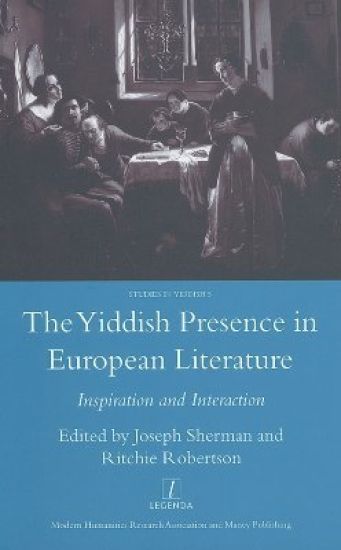
This book is a collection of papers, examining some of the fruitful interactions between Yiddish and the European literary tradition, ranging from the early nineteenth century to the present, from France to Lithuania, and from classic modernist writers such as Kafka to Imre Kertesz.
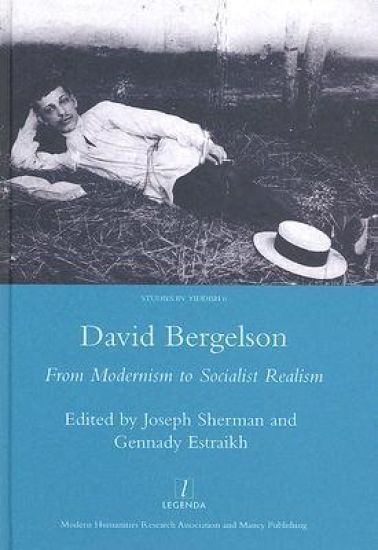
This book seeks to challenge conventionally accepted views of David Bergelson's achievement by examining his entire oeuvre. It offers a full-length biography, the first comprehensive bibliography of Bergelson's work, and translations of two of his most influential programmatic essays.
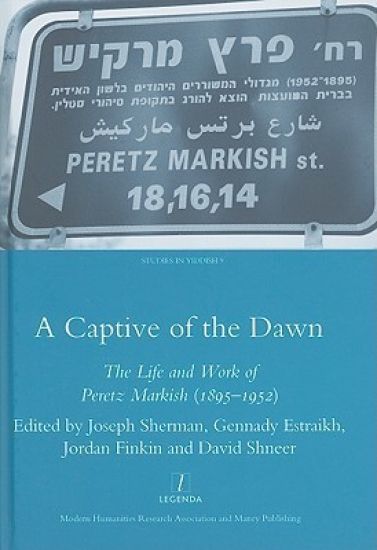
In this book, the authors explore Peretz Markish's entire career from his famous early modernist poetry to his post-war Yiddish literature that responded to Nazi and Soviet state-sponsored violence, and everything in between.
Happy?: How To Win The Lasting Happiness That You Desire
Sherman Joseph
Jama Publishing
2015
nidottu
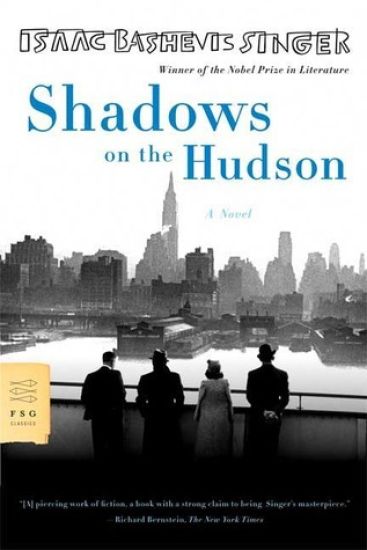
Shadows on the Hudson
Isaac Bashevis Singer; Joseph (TRN) Sherman
Farrar, Straus Giroux Inc
2008
pokkari
"A piercing work of fiction with a strong claim to being Singer's masterpiece" - Richard Bernstein, "The New York Times". 'Shadows On The Hudson" traces the intertwined lives of a group of Jewish refugees in New York City in the late 1940s. At its centre is Boris Makaver, a pious, wealthy businessman whose greatest trial is his unstable daughter, Anna. A chain of events disrupts the lives of the close-knit community as each refugee struggles to reconcile the horrific past with the difficult present, as Singer explores both the nature of faith and the nature of love in the aftermath of the Holocaust.

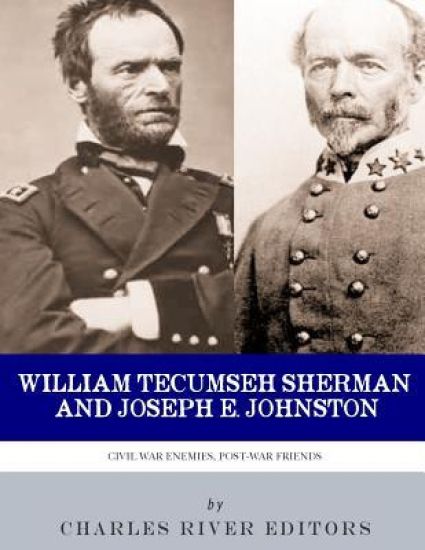
Civil War Enemies, Post-War Friends: William Tecumseh Sherman and Joseph E. Johnston
Charles River
Createspace Independent Publishing Platform
2013
nidottu
*Weaves the lives and careers of Sherman and Johnston together into one entertaining and educational narrative. *Includes pictures of the generals and important people and places in their lives. *Includes maps of important battles they fought in. *Discusses their relationship during and after the war. *Includes Bibliographies of each general for further reading. William Tecumseh Sherman (February 8, 1820 - February 14, 1891) holds a unique position in American history. Synonymous with barbarity in the South, Sherman is lauded as a war hero in the North, and modern historians consider him the harbinger of total war. As a General in the Union Army during the American Civil War (1861-65), Sherman was recognized for his outstanding command of military strategy but criticized for the harshness of the "scorched earth" policies that he implemented in conducting total war against the Confederate States, especially in 1864 and 1865. Military historian B. H. Liddell Hart famously declared that Sherman was "the first modern general." Sherman spent a majority of the war out west, although it is often forgotten that he was a brigade commander at the First Battle of Bull Run, and that the Civil War actually finished with General Joseph E. Johnston surrendering to Sherman weeks after Appomattox. Having fought against each other and negotiated with each other, Sherman and Johnston became good friends after the war, and when the elderly Johnston served as a pallbearer at Sherman's funeral, he contracted an illness that eventually killed him. During the Civil War, one of the tales that was often told among Confederate soldiers was that Joseph E. Johnston was a crack shot who was a better bird hunter than just about everyone else in the South. However, as the story went, Johnston would never take the shot when asked to, complaining that something was wrong with the situation that prevented him from being able to shoot the bird when it was time. The story is almost certainly apocryphal, but it was aptly used to demonstrate the Confederates' frustration with a man who everyone regarded as a capable general. Johnston would become known more for losing by not winning; he was never badly beaten in battle, but he had a habit of strategically withdrawing until he had nowhere left to retreat. When Johnston had retreated in the face of McClellan's army before Richmond in 1862, he finally launched a complex attack that not only failed but left him severely wounded, forcing him to turn over command of the Army of Northern Virginia to Robert E. Lee. Johnston and Confederate President Jefferson Davis had a volatile relationship throughout the war, but Johnston was too valuable to leave out of service and at the beginning of 1864 he was given command of the Army of Tennessee. When Johnston gradually retreated in the face of Sherman's massive army (which outnumbered his 2-1) before Atlanta in 1864, Davis removed Johnston from command of the Army of Tennessee and gave it to John Bell Hood. Civil War Enemies, Post-War Friends chronicles the lives and careers of the two famous generals, including their famous encounters in the field, their assessments of each other, and their final surrender negotiations. Along with pictures of important people, places, and events in his life, you will learn about Sherman and Johnston like you never have before.
Civil War Enemies, Post-War Friends: William Tecumseh Sherman and Joseph E. Johnston
Charles River
Createspace Independent Publishing Platform
2018
nidottu
*Weaves the lives and careers of Sherman and Johnston together into one entertaining and educational narrative. *Includes pictures of the generals and important people and places in their lives. *Includes maps of important battles they fought in. *Discusses their relationship during and after the war. *Includes Bibliographies of each general for further reading. William Tecumseh Sherman (February 8, 1820 - February 14, 1891) holds a unique position in American history. Synonymous with barbarity in the South, Sherman is lauded as a war hero in the North, and modern historians consider him the harbinger of total war. As a General in the Union Army during the American Civil War (1861-65), Sherman was recognized for his outstanding command of military strategy but criticized for the harshness of the "scorched earth" policies that he implemented in conducting total war against the Confederate States, especially in 1864 and 1865. Military historian B. H. Liddell Hart famously declared that Sherman was "the first modern general." Sherman spent a majority of the war out west, although it is often forgotten that he was a brigade commander at the First Battle of Bull Run, and that the Civil War actually finished with General Joseph E. Johnston surrendering to Sherman weeks after Appomattox. Having fought against each other and negotiated with each other, Sherman and Johnston became good friends after the war, and when the elderly Johnston served as a pallbearer at Sherman's funeral, he contracted an illness that eventually killed him. During the Civil War, one of the tales that was often told among Confederate soldiers was that Joseph E. Johnston was a crack shot who was a better bird hunter than just about everyone else in the South. However, as the story went, Johnston would never take the shot when asked to, complaining that something was wrong with the situation that prevented him from being able to shoot the bird when it was time. The story is almost certainly apocryphal, but it was aptly used to demonstrate the Confederates' frustration with a man who everyone regarded as a capable general. Johnston would become known more for losing by not winning; he was never badly beaten in battle, but he had a habit of strategically withdrawing until he had nowhere left to retreat. When Johnston had retreated in the face of McClellan's army before Richmond in 1862, he finally launched a complex attack that not only failed but left him severely wounded, forcing him to turn over command of the Army of Northern Virginia to Robert E. Lee. Johnston and Confederate President Jefferson Davis had a volatile relationship throughout the war, but Johnston was too valuable to leave out of service and at the beginning of 1864 he was given command of the Army of Tennessee. When Johnston gradually retreated in the face of Sherman's massive army (which outnumbered his 2-1) before Atlanta in 1864, Davis removed Johnston from command of the Army of Tennessee and gave it to John Bell Hood. Civil War Enemies, Post-War Friends chronicles the lives and careers of the two famous generals, including their famous encounters in the field, their assessments of each other, and their final surrender negotiations. Along with pictures of important people, places, and events in his life, you will learn about Sherman and Johnston like you never have before.
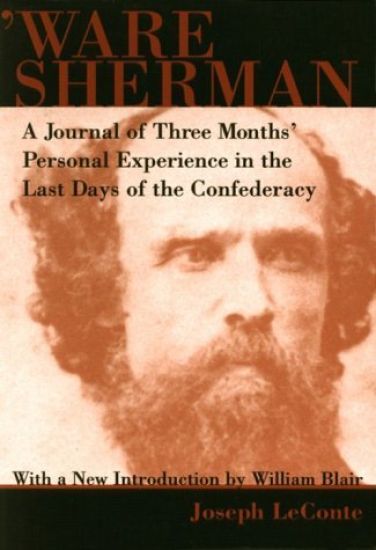
William Blair reintroduces Joseph LeConte and his enticing journal to readers today while providing insights into the South Atlantic region's importance as a food producer, the role of slaves during the war, and civilian treatment at the hands of Union soldiers.
This work has been selected by scholars as being culturally important and is part of the knowledge base of civilization as we know it.This work is in the public domain in the United States of America, and possibly other nations. Within the United States, you may freely copy and distribute this work, as no entity (individual or corporate) has a copyright on the body of the work.Scholars believe, and we concur, that this work is important enough to be preserved, reproduced, and made generally available to the public. To ensure a quality reading experience, this work has been proofread and republished using a format that seamlessly blends the original graphical elements with text in an easy-to-read typeface.We appreciate your support of the preservation process, and thank you for being an important part of keeping this knowledge alive and relevant.
Darling On Trusts - The Department Of Justice - The Sherman Anti-Trust Law, With Amendments - The New Rules Of Practice For The Courts Of Equity Of The United States - A List Of Cases Instituted By The United States Under The Sherman Law, And Citations Of
Joseph Robinson Darling
READ BOOKS
2010
pokkari
Why the Purchase Clause of the act of July 14, 1890 (called Sherman law) Should be Repealed, and why Free Coinage of Silver Would be Unjust ..
Joseph Henry Walker
Hutson Street Press
2025
sidottu
Why the Purchase Clause of the act of July 14, 1890 (called Sherman law) Should be Repealed, and why Free Coinage of Silver Would be Unjust ..
Joseph Henry Walker
Hutson Street Press
2025
pokkari