Kirjojen hintavertailu. Mukana 11 244 527 kirjaa ja 12 kauppaa.

Kirjahaku

Etsi kirjoja tekijän nimen, kirjan nimen tai ISBN:n perusteella.

1000 tulosta hakusanalla Josephine R Baker

Tom's Heathen. [A Tale.]

Tom's Heathen. [A Tale.]

Josephine R Baker

British Library, Historical Print Editions
2011
pokkari
Title: Tom's Heathen. A tale.]Publisher: British Library, Historical Print EditionsThe British Library is the national library of the United Kingdom. It is one of the world's largest research libraries holding over 150 million items in all known languages and formats: books, journals, newspapers, sound recordings, patents, maps, stamps, prints and much more. Its collections include around 14 million books, along with substantial additional collections of manuscripts and historical items dating back as far as 300 BC.The FICTION & PROSE LITERATURE collection includes books from the British Library digitised by Microsoft. The collection provides readers with a perspective of the world from some of the 18th and 19th century's most talented writers. Written for a range of audiences, these works are a treasure for any curious reader looking to see the world through the eyes of ages past. Beyond the main body of works the collection also includes song-books, comedy, and works of satire. ++++The below data was compiled from various identification fields in the bibliographic record of this title. This data is provided as an additional tool in helping to insure edition identification: ++++ British Library Baker, Josephine R.; 1880. viii. 288 p.; 8 . 12641.d.13.

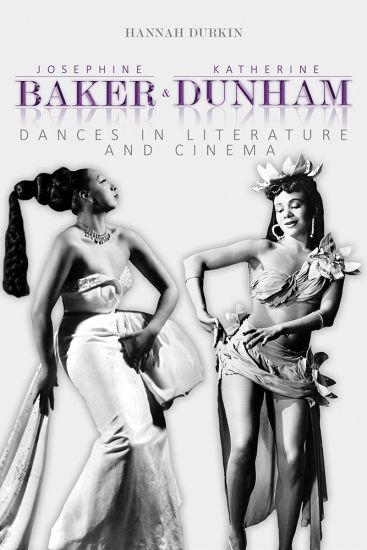
Josephine Baker and Katherine Dunham

Josephine Baker and Katherine Dunham

Hannah Durkin

University of Illinois Press
2019
sidottu
Josephine Baker and Katherine Dunham were the two most acclaimed and commercially successful African American dancers of their era and among the first black women to enjoy international screen careers. Both also produced fascinating memoirs that provided vital insights into their artistic philosophies and choices. However, difficulties in accessing and categorizing their works on the screen and on the page have obscured their contributions to film and literature. Hannah Durkin investigates Baker and Dunham’s films and writings to shed new light on their legacies as transatlantic artists and civil rights figures. Their trailblazing dancing and choreography reflected a belief that they could use film to confront racist assumptions while also imagining-within significant confines-new aesthetic possibilities for black women. Their writings, meanwhile, revealed their creative process, engagement with criticism, and the ways each mediated cultural constructions of black women's identities. Durkin pays particular attention to the ways dancing bodies function as ever-changing signifiers and de-stabilizing transmitters of cultural identity. In addition, she offers an overdue appraisal of Baker and Dunham's places in cinematic and literary history.
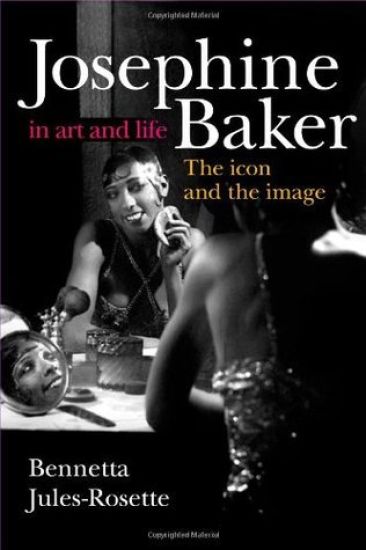
Josephine Baker in Art and Life

Josephine Baker in Art and Life

Bennetta Jules-Rosette

University of Illinois Press
2007
nidottu
Josephine Baker (1906-1975) was a dancer, singer, actress, author, politician, militant, and philanthropist, whose images and cultural legacy have survived beyond the hundredth anniversary of her birth. Neither an exercise in postmodern deconstruction nor simple biography, Josephine Baker in Art and Life presents a critical cultural study of the life and art of the Franco-American performer whose appearances as the savage dancer Fatou shocked the world. Although the study remains firmly anchored in Josephine Baker’s life and times, presenting and challenging carefully researched biographical facts, it also offers in-depth analyses of the images that she constructed and advanced. Bennetta Jules-Rosette explores Baker’s far-ranging and dynamic career from a sociological and cultural perspective, using the tools of sociosemiotics to excavate the narratives, images, and representations that trace the story of her life and fit together as a cultural production.
Josephine Baker and Katherine Dunham

Josephine Baker and Katherine Dunham

Hannah Durkin

University of Illinois Press
2019
nidottu
Josephine Baker and Katherine Dunham were the two most acclaimed and commercially successful African American dancers of their era and among the first black women to enjoy international screen careers. Both also produced fascinating memoirs that provided vital insights into their artistic philosophies and choices. However, difficulties in accessing and categorizing their works on the screen and on the page have obscured their contributions to film and literature. Hannah Durkin investigates Baker and Dunham’s films and writings to shed new light on their legacies as transatlantic artists and civil rights figures. Their trailblazing dancing and choreography reflected a belief that they could use film to confront racist assumptions while also imagining-within significant confines-new aesthetic possibilities for black women. Their writings, meanwhile, revealed their creative process, engagement with criticism, and the ways each mediated cultural constructions of black women's identities. Durkin pays particular attention to the ways dancing bodies function as ever-changing signifiers and de-stabilizing transmitters of cultural identity. In addition, she offers an overdue appraisal of Baker and Dunham's places in cinematic and literary history.
Josephine Baker's Cinematic Prism

Josephine Baker's Cinematic Prism

Terri Simone Francis

Indiana University Press
2021
pokkari
Josephine Baker, the first Black woman to star in a major motion picture, was both liberated and delightfully undignified, playfully vacillating between allure and colonialist stereotyping. Nicknamed the "Black Venus," "Black Pearl," and "Creole Goddess," Baker blended the sensual and the comedic when taking 1920s Europe by storm. Back home in the United States, Baker's film career brought hope to the Black press that a new cinema centered on Black glamour would come to fruition. In Josephine Baker's Cinematic Prism, Terri Simone Francis examines how Baker fashioned her celebrity through cinematic reflexivity, an authorial strategy in which she placed herself, her persona, and her character into visual dialogue. Francis contends that though Baker was an African American actress who lived and worked in France exclusively with a white film company, white costars, white writers, and white directors, she holds monumental significance for African American cinema as the first truly global Black woman film star. Francis also examines the double-talk between Baker and her characters in Le Pompier de Folies Bergère, La Sirène des Tropiques, Zou Zou, Princesse Tam Tam, and The French Way, whose narratives seem to undermine the very stardom they offered. In doing so, Francis artfully illuminates the most resonant links between emergent African American cinephilia, the diverse opinions of Baker in the popular press, and African Americans' broader aspirations for progress toward racial equality. Examining an unexplored aspect of Baker's career, Josephine Baker's Cinematic Prism deepens the ongoing conversation about race, gender, and performance in the African diaspora.
Josephine Baker's Cinematic Prism

Josephine Baker's Cinematic Prism

Terri Simone Francis

Indiana University Press
2021
sidottu
Josephine Baker, the first Black woman to star in a major motion picture, was both liberated and delightfully undignified, playfully vacillating between allure and colonialist stereotyping. Nicknamed the "Black Venus," "Black Pearl," and "Creole Goddess," Baker blended the sensual and the comedic when taking 1920s Europe by storm. Back home in the United States, Baker's film career brought hope to the Black press that a new cinema centered on Black glamour would come to fruition. In Josephine Baker's Cinematic Prism, Terri Simone Francis examines how Baker fashioned her celebrity through cinematic reflexivity, an authorial strategy in which she placed herself, her persona, and her character into visual dialogue. Francis contends that though Baker was an African American actress who lived and worked in France exclusively with a white film company, white costars, white writers, and white directors, she holds monumental significance for African American cinema as the first truly global Black woman film star. Francis also examines the double-talk between Baker and her characters in Le Pompier de Folies Bergère, La Sirène des Tropiques, Zou Zou, Princesse Tam Tam, and The French Way, whose narratives seem to undermine the very stardom they offered. In doing so, Francis artfully illuminates the most resonant links between emergent African American cinephilia, the diverse opinions of Baker in the popular press, and African Americans' broader aspirations for progress toward racial equality. Examining an unexplored aspect of Baker's career, Josephine Baker's Cinematic Prism deepens the ongoing conversation about race, gender, and performance in the African diaspora.
Josephine Baker's Secret War

Josephine Baker's Secret War

Hanna Diamond

YALE UNIVERSITY PRESS
2025
sidottu
The full story of Josephine Baker’s wartime and intelligence work in France and North Africa Before the Second World War, Josephine Baker (1906–1975) was one of the most famous performers in the world. She made her name dancing on the Parisian stage, but when war broke out she decided not to return to America. Instead, Baker turned spy for the French Secret Services. In this engaging, deeply researched study, Hanna Diamond tells the full story of Baker’s actions for the French and Allied powers in World War Two. Drawing on previously unseen material, Diamond reveals the vital role Baker played throughout the war, from counterintelligence work for the Allied landings in North Africa to serving in the French Air Force in 1944–45. A woman of colour operating in a white male environment, Baker exploited her celebrity to enable her war work across France, Spain, Portugal, North Africa, and the Middle East. This groundbreaking account is the first to reveal the full significance of Baker’s wartime contribution.
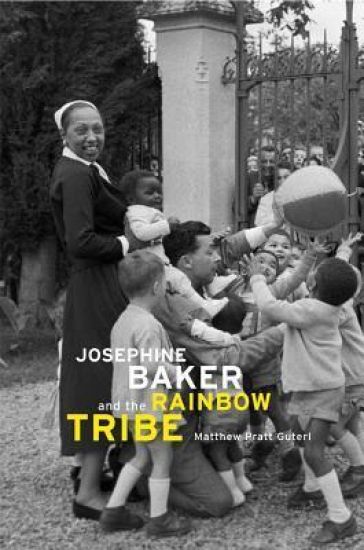
Josephine Baker and the Rainbow Tribe

Josephine Baker and the Rainbow Tribe

Matthew Pratt Guterl

The Belknap Press
2014
sidottu
Creating a sensation with her risqué nightclub act and strolls down the Champs Elysées, pet cheetah in tow, Josephine Baker lives on in popular memory as the banana-skirted siren of Jazz Age Paris. In Josephine Baker and the Rainbow Tribe, Matthew Pratt Guterl brings out a little known side of the celebrated personality, showing how her ambitions of later years were even more daring and subversive than the youthful exploits that made her the first African American superstar.Her performing days numbered, Baker settled down in a sixteenth-century chateau she named Les Milandes, in the south of France. Then, in 1953, she did something completely unexpected and, in the context of racially sensitive times, outrageous. Adopting twelve children from around the globe, she transformed her estate into a theme park, complete with rides, hotels, a collective farm, and singing and dancing. The main attraction was her Rainbow Tribe, the family of the future, which showcased children of all skin colors, nations, and religions living together in harmony. Les Milandes attracted an adoring public eager to spend money on a utopian vision, and to worship at the feet of Josephine, mother of the world.Alerting readers to some of the contradictions at the heart of the Rainbow Tribe project—its undertow of child exploitation and megalomania in particular—Guterl concludes that Baker was a serious and determined activist who believed she could make a positive difference by creating a family out of the troublesome material of race.
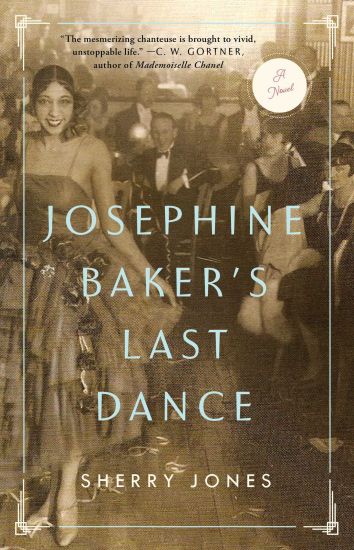
Josephine Baker's Last Dance

Josephine Baker's Last Dance

Sherry Jones

Gallery Books
2018
nidottu
From the author of The Jewel of Medina, a moving and insightful novel based on the life of legendary performer and activist Josephine Baker, perfect for fans of The Paris Wife and Hidden Figures. Discover the fascinating and singular life story of Josephine Baker--actress, singer, dancer, Civil Rights activist, member of the French Resistance during WWII, and a woman dedicated to erasing prejudice and creating a more equitable world--in Josephine Baker's Last Dance. In this illuminating biographical novel, Sherry Jones brings to life Josephine's early years in servitude and poverty in America, her rise to fame as a showgirl in her famous banana skirt, her activism against discrimination, and her many loves and losses. From 1920s Paris to 1960s Washington, to her final, triumphant performance, one of the most extraordinary lives of the twentieth century comes to stunning life on the page. With intimate prose and comprehensive research, Sherry Jones brings this remarkable and compelling public figure into focus for the first time in a joyous celebration of a life lived in technicolor, a powerful woman who continues to inspire today.
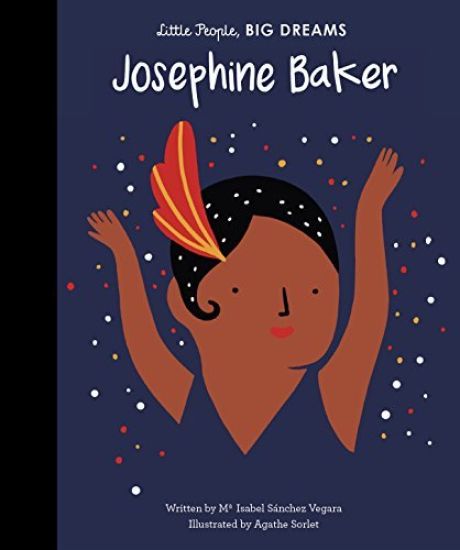
Josephine Baker

Josephine Baker

Maria Isabel Sanchez Vegara; Agathe Sorlet

Frances Lincoln Childrens Books
2018
sidottu
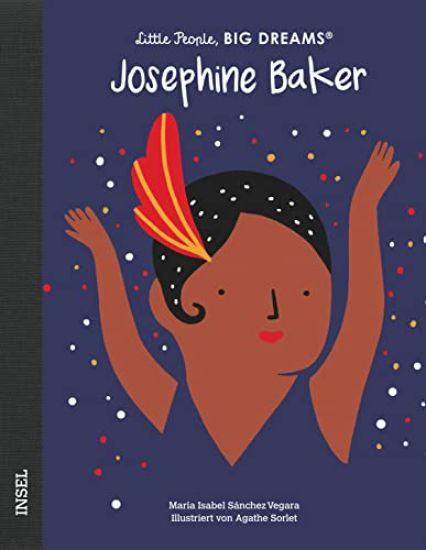
Meet Josephine Baker, the world-famous entertainer, activist and French Resistance agent in this true story of her life! Part of the beloved Little People, BIG DREAMS series, this inspiring and informative little biography follows the incredible life of Josephine Baker, from growing up in St. Louis, Missouri, during segregation to defying expectations and performing on the stage in Paris, where audiences fell in love with her. Josephine Baker was born for the stage. But growing up in segregated St. Louis, she didn't have the same opportunities as white entertainers. So, she moved to Paris where audiences fell in love with her. Josephine worked as a dancer, an actor and even a spy. She then spent the rest of her life spreading the word that people of all colours can live together in harmony. This moving book features stylish and quirky illustrations and extra facts at the back, including a biographical timeline with historical photos and a detailed profile of the entertainer's amazing life.Little People, BIG DREAMS is a bestselling biography series for kids that explores the lives of outstanding people, from designers and artists to scientists and activists. All of them achieved incredible things, yet each began life as a child with a dream. This empowering series of books offers inspiring messages to children of all ages, in a range of formats. The board books are told in simple sentences, perfect for reading aloud to babies and toddlers. The hardback and paperback versions present expanded stories for beginning readers. With rewritten text for older children, the treasuries each bring together a multitude of dreamers in a single volume. You can also collect a selection of the books by theme in boxed gift sets. Activity books and a journal provide even more ways to make the lives of these role models accessible to children.Inspire the next generation of outstanding people who will change the world with Little People, BIG DREAMS!
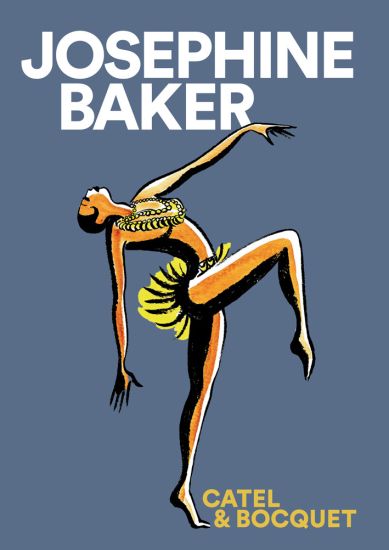
Josephine Baker

Josephine Baker

Jose-Luis Bocquet

SelfMadeHero
2017
nidottu
Josephine Baker (1906–1975) was nineteen years old when she found herself in Paris for the first time in 1925. Overnight, the young American dancer became the idol of the Roaring Twenties, captivating Picasso, Cocteau, Le Corbusier, and Simenon. In the liberating atmosphere of the 1930s, Baker rose to fame as the first black star on the world stage, from London to Vienna, Alexandria to Buenos Aires. After World War II, and her time in the French Resistance, Baker devoted herself to the struggle against racial segregation, publicly battling the humiliations she had for so long suffered personally. She led by example, and over the course of the 1950s adopted twelve orphans of different ethnic backgrounds: a veritable Rainbow Tribe. A victim of racism throughout her life, Josephine Baker would sing of love and liberty until the day she died.
Joséphine Baker Across the Colonial Modern
On renowned night-club performer and Allied spy Jos phine Baker's movements during the Second World War, told through essays, archival material, and photography. In this unique study, architect and theorist Ines Weizman presents a speculative architectural travelogue of renowned night-club performer and Resistance spy Jos phine Baker's movements during the Second World War. Based on Weizman's installation at the 2023 Venice Architecture Biennale, the book uncovers political histories of colonization and occupation through the lens of architecture. Shortly after Germany occupied France, Baker--who had, up until the war, been performing in Paris and internationally--enlisted in the counterintelligence wing of the Free French Army. In 1940, she left Paris for Marseille, from which she departed in 1941 to establish networks and find allies in North Africa. In 1943, she began performing across the Middle East, traveling alongside, in advance of, or behind Allied soldiers, alternately conducting acts of espionage and entertainment. Her perilous trajectory across the shifting borders of North Africa and the Middle East is known only in broad terms, as evidence that could detail the series of places in which she performed is almost completely lost. Only a few faint traces, speculations, rumors, and documents indicate Baker's presence in military camps, clubs, cabarets, casinos, theatres, and "gin joints" across the region. Centering around a seemingly minor architectural detail (a faded photograph of the remnants of a French flag painted on an interior wall of a long-since demolished casino in Haifa), this book searches for material clues of Baker's movements to trace the political, racial, and religious conflicts encountered along her journey. Featuring a film essay and a longer text discussing archival material, including photographs, documents, and correspondences, the book aims to untangle a web of cross-border relations that have since become hardened by national boundaries, and of trajectories now severed.
Josephine Baker Swimming Pool

Josephine Baker Swimming Pool

Tim Suermondt

Madhat, Inc.
2019
pokkari
Tim Suermondt's fifth full-length book of verse, Josephine Baker Swimming Pool, is one you should keep by your bedside to dive into just before turning off your light--for its companionable tone, for its clarity and surprising imagery, for the sweet quietude of these many meditations.
Josephine Baker (Spanish Edition)

Josephine Baker (Spanish Edition)

José Louis Bocquet; Catel Muller

Salamandra Graphic
2023
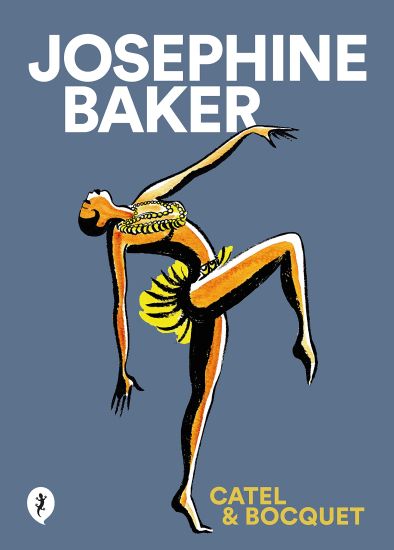
sidottu
Jos -Louis Bocquet y Catel Muller cuentan en Josephine Baker la historia de una mujer que se convirti en un icono de los locos a os veinte por su alegr a de vivir y su rabiosa modernidad. Bocquet y Catel rinden homenaje a una artista que deslumbr al p blico, pero que tambi n demostr sus elevados valores y su compromiso, y rompi todos los tab es a pesar de su g nero, color de piel y origen humilde. Josephine Baker cuenta la vida de una mujer excepcional que cant al amor y a la libertad hasta su ltimo aliento y que, a d a de hoy, sigue siendo un ejemplo de lucha, constancia y solidaridad. «Amigos m os, sab is que no miento si os digo que he tenido acceso a palacios de reyes y reinas, a casas de presidentes, mientras en Estados Unidos no pod a entrar en un hotel o beber un caf , y eso me pon a furiosa . -Josephine Baker, Marcha en Washington por el empleo y la libertad, 28 de agosto de 1963. ENGLISH DESCRIPTION Jos -Louis Bocquet and Catel Muller tell the story of a woman who became an icon of the Roaring Twenties for her joie de vivre and her zealous modernism. Bocquet and Catel pay homage to an artist who dazzled the audience, one who exhibited high values and commitment, and broke all taboos despite her gender, skin color, and humble beginnings. Josephine Baker (1906-1975) was nineteen years old when she found herself in Paris for the first time in 1925. Overnight, the young American dancer became the idol of the Roaring Twenties, captivating Picasso, Cocteau, Le Corbusier, and Simenon. In the liberating atmosphere of the 1930s, Baker rose to fame as the first black star on the world stage, from London to Vienna, Alexandria to Buenos Aires. After World War II, and her time in the French Resistance, Baker devoted herself to the struggle against racial segregation, publicly battling the humiliations she had for so long suffered personally. She led by example, and over the course of the 1950s adopted twelve orphans of different ethnic backgrounds: a veritable Rainbow Tribe. A victim of racism throughout her life, Josephine Baker would sing of love and liberty until the day she died.