
Kirjahaku
Etsi kirjoja tekijän nimen, kirjan nimen tai ISBN:n perusteella.
1000 tulosta hakusanalla Joshua L. Burrows

Joshua Chamberlain is arguably the most well-known figure in Maine history and this highly accessible biography provides a brief look at his life. Covering his early years to his time as a student at Bowdoin, the primary emphasis in on Chamberlain's military career and his heroic actions during the Civil War, for which he was awarded the Medal of Honor. After the war he served as governor of Maine and as president of his alma mater before his death in 1914. Filled with photos, maps, and illustrations, this concise history of a Maine icon is ideal for anyone with even just a passing interest in Maine or the Civil War.

Valor's Measure: Based on the Heroic Civil War Career of Joshua L. Chamberlain
Thomas Wade Oliver
Substance Press
2013
nidottu

Fact or Fiction? Colonel Joshua L. Chamberlain at Gettysburg as Depicted in Michael Shaara's "The Killer Angels"
Penny Hill Press; U. S. Army Command and General Staff Col
Createspace Independent Publishing Platform
2015
nidottu
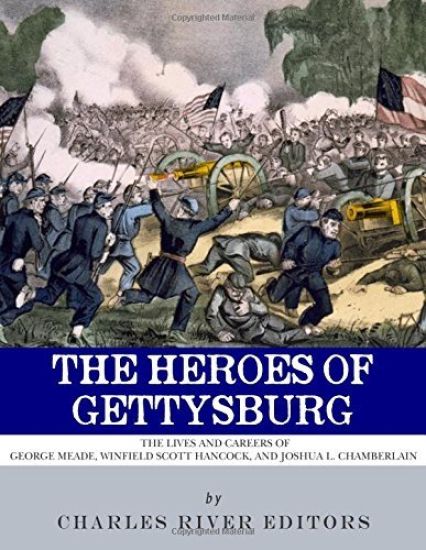
The Heroes of Gettysburg: The Lives and Careers of George Meade, Winfield Scott Hancock and Joshua L. Chamberlain
Charles River
Createspace Independent Publishing Platform
2018
nidottu
*Covers the entire careers of all three in one entertaining and educational narrative. *Includes pictures of Meade, Hancock, Chamberlain, and important people, places, and events in their lives. *Includes a Bibliography of each man for further reading. Despite the fact that the Civil War began over 150 years ago, it remains one of the most widely discussed topics in America today, with Americans arguing over its causes, reenacting its famous battles, and debating which general was better than others. Americans continue to be fascinated by the Civil War icons who made the difference between victory and defeat in the war's great battles. Naturally, as the most famous and biggest battle of the Civil War, Gettysburg has been studied intensely for nearly 150 years, as every decision by the battle's generals has been dissected over and over again. With that, the men most responsible for the Union victory there have been immortalized. Ironically, one of the generals who often escapes the attention of Civil War fans who compile the lists of best generals is the man who won the war's most famous battle, George G. Meade (1815-1872). During the first half of the war, Meade rose from command of a brigade to command of a division and finally command of the entire Army of the Potomac just days before the Battle of Gettysburg. Naturally, he is best known for defeating Robert E. Lee's Army of Northern Virginia at Gettysburg in July 1863, although he's not nearly as well remembered as his Confederate counterpart. After the Battle of Chancellorsville, Winfield Scott Hancock fortuitously became the new II Corps commander in the Army of the Potomac, just in time to deliver his greatest performance of all. At Gettysburg, Hancock was the commanding general in the field on Day 1, as Meade and the rest of the Union army arrived later that night. On Day 2, Hancock's men assisted Sickles' III Corps when Sickles disobeyed orders and moved it forward, creating a gap in the Union lines. And on Day 3, Hancock's greatest day of the war, he was seriously injured and nearly bled to death while leading his men in their decisive repulse of Pickett's Charge. Chamberlain had a respectable Civil War career and life, but he had been largely forgotten in the decades after the Civil War, with the focus on more influential commanding generals and their principal subordinates. Then a remarkable thing happened with the 1974 publication of Michael Sharaa's The Killer Angels, a Pulitzer Prize winning historical fiction that focuses on the Battle of Gettysburg and its influential generals and leaders. In one fell swoop, Michael Sharaa breathed life back into the reputations of men like John Buford and Joshua Chamberlain, cast as the Union heroes of Day 1 and Day 2 respectively that made victory at Gettysburg possible. In the novel, Chamberlain's regiment holds the high ground against a series of desperate Confederate charges, and when they ran out of gunpowder, Chamberlain ordered a brave bayonet charge that drove the Confederates in their front from the fight. With that, the Union's left flank was saved. The Heroes of Gettysburg comprehensively covers the leadership of all three at Gettysburg, but it also chronicles their entire lives and careers, humanizing the stoic Chamberlain, physically intimidating Hancock, and the surly but modest Meade. Along with bibliographies and pictures of important people, places, and events, you will learn about the Heroes of Gettysburg like you never have before.

Don't Change: Joshua's Recruitment
Joshua L. Edwards
Createspace Independent Publishing Platform
2013
nidottu

Accented America is a sweeping study of U.S. literature between 1890-1950 that reveals a long history of English-Only nationalism: the political claim that U.S. citizens must speak a nationally distinctive form of English. This perspective presents U.S. literary works written between the 1890s and 1940s as playfully, painfully, and ambivalently engaged with language politics, thereby rewiring both narrative form and national identity. The United States has always been a densely polyglot nation, but efforts to prove the existence of a nationally specific form of English turn out to be a development of particular importance to interwar modernism. If the concept of a singular, coherent, and autonomous 'American language' seemed merely provocative or ironic in 1919 when H.L. Mencken emblazoned the phrase on his philological study, within a short period of time it would come to seem simultaneously obvious and impossible. Considering the continuing presence of fierce public debates over U.S. English and domestic multilingualisms demonstrates the symbolic and material implications of such debates in naturalization and citizenship law, presidential rhetoric, academic language studies, and the artistic renderings of novelists. Against the backdrop of the period's massive demographic changes, Accented America brings a broadly multi-ethnic set of writers into conversation, including Gertrude Stein, Jean Toomer, Henry Roth, Nella Larsen, John Dos Passos, Lionel Trilling, Américo Paredes, and Carlos Bulosan. These authors shared an acute sense of linguistic standardization during the interwar era and contend with the defamiliarizing sway of radical experimentation with invented and improper literary vernaculars. Mixing languages, these authors spurn expectations for phonological exactitude to develop multilingual literary aesthetics. Rather than confirming the powerfully seductive subtext of monolingualism-that those who speak alike are ethically and politically likeminded-multilingual modernists composed interwar novels that were characteristically American because, not in spite, of their synthetic syntaxes and enduring strangeness.
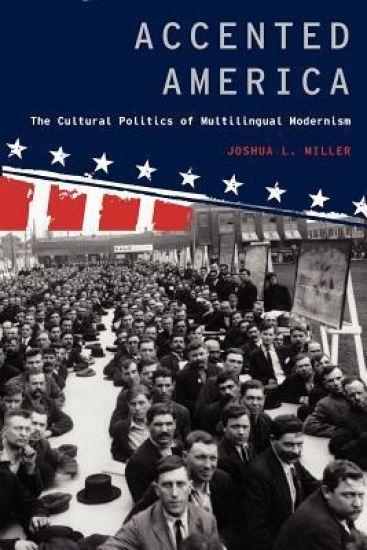
Accented America is a sweeping study of U.S. literature between 1890-1950 that reveals a long history of English-Only nationalism: the political claim that U.S. citizens must speak a nationally distinctive form of English. This perspective presents U.S. literary works written between the 1890s and 1940s as playfully, painfully, and ambivalently engaged with language politics, thereby rewiring both narrative form and national identity. The United States has always been a densely polyglot nation, but efforts to prove the existence of a nationally specific form of English turn out to be a development of particular importance to interwar modernism. If the concept of a singular, coherent, and autonomous 'American language' seemed merely provocative or ironic in 1919 when H.L. Mencken emblazoned the phrase on his philological study, within a short period of time it would come to seem simultaneously obvious and impossible. Considering the continuing presence of fierce public debates over U.S. English and domestic multilingualisms demonstrates the symbolic and material implications of such debates in naturalization and citizenship law, presidential rhetoric, academic language studies, and the artistic renderings of novelists. Against the backdrop of the period's massive demographic changes, Accented America brings a broadly multi-ethnic set of writers into conversation, including Gertrude Stein, Jean Toomer, Henry Roth, Nella Larsen, John Dos Passos, Lionel Trilling, Américo Paredes, and Carlos Bulosan. These authors shared an acute sense of linguistic standardization during the interwar era and contend with the defamiliarizing sway of radical experimentation with invented and improper literary vernaculars. Mixing languages, these authors spurn expectations for phonological exactitude to develop multilingual literary aesthetics. Rather than confirming the powerfully seductive subtext of monolingualism-that those who speak alike are ethically and politically likeminded-multilingual modernists composed interwar novels that were characteristically American because, not in spite, of their synthetic syntaxes and enduring strangeness.
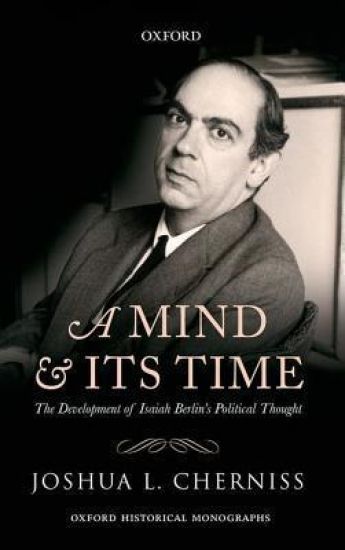
A Mind and its Time offers the most detailed account to date of the genesis and development of Isaiah Berlin's political thought, philosophical views, and historical understanding. Drawing on both little-known published material and archival sources, it locates Berlin's evolving intellectual interests and political positions in the context of the events and trends of interwar and post-war intellectual and political life. Special emphasis is placed on the roots of Berlin's later pluralism in philosophical and cultural debates of the interwar period, his concern with the relationship between ethics and political conduct, and his evolving account of liberty. Berlin's distinctive liberalism is shown to have been shaped by his response to the cultural politics of interwar period, and the political and ethical dilemmas of the early Cold War era; and to what Berlin saw as a dangerous embrace of an elitist, technocratic, scientistic and "managerial" intellectual and political stance by liberals themselves. At the same time, Berlin's attitude toward what he called "positive liberty" emerges as far more complicated and ambivalent than is often realized. Joshua L. Cherniss reveals the multiplicity of Berlin's influences and interlocutors, the shifts in his thinking, and the striking consistency of his concerns and commitments. In shedding new light on Berlin's thought, and offering a better understanding of his place in the development of liberal thought in the twentieth century, he makes fresh contributions both to understanding the intellectual history of the twentieth century, and to discussions of liberty and liberalism in political theory.
Psychosocial Capacity Building in Response to Disasters
Joshua L. Miller
Columbia University Press
2012
sidottu
Disaster responders treat more than just the immediate emotional and psychological trauma of victims: they empower individuals and families to heal themselves long into a disaster's aftermath. This requires helping survivors to rebuild their ability to meet their emotional and psychological needs, not only for themselves but also for others, which necessitates a careful consideration of survivors' social, economic, and political realities as their communities heal and recover. This comprehensive book integrates Western mental health approaches and international models of psychosocial capacity building within a social ecology framework, providing practitioners and volunteers with a blueprint for individual, family, group, and community interventions. Joshua L. Miller focuses on a range of disasters at local, regional, national, and international levels. Global case studies explore the social, psychological, economic, political, and cultural issues affecting various reactions to disaster and illustrate the importance of drawing on local cultural practices to promote empowerment and resiliency. Miller encourages developing people's capacity to direct their own recovery, using a social ecology framework to conceptualize disasters and their consequences. He also considers sources of vulnerability and how to support individual, family, and community resiliency; adapt and implement traditional disaster mental health interventions in different contexts; use groups and activities to facilitate recovery as part of a larger strategy of psychosocial capacity building; and foster collective grieving and memorializing. Miller's text examines the unique dynamics of intergroup conflict and the relationship between psychosocial healing, social justice, and peace and reconciliation. Each chapter ends with a mindfulness exercise, and a section reviews practitioner self-care.

Psychosocial Capacity Building in Response to Disasters
Joshua L. Miller
Columbia University Press
2012
pokkari
Disaster responders treat more than just the immediate emotional and psychological trauma of victims: they empower individuals and families to heal themselves long into a disaster's aftermath. This requires helping survivors to rebuild their ability to meet their emotional and psychological needs, not only for themselves but also for others, which necessitates a careful consideration of survivors' social, economic, and political realities as their communities heal and recover. This comprehensive book integrates Western mental health approaches and international models of psychosocial capacity building within a social ecology framework, providing practitioners and volunteers with a blueprint for individual, family, group, and community interventions. Joshua L. Miller focuses on a range of disasters at local, regional, national, and international levels. Global case studies explore the social, psychological, economic, political, and cultural issues affecting various reactions to disaster and illustrate the importance of drawing on local cultural practices to promote empowerment and resiliency. Miller encourages developing people's capacity to direct their own recovery, using a social ecology framework to conceptualize disasters and their consequences. He also considers sources of vulnerability and how to support individual, family, and community resiliency; adapt and implement traditional disaster mental health interventions in different contexts; use groups and activities to facilitate recovery as part of a larger strategy of psychosocial capacity building; and foster collective grieving and memorializing. Miller's text examines the unique dynamics of intergroup conflict and the relationship between psychosocial healing, social justice, and peace and reconciliation. Each chapter ends with a mindfulness exercise, and a section reviews practitioner self-care.

The first full-scale history of the Makah people of the Pacific Northwest, whose culture and identity are closely bound to the sea For the Makahs, a tribal nation at the most northwestern point of the contiguous United States, a deep relationship with the sea is the locus of personal and group identity. Unlike most other indigenous tribes whose lives are tied to lands, the Makah people have long placed marine space at the center of their culture, finding in their own waters the physical and spiritual resources to support themselves. This book is the first to explore the history and identity of the Makahs from the arrival of maritime fur-traders in the eighteenth century through the intervening centuries and to the present day. Joshua L. Reid discovers that the “People of the Cape” were far more involved in shaping the maritime economy of the Pacific Northwest than has been understood. He examines Makah attitudes toward borders and boundaries, their efforts to exercise control over their waters and resources as Europeans and then Americans arrived, and their embrace of modern opportunities and technology to maintain autonomy and resist assimilation. The author also addresses current environmental debates relating to the tribe’s customary whaling and fishing rights and illuminates the efforts of the Makahs to regain control over marine space, preserve their marine-oriented identity, and articulate a traditional future.

Psychosocial Responses to Sociopolitical Targeting, Oppression and Violence
Joshua L. Miller
TAYLOR FRANCIS LTD
2023
sidottu
This book will prepare social workers, psychologists, and counselors for psychosocial work with individuals and groups who are experiencing distress and trauma resulting from historical and current sociopolitical oppression and violence. Sociopolitical oppression is a sustained, systematic catastrophe, which results from social targeting and discrimination such as racism, sexism and misogyny, homophobia, and anti-immigrant fervor. The consequences are profound and debilitating. In some ways, they are similar to reactions to a single event disaster (e.g., hurricane, earthquake, terrorist attack) but even more insidious because the social targeting and harassment have been ongoing and will continue. As a guide for direct clinical practice, this book offers new models for understanding the nature and consequences of sociopolitical disasters as well as guiding a range of interventions – clinical, psychoeducational, advocacy, and social justice – for use on a micro, mezzo, and macro level. Drawing on indigenous and BIPOC knowledge and scholarship and using case studies from around the world, it criticizes while also adapting and integrating knowledge and theory from the fields of disaster mental health, psychosocial capacity building, trauma therapy, psychodynamic theory, cognitive behavioral theories, and theories of resilience and positive psychology, linking them to an understanding of historical and social oppression, social justice, and intergroup conflict and reconciliation. The book offers critiques of dominant Western, Eurocentric visions of personhood and models of intervention and questions assumptions about the roles of "client" and "worker," proposing more egalitarian, collaborative relationships and extensive use of training of trainers. It will prepare graduate students and practitioners across the helping professions for work that promotes the collective and individual strength and efficacy of affected people, while also responding directly to vulnerability, stress, and trauma.

Psychosocial Responses to Sociopolitical Targeting, Oppression and Violence
Joshua L. Miller
TAYLOR FRANCIS LTD
2023
nidottu
This book will prepare social workers, psychologists, and counselors for psychosocial work with individuals and groups who are experiencing distress and trauma resulting from historical and current sociopolitical oppression and violence. Sociopolitical oppression is a sustained, systematic catastrophe, which results from social targeting and discrimination such as racism, sexism and misogyny, homophobia, and anti-immigrant fervor. The consequences are profound and debilitating. In some ways, they are similar to reactions to a single event disaster (e.g., hurricane, earthquake, terrorist attack) but even more insidious because the social targeting and harassment have been ongoing and will continue. As a guide for direct clinical practice, this book offers new models for understanding the nature and consequences of sociopolitical disasters as well as guiding a range of interventions – clinical, psychoeducational, advocacy, and social justice – for use on a micro, mezzo, and macro level. Drawing on indigenous and BIPOC knowledge and scholarship and using case studies from around the world, it criticizes while also adapting and integrating knowledge and theory from the fields of disaster mental health, psychosocial capacity building, trauma therapy, psychodynamic theory, cognitive behavioral theories, and theories of resilience and positive psychology, linking them to an understanding of historical and social oppression, social justice, and intergroup conflict and reconciliation. The book offers critiques of dominant Western, Eurocentric visions of personhood and models of intervention and questions assumptions about the roles of "client" and "worker," proposing more egalitarian, collaborative relationships and extensive use of training of trainers. It will prepare graduate students and practitioners across the helping professions for work that promotes the collective and individual strength and efficacy of affected people, while also responding directly to vulnerability, stress, and trauma.
Looking for Work, Searching for Workers
Joshua L. Rosenbloom
Cambridge University Press
2002
pokkari
The dynamic character of American industrialization produced imbalances between the supply of and demand for labor across cities and regions. This book describes how employers and job-seekers responded to these imbalances to create networks of labor market communication and assistance capable of mobilizing the massive redistribution of population that was essential to maintain the rapid pace of the nation's economic growth between the Civil War and World War I. It combines a detailed description of the emerging labor market institutions with a careful analysis of a variety of quantitative evidence to assess the broader economic implications for geographic wage convergence and for American economic growth. Despite an expansion in the geographic scope of labor markets at this time, the evidence suggests that labor market institutions reinforced regional divisions within the United States and left a lasting impact on the evolution of many other aspects of the employment relationship.
Looking for Work, Searching for Workers
Joshua L. Rosenbloom
Cambridge University Press
2002
sidottu
The dynamic character of American industrialization produced imbalances between the supply of and demand for labor across cities and regions. This book describes how employers and job-seekers responded to these imbalances to create networks of labor market communication and assistance capable of mobilizing the massive redistribution of population that was essential to maintain the rapid pace of the nation's economic growth between the Civil War and World War I. It combines a detailed description of the emerging labor market institutions with a careful analysis of a variety of quantitative evidence to assess the broader economic implications for geographic wage convergence and for American economic growth. Despite an expansion in the geographic scope of labor markets at this time, the evidence suggests that labor market institutions reinforced regional divisions within the United States and left a lasting impact on the evolution of many other aspects of the employment relationship.

In part one of this book Joshua L. Harper is able to demonstrate the following aspects of the Barberini version: when compared with the other Greek versions, it appears that the Barberini version was originally independent of the Septuagint but has been influenced by it in transmission. The Barberini version was probably translated no earlier than the later books of the Septuagint (that is, around the first century BC), and no later than the mid-third century AD. The style, methods of translation, and exegetical affinities suggest that the translator was primarily concerned with producing stylistic, understandable Greek rather than with conforming closely to the Hebrew source text. The translator was probably Jewish, particularly since some readings resonate with Jewish exegetical traditions. The relatively polished Greek suggests that the translator had received some formal Greek education, perhaps in a Hellenistic Jewish community. In the second part of this work Harper provides text, translation, and notes for the major Greek versions. The Barberini version has been analysed in particular detail, with regard to lexical and syntactical translation technique, as well as matters of style.

In part one of this book Joshua L. Harper is able to demonstrate the following aspects of the Barberini version: when compared with the other Greek versions, it appears that the Barberini version was originally independent of the Septuagint but has been influenced by it in transmission. The Barberini version was probably translated no earlier than the later books of the Septuagint (that is, around the first century BC), and no later than the mid-third century AD. The style, methods of translation, and exegetical affinities suggest that the translator was primarily concerned with producing stylistic, understandable Greek rather than with conforming closely to the Hebrew source text. The translator was probably Jewish, particularly since some readings resonate with Jewish exegetical traditions. The relatively polished Greek suggests that the translator had received some formal Greek education, perhaps in a Hellenistic Jewish community. In the second part of this work Harper provides text, translation, and notes for the major Greek versions. The Barberini version has been analysed in particular detail, with regard to lexical and syntactical translation technique, as well as matters of style.

A timely defense of liberalism that draws vital lessons from its greatest midcentury proponentsToday, liberalism faces threats from across the political spectrum. While right-wing populists and leftist purists righteously violate liberal norms, theorists of liberalism seem to have little to say. In Liberalism in Dark Times, Joshua Cherniss issues a rousing defense of the liberal tradition, drawing on a neglected strand of liberal thought.Assaults on liberalism—a political order characterized by limits on political power and respect for individual rights—are nothing new. Early in the twentieth century, democracy was under attack around the world, with one country after another succumbing to dictatorship. While many intellectuals dismissed liberalism as outdated, unrealistic, or unworthy, a handful of writers defended and reinvigorated the liberal ideal, including Max Weber, Raymond Aron, Albert Camus, Reinhold Niebuhr, and Isaiah Berlin—each of whom is given a compelling new assessment here.Building on the work of these thinkers, Cherniss urges us to imagine liberalism not as a set of policies but as a temperament or disposition—one marked by openness to complexity, willingness to acknowledge uncertainty, tolerance for difference, and resistance to ruthlessness. In the face of rising political fanaticism, he persuasively argues for the continuing importance of this liberal ethos.