Kirjojen hintavertailu. Mukana 11 241 044 kirjaa ja 12 kauppaa.

Kirjahaku

Etsi kirjoja tekijän nimen, kirjan nimen tai ISBN:n perusteella.

1000 tulosta hakusanalla Jospeh T. Stuart

Christopher Dawson

Christopher Dawson

Jospeh T. Stuart

THE CATHOLIC UNIVERSITY OF AMERICA PRESS
2022
nidottu
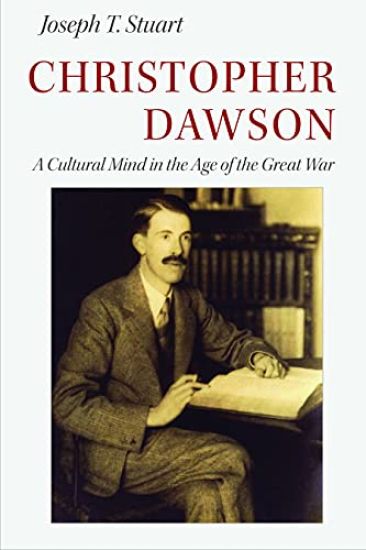
The English historian Christopher Dawson (1889-1970) was the first Catholic Studies professor at Harvard University and has been described as one of the foremost Catholic thinkers of modern times. His focus on culture prefigured its importance in Catholicism since Vatican Council II and in the rise of mainstream cultural history in the late twentieth century. How did Dawson think about culture and why does it matter? Joseph T. Stuart argues that through Dawson's study of world cultures, he acquired a "cultural mind" by which he attempted to integrate knowledge according to four implicit rules: intellectual architecture, boundary thinking, intellectual asceticism, and intellectual bridges. Dawson's multilayered approach to culture, instantiating John Henry Newman's philosophical habit of mind, is key to his work and its relevance. By it, he responded to the cultural fragmentation he sensed after the Great War (1914-1918). Stuart supports these claims by demonstrating how Dawson formed his cultural mind practicing an interdisciplinary science of culture involving anthropology, sociology, history, and comparative religion. Stuart shows how Dawson applied his cultural thinking to problems in politics and education.This book establishes how Dawson's simple definition of culture as a "common way of life" reconciles intellectualist and behavioral approaches to culture. In addition, Dawson's cultural mind provides a synthesis helpful for recognizing the importance of Christian culture in education. It demonstrates principles which construct a more meaningful cultural history. Anyone interested in the idea of culture, the connection of religion to the social sciences, Catholic Studies, or Dawson studies will find this book an engaging and insightful intellectual history.

The Formation of Christendom

The Formation of Christendom

Christopher Dawson; Joseph T. Stuart

THE CATHOLIC UNIVERSITY OF AMERICA PRESS
2026
pokkari
Together with its sequel The Dividing of Christendom, this book was the fruit of the Harvard lectures that Christopher Dawson delivered as the first occupant of the Charles Chauncey Stillman Chair of Roman Catholic Studies from 1958-1962. Here, as in all his works, he sees religion as the dynamic element of culture. This work traces the formation of Christian culture from its roots in the Judeo-Christian tradition through the rise and fall of medieval Christendom, and ends with an epilogue in which the author reflects on the defining characteristics of Christianity in general and the Catholic Church in particular. In the introductory section of this work, Dawson highlights the importance of language in the origin and development of civilization. Christina Scott, the author’s daughter and first biographer, summarises Dawson’s ideas on this point in her work A Historian and his World: "In the beginning was the word: language was the gateway to the human world and was the single factor that distinguished man from the animal kingdom." Language, as Dawson wrote, "enables man to think, to create a new world of imagination and reason." In parts two and three Dawson traces the beginnings of Christian culture in the first centuries after Christ through to the decline of medieval unity. Some of the tantalizing chapter headings include The Christian and Jewish Idea of Revelation, The Foundation of Europe: The Monks of the West, The Carolingian Age, Feudal Europe and the Age of Anarchy, The Achievement of Medieval Thought, and East and West in the Middle Ages. Dawson shared with Arnold Toynbee the ideal of a universal spiritual society as the goal of history; but whereas Dr. Toynbee saw this as achievable by a consensus of the great world religions, Dawson concludes his work with a clear exposition of the Catholic ideal of a universal spiritual society. It provides an excellent summary of the author’s view of the uniqueness and universality of the Catholic Church, as well as its fundamentally non-sectarian basis. His concluding words demonstrate his commitment to the concept of unity: "On the other hand, if Christianity were to lead the nations still further apart from one another into spiritual disunity, it would defeat the central purpose of the Church’s institution."
Out of the Woods

Out of the Woods

Stuart T. Hauser; Joseph P. Allen; Eve Golden

Harvard University Press
2008
nidottu
Seventy deeply troubled teenagers spend weeks, months, even years on a locked psychiatric ward. They’re not just failing in school, not just using drugs. They are out of control—violent or suicidal, in trouble with the law, unpredictable, and dangerous. Their futures are at risk.Twenty years later, most of them still struggle. But astonishingly, a handful are thriving. They’re off drugs and on the right side of the law. They’ve finished school and hold jobs that matter to them. They have close friends and are responsible, loving parents.What happened? How did some kids stumble out of the woods while others remain lost? Could their strikingly different futures have been predicted back during their teenage struggles? The kids provide the answers in a series of interviews that began during their hospitalizations and ended years later. Even in the early days, the resilient kids had a grasp of how they contributed to their own troubles. They tried to make sense of their experience and they groped toward an understanding of other people’s inner lives.In their own impatient voices, Out of the Woods portrays edgy teenagers developing into thoughtful, responsible adults. Listening in on interviews through the years, narratives that are often poignant, sometimes dramatic, frequently funny, we hear the kids growing into more composed—yet always recognizable—versions of their tough and feisty selves.
DiPiro's Pharmacotherapy: A Pathophysiologic Approach, Twelfth Edition

DiPiro's Pharmacotherapy: A Pathophysiologic Approach, Twelfth Edition

Joseph DiPiro; Gary Yee; Stuart T. Haines; Thomas D. Nolin; Vicki Ellingrod; L. Michael Posey

McGraw-Hill Education
2023
sidottu
A Doody's Core Title for 2024 & 2023!The #1 Textbook in Pharmacotherapy providing optimal patient outcomes using evidence-based medication therapies—updated with the latest advances and guidelinesFor more than 30 years, DiPiro’s Pharmacotherapy has been the essential textbook for learning how to properly select, administer, and monitor drugs-everything needed to provide safe, effective drug therapy across all therapeutic categories. This new edition has been fully updated with the latest evidence-based information and recommendations.With content from 300 expert contributors, this valuable resource offers detailed descriptions of common and uncommon disease states, including treatment by pharmacologic and non-pharmacologic means. Each disease chapter opens with a Patient Care Process, helping readers understand the collaborative care model in which pharmacists work and communicate with other healthcare providers for effective coordinated care.Here's why DiPiro's Pharmacotherapy: A Pathophysiologic Approach is the perfect learning tool for students, pharmacists, and other healthcare providers:All chapters provide the most current, reliable, and relevant information availableKey concepts are included at the beginning of each chapterClinical Presentation boxes concisely outline disease signs and symptomsNew: Beyond the Book feature points readers to multimedia resources to deepen their understanding of the materialDiagnostic flow diagrams, treatment algorithms, dosing guideline recommendations, and monitoring approaches clearly distinguish treatment pathwaysNew: Drug monitoring tables have been addedPatient care process boxes help readers know how to communicate with other health care providersNew: Additional E-chapters are available with a subscription to AccessPharmacyNew: Over 2000 Review Questions to help prepare students!
Cryptocurrency Guide For Beginners. How To Start With Minimum Investment.: Successful Investment Strategies And How To Minimizing Your Risk. Mining, T
Want to invest in bitcoins for so long? Don't know how to begin and how to avoid losing money? Here's our book for beginners that makes buying and investing in cryptocurrency understandable and easy to start. Here's the easiest language to learn the cryptocurrency basics, which brings all the necessary information in one place. In this book, you'll learn: In this book, you'll learn: Key reasons why the best time to start successful investing in Bitcoin was yesterday How to get started How much money do you need to start investing What are the most important cryptocurrencies other than Bitcoin You will no longer be confused What are mining and ICO, and how do you make money from the cryptocurrency How to choose a successful investment strategy What are the top mistakes beginners make trading cryptocurrency, and how to avoid them TOP 10 business books that make you richer just as an added bonus Buy this book NOW to increase productivity and the quality of your life Pick up your copy today by clicking the BUY NOW button at the top of this page
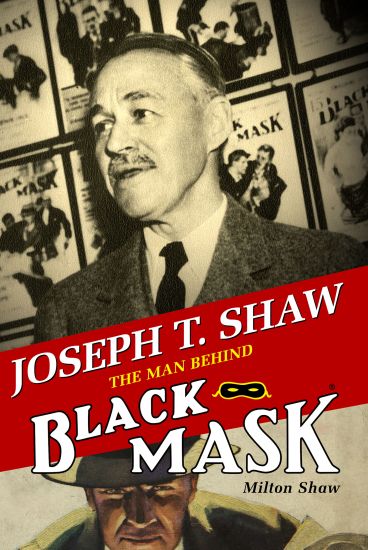
Joseph T. Shaw: The Man Behind Black Mask
Joseph T. "Cap" Shaw enjoyed several distinguished careers-military man and champion fencer, among them-before he assumed the editorial chair of the most significant fiction magazine since The Strand gave the world the immortal Sherlock Holmes. Between 1926 and 1936, Shaw edited Black Mask magazine. The pioneering first stories of Carroll John Daly and Dashiell Hammett had just begun to appear in its pages. Shaw recognized in their hard-boiled treatment of the American crime story the potential for a new literary school. Working closely with his hand-picked writers, he pulled the magazine back from the brink of cancellation, and transformed the staid detective story into a vigorous and modern genre, discovering and championing important inheritors of this new tradition, among them, Raymond Chandler.But there is more to Joe Shaw than his editorial career. Here, in the first biography ever written of this editorial giant, his son relates the full fascinating story of the man behind the revolutionary editorial persona....
Neuropsychopharmacology: A Tribute to Joseph T. Coyle
Neuropsychopharmacology: A Tribute to Joseph T. Coyle is a new volume from Advances in Pharmacology presenting reviews of recent breakthroughs in glutamate pharmacology and a tribute to one of the most influential neuroscientists of our times. With a variety of chapters and the best authors in the field, the volume is an essential resource for pharmacologists, immunologists, and biochemists alike.
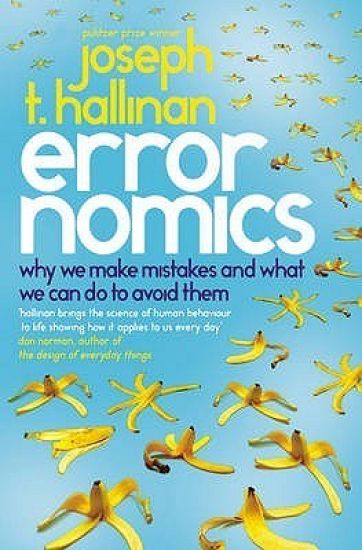
Errornomics

Errornomics

Joseph T Hallinan

Ebury Press
2009
pokkari
How did security staff at LA International Airport miss 75% of bomb-making materials that went through screening? From minor lapses (why we're so likely to forget passwords) to life-threatening blunders (why anaesthetists used to maim their patients), Pulitzer-Prize winning journalist Joseph T.
Atlas of Human Cranial Macromorphoscopic Traits

Atlas of Human Cranial Macromorphoscopic Traits

Joseph T. Hefner; Kandus C. Linde

Academic Press Inc
2018
sidottu
Atlas of Human Cranial Macromorphoscopic Traits synthesizes macromorphoscopic traits and their analysis in an accessible manner, providing detailed descriptions and examples of the various character state manifestations intended for use in classrooms, laboratories, and in the field. The volume begins with an outline of the macromorphoscopic dataset, its history, recent modifications to the historical approach, and recent technological and analytical advances. Additional sections cover Nomenclature, Gross Anatomy, Function, Methodology, Line Drawings, Detailed Definitions, Multiple High-resolution Photographs, and Population Variation Data from the Macromorphoscopic Databank (MaMD). The volume concludes with a chapter outlining the statistical analysis of macromorphoscopic data and a summary of the computer programs and reference databases available to forensic anthropologists for the analysis of these data.
Born of Conviction

Born of Conviction

Joseph T. Reiff

Oxford University Press Inc
2015
sidottu
The dominant narrative of Mississippi during the Civil Rights Era focuses on white citizens, the white church, and their intense resistance to change. Signed by twenty-eight white pastors of the Methodist Mississippi Annual conference and published in the Mississippi Methodist Advocate on January 2, 1963, the "Born of Conviction" statement offered an alternative witness to the segregationist party line by calling for freedom of the pulpit and reminding readers of the Methodist Discipline's claim that the teachings of Jesus "[permit] no discrimination because of race, color, or creed". The twenty-eight pastors sought to speak to and for a mostly silent yet significant minority of Mississippians, and to lead white Methodists to join the conversation on the need for racial justice. The document additionally expressed support for public schools and opposition to any attempt to close them, and affirmed the signers' opposition to Communism. Though a few lay and clergy persons voiced public affirmation of "Born of Conviction," the overwhelming reaction was negative-by mid-1964, twenty of the original signers had left Mississippi, revealing the challenges faced by whites who offered even mild dissent to massive resistance in the Deep South. Dominant narratives, however, rarely tell the whole story. The statement caused a significant crack in the public unanimity of Mississippi white resistance. Signers and their public supporters had also received private messages of gratitude for their stand, and eight of the signers remained in the Methodist ministry in Mississippi until retirement. Born of Conviction tells the story of "the Twenty-eight," illuminating the impact on the larger culture of this attempt by white clergy to support race relations change. The book explores the theological and ethical understandings of the signers through an account of their experiences before, during, and after the statement's publication. It also offers a detailed portrait of both public and private expressions of the theology and ethics of white Mississippi Methodists as a whole - including laity and other clergy - as revealed by their responses to the "Born of Conviction" controversy, which came at the crisis point of the Civil Rights Era in Mississippi.
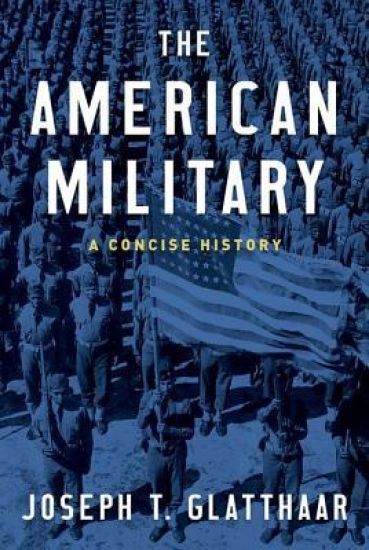
The American Military

The American Military

Joseph T. Glatthaar

Oxford University Press Inc
2018
sidottu
Since the first English settlers landed at Jamestown with the legacy of centuries of European warfare in tow, the military has been an omnipresent part of America. In The American Military: A Concise History, Joseph T. Glatthaar explores this relationship from its origins in the thirteen colonies to today's ongoing conflicts in the Middle East. Colonial Americans struggled to reconcile the rights of the citizenry to form local militias with the existence of a standing army, viewing it as a threat to civil liberty. This tension played out during the Revolution as General Washington's rag-tag band of "Continentals" was largely neglected by the public as it bravely faced the British redcoats. The Founding Fathers attempted to strike a balance, enshrining an army, navy, and a "well regulated Militia" in the Constitution. As such, the United States soon witnessed the rise of a professional military, with its commitment to selectivity and expertise, a boon to the nation's successes in the War of 1812, the Mexican War, and the Civil War to come. This system would give rise to great generals such as Ulysses S. Grant and Robert E. Lee, both graduates of West Point, and great naval commanders such as Matthew Perry, hero of the Battle of Lake Erie. As a testament to this system, the officer corps would lead the immense armies and ships of the Union and Confederacy with skill and professionalism. However, the United States quickly dismantled the world's finest army and navy after the war--but soon learned that the purpose of a peacetime army is to prepare for war. When war did arrive, it arrived with a vengeance, gutting the trenches of the Great War with effective innovations: tanks, planes, machine guns, and poison gas. The U.S. military strategically embraced the technology that would win both world wars. From the great aircraft carriers of the Pacific, the Sherman tanks of the Allied front, to the finality of the atomic bomb, this turn to technology changed the nature of battle in the Second World War. The nuclear era brought encounters defined by stalemate--from the damaging Cold War conflicts of Korea and Vietnam, and an all-time high in hostility towards the military during Vietnam, to the current engagements in Afghanistan and Iraq. Since the events of 9/11, the United States has been frustrated by unconventional warfare, including terrorism and cyberwar, largely negating the technological advantage it has held since the Second World War. Glatthaar examines this challenge, looking to the future of the U.S. military and its often proud and complicated legacy.
Born of Conviction

Born of Conviction

Joseph T. Reiff

OXFORD UNIVERSITY PRESS INC
2025
nidottu
Winner of the Mississippi Institute of Arts and Letters' Nonfiction Award The dominant narrative of the role of white citizens and the white church in Mississippi's civil rights era focuses on their intense resistance to change. The "Born of Conviction" statement, signed by twenty-eight white Methodist pastors and published in the Mississippi Methodist Advocate on January 2, 1963, offered an alternative witness to the segregationist party line. Calling for freedom of the pulpit and reminding readers of the Methodist Discipline's claim that the teachings of Jesus permit "no discrimination because of race, color, or creed," the pastors sought to speak to and for a mostly silent yet significant minority of Mississippians, and to lead white Methodists to join the conversation on the need for racial justice. The document additionally expressed support for public schools and opposition to any attempt to close them, and affirmed the signers' opposition to Communism. Though a few individuals, both laity and clergy, voiced public affirmation of "Born of Conviction," the overwhelming reaction was negative-by mid-1964, eighteen of the signers had left Mississippi, evidence of the challenges faced by whites who offered even mild dissent to massive resistance in the Deep South. Dominant narratives, however, rarely tell the whole story. The statement caused a significant crack in the public unanimity of Mississippi white resistance. Signers and their public supporters also received private messages of gratitude for their stand, and eight of the signers would remain in the Methodist ministry in Mississippi until retirement. Born of Conviction tells the story of "the Twenty-Eight," illuminating the impact on the larger culture. The book explores the theological and ethical understandings of the signers through an account of their experiences before, during, and after the statement's publication. It also offers a detailed portrait of both public and private expressions of the theology and ethics of white Mississippi Methodists in general, as revealed by their responses to the "Born of Conviction" controversy.
American Military History

American Military History

Joseph T. Glatthaar

Oxford University Press Inc
2020
nidottu
Since the first English settlers landed at Jamestown with the legacy of centuries of European warfare in tow, the military has been an omnipresent part of America. In American Military History: A Very Short Introduction, Joseph T. Glatthaar explores this relationship from its origins in the thirteen colonies to today's ongoing conflicts in the Middle East. During the Revolutionary War, tension grew between local militias and a standing army. The Founding Fathers attempted to strike a balance, enshrining an army, navy, and a "well-regulated Militia" in the Constitution. The US soon witnessed the rise of a professional military, a boon to its successes in the War of 1812, the Mexican War, and the Civil War. However, after the Civil War, the US struggled to learn that the purpose of a peacetime army is to prepare for war. When war did arrive, it arrived with a vengeance, gutting the trenches of the Great War with effective innovations: tanks, planes, machine guns, and poison gas. The US embraced the technology that would win both world wars and change the nature of battle in the Second World War. The US emerged from World War II as the most powerful nation in the war, but over the next several decades it was forced to confront the limits of its power. The nuclear era brought encounters defined by stalemate--from the Cold War conflicts of Korea and Vietnam to the wars in Afghanistan and Iraq. Since 9/11, the US has been frustrated by unconventional warfare, including terrorism and cyberwar, largely negating the technological advantage it had held. Glatthaar examines all these challenges, looking to the future of the U.S. military and its often proud and complicated legacy.
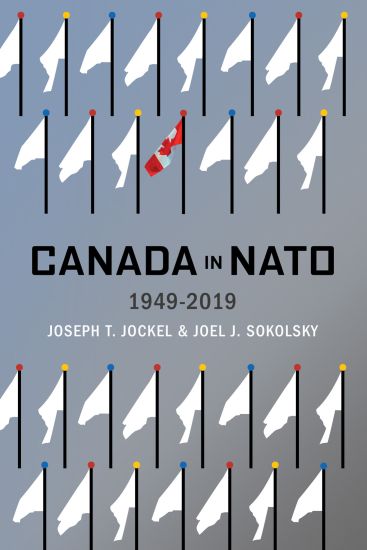
Canada in NATO, 1949–2019

Canada in NATO, 1949–2019

Joseph T. Jockel; Joel J. Sokolsky

McGill-Queen's University Press
2021
sidottu
The story of Canada in the North Atlantic Treaty Organization (NATO) is one of consistent support and involvement but of varying levels of military and diplomatic engagement. Canada in NATO, 1949–2019 provides the first analysis of Canada’s involvement in the Atlantic Alliance – from the negotiations leading to the alliance’s charter in 1949 to NATO’s seventieth anniversary – exploring how the country’s role in NATO has evolved over the years. As one of NATO’s early, foremost participants, Canada was a major force contributor in the 1950s. Briefly deploying more modern fighter aircrafts in Europe than the United States had, as well as a naval commitment that would have been responsible for 10 per cent of ship escorts across the North Atlantic, Canada became the “odd man out” of the western alliance as the Cold War wore on due to its spotty military contributions. Yet Canada eventually re-emerged as a significant member through its contributions to NATO peace enforcement operations in the Balkans in the 1990s and its heavy contributions to operations in Afghanistan in the early twenty-first century, finding itself in the unfamiliar position of criticizing many of the allies by which it had for so long been criticized. As the lead nation for the alliance’s “enhanced forward presence” in Latvia, Canada still plays an important and highly visible role in NATO’s efforts in Eastern Europe today. Canada in NATO, 1949–2019 sheds light on how NATO profoundly shaped Canadian defence and foreign policy, while also serving vital Canadian security and diplomatic interests.