Lappeenrantalaisen opettaja-nuortenkirjailija Jouko Varosen kirjoittamia opettavaisia, lapsissa ajatuksia herättäviä kertomuksia ja päivänavauksia. 150 lasten maailmaan sijoittuvaa kertomusta. Ikäsuositus 6-10-vuotiaille esikouluun, kouluun ja kerhoon.
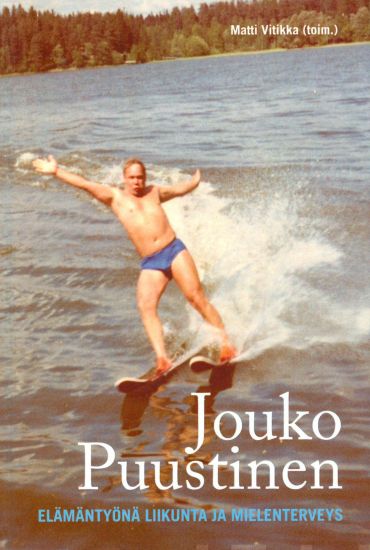
Jouko Puustisen syntymäkodista ja lapsuuden maisemasta, Törnävän mielisairaalan pihapiiristä, alkoi erikoinen elämäntaival. Se johti mielisairaanhoitajan ja liikunnanohjaajan työhön Kellokosken sairaalaan, missä Puustinen sai olla kehittämässä liikuntaterapiaa merkittäväksi hoitomuodoksi maamme mielisairaaloihin.Liikuntaneuvos Jouko Puustisen muistelmateos kuljettaa lukijan läpi mielisairaaloiden ja mielisairaanhoidon suurten muutosten seitsemällä eri vuosikymmenellä. Se kertoo lukituissa huoneissa säilötyistä potilaista, jotka pääsevät liikkumaan, harrastamaan, opiskelemaan, matkustamaan ja kokemaan inhimillistä kohtelua.Muisteluun osallistuvat myös Puustisen kollegat ja ystävät sairaalamaailmasta, urheilukentiltä ja potilasmatkoilta aina Jäämerelle asti. Mukana kulkevat koskettavat ja hymyilyttävät tarinat potilaiden elämästä. Kerronnan keskeisiä teemoja ovat ihmisyys, yhteisöllisyys ja onnistuminen.
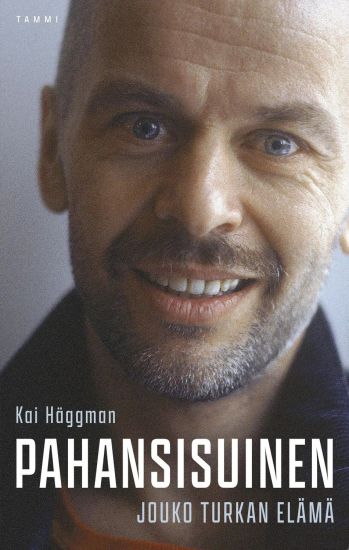
Jouko Turkka (1942–2016) jätti kaikkiin hänet kohdanneisiin lähtemättömän vaikutuksen. Häntä kutsuttiin teatterineroksi, visionääriseksi ohjaajaksi ja suomalaisen teatterin poikkeukselliseksi uudistajaksi. Häntä kutsuttiin myös kiduttajaksi, nöyryyttäjäksi ja valtakunnansaatanaksi. Hän provosoi ja ärsytti tahallaan, jopa eli konflikteista ja riidoista. Hän sai suostuteltua töihinsä ihmisiä, jotka tiesivät tulevansa haukutuksi ja nöyryytetyiksi. Miten Jouko Turkka sai synnytettyä oman kulttinsa? Millainen ihminen oli röyhkeän ja pelkäämättömän roolin takana? Kuka hän oikeastaan oli? Turkan toiminta kohtasi suurta vastustusta, potkuja ja kanteluja viranomaisille, mutta aina hän nousi jaloilleen. Elämäkerta on myös ajankuva 1900-luvun loppuvuosikymmenien suomalaisesta yhteiskunnasta ja kulttuurielämästä.
Jouko Piho alkoi kirjoittaa omia psalmeja 18.10.2016 ja julkaisi niitä nettisivuillaan ja Facebookissa. Kun inspiraatio jatkui ja psalmeja tuli aina vain lisää ja kun ihmisiltä alkoi tulla hyvin rohkaisevaa palautetta, päätti Piho, että kun psalmeja on kertynyt tarpeeksi, niistä on syytä tehdä kirja.Lopuksi syntyi 120 Jouko Pihon psalmia elämän eri aiheista aivan kuten alkuperäisissä Raamatun psalmeissakin.Piho ei vertaa omia psalmejaan Raamatun vastaaviin, mutta kokee kuitenkin sanan psalmi käytön oikeaksi, koska juuri se sana kuvaa hänen mielestään parhaiten näiden runojen, virsien, laulujen eli psalmien sisältöä.
Haitaristi Jouko Hietala (s.5.3.1943) aloitti keikkailun 1950-luvun lopussa kotiseudullaan Ylivieskassa. Tuolloin suomalaisella musiikkirintamalla alettiin elää suurta tangomusiikin aikaa. Niinpä 1960-luvun alussa ensimmäisestä yhtyeestä tuli Jouko Hietalan Tangoyhtye.Jouko Hietala on keikkaillut seitsemällä vuosikymmenellä ja säestänyt lukuisia suomalaisia solisteja Tapio Rautavaarasta Annikki Tähteen ja Juha Vainiosta, Markus Allaniin ja Katri Helenaan. Alkuaan itseoppinut muusikko sai soittamiseen oppia Unto Jutilalta.Jouko Hietalan yhtye sai aktiiviaikanaan 1960-1990-luvuilla laajan tanssiyleisön arvostuksen lähinnä Ylivieskan seudulla ja entisen Oulun läänin alueella, missä yhtye pääasiallisesti keikkaili. Muusikon ammattilaisura häämötti edessä ja kysyntää oli, mutta jalat maassa ollut Hietala ei halunnut astua pelkän muusikon rooliin. Lähes ammattimaisen soittamisen ohella Hietala teki yli nelikymmenvuotisen uran päivätöissä Pohjanmaan Puhelinosuuskunnalla. Kovimpina aikoina keikalla meni viisi iltaa viikosta ja päivätyöt tuli hoidettua samaan aikaan.Jouko Hietala on soittanut haitaristina tuhansia keikkoja eri vuosikymmeninä. Muusikon työ on usein sen luontoista, että kun sävelet on soitettu, niin mitään ei jää jäljelle. Tämän dokumentin myötä voidaan olla kiitollisia siitä, että paljon on jäänyt jäljelle! Kansien väliin on saatu välähdyksiä Jouko Hietalan monipuoliselta musiikkitaipaleelta. Samaan aikaan julkaistava CD-kokoelma Yleisradion nauhoituksista piirtää rehellisen kuvan siitä, kuinka 1960-luvun tanssiyleisö sai nauttia yhtyeen musisoinnista Pohjois-Pohjanmaalla, Jouko Hietalan haitarin soidessa.Jouko Hietala keikkailee harvakseltaan yhä, musiikki on ”henki ja elämä”. Itse hän sanookin, ettei voisi kuvitella olevansa ilman soittamista.Vuonna 2005 Ylivieskan kaupungin kulttuuripalkinto myönnettiin Jouko Hietalalle ja Matti Lavanderille. Pohjois-Pohjanmaan Kulttuurirahasto on tukenut tämän dokumentin tekemistä.FM Aki Hietala (s.1974) on pieksämäkeläinen musiikinopettaja, tietokirjailija ja laulunopettaja sekä laulaja.Hän on aikaisemmin kirjoittanut tenorilaulajien Mauno Kuusiston, Vilho Kekkosen ja Juhani Markolan henkilöhistoriat.
Lajinsa viimeinen.Ensimmäinen elämäkerta suomalaisen teatterin suurmiehestä ja riitapukarista. Jouko Turkka oli pitkään Suomen vihatuin mies, mutta vihaajista useimmat eivät nähneet yhtään hänen ohjaamaansa esitystä. Pelkkä pistävä katse ja tahallisen provosoivat mielipiteet riittivät. Turkka oli teatteriohjaajana aikanaan visionäärinen, mutta jälkimainetta leimaa hänen aikansa Teatterikorkeakoulun professorina.Palkittu tietokirjailija Kai Häggman avaa tuntemattomia puolia Jouko Turkan elämästä. Samalla hän kuvaa suomalaisen kulttuurielämän värikkäitä ja myrskyisiä vuosikymmeniä.Jouko Turkka oli isoveljensä mukaan jo koulupoikana niin pahansisuinen, ettei hänen kanssaan voinut keskustella. Kouluun hän kulki tien vierellä, ei koskaan tiellä kuten muut. Tämä toistui myös aikuisena. Turkka oli epäsosiaalinen, mutta mielellään julkisuudessa. Paradokseja riitti.Turkka ei halunnut miellyttää sen paremmin kollegoita kuin teatteriyleisöä. Hän muistutti usein, että ihminen oli syntynyt kusen ja paskan välistä ja loppu olikin pelkkää alamäkeä.Turkalla oli myös toinen puoli. Teatterikoulussa monet oppilaat palvoivat opettajaansa ja samaan aikaan teatterikriitikot ylistivät Turkan ohjauksia. Hän jätti pysyvän jäljen suomalaiseen teatterikenttään niin hyvässä kuin pahassa.Suomen ja Skandinavian historian dosentti Kai Häggman on kirjoittanut 2000-luvulla seitsemän jykevää kirjaa suomalaisesta kulttuurihistoriasta ja kulttuuri-instituutioista, muun muassa Päänäyttämöllä: Suomen Kansallisteatterin 150 vuotta (2022). Tämän lisäksi hän on tutkinut mm. perhehistoriaa, metsäteollisuutta ja suomalaista arkea. Hän toimi pitkään myös WSOY:n Kirjallisuussäätiön hallituksen puheenjohtajana. Häggman on ylpeä siitä, että hän on elättänyt itsensä yli 40 vuotta akateemisilla pätkätöillä, kirjoja kirjoittamalla.
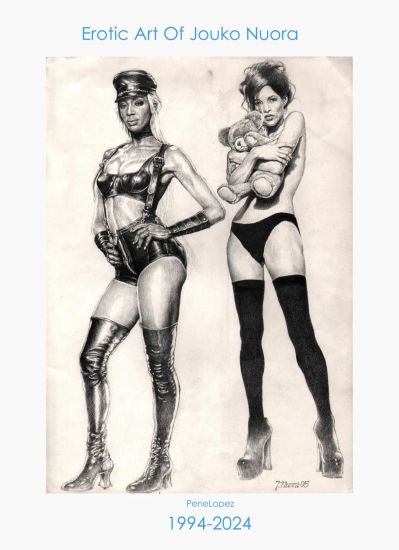
Jouko Nuoran taideuran parhaita ennejulkaisemattomia todella rohkeita ja eroottisia piirroksia ja akvarellejä vuosilta 1994.2024, vain huumorintajuisille ja aikuisille! Yli 80 kuvaa, 72 sivua.
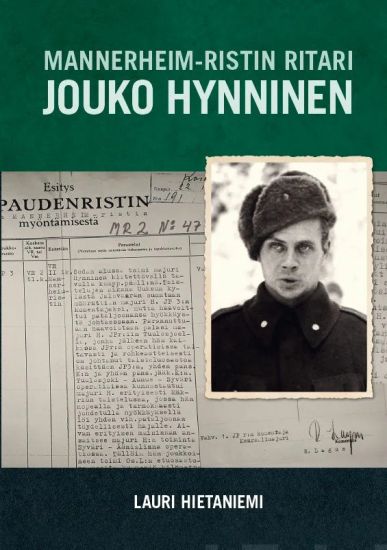
Kirjan tarina lähtee Hynnisen suvun savolaisista juurista ja etenee rovastin perheen lapsuus- ja kouluvuosista reserviupseeri- sekä kadettikouluun. Nuori vänrikki perustaa perheen Mikkeliin, jonne hänet on nimitetty ammattisotilaana Polkupyöräpataljoona 3:n kouluttajaksi. Perhe on kuitenkin pian hyvästeltävä talvisodan alettua. Välirauhan aikana Jääkäripataljoona 3:n eli JP 3:n kokeneet upseerit pistivät Kouvolassa varusmiehet kovaan koulutukseen.Jakosodassa Hynnisen pataljoona sijoitettiin kuuluisaan kenraalimajuri Ruben Laguksen Jääkäriprikaatiin ja asemasodan aikana Panssaridivisioonaan. Hynnisen pataljoona oli mukana jatkosodan ja Lapin sodan ratkaisevimmissa taisteluissa, joissa syntyi myös valitettavan paljon omia tappioita vihollisen vahvan ylivoiman vuoksi. Sotien jälkeen Jouko Hynnisen ura eteni ja jatkui kymmenen vuotta everstinä Savon Prikaatin komentajana sekä päättyi kenraalimajurina Kaakkois-Suomen ja Sisä-Suomen sotilasläänien komentajana. Kirjan aineiston ydintä ovat kymmenet veteraanien tuottamat aidot taistelukertomukset. Useat kartat (20 kpl) havainnollistavat tilanteiden kulkua. Runsas ja värikäs kuvitus elävöittää kerrontaa ja auttaa lukijaa siirtymään ajan henkeen.FT Lauri Hietaniemi keskittyy kolmannessakin kirjassaan fokukseensa, sodassa onnistuneisiin pataljoonankomentajiin. Tällä kertaa on vuorossa sotiemme pitkäaikaisimman ja ansioituneimman pataljoonan komentajan, Jääkäripataljoona 3:n komentajan, Marskin ritarin Jouko Hynnisen elämänkerta. Aiemmin hän on kirjoittanut Auno Kuirin ja Heikki Mikkolan Palveluksia isänmaalle ja yhdessä Hannu Aikion kanssa teoksen Ilomantsista Ilomantsiin - JP 1:n veteraanien kertomuksia.
This gentle introduction to logic and model theory is based on a systematic use of three important games in logic: the semantic game; the Ehrenfeucht–Fraïssé game; and the model existence game. The third game has not been isolated in the literature before but it underlies the concepts of Beth tableaux and consistency properties. Jouko Väänänen shows that these games are closely related and in turn govern the three interrelated concepts of logic: truth, elementary equivalence and proof. All three methods are developed not only for first order logic but also for infinitary logic and generalized quantifiers. Along the way, the author also proves completeness theorems for many logics, including the cofinality quantifier logic of Shelah, a fully compact extension of first order logic. With over 500 exercises this book is ideal for graduate courses, covering the basic material as well as more advanced applications.
Dependence is a common phenomenon, wherever one looks: ecological systems, astronomy, human history, stock markets - but what is the logic of dependence? This book is the first to carry out a systematic logical study of this important concept, giving on the way a precise mathematical treatment of Hintikka's independence friendly logic. Dependence logic adds the concept of dependence to first order logic. Here the syntax and semantics of dependence logic are studied, dependence logic is given an alternative game theoretic semantics, and results about its complexity are proven. This is a graduate textbook suitable for a special course in logic in mathematics, philosophy and computer science departments, and contains over 200 exercises, many of which have a full solution at the end of the book. It is also accessible to readers, with a basic knowledge of logic, interested in new phenomena in logic.
Dependence is a common phenomenon, wherever one looks: ecological systems, astronomy, human history, stock markets - but what is the logic of dependence? This book is the first to carry out a systematic logical study of this important concept, giving on the way a precise mathematical treatment of Hintikka's independence friendly logic. Dependence logic adds the concept of dependence to first order logic. Here the syntax and semantics of dependence logic are studied, dependence logic is given an alternative game theoretic semantics, and results about its complexity are proven. This is a graduate textbook suitable for a special course in logic in mathematics, philosophy and computer science departments, and contains over 200 exercises, many of which have a full solution at the end of the book. It is also accessible to readers, with a basic knowledge of logic, interested in new phenomena in logic.
A major advantage of a direct digital synthesizer (DDS) is that its output frequency, phase and amplitude can be precisely and rapidly manipulated under digital processor control. Other inherent DDS attributes include the ability to tune with extremely fine frequency and phase resolution, and to rapidly `hop' between frequencies. These combined characteristics have made the technology popular in military radar and communications systems. In fact, DDS technology was previously applied almost exclusively to high-end and military applications: it was costly, power-hungry, difficult to implement, and required a discrete high speed D/A converter. Due to improved integrated circuit (IC) technologies, they now present a viable alternative to analog-based phase-locked loop (PLL) technology for generating agile analog output frequency in consumer synthesizer applications. It is easy to include different modulation capabilities in the DDS by using digital signal processing (DSP) methods, because the signal is in digital form. By programming the DDS, adaptive channel bandwidths, modulation formats, frequency hopping and data rates are easily achieved. The flexibility of the DDS makes it ideal for signal generator for software radio. The digital circuits used to implement signal-processing functions do not suffer the effects of thermal drift, aging and component variations associated with their analog counterparts. The implementation of digital functional blocks makes it possible to achieve a high degree of system integration. Recent advances in IC fabrication technology, particularly CMOS, coupled with advanced DSP algorithms and architectures are providing possible single-chip DDS solutions to complex communication and signal processing subsystems as modulators, demodulators, local oscillators, programmable clock generators, and chirp generators. The DDS addresses a variety of applications, including cable modems, measurement equipments, arbitrary waveform generators, cellular base stations and wireless local loop base stations. Direct Digital Synthesizers was written to find possible applications for radio communication systems. It will have appeal for wireless and wireline communication engineers, teachers and students.
The approach adopted in Digital Synthesizers and Transmitters for Software Radio will provide an understanding of key areas in the field of digital synthesizers and transmitters. It is easy to include different digital techniques in the digital synthesizers and transmitters by using digital signal processing methods, because the signal is in digital form. By programming the digital synthesizers and transmitters, adaptive channel bandwidths, modulation formats, frequency hopping and data rates are easily achieved. Techniques such as digital predistortion for power amplifier linearization, digital compensation methods for analog I/Q modulator nonlinearities and digital power control and ramping are presented in this book. The flexibility of the digital synthesizers and transmitters makes them ideal as signal generators for software radio. Software radios represent a major change in the design paradigm for radios in which a large portion of the functionality is implemented through programmable signal processing devices, giving the radio the ability to change its operating parameters to accommodate new features and capabilities. A software radio approach reduces the content of radio frequency (RF) and other analog components of traditional radios and emphasizes digital signal processing to enhance overall transmitter flexibility. Software radios are emerging in commercial and military infrastructure.
A major advantage of a direct digital synthesizer (DDS) is that its output frequency, phase and amplitude can be precisely and rapidly manipulated under digital processor control. Other inherent DDS attributes include the ability to tune with extremely fine frequency and phase resolution, and to rapidly `hop' between frequencies. These combined characteristics have made the technology popular in military radar and communications systems. In fact, DDS technology was previously applied almost exclusively to high-end and military applications: it was costly, power-hungry, difficult to implement, and required a discrete high speed D/A converter. Due to improved integrated circuit (IC) technologies, they now present a viable alternative to analog-based phase-locked loop (PLL) technology for generating agile analog output frequency in consumer synthesizer applications. It is easy to include different modulation capabilities in the DDS by using digital signal processing (DSP) methods, because the signal is in digital form. By programming the DDS, adaptive channel bandwidths, modulation formats, frequency hopping and data rates are easily achieved. The flexibility of the DDS makes it ideal for signal generator for software radio. The digital circuits used to implement signal-processing functions do not suffer the effects of thermal drift, aging and component variations associated with their analog counterparts. The implementation of digital functional blocks makes it possible to achieve a high degree of system integration. Recent advances in IC fabrication technology, particularly CMOS, coupled with advanced DSP algorithms and architectures are providing possible single-chip DDS solutions to complex communication and signal processing subsystems as modulators, demodulators, local oscillators, programmable clock generators, and chirp generators. The DDS addresses a variety of applications, including cable modems, measurement equipments, arbitrary waveform generators, cellular base stations and wireless local loop base stations. Direct Digital Synthesizers was written to find possible applications for radio communication systems. It will have appeal for wireless and wireline communication engineers, teachers and students.
The approach adopted in Digital Synthesizers and Transmitters for Software Radio will provide an understanding of key areas in the field of digital synthesizers and transmitters. It is easy to include different digital techniques in the digital synthesizers and transmitters by using digital signal processing methods, because the signal is in digital form. By programming the digital synthesizers and transmitters, adaptive channel bandwidths, modulation formats, frequency hopping and data rates are easily achieved. Techniques such as digital predistortion for power amplifier linearization, digital compensation methods for analog I/Q modulator nonlinearities and digital power control and ramping are presented in this book. The flexibility of the digital synthesizers and transmitters makes them ideal as signal generators for software radio. Software radios represent a major change in the design paradigm for radios in which a large portion of the functionality is implemented through programmable signal processing devices, giving the radio the ability to change its operating parameters to accommodate new features and capabilities. A software radio approach reduces the content of radio frequency (RF) and other analog components of traditional radios and emphasizes digital signal processing to enhance overall transmitter flexibility. Software radios are emerging in commercial and military infrastructure.
This book is the third volume in an approximately annual series which comprises the proceedings of the International Workshops on Condensed Matter Theories. The first of these meetings took place in 1977 in Sao Paulo, Brazil, and successive workshops have been held in Trieste, Italy (1978), Buenos Aires, Argentina (1979), Caracas, Venezuela (1980), Mexico City, Mexico (1981), St. Louis, USA (1982), Altenberg, Federal Republic of Germany (1983), Granada, Spain (1984), San Francisco, USA (1985), and Argonne, USA (1986). The present volume contains the proceedings of the Eleventh Workshop which took place in Qulu, Finland during the period 27 July - 1 August, 1987. The original motivation and the historical evolution of the series of Workshops have been amply described in the preface to the first volume in the present series. An important objective throughout has been to work against the ever-present trend for physics to fragment into increasingly narrow fields of specialisation, between which communication is difficult. The Workshops have traditionally sought to emphasise the unity of physics. By bringing together scientists working in many different areas of condensed matter theory, for the dual purpose of fostering collaborations between them and promoting the exchange of ideas between various disciplines, a common language has been exposed and developed. The Editor of the first volume in the series, F. B.
Let M be a smooth manifold and G a Lie group. In this book we shall study infinite-dimensional Lie algebras associated both to the group Map(M, G) of smooth mappings from M to G and to the group of dif feomorphisms of M. In the former case the Lie algebra of the group is the algebra Mg of smooth mappings from M to the Lie algebra gof G. In the latter case the Lie algebra is the algebra Vect M of smooth vector fields on M. However, it turns out that in many applications to field theory and statistical physics one must deal with certain extensions of the above mentioned Lie algebras. In the simplest case M is the unit circle SI, G is a simple finite dimensional Lie group and the central extension of Map( SI, g) is an affine Kac-Moody algebra. The highest weight theory of finite dimensional Lie algebras can be extended to the case of an affine Lie algebra. The important point is that Map(Sl, g) can be split to positive and negative Fourier modes and the finite-dimensional piece g corre sponding to the zero mode.
Runomuotoinen kertomus kahden tyhjätaskun matkasta Baltian maihin, Puolaan, Saksaan ja takaisin päin Tanskaan, 90-luvun lopulla. Glasnost ja Muurin äskettäinen murtuminen tietenkin näkyvät Berliinissä, tai vaikkapa Puolan uudisrakentamisessa, mutta matkailijoiden huomion vievät paljon yksinkertaisemmat asiat. Eli mistä kyyti tai telttapaikka, tai sämpylöitä täksikin päiväksi.
Cherished Disappointments in Love is a brilliantly funny and wildly savage theatrical roller-coaster ride. A woman of a certain age is in love with Finland's youngest philosopher, Pekka Himanen. He is also loved by an army sergeant major who means to make a man of him. From the country who gave us saunas, Nokia and Mika Hakkinen, Cherished Disappointments in Love is a comic fantasia on love, philosophy and theatre. Shot through with an eroticism that engenders chaos, the time-honoured and eternal differences between male and female are played out upon the stage with wild, highly comic intensity.