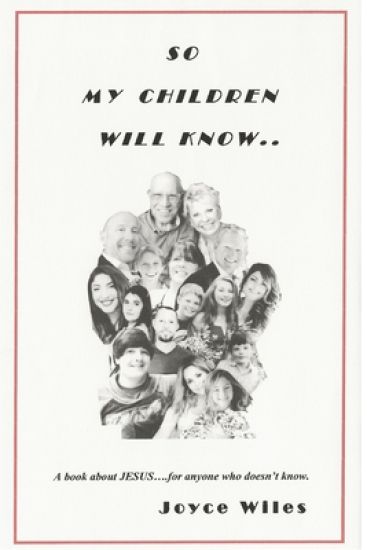
Why Jesus? For adult children who are unbelievers & those who have walked away from their faith. So My Children Will Know... examines all the "What if's" in your life and how you can experience God's total peace and contentment "if" you understand and accept His love and many promises... It captures the true story of the author, the 30 years of her life wasted as she attempted to live life "my way." until she experienced "God's Way.". . from struggles and disappointments to peace, abundance and total joy.
"Two Countries Speak: Poems and Remembrances" is a rendition of poems and reminiscences showcasing author Joyce P. Nightingale-Holder's early life in Barbados and her current experiences in America. BLINDFOLDS We wear our blindfolds, Blindfolds of many colors. Like sunglasses of convenience, With tinted lenses fashioned to our fancy That sometimes hide what's painful to acknowledge. From time to time Conscience removes the blindfolds And therein lies the book. The book of fears and prejudices The book of challenges Bigger than friends, Bigger than family, The book of self A workbook we all must engage Each day, every day. Do we dare show The pages of our foibles? And stand exposed for prying eyes to witness Can we be bold and shift the paradigm? Or put the blindfolds on and walk away Will we accept discomfort to know "truth," Or will we stay within the realm of familiar?
"Two Countries Speak: Poems and Remembrances" is a rendition of poems and reminiscences showcasing author Joyce P. Nightingale-Holder's early life in Barbados and her current experiences in America. BLINDFOLDS We wear our blindfolds, Blindfolds of many colors. Like sunglasses of convenience, With tinted lenses fashioned to our fancy That sometimes hide what's painful to acknowledge. From time to time Conscience removes the blindfolds And therein lies the book. The book of fears and prejudices The book of challenges Bigger than friends, Bigger than family, The book of self A workbook we all must engage Each day, every day. Do we dare show The pages of our foibles? And stand exposed for prying eyes to witness Can we be bold and shift the paradigm? Or put the blindfolds on and walk away Will we accept discomfort to know "truth," Or will we stay within the realm of familiar?
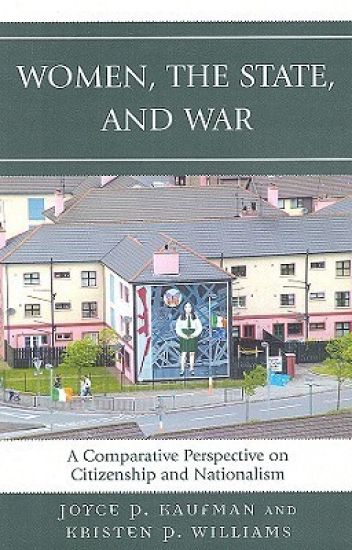
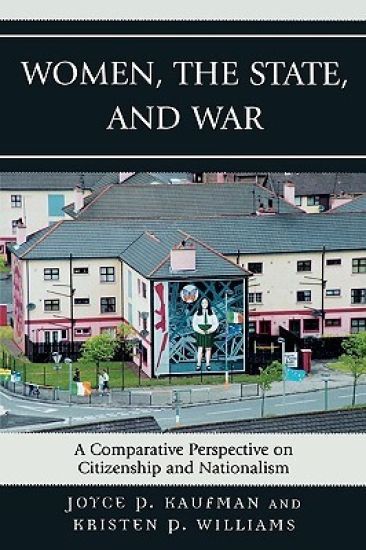
Women, the State, and War looks at the intersection of gender, citizenship, and nationalism; marriage, intermarriage, and how states gender that relationship; and the ways in which women are used as symbols to reinforce or further nationalistic goals. Women have long struggled with issues of citizenship, identity, and the challenge of being recognized as equal members of the community. Governments use feminine imagery (e.g., mother country) to create a national identity, while simultaneously minimizing the role that women play as productive contributors to the society. Authors Joyce P. Kaufman and Kristen P. Williams examine the relationship of government and women in four different countries: the United States, Israel, the former Yugoslavia, and Northern Ireland. In each case, numerous similarities appear: conflict plays a significant role in the definition of citizenship for women; women's movements have worked in contradiction to the state; and citizenship and marriage are gendered undertakings.
Women, the State, and War looks at the intersection of gender, citizenship, and nationalism; marriage, intermarriage, and how states gender that relationship; and the ways in which women are used as symbols to reinforce or further nationalistic goals. Women have long struggled with issues of citizenship, identity, and the challenge of being recognized as equal members of the community. Governments use feminine imagery (e.g., mother country) to create a national identity, while simultaneously minimizing the role that women play as productive contributors to the society. Authors Joyce P. Kaufman and Kristen P. Williams examine the relationship of government and women in four different countries: the United States, Israel, the former Yugoslavia, and Northern Ireland. In each case, numerous similarities appear: conflict plays a significant role in the definition of citizenship for women; women's movements have worked in contradiction to the state; and citizenship and marriage are gendered undertakings.
Focusing on NATO's continued crisis of identity, Joyce P. Kaufman argues that the conflicts in Croatia, Bosnia-Herzegovina, and Kosovo have proven to be critical to an alliance that has not been able to define its roles and missions in the post-Cold War world. While, on the one hand, NATO was enlarging by inviting former adversaries in Central and Eastern Europe and the former Soviet Union to join, on the other hand it has been woefully unprepared to deal with the ethnic conflicts that erupted on its borders and that could undermine the peace and stability of Europe. The author contends that the conflicts in the former Yugoslavia have potentially threatened the essence of NATO by forcing the alliance to take on the new role of peacekeeper without adequately allowing the members to examine the role the alliance wants to or should play in a largely postcommunist world. Despite ongoing discussion in NATO ministerial summits, the alliance has made little progress to date and public questions about the role and even the viability of NATO after the Cold War continue to grow. The inability to address these issues leaves NATO facing a number of pressing questions that this book tries to answer: What role can and should the alliance play in the future? And why have the ongoing conflicts in the Balkans proven to be a challenge that the alliance has been unwilling or unable to resolve?
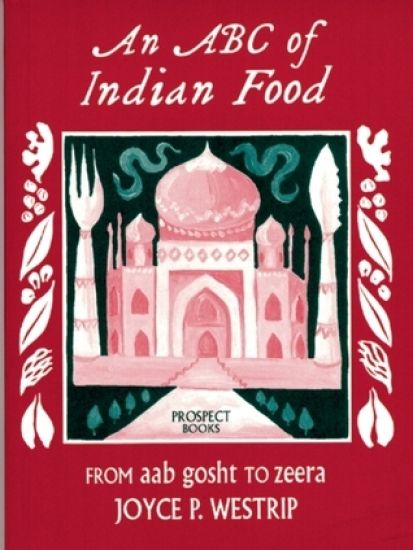
An ABC of Hindi food terms, perfect if you are travelling in a Hindi speaking area, or throughout the sub-continent.With a well laid out glossary, it is essential company when going to the market, restaurant, or food store. Travellers and enthusiasts of Indian food will come to rely on it. Joyce P. Westrip was born in India and has spent a lifetime travelling the country, cooking the food and studying the food history.
Jema Holt, a young woman born as an heiress to a shipyard and tragically left to be raised by her aunt and uncle is lost in the sadness that seems to follow her. Until, that is, she meets the Mitchell's who bring not only love into her dark world, but also an introduction to a relationship unlike any she had ever known. Set in a small, coastal town with generations of residents, set in their ways, this is a novel of hope, forgiveness, and the power of God's love.
Join Albert, a lovable stuffed teddy bear, in this fun based rhyming concept book about his adventures while camping. His momma and daddy help Albert have good manners when he's in the mountains camping.Albert climbs trees; he learns about pine cones and the wonders of the forest. When he's good his Momma takes him to get ice cream at the camp store. Albert's favorite game is hide-and-go-seek. His favorite dinner is corn on the cob, and he learns about safe campfire building as well as using soap and water when washing for dinner. Albert Goes Camping is a gentle camping story for children ages one through six.
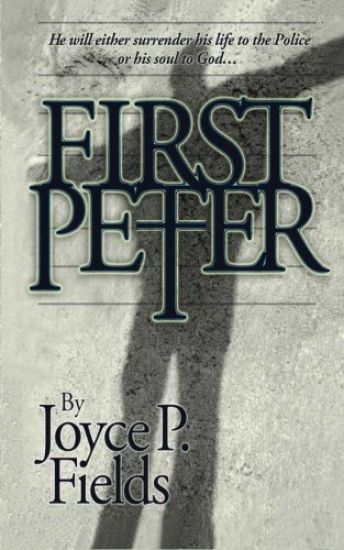
A gang member (Peter) and a church leader (Denise) are both seeing visions from God. One is running away from them and the other towards them. They will both wind up in the same place, fighting for lost souls.When Peter was eight years old his faith in God was little, but hopeful, even though his life was one of suffering by the hands of his mother's various boyfriends. An incident when he was eight years old, led to a death and Peter's little faith was shaken. At sixteen years old, Peter is in a gang and his rebellion against God is in full swing. Now his reluctance to follow God's leading could cost him and his friends the ultimate price ... death, unless Denise, a woman of God, can help him see the light.
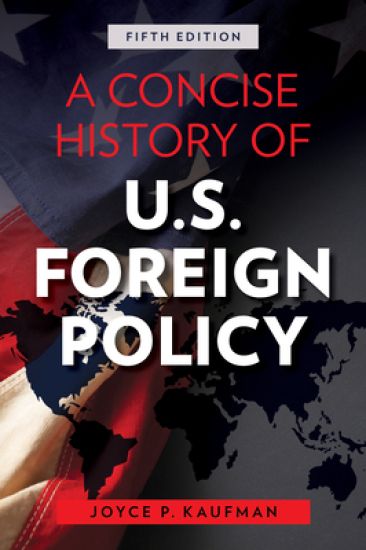
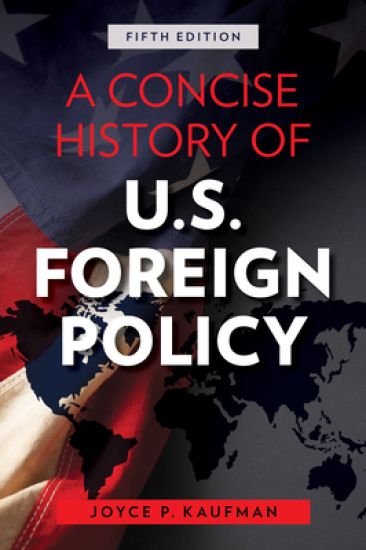
Now in a fully updated edition that goes through the Trump administration and the election and formative period of the Biden administration, this compact and accessible introduction offers a historical perspective on the evolution of U.S. foreign policy from the founding of the country to the present. Joyce P. Kaufman provides students and general readers with a clear and concise understanding of key foreign-policy decisions and why they were made. She identifies the major themes that have guided foreign policy and the reasons that the United States pursued certain policies in the context of specific periods in the nation’s history. Kaufman focuses on the major actors involved in the making of foreign policy and the changing relationships among them. She also explains the major theoretical perspectives within international relations and contextualizes key foreign policy decisions as they fit these frameworks. This edition puts a particular focus on the creation of Cold War foreign policy, and why the end of the Cold War has continued to be such a challenge to the United States. Kaufman concludes with a look at the threat that the United States is facing and will continue to face, including existential threats such as climate change and disease, and how Americans can be prepared to face them.
Now in a fully updated edition that goes through the Trump administration and the election and formative period of the Biden administration, this compact and accessible introduction offers a historical perspective on the evolution of U.S. foreign policy from the founding of the country to the present. Joyce P. Kaufman provides students and general readers with a clear and concise understanding of key foreign-policy decisions and why they were made. She identifies the major themes that have guided foreign policy and the reasons that the United States pursued certain policies in the context of specific periods in the nation’s history. Kaufman focuses on the major actors involved in the making of foreign policy and the changing relationships among them. She also explains the major theoretical perspectives within international relations and contextualizes key foreign policy decisions as they fit these frameworks. This edition puts a particular focus on the creation of Cold War foreign policy, and why the end of the Cold War has continued to be such a challenge to the United States. Kaufman concludes with a look at the threat that the United States is facing and will continue to face, including existential threats such as climate change and disease, and how Americans can be prepared to face them.
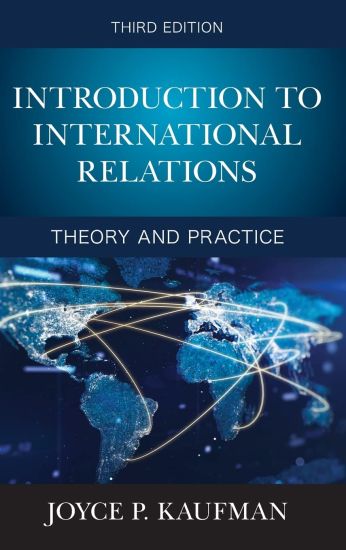
This clear and concise text introduces four key theoretical frameworks that form the foundation of international relations—realism, liberalism, constructivism, and feminist theory—and uses levels of analysis as the primary unifying force to explain contemporary global politics. Cases on climate change; gender, peace, and security; migration; and the rise of China illustrate Kaufman's approach.The third edition explains core issues in international relations, such as the interaction of nations in a globalized world; the growing threat posed by non-state actors and civil conflicts; and the need for countries to work together to counter what have been called “existential crises,” such as climate change, which threaten human lives and the planet. Significant revisions focus on discussion of democratic backsliding, the Covid-19 pandemic, cyberterrorism and cyberwar, changes to the European Union, and expanded coverage of international political economy.
This clear and concise text introduces four key theoretical frameworks that form the foundation of international relations—realism, liberalism, constructivism, and feminist theory—and uses levels of analysis as the primary unifying force to explain contemporary global politics. Cases on climate change; gender, peace, and security; migration; and the rise of China illustrate Kaufman's approach.The third edition explains core issues in international relations, such as the interaction of nations in a globalized world; the growing threat posed by non-state actors and civil conflicts; and the need for countries to work together to counter what have been called “existential crises,” such as climate change, which threaten human lives and the planet. Significant revisions focus on discussion of democratic backsliding, the Covid-19 pandemic, cyberterrorism and cyberwar, changes to the European Union, and expanded coverage of international political economy.