

Kirjahaku
Etsi kirjoja tekijän nimen, kirjan nimen tai ISBN:n perusteella.
1000 tulosta hakusanalla Jozef (EDT) Miloš

The Human Wisdom of St. Thomas
Josef (EDT) Pieper; Drostan (TRN) Maclaren
Kessinger Pub
2007
pokkari
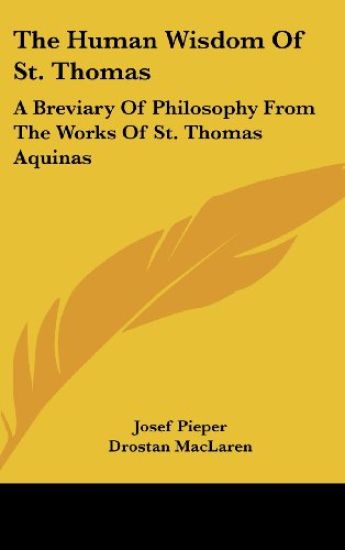
The Human Wisdom of St. Thomas
Josef (EDT) Pieper; Drostan (TRN) Maclaren
Kessinger Pub
2008
sidottu

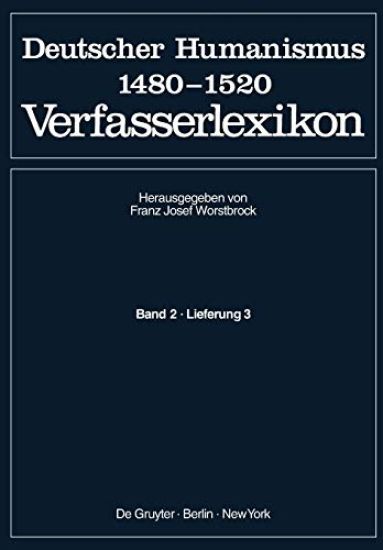
The two-volume reference work is an important part of the renowned Verfasserlexikon zur deutschen Literatur des Mittelalters [Author Lexicon of German Literature of the Middle Ages], and, using the established systematics of the main work, documents and presents bio-bibliographical articles from Latin literature and science in the German-speaking area between 1480 and 1520. The lexicon is a valuable reference work on German High Humanism - a work which will mark the way for future research in literary science and history and which presents the first scientific bundling and presentation of information and texts that were previously difficult to access. Through the Author Lexicon on German Humanism, an important phase of German literary history, which is still terra incognita to a great extent, has been made comprehensively accessible.

The Rule of Law Under Threat
Robert (EDT) Bottner; Hermann-josef (EDT) Blanke
Edward Elgar Pub
2024
sidottu
Additive Combinatorics
Andrew (EDT) Granville; Melvyn B. (EDT) Nathanson; Jozsef (EDT) Solymosi
Amer Mathematical Society
2007
pokkari

Theological Dictionary of the Old Testament
G. Johannes (EDT) Botterweck; Helmer (EDT) Ringgren; Heinz-Josef (EDT) Fabry
William B Eerdmans Publishing Co
2015
pokkari
This multivolume work is still proving to be as fundamental to Old Testament studies as its companion set, the Kittel-Friedrich Theological Dictionary of the New Testament, has been to New Testament studies. Beginning with 'abh ('ab), -father, - and continuing through the alphabet, the TDOT volumes present in-depth discussions of the key Hebrew and Aramaic words in the Old Testament. Leading scholars of various religious traditions (including Roman Catholic, Lutheran, Reformed, Anglican, Greek Orthodox, and Jewish) and from many parts of the world (Denmark, France, Germany, Great Britain, Greece, Israel, Italy, the Netherlands, Norway, Sweden, Switzerland, and the United States) have been carefully selected for each article by editors Botterweck, Ringgren, and Fabry and their consultants, George W. Anderson, Henri Cazelles, David Noel Freedman, Shemaryahu Talmon, and Gerhard Wallis. The intention of the writers is to concentrate on meaning, starting from the more general, everyday senses and building to an understanding of theologically significant concepts. To avoid artificially restricting the focus of the articles, TDOT considers under each keyword the larger groups of words that are related linguistically or semantically. The lexical work includes detailed surveys of a word's occurrences, not only in biblical material but also in other ancient Near Eastern writings. Sumerian, Akkadian, Egyptian, Ethiopic, Ugaritic, and Northwest Semitic sources are surveyed, among others, as well as the Qumran texts and the Septuagint; and in cultures where no cognate word exists, the authors often consider cognate ideas. TDOT's emphasis, though, is on Hebrew terminology and on biblical usage. The contributors employ philology as well as form-critical and traditio-historical methods, with the aim of understanding the religious statements in the Old Testament. Extensive bibliographical information adds to the value of this reference work. This English edition attempts to serve the needs of Old Testament students without the linguistic background of more advanced scholars; it does so, however, without sacrificing the needs of the latter. Ancient scripts (Hebrew, Greek, etc.) are regularly transliterated in a readable way, and meanings of foreign words are given in many cases where the meanings might be obvious to advanced scholars. Where the Hebrew text versification differs from that of English Bibles, the English verse appears in parentheses. Such features will help all earnest students of the Bible to avail themselves of the manifold theological insights contained in this monumental work.

Encyclopedia of the Bible and Its Reception
Dale C. Allison; Hans-Josef (EDT) Klauck; Volker (EDT) Leppin
De Gruyter
2012
sidottu
The projected thirty-volume Encyclopedia of the Bible and Its Reception (EBR) is intended to serve as a comprehensive guide to the current state of knowledge on the background, origins, and development of the canonical texts of the Bible as they were accepted in Judaism and Christianity. Unprecedented in breadth and scope, this encyclopedia also documents the history of the Bible's interpretation and reception across the centuries, not only in Judaism and Christianity, but also in literature, visual art, music, film, and dance, as well as in Islam and other religious traditions and new religious movements. The EBR is also available online. Further information on "The Bible and Its Reception".
Dabbesheth - Dreams and Dream Interpretation
Dale C. Allison; Hans-Josef (EDT) Klauck; Volker (EDT) Leppin
De Gruyter
2013
sidottu
The projected thirty-volume Encyclopedia of the Bible and Its Reception (EBR) is intended to serve as a comprehensive guide to the current state of knowledge on the background, origins, and development of the canonical texts of the Bible as they were accepted in Judaism and Christianity. Unprecedented in breadth and scope, this encyclopedia also documents the history of the Bible's interpretation and reception across the centuries, not only in Judaism and Christianity, but also in literature, visual art, music, film, and dance, as well as in Islam and other religious traditions and new religious movements. The EBR is also available online. Further information on "The Bible and Its Reception".

Oeuvres Completes De R. Saadia Ben Josef Al-fayyoumi
R. Saadia Ben Josef Al-fayyoumi; Joseph (EDT) Derenbourg
Kessinger Pub
2009
pokkari
The Secret of Theatrical Space
Josef Svoboda; J. M. (EDT) Burian
Applause Theatre Cinema Books
1993
sidottu

This stunning monograph, a long-overdue critical appraisal of Polish artist Józef Czapski (1896–1993), arrives at a moment when the artist’s legacy is gaining new recognition. Within these pages, author Eric Karpeles conveys how making art was so enmeshed with Czapski’s way of seeing and being in the world that it was second nature. Given that he lived into his 97th year, it’s no surprise that the artist has works dating from every decade of the 20th century but the first. As witness to the tumultuous events of that century, he found in painting ‘a refuge and a salvation’. Prolific as a painter, he was equally disciplined in recording the events of his life in pencil, ink, and watercolour in his journals. At a time when abstract art tended to dominate aesthetic discourse, he preferred to observe the world around him, to portray people going about their daily business. Some of his most compelling works depict theatre-goers and art lovers doing what they do best – looking.

The story of the enigmatic Jozef Pilsudski, the founding father of modern Poland: a brilliant military leader and high-minded statesman who betrayed his own democratic vision by seizing power in a military coup.In the story of modern Poland, no one stands taller than Jozef Pilsudski. From the age of sixteen he devoted his life to reestablishing the Polish state that had ceased to exist in 1795. Ahead of World War I, he created a clandestine military corps to fight Russia, which held most Polish territory. After the war, his dream of an independent Poland realized, he took the helm of its newly democratic political order. When he died in 1935, he was buried alongside Polish kings.Yet Pilsudski was a complicated figure. Passionately devoted to the idea of democracy, he ceded power on constitutional terms, only to retake it a few years later in a coup when he believed his opponents aimed to dismantle the democratic system. Joshua Zimmerman’s authoritative biography examines a national hero in the thick of a changing Europe, and the legacy that still divides supporters and detractors. The Poland that Pilsudski envisioned was modern, democratic, and pluralistic. Domestically, he championed equality for Jews. Internationally, he positioned Poland as a bulwark against Bolshevism. But in 1926 he seized power violently, then ruled as a strongman for nearly a decade, imprisoning opponents and eroding legislative power.In Zimmerman’s telling, Pilsudski’s faith in the young democracy was shattered after its first elected president was assassinated. Unnerved by Poles brutally turning on one another, the father of the nation came to doubt his fellow citizens’ democratic commitments and thereby betrayed his own. It is a legacy that dogs today’s Poland, caught on the tortured edge between self-government and authoritarianism.