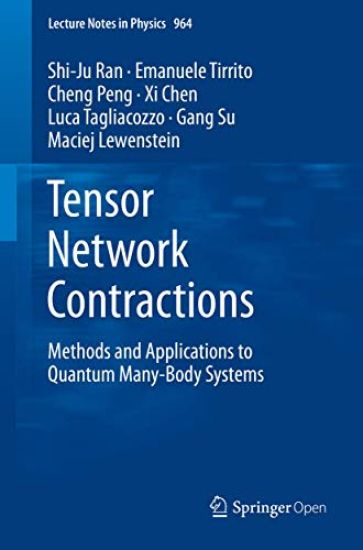
Tensor network is a fundamental mathematical tool with a huge range of applications in physics, such as condensed matter physics, statistic physics, high energy physics, and quantum information sciences. This open access book aims to explain the tensor network contraction approaches in a systematic way, from the basic definitions to the important applications. This book is also useful to those who apply tensor networks in areas beyond physics, such as machine learning and the big-data analysis. Tensor network originates from the numerical renormalization group approach proposed by K. G. Wilson in 1975. Through a rapid development in the last two decades, tensor network has become a powerful numerical tool that can efficiently simulate a wide range of scientific problems, with particular success in quantum many-body physics. Varieties of tensor network algorithms have been proposed for different problems. However, the connections among different algorithms are notwell discussed or reviewed. To fill this gap, this book explains the fundamental concepts and basic ideas that connect and/or unify different strategies of the tensor network contraction algorithms. In addition, some of the recent progresses in dealing with tensor decomposition techniques and quantum simulations are also represented in this book to help the readers to better understand tensor network. This open access book is intended for graduated students, but can also be used as a professional book for researchers in the related fields. To understand most of the contents in the book, only basic knowledge of quantum mechanics and linear algebra is required. In order to fully understand some advanced parts, the reader will need to be familiar with notion of condensed matter physics and quantum information, that however are not necessary to understand the main parts of the book. This book is a good source for non-specialists on quantum physics to understand tensor network algorithms and the related mathematics.
Special names are for the rare, beautiful souls in this world who make a difference. Ju Bear is a book designed by a mother who shares a special name with her little hero, a special name that can never be smudged or scratched. Beneath the cover of this book lies an empowering message like none other: To find joy, overcome sadness, or become great. With exquisitely illustrated scenes painted as if they were watercolors on paper, this is sure to be one heartwarming tale of a mother's unspoken love. Read along her journey of learning how to grow, let go and love unconditionally.
Applied Channel Theory in Chinese Medicine demonstrates how a deeper understanding of the interrelationship between organ and channel theory can lead to more precise diagnoses and better clinical results. This book is a collaboration between Wang Ju-Yi, one of modern China's most respected scholars, teachers, and practitioners of traditional Chinese medicine, and his American apprentice and practitioner, Jason Robertson. While most textbooks focus either on the functions of the organs in basic physiology or on the uses of the channels in treatment, this book shows the essential relationships between the two. Theory and practice are connected through a detailed discussion of a channel palpation methodology developed by Dr. Wang, which leads to more precise and effective point selection, location, and technique. Applied Channel Theory in Chinese Medicine was developed during Mr. Robertson's apprenticeship with Dr. Wang in Beijing, and is presented in a unique and highly readable format that preserves the intimacy of dialogue between apprentice and teacher, with questions and answers, narratives, and case studies.
Ju-Jitsu by E. J. Harrison is a comprehensive guide to the Japanese martial art of Ju-Jitsu. The book covers the history and philosophy of Ju-Jitsu, as well as the various techniques and movements involved in the practice. It includes detailed descriptions and illustrations of throws, locks, strikes, and other techniques, as well as advice on training and conditioning. The book is suitable for both beginners and advanced practitioners of Ju-Jitsu, and provides a thorough introduction to this ancient martial art. Overall, Ju-Jitsu is a valuable resource for anyone interested in learning more about this fascinating discipline.This scarce antiquarian book is a facsimile reprint of the old original and may contain some imperfections such as library marks and notations. Because we believe this work is culturally important, we have made it available as part of our commitment for protecting, preserving, and promoting the world's literature in affordable, high quality, modern editions, that are true to their original work.
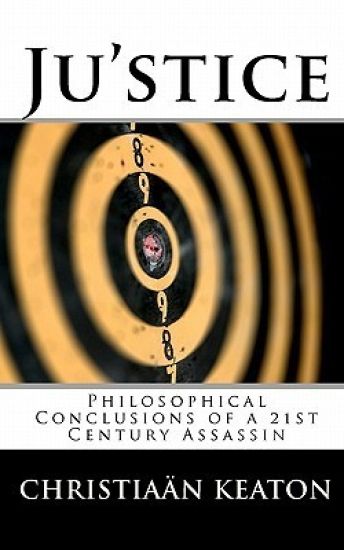
Ju'stice is a fast-paced, seductive, yet satirical journey that follows a highly skilled, incredibly beautiful and intelligent, genetically enhanced assassin on her quest to find meaning in life. The modish, beguiling style of the main character, Ju, which means "ten" in Japanese and is pronounced like the French "au jus", is quite unique. When she gets handed an assignment, a "hit" on a former mentor and friend, it takes her on a ride of both conscience and conflict. In her attempts to define justice, truth and beauty, Ju is forced to confront both inner demons of her past and outside villains that threaten her future and the future of those she cares for. There is a thick texture of contemporary pop-culture woven into the most age-old struggles of Who am I? Why am I here? Is there meaning in life? Is there purpose to suffering? Filled with philosophical quotes, an eclectic assortment of weaponry, Ju'stice transports its readers to a not-so-far-away future where contrasting cultures, modern science and ancient faiths clash with personal conscience and political conflicts. Filled with tensions and dichotomies of all sorts, the inner struggles of the endearing characters are as rich, complex and titillating as their outer m l es.
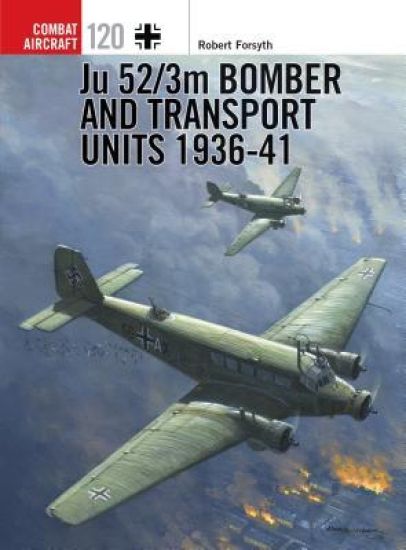
The all-metal Junkers Ju 52/3m enjoyed a solid – indeed, revered – reputation amongst its crews and the troops and paratroopers who used and depended on it. For more than ten years, it saw service as a successful military transport, with its distinctive, three-engined design and corrugated metal construction becoming instantly recognisable. It was a mainstay in the Luftwaffe’s inventory, first seeing service in the 1930s in bombing and transport operations in the Spanish Civil War, and subsequently during the German invasion of Poland. It then served on every front on which the Luftwaffe was deployed until May 1945. The Junkers served as a stalwart transport, confronting both freezing temperatures and ice, and heat and dust, lifting men, animals, food and supplies vital for German military operations. This, the first of two books on the Ju 52/3m, details its service as a bomber in Spain and in South America, followed by its pivotal role in early war operations during the invasions of Poland and France, the airborne invasion of Crete and the early stages of Operation Barbarossa.
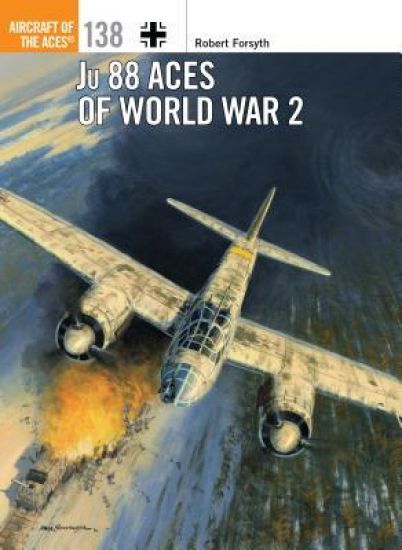
Initially designed as a fast medium bomber, the Junkers Ju 88 was also used as a Zerstörer heavy fighter by the Luftwaffe. It saw its combat debut over Poland in 1939, and heavy fighter variants saw action on every front up to VE Day. The ultimate Ju 88 fighter variant was the G-model of 1944, which boasted a FuG 220 or 227 radar, an astounding array of cannon and machine gun armament and advanced Junkers Jumo or BMW engines. A dedicated nightfighter, the first Ju 88G-1s entered service with the Nachtjagd in the summer of 1944, replacing Ju 88C/Rs as well as some Bf 110Gs. Despite suffering heavy losses in the final months of the war, Ju 88Gs also inflicted serious casualties on Bomber Command throughout the war.From patrolling over the Bay of Biscay, to the Arctic circle opposing Allied convoys and, most successfully, as radar-equipped nightfighters engaging RAF heavy bombers during defence of the Reich operations from late 1941, this is the story of the Ju 88 aces who menaced Allied aircraft and shipping throughout World War 2.
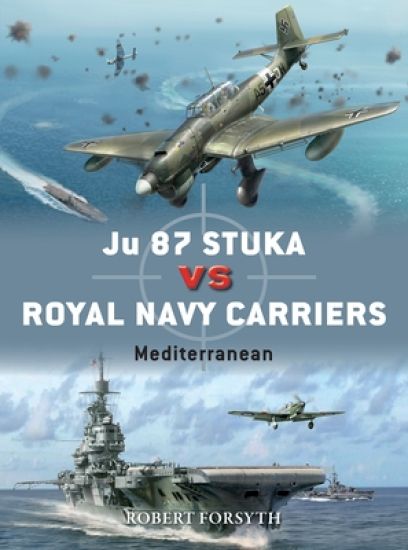
Ju 87 dive-bombers, originally developed for pin-pointing bombing missions against land targets and Allied naval vessels were deployed by both the Luftwaffe and the Regia Aeronautica against the Allied forces. Included in such a target were perhaps the greatest prize of all for a Stuka pilot: a British aircraft carrier.This superbly illustrated book looks at the duel between the Ju 87 Stuka and the aircraft carriers of the Royal Navy. Despite their gun protection (‘pompoms’)and their squadrons of fighters, these immense and mighty vessels proved irresistible targets to determined and experienced Stuka aces as they endeavoured to stop British naval intervention in the campaigns in Norway, Malta and Crete. By 1941, the Ju 87 had become known by the British as a fearsome aircraft following its operations in France, specifically at Dunkirk, as well as in the Balkans. For the Luftwaffe, it was an aircraft in which they still had great confidence despite its mauling in the Battle of Britain during the summer of 1940. This book examines the key attributes and shortcomings of both aircraft and carrier by analysing various compelling episodes including the dramatic attacks on Ark Royal by Stukageschwader (St.G) 1 off Norway in April 1940, the strikes by the Luftwaffe’s St.G 1, St.G 2 and the Regia Aeronautica’s 237° Squadriglia against Illustrious in Malta harbour. Aside from outstanding photography and artwork, this volume also include numerous personal accounts from Stuka crews, the pilots of carrier-borne fighters opposing them and the sailors embarked in the various carriers that came under attack.