Kirjahaku
Etsi kirjoja tekijän nimen, kirjan nimen tai ISBN:n perusteella.
1000 tulosta hakusanalla Juana Gorriti
Sue os y realidades. 564 p ginas. Juana Manuela Gorriti. Argentina 1818 - 1892
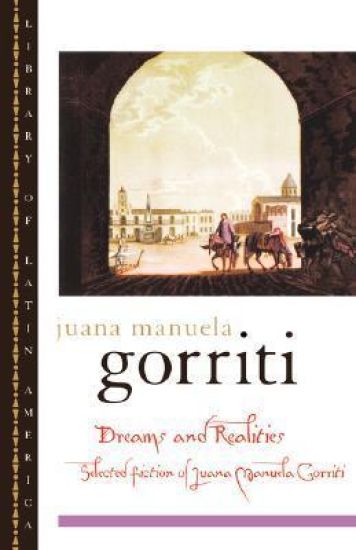
One of the most dramatic figures among Latin America's romantic writers and the distinguished woman writer of her century, Juana Manuela Gorriti brings passion and intrigue to the scene of writing. An exile from her native Argentina who sought refuge first in Bolivia and then in Peru, her lifetime of travel and displacement is echoed in her fictions. Her short stories tell of homelessness and nomadic yearnings, taking the reader from the Peruvian highlands, where Spanish colonizers plot to rob the treasures of the Incas, to the Argentine capital city plagued by sinister political intentions. Her later fictions move from Chile to scenes of the California Gold Rush. Covering the wide landscape of the Americas, Gorriti tracks the spirit of nineteenth-century adventurers and dandies, nation builders and soldiers who participate in the conflicts of settlement in a new and lawless land. Women are the protagonists here, mediating episodes of civil strife as they voice their despair about the treachery of fortune seekers in Latin America in the years following Independence from Spain. Dreams and Realities offers a sampling of Gorriti's stories, showing the range of her commitment to political fiction drawn in the romantic style. Originally published in four volumes under the titles Suenos y realidades and Panoramas de la vida, her works deal with the tyranny of the Rosas regime, the mediating role of women, and the clash of European and indigenous cultures. Notwithstanding her personal political leanings, Gorriti's stories and fictions provide a generous dose of swashbuckling adventure and romance. Translated into English for the first time by Sergio Weisman and with an Introduction, Chronology, and Critical Notes by Francine Maisello, the book gives a woman's view of the world of political intrigue and civil unrest that marks Latin America's turbulent nineteenth century.

"El pozo del Yocci", de Juana Manuela Gorriti. Juana Manuela Gorriti fue una escritora argentina (1818-1892)
"Panoramas de la vida", de Juana Manuela Gorriti. Juana Manuela Gorriti fue una escritora argentina (1818-1892)
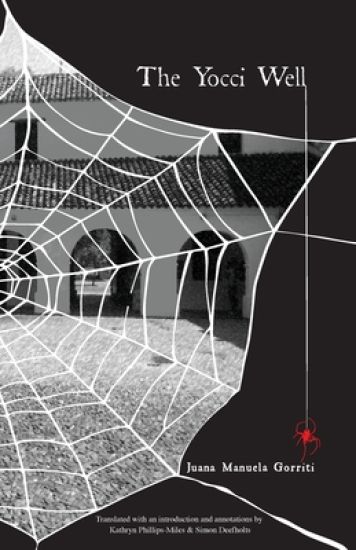
Juana Manuela Gorriti was born in Argentina in 1814, in the province of Salta. Her father fought in the War of Independence but was forced into exile in Bolivia in 1831 under the Rosas dictatorship. Juana married an army officer who became the Bolivia's president and was later assassinated in his palace. She was recognised in her time as one of Latin America's outstanding authors, but few of her works have been translated into English.A love story, ghost story and gothic horror rolled into one, The Yocci Well takes place in two parallel periods spanning twenty years, contrasting Argentina's War of Independence with the savagery the civil wars that followed. This brilliant novella is now available in English for the first time, together with an introduction and explanatory notes.
Oasis en la vida is a melodramatic novel by the outstanding Argentine author Juana Manuela Gorriti. Published in 1888; it is a reflection on the financial hardship and struggles of a young aspiring writer following a loveless childhood in exile.
Our Native Lane (La tierra natal), Juana Manuela Gorriti's last major work, published in 1889, relates a physical journey through northern Argentina as well as a voyage back through her memories of the people and events she had known and experienced along the way.Juana Manuela Gorriti was one of the major literary figures in nineteenth century Latin America but her work remains almost unknown outside a narrow academic circle. Born into a wealthy family in Salta, Argentina, in 1818, she married Manuel Isidro Belz , who was later to become president of Bolivia. Her principal works include collections of short stories and several novellas.
The year is 1838. Valent n de Avellaneda has been forced into exile in Uruguay with his wife and son by the blood-thirsty Argentine dictator, General Juan Manuel de Rosas, who has denounced him as a "Unitarian savage". As the fugitive tries to escort his family to a place of safety upriver, Rosas orders his capture and arrest and he is brought back to Buenos Aires, to stand trial as an enemy of the state . . .
Juana Manuela Gorriti was one of the major literary figures in nineteenth century Latin America but her work remains almost unknown outside a narrow academic circle. She was born into a wealthy family in Salta in the North of Argentina in 1818. Her father was a soldier who fought in Argentina's War of Independence from Spain (1810-1818). As a Unitarian politician he later took up arms against Rosas and other Federalist leaders, leading to the family's exile in Bolivia in 1831.In 1833, at the age of fifteen, Juana married Manuel Isidro Belz , a captain in the Bolivian army who eventually became president of the Bolivian Republic, serving two separate terms. He survived an assassination attempt in 1850, but was eventually shot dead in the presidential palace - aptly named the Palacio Quemado - in January 1865.After a further long period of exile in Lima, Juana set up home in Buenos Aires, eventually returning to Salta in 1886. She died in 1892. La tierra natal (1889), her last major work, relates a physical journey through northern Argentina, back to the places where she had lived over the course of her lifetime, as well as a voyage back through her memories of the people and events she had known and experienced along the way.This revised Spanish language edition is based directly on the first edition published in Buenos Aires by F lix Lajouane in 1889. To make it more accessible to the modern reader, the original orthography and use of accents has been modernised and a plethora of short, one-sentence paragraphs has been rationalised and consolidated.